
Affiliate Disclosure
Plumber Guide Guys is a participant in the Amazon Services LLC Associates Program, an affiliate advertising program designed to provide a means for sites to earn advertising fees by advertising and linking to Amazon.
Can Plumbing Vents Have 90 Degree Turns? Ever thought about if your home’s plumbing vent pipes can make sharp turns? It’s important to know the right angles for your plumbing vents. This keeps your drainage system working well.
Many homeowners don’t realize how vital vent stacks are in their plumbing. There are strict rules for plumbing vent pipe angles. These rules help your system work right and avoid problems.
Your plumbing needs the right venting to handle air pressure and keep sewer gas out. Knowing the limits of 90-degree turns in plumbing vents is key. It helps avoid future plumbing issues.
Key Takeaways
- Plumbing vent pipes need specific angle setups
- 90-degree turns are usually not okay in vent systems
- Good venting is key for your home’s plumbing
- Wrong vent pipe angles can lead to drainage issues
- Getting a pro to install ensures your plumbing works best
Understanding Plumbing Vent Systems and Their Purpose
Plumbing vent systems are key parts of your home’s drainage setup. They work quietly behind walls and roofs to keep water flowing smoothly. They also help keep the air inside your home clean. Without them, your plumbing could have big problems.
Role of Vent Stacks in Home Plumbing
Vent stacks are very important for your home’s plumbing. They let air into the plumbing system, which helps with drainage. When installing these systems, experts must follow the plumbing code for vent pipe bends to work well.
- Regulate air pressure in drainage pipes
- Prevent water from being siphoned out of drain traps
- Facilitate smooth waste removal
How Venting Affects Drainage Performance
Good venting stops negative air pressure that can slow down water flow. A 90 degree elbow in the vent stack might seem simple. But, it can really affect your plumbing’s efficiency if not done right.
Sewer Gas Management Through Proper Venting
Vent systems protect your home from harmful sewer gases. They make sure air can move freely, keeping dangerous gases out of your living areas. It’s vital to install them correctly and follow local plumbing codes for a safe home.
Can Plumbing Vent Pipe Have 90 Degree Turns?
Experts say it’s best to avoid 90-degree turns in plumbing. These sharp bends can mess up your home’s air flow and drainage.
Plumbing vent pipes are key to your home’s waste system. Proper installation is important for good airflow and to avoid blockages.
- 90-degree turns restrict air circulation
- Sharp angles can trap debris and cause clogs
- Strict building codes prohibit such configurations
90-degree turns can block air and waste flow. They cause resistance, leading to:
- Reduced drainage efficiency
- Increased risk of pipe blockages
- Potential sewer gas buildup
Professional plumbers suggest using 45-degree angles. These are gentler and keep air flowing well. They follow installation guidelines for a smooth system.
Knowing these rules can prevent expensive fixes and plumbing problems. Always get a pro’s advice for your plumbing needs.
Acceptable Angles for Plumbing Vent Pipes
When designing a drainage-waste-vent (DWV) system, it’s key to get the pipe layout right. Plumbing vent pipes need careful planning for good airflow and to avoid drainage problems.
Understanding dwv system bends is important. Plumbers use specific angles to keep your home’s drainage system running well.
Maximum Angle Requirements
Your plumbing vent system has strict angle rules for best performance. Important points include:
- Limit turns to one 45-degree angle from horizontal pipes
- Avoid sharp 90-degree turns that restrict airflow
- Maintain a clear path for air circulation
The 45-Degree Rule Explained
The 45-degree angle rule is key in plumbing design. This gentle bend helps:
- Smooth air movement through vent pipes
- Reduced risk of debris accumulation
- Better overall drainage system efficiency
Code Compliance for Vent Pipe Installation
Following local building codes is vital when installing vent pipes. Proper installation keeps your home’s plumbing safe and efficient. It prevents long-term issues with drainage and ventilation.
Proper angle management in your DWV system is not just about compliance—it’s about protecting your home’s plumbing infrastructure.
Different Types of Plumbing Vents in Your Home
Knowing about the plumbing vents in your home is key for a good drainage system. Each vent type helps manage air pressure and stops sewer gas buildup.
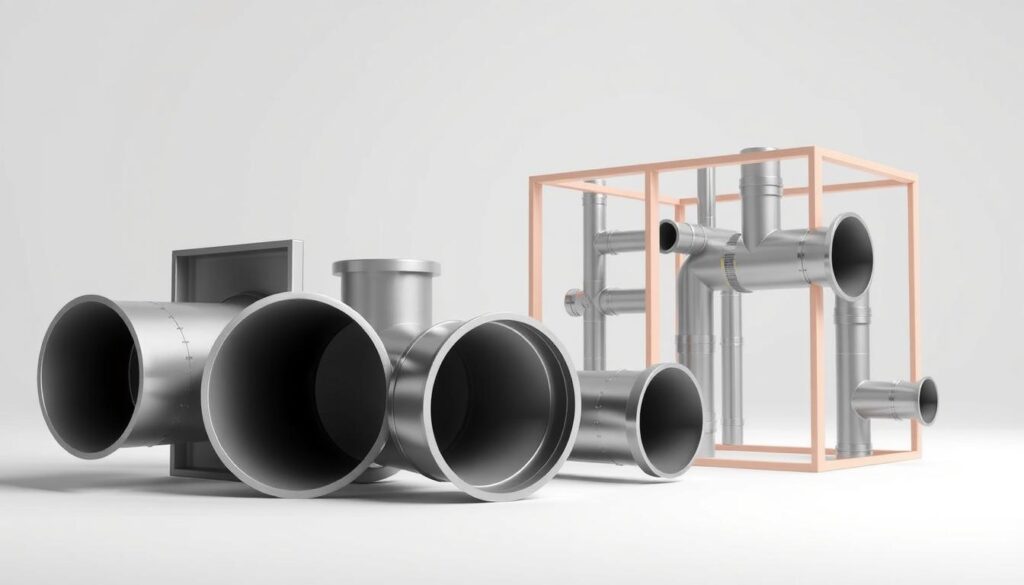
Your home’s plumbing needs different vent types for proper drainage and air flow. Each vent has its own role in the plumbing system:
- True Vent: The most common type, typically running vertically through the roof
- Auxiliary Vent: Connects secondary fixtures to the main vent stack
- Common Vent: Serves multiple fixtures in close proximity
- Loop Vent: Used in specific bathroom configurations
- Air Admittance Valve (AAV): A mechanical alternative to traditional venting
Choosing the right right angle vent pipe fittings is key for good airflow and avoiding plumbing problems. Plumbers pick the best vent setups to follow local codes and ensure the system works well.
| Vent Type | Primary Function | Typical Location |
|---|---|---|
| True Vent | Primary air pressure equalization | Roof penetration |
| Auxiliary Vent | Supporting secondary fixtures | Near bathroom or kitchen |
| Air Admittance Valve | Indoor air pressure regulation | Under sink or in wall cavity |
Understanding your home’s plumbing vents is vital for a well-working drainage system. The right installation and care of these vents can avoid problems and keep water flowing smoothly.
Critical Requirements for Vent Stack Installation
Installing plumbing vent stacks requires careful attention to guidelines. This ensures your home’s plumbing works well and meets local codes.
Knowing the key steps for vent stack installation helps avoid plumbing problems. It also makes sure your system works at its best.
Vertical Alignment Standards
Plumbing codes have rules for vent stack alignment. Your vent stack should go straight up. This helps air flow and prevents blockages.
- Maintain a consistent vertical line
- Minimize horizontal runs
- Avoid sharp bends or unnecessary turns
Distance Requirements from Fixtures
Each plumbing fixture needs a certain distance for proper venting. These distances help avoid pressure issues and ensure good drainage.
| Fixture Type | Minimum Vent Distance |
|---|---|
| Kitchen Sink | 5 feet |
| Bathroom Sink | 3-4 feet |
| Toilet | 6 feet |
Proper Support and Anchoring Methods
Securing your vent stack is key for its stability. Proper anchoring prevents stress on pipe connections and maintains alignment.
- Use appropriate pipe hangers
- Ensure secure roof penetration
- Check mounting brackets regularly
By following these guidelines, you’ll have a strong plumbing system. It will meet professional standards and local codes.
Common Issues with Incorrectly Angled Vent Pipes
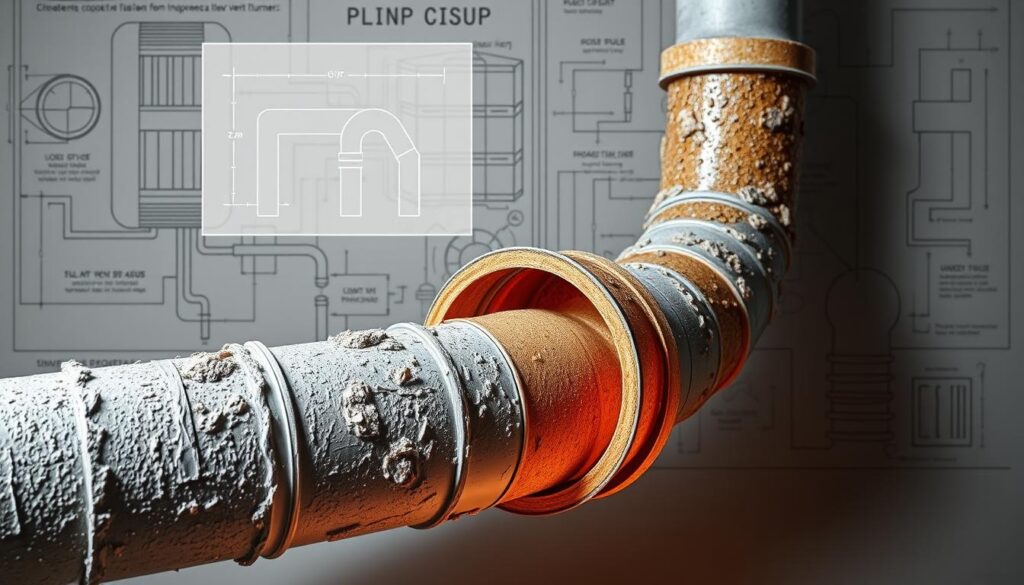
When plumbing vent pipe angles are set up wrong, it can cause big problems. These issues can affect your home’s drainage system a lot. You might face many challenges that harm your plumbing network.
Badly set plumbing vent pipe angles, like those with a 90 degree elbow, can lead to serious problems:
- Restricted airflow in drainage pipes
- Potential sewer gas buildup
- Increased risk of blockages
- Reduced overall system efficiency
Sharp angles in vent stacks can trap debris and stop air from flowing right. Water movement becomes problematic when vent pipes have extreme turns. This messes up the balance of your plumbing system’s ventilation.
| Angle Type | Potential Issues | Recommended Solution |
|---|---|---|
| 90 Degree Elbow | High risk of blockage | Use 45-degree connectors |
| Sharp Horizontal Run | Debris accumulation | Maintain gradual slope |
| Steep Vertical Angle | Air circulation problems | Ensure proper vertical alignment |
Experts say to avoid extreme angles in your vent stack. Knowing these issues can help you avoid expensive fixes. It keeps your plumbing system healthy.
Professional Installation vs DIY Vent Pipe Work
Installing a plumbing vent pipe needs special knowledge and care. Many homeowners like to fix things around the house. But, vent pipe work needs a pro to keep everyone safe and follow local rules.
When to Call a Licensed Plumber
There are times when you must call a pro plumber for vent pipe work. You should get a licensed plumber for:
- Complex vent pipe setups
- Big changes to your home’s structure
- Uncertainty about local vent pipe codes
- Connecting many fixtures
Required Tools and Materials
Pro plumbers use special tools for accurate vent pipe work. They need pipe cutters, levels, measuring tape, and specific connectors for venting systems.
Safety Considerations
Wrong vent pipe installation can cause big problems. These include:
- Sewer gas leaks
- Water damage to your home
- Bad drainage
- Breaking local building codes
Professional plumbers know all about vent pipe systems. They ensure a safe, code-following installation.
While DIY projects are fun, vent pipe work is best for pros. They know the details of plumbing and local rules.
Building Code Requirements for Vent Pipe Configuration
Understanding plumbing code restrictions for vents can be tough for homeowners. Building codes set important rules for safe and effective DWV system performance. Knowing these rules helps avoid costly mistakes and damage.
Local and national building codes have specific rules for DWV system bends and vent pipe setups. These rules help keep air flowing right, stop sewer gas buildup, and ensure good drainage in your home’s plumbing.
- Minimum vertical clearance requirements
- Maximum allowable bend angles
- Distance restrictions from fixtures
- Material specifications for vent pipes
Important things to keep in mind for compliance include:
| Code Requirement | Typical Specification |
|---|---|
| Vent Pipe Slope | Minimum 1/4 inch per foot |
| Maximum Bend Angle | 45 degrees recommended |
| Pipe Material | ABS or PVC approved |
Professional plumbers know these detailed code rules and can guide you through tricky installations. Trying to install vent pipes yourself without the right knowledge can lead to big structural problems and code issues.
Always check with local building authorities or a licensed plumbing expert to make sure you follow current plumbing codes.
The Impact of Proper Venting on Plumbing Performance
Your home’s plumbing system needs a balance of air pressure and fluid flow. The right plumbing vent setup is key to keeping this balance. It ensures your drains work well and avoids problems.
Venting systems do more than let air into your pipes. They help keep the pressure right, so water flows well. If your vent pipe is set up wrong, it can mess with this balance.
- Prevent sewer gas buildup
- Maintain consistent water flow
- Eliminate drainage blockages
- Reduce gurgling sounds in pipes
Setting up your vent pipe wrong can cause big problems. It might slow down your drains, make bad smells, and even cause backups. Plumbers know that the right turns in your vent pipe depend on building codes and system needs.
| Vent Configuration | Performance Impact |
|---|---|
| Proper Vertical Alignment | Optimal Drainage Efficiency |
| Minimal Angle Turns | Reduced Blockage Risk |
| Adequate Air Circulation | Consistent Pressure Management |
Knowing about plumbing vent setups helps homeowners spot problems early. Regular checks and upkeep can stop expensive fixes. This keeps your plumbing system running smoothly.
Conclusion
Knowing about plumbing vent pipe angles is key for a healthy home plumbing system. It helps avoid drainage problems and saves you from expensive fixes. Make sure to check right angle vent pipe fittings for the best system function.
When it comes to vent pipe setups, getting help from a pro is a must. DIY might seem easy, but plumbing vents are complex. Plumbers know how to place vents right and follow local codes.
Learning about plumbing vent pipe angles can prevent a lot of headaches. Always choose professional installation and upkeep for a well-working plumbing system. With the right advice, your plumbing vents will work their best.
Every home’s plumbing is different. Talking to a licensed plumber can solve unique vent pipe issues. This keeps your drainage system reliable and efficient.
FAQ
Are 90-degree turns allowed in plumbing vent pipes?
No, 90-degree turns are not allowed in plumbing vent pipes. They can cause problems with airflow. This might lead to blockages and reduced efficiency. Plumbing codes usually require 45-degree turns for better ventilation and drainage.
Why are 90-degree turns problematic in vent stacks?
Sharp 90-degree turns can restrict airflow and lead to debris buildup. They also increase the risk of blockages and affect drainage performance. These turns can block air and waste flow, causing sewer gas buildup and drainage issues.
What is the recommended angle for plumbing vent pipes?
The recommended angle for plumbing vent pipes is 45 degrees. This angle ensures smooth air and waste flow. It also prevents debris buildup and ensures optimal venting performance. Following this rule helps meet plumbing codes and improves your drainage system’s efficiency.
How do I know if my vent pipes are installed correctly?
Look for vertical alignment, proper distance from fixtures, and 45-degree turns. Ensure they are supported and meet local plumbing codes. If unsure, consult a licensed plumber for an inspection.
Can incorrect vent pipe configuration cause plumbing problems?
Yes, incorrect configuration can cause slow drains, gurgling sounds, and sewer odors. It can also lead to sewage backups and reduce plumbing system performance. Sharp turns disrupt air pressure and hinder drainage.
When should I hire a professional for vent pipe installation?
Hire a professional plumber if you lack plumbing expertise or are working on new construction. They ensure proper installation and meet local codes. Licensed plumbers are trained for complex installations.
What are the consequences of ignoring plumbing vent pipe guidelines?
Ignoring guidelines can lead to code violations, reduced home value, and insurance issues. It increases the risk of plumbing failures and sewer gas leaks. Proper installation is key for a safe plumbing system.
How do different types of plumbing vents work together?
Plumbing vents like stack vents, individual vents, and branch vents manage air pressure and drainage. They work together to prevent sewer gas buildup. Each type has a specific role in maintaining your plumbing system’s efficiency.