
Affiliate Disclosure
Plumber Guide Guys is a participant in the Amazon Services LLC Associates Program, an affiliate advertising program designed to provide a means for sites to earn advertising fees by advertising and linking to Amazon.
Can a Handyman Do Plumbing? Are you wondering if a handyman can fix your plumbing problems without costing too much? Many homeowners face this question when they have small plumbing issues. They don’t think it’s worth calling a full professional plumber.
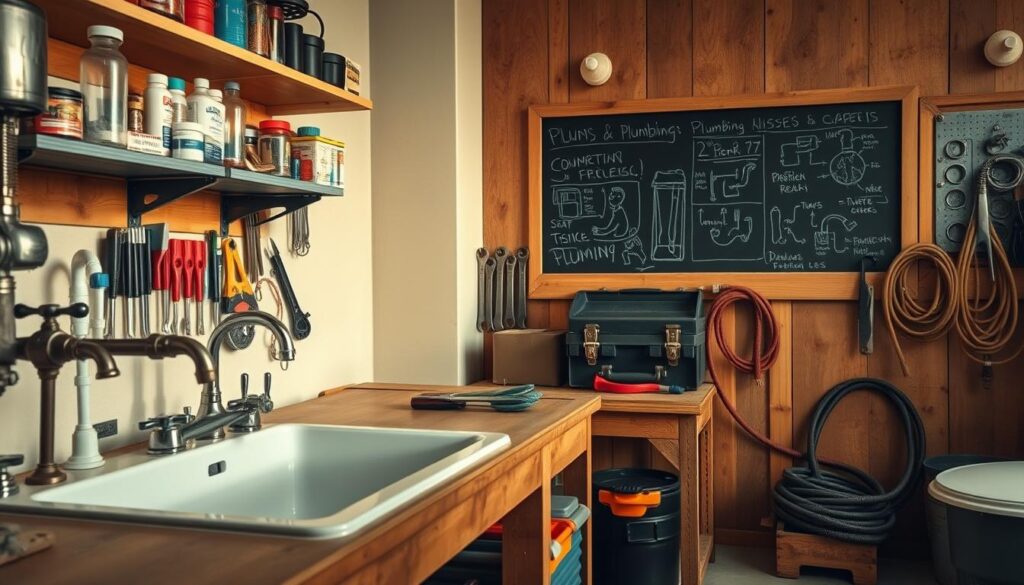
The answer to can handyman do plumbing depends on a few important things. Some plumbing jobs are perfect for a handyman. But, others need special knowledge and a license, which only plumbers have.
Knowing the difference between handyman and plumber services can save you money and prevent damage. It also keeps your plumbing system working well. This guide will help you understand how to handle plumbing repairs and installations.
Key Takeaways
- Handymen can handle basic plumbing tasks with proper skills
- Some plumbing work requires licensed professional intervention
- Always check local regulations before attempting plumbing repairs
- Cost and complexity determine whether to hire a handyman or plumber
- Safety should be your primary consideration in any plumbing project
Understanding the Scope of Handyman Plumbing Work
For homeowners, figuring out what a handyman can do with plumbing can be tricky. Not every plumbing job needs a full plumbing license. Many small fixes are within a handyman’s abilities.
Handymen are key in keeping up with home maintenance. Knowing what they can’t do helps you decide who to call for repairs.
Common Plumbing Tasks for Handymen
Handymen can handle many simple plumbing jobs:
- Fixing leaky faucets
- Replacing showerheads
- Unclogging drains
- Installing basic bathroom fixtures
- Repairing minor pipe connections
Legal Limitations and Regulations
Every state has rules about what handymen can do with plumbing. Some places don’t let handymen do big plumbing jobs that need special licenses.
Here are some things handymen usually can’t do:
- Major sewer line repairs
- Gas line installations
- Extensive pipe replacements
- Water heater complex installations
Insurance and Liability Considerations
It’s important to hire insured professionals. Good handymen have insurance to protect against damage during work. Always check their insurance before hiring.
Professional handymen know their limits and won’t try repairs they’re not trained for.
Can Handyman Do Plumbing: State Laws and Requirements
Understanding the laws for handyman plumbing work can be tricky. Each state has its own rules, so it’s important to know what’s needed in your area. This is true whether you’re hiring someone or trying to do the work yourself.
It’s key for both homeowners and professionals to grasp the legal side. States have different rules for what handymen can do. These rules affect what work can be done legally.
Licensed vs. Unlicensed Work
Knowing the difference between licensed and unlicensed work is important. Here are some points to consider:
- Licensed pros can handle more complex plumbing jobs
- Unlicensed handymen have limits on what they can do
- Some states need special certifications for certain plumbing jobs
Permit Requirements
Permits are needed in different places for different jobs. Your local government might require permits for:
- Swapping out water heaters
- Putting in new plumbing fixtures
- Changing existing plumbing systems
Professional Certification Standards
Certifications show a handyman’s skills. Recommended standards include:
- Trade school degrees
- State-approved apprenticeships
- Being part of professional groups
Always check a handyman’s credentials. This ensures they follow state rules and protects your property.
Simple Plumbing Tasks You Can Trust to a Handyman
A skilled handyman is a great ally for your home’s plumbing needs. Many people find that simple plumbing tasks don’t need a licensed plumber. This saves time and money on basic upkeep and fixes.
Your handyman can take care of many easy plumbing tasks to keep your home in good shape. These include:
- Fixing leaky faucets
- Replacing showerheads
- Unclogging bathroom and kitchen drains
- Installing new sink fixtures
- Replacing toilet components
These minor plumbing repairs need basic skills and simple tools. A professional handyman knows how to fix common plumbing problems. They do this without the need for big system changes.
Before you hire a handyman, make sure they have plumbing experience. Check their references and see if they’ve done similar jobs before. Even though these tasks seem simple, doing them right prevents water damage and ensures repairs last.
Choosing a handyman for regular plumbing upkeep helps protect your home. It also keeps repair costs down. But, always call a licensed pro for more complex plumbing issues.
When to Choose a Licensed Plumber Instead
Knowing the difference between a handyman and a plumber can save you money and prevent damage. Handymen can fix simple plumbing issues, but some jobs need a pro.
Not all plumbing problems are the same. Some need special skills that go beyond simple fixes. Knowing when to call a licensed plumber can keep your home safe and avoid bad plumbing work.
Complex Plumbing Scenarios
Some plumbing problems are very complex. They need a pro to figure out and fix. These include:
- Sewer line replacements
- Whole-house repipe projects
- Advanced drainage system modifications
- Water main connections
Emergency Situations
In plumbing emergencies, a licensed plumber is key. They can act fast and fix problems before they get worse.
| Emergency Scenario | Required Professional Action |
|---|---|
| Major pipe burst | Immediate system shutdown and repair |
| Sewage backup | Health hazard mitigation |
| Gas line leak | Immediate safety intervention |
Major Installation Projects
Big plumbing jobs need a pro. Licensed plumbers make sure everything is done right. They handle:
- Water heater replacements
- Bathroom or kitchen remodels
- New construction plumbing
- Commercial plumbing systems
Choosing a licensed plumber for big jobs is smart. It keeps your property safe and working well. Remember, trying to save money with unlicensed work can cost you more later.
Essential Tools and Skills for DIY Plumbing
Starting DIY plumbing projects needs more than just excitement. You’ll need the right tools and basic skills for safe and effective repairs. Knowing your limits is key to avoiding expensive errors.
Every DIY plumber should have a basic toolkit. This includes tools for minor repairs and upkeep.
- Adjustable wrench
- Plunger
- Pipe wrench
- Drain snake
- Teflon tape
- Hacksaw
- Plumber’s tape
Your skill set is as important as your tools. Learning key techniques lets you tackle small plumbing issues with confidence. Essential skills include:
- Locating and shutting off main water valves
- Identifying different pipe materials
- Understanding basic pipe fitting techniques
- Recognizing water pressure indicators
Pro tip: Always know your limits. Some repairs are best left to licensed professionals to avoid water damage or complex issues.
Before starting any DIY plumbing project, check your comfort and knowledge level. Watching tutorials and practicing on simple tasks can boost your confidence and skills over time.
Safety Considerations and Risk Assessment
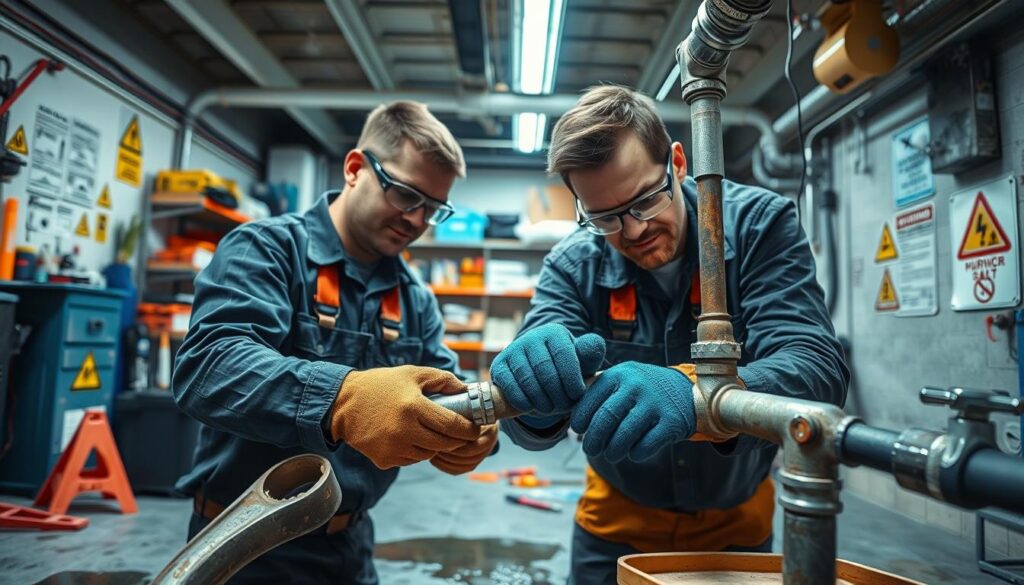
Thinking about whether a handyman can handle plumbing is key. Plumbing tasks are complex and can be dangerous without the right skills and prep.
Common Safety Hazards
Handyman plumbing limits are clear when looking at risks. You might face several dangers:
- Exposure to harmful chemicals in drain cleaners
- Risk of electrical shock near water sources
- Potential injuries from heavy lifting or awkward positions
- Slip and fall dangers in wet work areas
Preventive Measures
Keeping safe requires careful planning. Before trying any plumbing repair, follow these important safety steps:
- Wear protective gear like safety glasses and waterproof gloves
- Ensure proper electrical disconnection
- Use specialized tools designed for specific tasks
- Maintain a clean, organized workspace
Emergency Protocols
If DIY plumbing fails, knowing how to act fast can save a lot. Always have emergency contact info for professional plumbers on hand.
Your safety is more important than completing a repair quickly or cheaply.
Knowing what a handyman can and can’t do helps you decide when to DIY and when to call a pro.
Cost Comparison: Handyman vs. Licensed Plumber
Knowing the price differences between handymen and licensed plumbers is key to smart home upkeep. Handyman vs plumber services show big price and skill gaps.
Prices for licensed handyman plumbing work vary a lot based on the job’s complexity. Here’s a cost overview:
- Minor repairs: $50 – $150
- Medium complexity tasks: $150 – $300
- Complex plumbing projects: $300 – $750
Licensed plumbers usually cost more because of their special training and licenses. Handymen might be cheaper upfront, but plumbers offer full solutions to avoid costly repairs later.
| Service Type | Handyman Rate | Licensed Plumber Rate |
|---|---|---|
| Pipe Repair | $100 – $250 | $200 – $500 |
| Fixture Installation | $75 – $200 | $150 – $350 |
Choose based on your project’s needs. Simple jobs might fit a handyman, but complex plumbing needs a pro.
Warning Signs of Plumbing Issues Requiring Professional Help
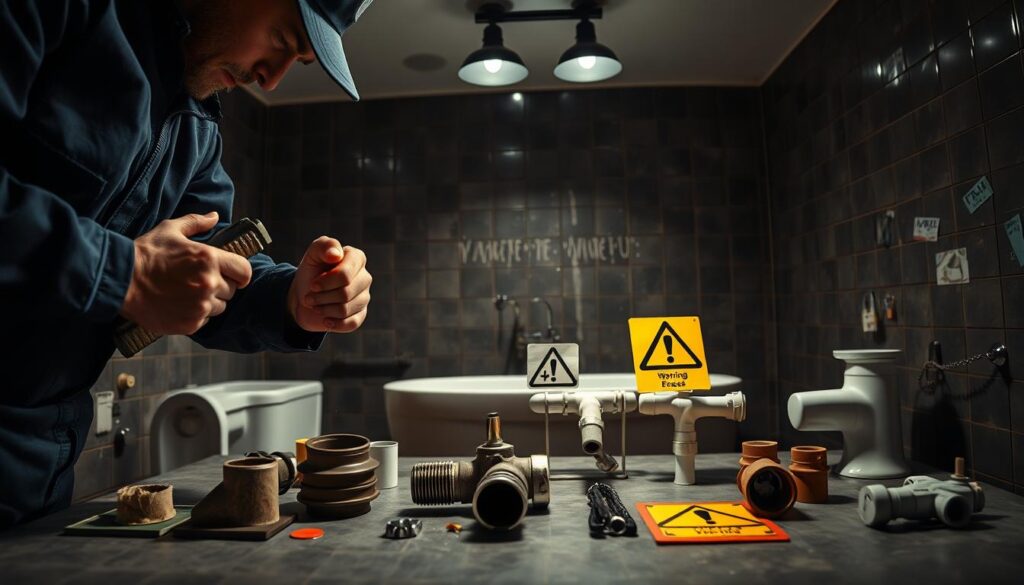
Spotting plumbing problems early can save you a lot of money and prevent damage to your home. Some plumbing issues might seem simple to fix, but certain signs mean you need a pro.
- Persistent low water pressure
- Frequent unexplained clogs
- Unusual noises from pipes
- Unexpected water bill increases
- Discolored or foul-smelling water
Work done by unlicensed plumbers can lead to bigger problems than they fix. Knowing when to call a professional plumber is key.
| Warning Sign | Potential Serious Issue |
|---|---|
| Persistent Dripping | Hidden Pipe Damage |
| Water Stains on Walls | Potential Structural Leak |
| Gurgling Sounds | Blocked Drainage System |
Your home’s plumbing needs expert care when warning signs show up. Ignoring these signs can cause big problems, like water damage and expensive fixes.
Professional intervention prevents minor issues from becoming major home disasters.
Always choose safety and quality by getting help from licensed plumbers for tough plumbing problems.
Conclusion
Knowing if a handyman can handle plumbing is key for homeowners looking to save money. DIY plumbing projects need you to check your skills, local laws, and the task’s complexity. Your home’s plumbing is a complex system that needs care and expertise.
When thinking about if a handyman can do plumbing, safety and following the law are top priorities. Some simple repairs are okay for handymen, but big jobs need a licensed plumber. Think about the job’s size, risks, and your skills before deciding.
It’s smart to look up local building codes and know what DIY plumbing can handle. Knowing when to get a licensed plumber is also important. The right choice keeps your home safe, avoids expensive fixes, and keeps your plumbing working well.
Choosing the right plumbing work, whether by a handyman or plumber, saves you money and avoids big problems. Being informed, careful, and making smart choices helps keep your plumbing system reliable.
FAQ
Can a handyman legally perform plumbing work?
Handymen can do simple plumbing jobs in many states. They can fix leaky faucets, replace showerheads, and clear drains. But, what they can do varies by state, so always check local laws.
What specific plumbing tasks can a handyman typically handle?
Handymen can handle basic plumbing tasks. This includes fixing leaky faucets, replacing showerheads, and unclogging drains. They can also replace toilet seats and fix minor pipe leaks. Plus, they can install basic fixtures.
When should I hire a licensed plumber instead of a handyman?
Hire a licensed plumber for big jobs. This includes complex pipe installations, sewer line repairs, and water heater replacements. They’re also needed for major remodels and code-compliant installations.
Are there legal risks associated with hiring an unlicensed handyman for plumbing?
Yes, hiring an unlicensed handyman can be risky. You might face liability for bad work, insurance denials, and property damage. There could also be code violation penalties and personal injury risks.
How can I verify a handyman’s qualifications for plumbing work?
To check a handyman’s qualifications, ask for proof of licensing. Check if they’re registered with the state and if they have insurance. Also, ask for references, look at certifications, and read online reviews.
What tools should a handyman have for basic plumbing repairs?
A good handyman should have the right tools. This includes adjustable wrenches, pipe wrenches, and plumber’s tape. They should also have plungers, drain snakes, and pipe cutters. Plus, they need hacksaws, screwdrivers, pliers, and measuring tapes.
How much do handymen typically charge for plumbing repairs?
Handyman rates for plumbing vary. They can cost between to 0 an hour. Prices depend on the job’s complexity, the handyman’s experience, and the materials needed.
What safety precautions should be taken during plumbing repairs?
Safety is key when fixing plumbing. Turn off the water supply and wear protective gear. Use the right tools and avoid electrical hazards. Make sure there’s good ventilation and have emergency numbers handy. Know basic first aid and when to call professionals.