
Affiliate Disclosure
Plumber Guide Guys is a participant in the Amazon Services LLC Associates Program, an affiliate advertising program designed to provide a means for sites to earn advertising fees by advertising and linking to Amazon.
Will PEX Plumbing Freeze? Ever wondered if your PEX pipes can handle winter’s cold? Many homeowners worry if their plumbing will make it through sub-zero temperatures. The good news is that PEX plumbing has special benefits in cold weather.
PEX pipes are popular for their flexibility and toughness. They can stretch a bit when it gets cold, lowering the chance of pipes bursting. Knowing the pex pipe freeze temperature is key to keeping your plumbing safe.
While no pipe is completely safe from freezing, PEX performs well in the cold. Homeowners can take steps to lower the risk of pipes freezing and getting damaged.
Key Takeaways
- PEX pipes are more freeze-resistant compared to traditional metal pipes
- Freezing can occur around 20 degrees Fahrenheit
- Proper insulation is critical for preventing pipe freeze
- PEX has unique expansion properties that help prevent bursting
- Strategic pipe placement can reduce freezing risks
Table of Contents
Understanding PEX Plumbing Systems and Freezing Risk
PEX plumbing has changed home water systems with its special material. It’s a great choice for those wondering if PEX is freeze resistant. PEX pipes perform well in tough weather conditions.
PEX stands out from other pipes in several ways. Its flexibility lets it expand and contract safely. This makes PEX perfect for places with big temperature changes.
What Sets PEX Apart from Traditional Pipes
- Exceptional flexibility under temperature stress
- Low thermal conductivity reducing freezing risks
- Fewer connection points compared to copper pipes
- Ability to withstand temperatures down to -40°C
Benefits of PEX in Cold Weather
PEX beats copper in freezing resistance. Its material expands without cracking, lowering damage risk in cold.
| Pipe Material | Freeze Resistance | Flexibility |
|---|---|---|
| Copper | Limited | Rigid |
| PEX | High | Excellent |
Temperature Thresholds for PEX
Knowing PEX’s temperature limits is key. PEX can handle temperatures as low as -40°F without damage. This makes PEX great for colder homes.
Will PEX Plumbing Freeze in Cold Weather?
It’s important for homeowners in cold areas to know if PEX plumbing will freeze. PEX pipes are more flexible than other materials but can freeze in very cold temperatures. They usually start to freeze when it gets to around 20 degrees Fahrenheit.
PEX pipes are a bit more resistant to freezing than metal pipes. When water in PEX pipes freezes, the material can expand a bit. This expansion helps prevent the pipes from cracking right away.
- PEX pipes can withstand temperatures as low as 20°F
- The material’s flexibility helps prevent immediate pipe rupture
- Freezing risk increases with prolonged exposure to cold temperatures
Several factors can affect if PEX plumbing will freeze:
| Factor | Impact on Freezing |
|---|---|
| Pipe Location | Exposed pipes are more vulnerable |
| Insulation | Proper insulation reduces freezing risk |
| Water Movement | Flowing water decreases freeze possibility |
Whether your PEX plumbing can handle cold weather depends on many things. While PEX does freeze under extreme conditions, its design offers more protection than traditional pipes. Homeowners should take steps to prevent freezing and water damage.
“Prevention is always better than repair when it comes to protecting your plumbing from freezing temperatures.” – Plumbing Expert
The Science Behind PEX Pipe Expansion During Freezing
Learning how PEX pipes act in cold weather can help keep your plumbing safe. Water’s special traits make pipes a challenge, but PEX stands out. It’s more durable than other materials.
Water changes shape when it freezes inside pipes. This change is key to whether your pipes will make it through winter. PEX pipes are special because they can adjust to this change.
How Water Freezing Affects PEX Material
Water grows about 9% when it turns from liquid to solid. This growth puts a lot of pressure on pipes. PEX can stretch and handle this increase, reducing the chance of pipes bursting.
- Stretch and accommodate water’s volume increase
- Reduce the risk of can pex pipes burst when frozen
- Maintain structural integrity during temperature fluctuations
Expansion and Contraction Properties
PEX pipes show remarkable flexibility in cold weather. Their special make-up lets them:
- Expand without permanent damage
- Go back to their normal shape after warming up
- Stay strong against high pressure
Pressure Resistance in Freezing Conditions
Even with its great performance, PEX is not completely safe from freezing. Very cold temperatures and long exposure can weaken pipes. It’s important to keep pipes well-insulated and in the right place to avoid damage.
Signs of Frozen PEX Pipes
Finding out if your PEX pipes are frozen early can prevent water damage and expensive fixes. Knowing the signs helps you act fast when your pipes might freeze.
Wondering if your PEX plumbing will freeze? Look out for these key signs:
- No water flow or significantly reduced water pressure from faucets
- Visible frost or condensation on exposed pipe sections
- Unusual gurgling or bubbling sounds when water runs
- Pipes feel unusually cold to the touch
Will PEX plumbing freeze? It depends on several factors. But these signs mean your pipes might be freezing. PEX tubing acts differently in extreme cold compared to metal pipes.
| Warning Sign | Potential Freeze Indication |
|---|---|
| No Water Flow | High Risk of Complete Pipe Freeze |
| Visible Frost | Immediate Freezing Concern |
| Bubbling Sounds | Partial Pipe Blockage |
If you see these symptoms, don’t worry. Does PEX tubing freeze differently than traditional pipes? Yes, PEX can expand a bit without immediate damage. This gives you more time to fix the issue.
Acting quickly is key. Inspect your pipes well. If you think they’re freezing, call a pro plumber who knows PEX systems.
Preventing PEX Pipes from Freezing
Keeping your PEX plumbing safe from freezing is key in winter. Knowing how to stop pex pipes from freezing can save you money and prevent water damage. Cold weather can harm your plumbing, so it’s important to act early.
Effective Insulation Strategies
Insulating your pex pipes is the best way to fight off freezing. Here are some effective methods:
- Use foam pipe insulation sleeves for exposed pipes
- Apply heat tape to vulnerable pipe sections
- Seal any air leaks near pipe locations
- Maintain consistent indoor temperatures
Strategic Pipe Placement
The spot where you place your PEX pipes matters a lot. Try to route them through heated areas inside your home. Don’t put pipes in unheated spots like attics or crawl spaces without insulation.
Winter Maintenance Tips
Here are some easy ways to keep your plumbing safe in winter:
- Keep garage doors closed to protect interior pipes
- Open cabinet doors to allow warm air circulation
- Let faucets drip during extreme cold spells
- Disconnect and drain outdoor hoses
By following these tips, you can lower the chance of your PEX pipes freezing. This will help keep your plumbing system safe all winter.
How to Safely Thaw Frozen PEX Pipes
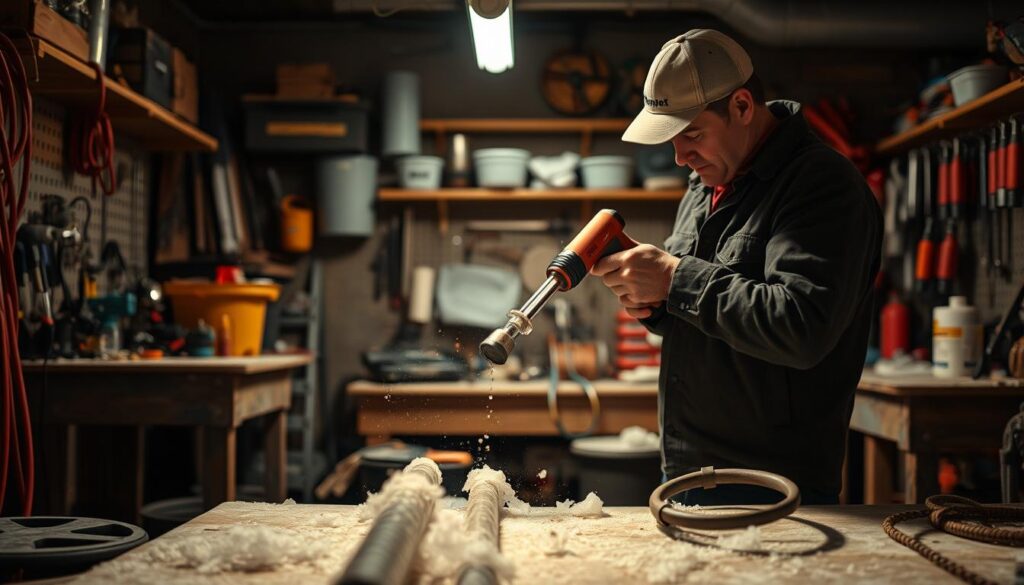
Dealing with frozen PEX pipes needs careful steps to avoid damage. Your goal is to get water flowing again without harming the pipes. The right methods can prevent PEX pipes from bursting when they freeze.
First, find where your PEX pipes are frozen. These spots are often near outside walls, in cold areas, or where cold air moves. Look for signs like less water flow or no water from faucets.
- Raise the ambient temperature in the affected area
- Use gentle heating methods
- Apply heat evenly across the pipe
- Avoid direct flame or extreme heat sources
Here are safe ways to thaw frozen PEX pipes:
- Space Heaters: Place a space heater near the frozen pipe, but keep a safe distance
- Heating Tape: Wrap electrical heating tape around the pipe for controlled warming
- Hairdryer: Use a hairdryer on low heat, moving it to spread warmth evenly
Remember these safety tips for thawing frozen PEX pipes:
- Never use open flames or high-intensity heat sources
- Work slowly and patiently
- Check for leaks after thawing
- Contact a professional plumber if unsure
If you can’t find the frozen spot or if many pipes are frozen, get help from a pro. Plumbers have tools to thaw pipes safely without damaging your plumbing.
Common Areas Where PEX Pipes Are Most Vulnerable
To keep PEX plumbing from freezing, it’s key to know where your home is most at risk. Not every spot is equally likely to freeze, and some need more care to keep your pipes safe.
Some parts of your home are more prone to frozen pipes. Knowing these areas helps you act early to avoid damage when it gets cold.
Exterior Wall Challenges
Pipes in exterior walls face a high risk of freezing. These areas get little insulation and are hit straight with cold air. It’s often in these spots that temperature swings are biggest.
- Minimal wall insulation increases freezing risk
- Cold air penetration creates temperature instability
- Wind chill can accelerate heat loss
Unheated Spaces
Spaces like attics, garages, and crawl spaces are big risks for frozen PEX pipes. They don’t stay warm and can quickly get too cold.
“Prevention is always better than repair when it comes to frozen pipes.” – Plumbing Safety Expert
Basement and Crawl Space Considerations
Basements are usually warmer, but crawl spaces can get very cold. It’s vital to insulate well and route pipes smartly to avoid freezing.
- Install additional insulation around pipes
- Use heat tape in vulnerable spots
- Seal any external air leaks
By pinpointing and fixing these high-risk areas, you can lower the chance of PEX pipe freezing. This helps protect your home’s plumbing.
PEX vs Traditional Pipes in Freezing Conditions
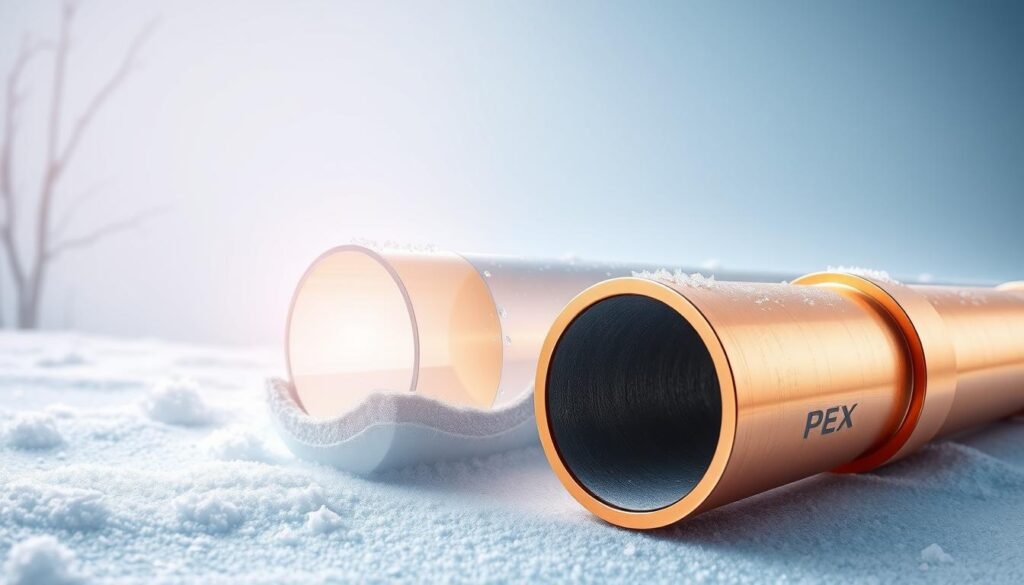
In cold climates, knowing how different pipes handle freezing is key. PEX piping stands out against copper and metal pipes in freezing weather.
PEX vs copper shows PEX is better for cold homes. PEX is very flexible. It can stretch and shrink without breaking, which is vital in cold.
| Pipe Material | Freeze Resistance | Flexibility |
|---|---|---|
| Copper | Low | Rigid |
| PEX | High | Extremely Flexible |
Is PEX freeze resistant? Absolutely. PEX doesn’t crack like rigid materials do in the cold. It can grow up to three times its size without breaking.
- PEX needs fewer connections, which means fewer places to break
- It keeps temperature changes slow, which helps prevent damage
- Its flexibility lets it handle water expansion in the cold
Choosing PEX means picking a material made for the cold. It’s a top pick for areas with tough winters.
Emergency Response for Frozen PEX Plumbing
Discovering frozen PEX pipes requires quick action to avoid damage. Knowing how to act in a freezing emergency can save you from expensive repairs and water damage.
The first step is to shut off the main water supply right away. This stops more water pressure from building up. It helps prevent pipes from bursting when thawing.
- Locate your home’s main water shutoff valve
- Turn the valve clockwise to completely stop water flow
- Open faucets to release any remaining water pressure
Can PEX pipes burst when frozen? Yes, they can. Prolonged freezing can cause significant damage. Start with gentle thawing to avoid ruptures.
Recommended thawing methods include:
- Use a hairdryer on low heat setting
- Apply warm towels around the frozen section
- Use electric heating tape designed for pipes
Warning: Never use open flames or high-heat sources like blowtorches, which can damage PEX pipes permanently.
If you’re unsure about thawing or see a lot of ice, call a professional plumber right away. They can prevent major water damage and keep your plumbing system working.
Conclusion
Homeowners can feel secure knowing PEX plumbing is more flexible than traditional pipes. This knowledge helps reduce the risk of winter damage. Understanding PEX’s unique properties is key.
Is PEX freeze resistant? While no plumbing is completely safe from freezing, PEX stands out in cold weather. The right installation, insulation, and maintenance are vital to protect your home’s water system.
To avoid frozen pipes, take a multi-step approach. Choose the right pipe locations and use strong insulation. Also, keep an eye on areas that might be at risk. Plumbers suggest regular checks and preventive steps to avoid problems.
Learning about your PEX plumbing system can save you money and prevent water damage. It’s wise to seek professional advice and stay informed about your plumbing needs. This ensures your system works well for years to come.