
Affiliate Disclosure
Plumber Guide Guys is a participant in the Amazon Services LLC Associates Program, an affiliate advertising program designed to provide a means for sites to earn advertising fees by advertising and linking to Amazon.
Who Invented the Plumbing and Sewage System? Imagine standing beside an ancient stone channel, watching water flow smoothly through pipes. The story of plumbing and sewage systems is not about one person. It’s a journey of human innovation that spans thousands of years.
Ancient plumbing history shows that managing water was key for survival. From the first settlements to big cities, people found clever ways to handle water and waste. They created sustainable living spaces.
Understanding modern sanitation starts with seeing how advanced ancient societies were. They worked hard to make reliable water systems. Their goal was clean drinking water, effective waste removal, and staying healthy.
Key Takeaways
- Plumbing was not invented by a single person
- Water management systems evolved over thousands of years
- Ancient civilizations made critical contributions to sanitation
- Clean water and waste removal were essential for human survival
- Technological innovations in plumbing reflect human ingenuity
Table of Contents
Ancient Origins of Water Management Systems
Human survival has always been linked to managing water. The roots of sewer systems go back to the first human settlements. There, people found ways to manage water for survival and growth.
Early humans knew how vital water was. The Neolithic period was a big step forward in water management. Archaeologists have found evidence of advanced water collection and storage methods.
Early Water Wells and Collection Methods
Long before modern tech, ancient communities had clever ways to get water. Some of their key achievements were:
- Digging hand-carved wells in strategic locations
- Creating underground water collection chambers
- Developing primitive filtration techniques
“Water is the driving force of all nature” – Leonardo da Vinci
First Permanent Settlement Drainage Systems
As people settled in one place, their water management got more complex. Early drainage systems kept flooding at bay and handled waste. These systems showed impressive engineering for their time.
Evolution of Water Storage Solutions
Prehistoric societies came up with smart ways to store and keep water. Their early water management included:
- Underground cisterns
- Clay water storage containers
- Elevated water collection platforms
These early solutions set the stage for sewer systems. They show that humans have always been driven by the need for clean, accessible water.
The Indus Valley Civilization’s Revolutionary Sanitation
The Indus Valley Civilization is a shining example of ancient urban engineering. Around 2600 BCE, they built some of the world’s first sewage systems. These systems amazed even today’s engineers.
Their cities, like Mohenjo-daro, had advanced drainage networks. These networks managed water and waste very well. Their sewage systems were way ahead of their time, showing great architectural skills.
- Private homes included dedicated bathroom areas
- Ceramic pipes transported water and waste
- Underground brick-lined drainage channels
- Sophisticated water management infrastructure
Their focus on public health was clear in their design. Ceramic pipes linked homes to big drainage systems. Their engineering skills made cities clean for thousands of years.
| City | Sanitation Feature | Technological Innovation |
|---|---|---|
| Mohenjo-daro | Complex Drainage Network | Brick-lined Underground Channels |
| Harappa | Public Wells | Standardized Water Distribution |
| Dholavira | Water Storage Systems | Advanced Rainwater Harvesting |
The Indus Valley Civilization made cities that were models for sanitation and engineering. They used advanced drainage and put community health first.
Mesopotamian Innovations in Plumbing
The ancient Mesopotamians were true pioneers in ancient plumbing history. They changed urban living with their groundbreaking techniques. These changes were huge in how civilizations handled water and waste.
Early Mesopotamian engineers created advanced water management systems. These systems were way ahead of their time. Their work set new standards for ancient cities.
Clay Pipe Development and Implementation
Around 4000 BCE, Mesopotamians introduced clay sewer pipe technologies. These systems were amazing. They had:
- Easily detachable pipe segments
- Replaceable components for maintenance
- Complex underground drainage networks
Urban Water Distribution Networks
Cities like Uruk had complex water distribution systems. These systems supported growing cities. Their engineering skills allowed them to create:
- Centralized water collection points
- Brick-constructed latrines
- Advanced waste management infrastructure
Waste Management Solutions
Archaeological evidence shows advanced waste management strategies. Cities like Nippur and Eshnunna had amazing mesopotamian sanitation techniques. They used advanced clay pipe systems.
| City | Plumbing Innovation | Year (BCE) |
|---|---|---|
| Nippur | Clay Sewer Pipes | 4000 |
| Uruk | Brick Latrines | 3200 |
| Eshnunna | Underground Drainage | 3800 |
These ancient plumbing innovations show the amazing engineering of Mesopotamian civilizations. They laid the groundwork for future urban infrastructure.
Who Invented Plumbing and Sewage System?
Exploring the history of plumbing and sewage systems is a journey of human creativity. It’s not about one person or group. Instead, it’s about how different cultures and times have improved technology together.
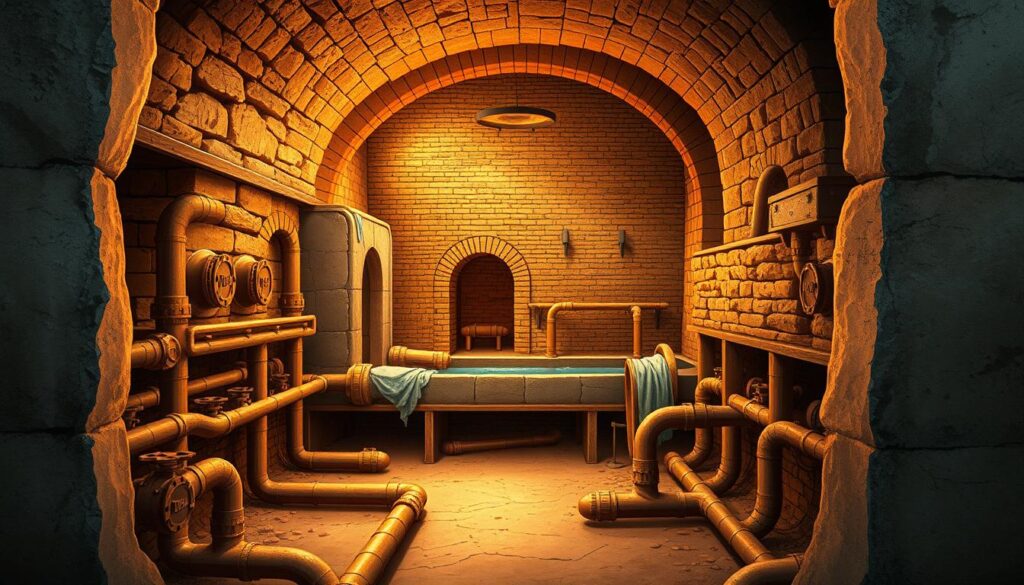
Looking into who invented plumbing and sewage systems, we find a rich history. Ancient societies found their own ways to handle water and waste. Each one added something new and important:
- Indus Valley Civilization created sophisticated drainage systems
- Mesopotamians developed early clay pipe networks
- Romans engineered advanced aqueducts and sewage management
The making of plumbing was a worldwide effort. Places around the globe tackled water problems on their own. Over time, they built more complex systems.
| Civilization | Key Plumbing Innovation | Approximate Time Period |
|---|---|---|
| Indus Valley | Underground Drainage Systems | 3300-1300 BCE |
| Mesopotamia | Clay Pipe Water Transport | 4000-3000 BCE |
| Ancient Greece | Ceramic Water Pipes | 800-146 BCE |
| Roman Empire | Comprehensive Urban Sewage Networks | 753 BCE-476 CE |
Learning about the beginnings of sewer systems shows our creativity. Each society added to the knowledge, making water management better over time. Today, we have the advanced plumbing systems we use.
Ancient Roman Engineering Marvels
The ancient Romans changed how we manage water and keep cities clean. Their work on roman aqueducts and plumbing is a big inspiration for today’s engineers and city planners.
Roman engineers came up with new ways to make cities better. They didn’t just focus on water; they combined tech and social planning in a big way.
The Cloaca Maxima System
The Cloaca Maxima was a key part of Roman sanitation. It was an underground sewer system that did a lot:
- Kept cities from flooding
- Got rid of street waste
- Kept people healthy
- Showed off their engineering skills
Aqueduct Networks and Distribution
Roman aqueducts were engineering wonders. They carried water for miles, using gravity and careful planning to reach cities.
- Used strong stone and concrete
- Had advanced water filters
- Had complex networks for water
Public Bath Engineering
Public baths showed the Romans’ skill in water management. These places needed smart plumbing, including heated water and systems for moving water. This was way ahead of its time.
Roman engineering changed how we think about water systems. It set standards that lasted for centuries.
Greek and Minoan Plumbing Achievements
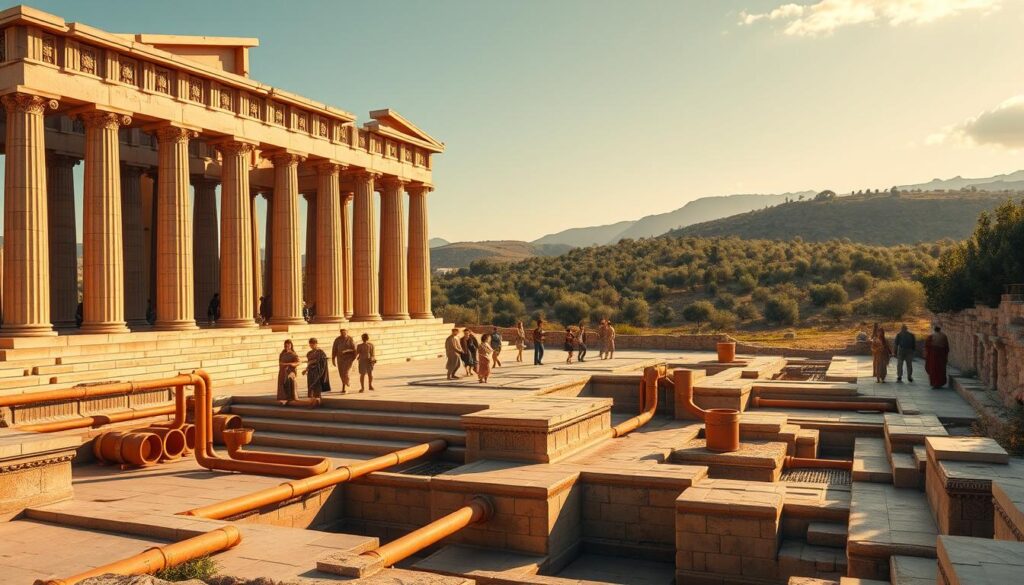
The ancient Greeks, led by the Minoans of Crete, changed the game in plumbing. They brought new ideas to water management. Their work made cities better by creating underground systems for water and waste.
The Minoans were way ahead with their water tech. They built complex clay pipe systems. These showed off their amazing engineering skills.
- Underground drainage systems in palace complexes
- Sophisticated water supply mechanisms
- Potential prototype of the world’s earliest flush toilet
At the Palace of Knossos, they found a detailed water network. It showed how smart the Minoans were with water. They used ceramic pipes, new ways to get rid of waste, and systems to catch rainwater.
“The Minoan civilization’s plumbing achievements were revolutionary for their time, demonstrating unprecedented technological sophistication.” – Archaeological Research Journal
Their work changed cities for the better. They made sure people had clean water and good sanitation. The Minoans’ skills helped start new ideas in water management.
Medieval Plumbing Developments
In the medieval times, new ways to manage water changed city life. Sewer systems got more advanced as people found better ways to handle water and waste.
The medieval era saw big steps forward in water systems. These steps helped lay the foundation for today’s sanitation. Each region found its own solutions to water problems.
European Sewage Solutions
Medieval European cities had big sanitation issues. They started using covered sewers to solve waste problems. Some key improvements were:
- Underground drainage channels
- Rudimentary waste collection systems
- Stone-lined water conduits
Islamic World’s Contributions
Islamic scholars and engineers made huge leaps in water management. Their systems were very advanced, including:
- Advanced hydraulic engineering
- Sophisticated irrigation techniques
- Complex water distribution networks
Asian Water Management Systems
Asian cultures developed complex water management plans. Innovative water collection and distribution methods showed their engineering skills.
These medieval steps in sewer systems were key for today’s cities. They show how people solved big environmental problems.
The Industrial Revolution’s Impact on Modern Plumbing
The Industrial Revolution changed indoor plumbing in big ways. It helped cities grow fast in the 19th century. Engineers and inventors came up with new sanitation technology that improved public health and infrastructure.
During this time, many important technologies were developed:
- Cast iron pipe manufacturing improved water distribution systems
- Standardized plumbing design allowed for more efficient urban infrastructure
- Mechanical pumping technologies expanded water access
- Advanced waste management techniques reduced disease transmission
People like Thomas Crapper and George Jennings were key in making modern toilets. Their work made plumbing better and cleaner. This changed how we use water at home and in public places.
The sanitation technology from the Industrial Revolution did more than just make life easier. It cut down on waterborne diseases, boosted public health, and laid the groundwork for today’s urban infrastructure.
“The greatest medical achievement of the 19th century was not a drug or surgical technique, but improved sanitation” – Medical Historian
Engineers of that era created a model for modern cities. They made water systems and waste management solutions that we use today. Their work has shaped urban development around the world.
Modern Sanitation Technology Evolution
Sanitation technology has changed a lot in recent years. Your water systems are now smarter, more efficient, and better for the environment. Indoor plumbing has become very advanced, tackling big issues like water scarcity and sustainability.
Today’s water management systems use new technologies. These changes are making a big difference in how we handle sanitation. Some key innovations include:
- Smart water monitoring sensors
- AI-powered leak detection systems
- Sustainable water recycling technologies
- IoT-enabled water quality tracking
There’s a growing focus on eco-friendly plumbing. Water treatment plants use advanced filters to reduce harm to the environment. Nanotechnology helps make purification methods more efficient. This lets communities turn wastewater into usable water.
Cities are starting to use advanced sanitation systems. These systems collect data in real-time and predict maintenance needs. They help cities manage water better, find problems early, and cut down on waste.
“The future of sanitation is not just about moving water, but intelligently managing our most precious resource.” – Water Innovation Expert
Your water systems are getting better to face today’s challenges. They’re working to provide cleaner, safer, and more sustainable water for future generations.
Conclusion
The search to find out who invented plumbing and sewage systems is fascinating. It shows how humans have always been clever. From ancient times to today, managing water has helped us grow.
Water management has been key to human progress. It shows how societies have kept getting better at handling water and waste. This is thanks to their hard work and new ideas.
Plumbing has always been changing. Each group of people added to what was known before. This led to better ways to move water and handle waste.
The ancient use of clay pipes, the Romans’ advanced aqueducts, and today’s smart water systems are all important. They show how we’ve worked to make cities healthier and better places to live.
Today, we face big challenges like water shortages and keeping our planet clean. We need new ideas to solve these problems. Plumbing is not just about pipes and systems. It shows our creativity and our desire for a better life.
Understanding plumbing connects us to thousands of years of solving problems. The story of plumbing is ongoing. Scientists and engineers are always finding new ways to manage water better for the future.