

Affiliate Disclosure
Plumber Guide Guys is a participant in the Amazon Services LLC Associates Program, an affiliate advertising program designed to provide a means for sites to earn advertising fees by advertising and linking to Amazon.
When Was Indoor Plumbing Invented? Did you know that nearly 4.5 billion people worldwide lacked safely managed sanitation services in 2017? The history of indoor plumbing is long and interesting. It shows how humans have always tried to improve their living conditions.
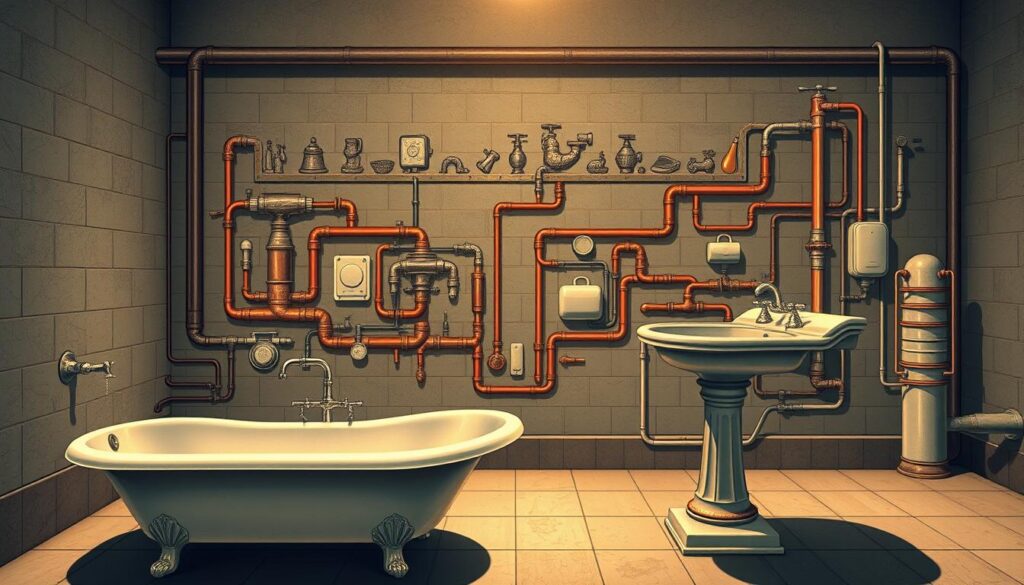
The history of indoor plumbing started in ancient times. Back then, people built amazing systems to manage water. These early systems were the start of what we know as plumbing today.
Indoor plumbing is more than just a tool. It shows how clever humans have been in solving big problems. Knowing when indoor plumbing was invented helps us see how it has changed our lives for the better.
Key Takeaways
- Indoor plumbing has roots dating back to the Bronze Age
- Ancient civilizations developed sophisticated water management systems
- Plumbing technology evolved through continuous human innovation
- Water infrastructure significantly impacts public health
- Understanding plumbing history helps appreciate modern conveniences
Table of Contents
The Birth of Indoor Plumbing in Ancient Civilizations
Ancient civilizations were very innovative with water management and sanitation. They created systems that would become the basis of today’s indoor plumbing.
Managing water was a big challenge for early societies. They knew clean water and waste removal were key. This led to amazing engineering solutions that amaze us today.
Early Egyptian Water Systems
Ancient Egyptians were leaders in water technology. They built complex irrigation and drainage systems. Their work included:
- Copper pipes for water transport
- Advanced drainage channels
- Bathrooms in wealthy homes
Indus Valley’s Revolutionary Sanitation
The Indus Valley civilization was known for its urban planning. In cities like Lothal, they built advanced water and sanitation systems. Their achievements were:
- Underground drainage systems
- Standardized brick sewers
- Public and private wells
Minoan Plumbing Achievements
The Minoans of Crete developed incredible plumbing technologies. Their palace at Knossos had complex water systems, including:
- Ceramic pipes for water distribution
- Flush toilets with advanced drainage
- Rainwater collection systems
These ancient civilizations set the stage for the advanced plumbing of the ancient Romans. Their work would spread across their vast empire.
Ancient Roman Plumbing Engineering
The Roman Empire marked a significant milestone in indoor plumbing history. Their plumbing was a technological marvel that changed how people lived and managed water. Roman engineers created water systems that laid the groundwork for today’s plumbing.
The Romans built an extensive network of aqueducts. These structures used gravity to carry water from mountains to cities. This provided clean water for drinking, bathing, and public use.
- Aqueducts stretched hundreds of miles
- Water flowed through lead pipes
- Public bathhouses became social centers
- Sophisticated drainage systems prevented flooding
Roman plumbing was more than just moving water. They built complex sewage systems like the Cloaca Maxima. These systems managed waste in crowded cities. Their pipes were designed for smooth water flow.
| Roman Plumbing Feature | Technological Significance |
|---|---|
| Aqueducts | Long-distance water transportation |
| Lead Pipes | Durable water distribution system |
| Public Bathhouses | Advanced sanitation infrastructure |
| Drainage Systems | Urban waste management |
Many think Roman lead pipes poisoned people, but that’s not true. Mineral deposits inside the pipes created a protective layer. This showed the Romans’ deep understanding of materials and engineering.
When Was Indoor Plumbing Invented: A Historical Timeline
The story of indoor plumbing is a thrilling tale of human creativity. To understand when indoor plumbing was invented, we must look at a long history of progress.
Indoor plumbing didn’t come out of nowhere. It grew slowly with big steps in technology. The start of indoor water systems goes back to ancient times. But the modern idea really came together in certain periods.
First Indoor Plumbing Systems
Early indoor plumbing was quite advanced for its time. Archaeologists have found some interesting things:
- Copper water pipes discovered in archaeological sites
- Initial gravity-based water distribution methods
- Rudimentary drainage infrastructure in select urban centers
Evolution Through Medieval Times
In medieval times, people started using better ways to manage water. Castles and monasteries often had advanced water systems. These were big steps for their time.
- Stone-carved water channels
- Primitive indoor water collection methods
- Innovative waste management techniques
Renaissance Period Developments
The Renaissance was a key time for plumbing. Architects and engineers began designing more complex water systems. This set the stage for even more progress.
Important changes during this time included better pipes, understanding water pressure, and smarter city planning. These helped water systems become more integrated into cities.
The journey of indoor plumbing shows how humans can tackle big environmental problems with smart technology.
The Mayan’s Advanced Water Systems
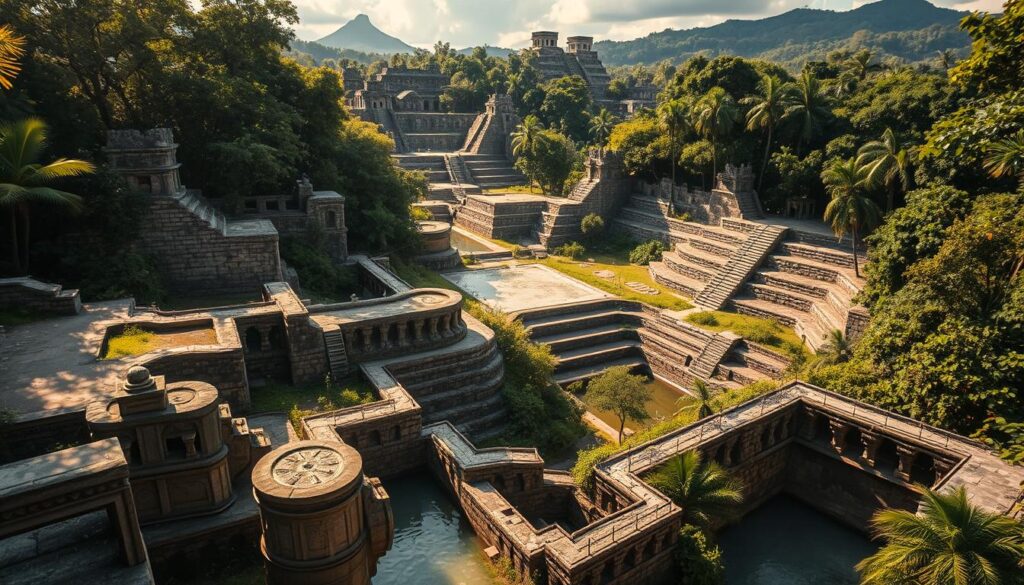
The ancient Mayans changed the game with their water management. Their indoor water systems were way ahead of their time. They showed engineering skills that many today can’t match.
Archaeologists have found that the Mayans had amazing water systems. Their cities had complex systems for water collection, distribution, and drainage. These systems worked with great precision.
- Developed sophisticated water filtration techniques
- Constructed advanced underground water channels
- Engineered pressurized water transportation systems
- Created multilevel water storage reservoirs
Chichen Itza shows off the Mayans’ tech skills. It has water management structures that show their hydraulic engineering knowledge.
| Mayan Water System Feature | Technological Significance |
|---|---|
| Underground Cisterns | Innovative water storage solutions |
| Pressurized Drainage Systems | Advanced waste management techniques |
| Rainwater Collection Networks | Sustainable water resource management |
The Mayans really got water systems. They understood gravity, hydraulic pressure, and managing water resources. Their work is inspiring for today’s plumbing.
The Mayans transformed water management from a basic necessity to an art of engineering sophistication.
Victorian Era Plumbing Revolution
The Victorian era was a time of big changes in plumbing and indoor toilets. Cities got much cleaner, improving health and daily life.
In the late 19th century, bathroom tech made huge leaps. Cities were expanding fast, needing better ways to handle waste and keep people clean.
Thomas Crapper’s Innovative Contributions
Thomas Crapper didn’t invent the flush toilet, but he made it better. He improved its design and marketing. His efforts made modern toilets popular in England and worldwide.
- Developed improved flush mechanism designs
- Created more efficient drainage systems
- Promoted indoor plumbing through innovative marketing
Emergence of Modern Toilets
Victorian engineers changed bathroom tech for the better. They brought in key innovations that changed our views on cleanliness and health.
Public Sanitation Improvements
Urban areas saw big health gains with new plumbing. Better sewage systems cut down on diseases, making communities healthier.
The bathroom was no longer just a functional space but a symbol of societal progress.
These major steps set the stage for today’s plumbing standards.
Early American Indoor Plumbing
The history of plumbing in the United States is quite interesting. It shows how Americans’ lives changed with water systems. In the early 19th century, indoor plumbing started to change city life. It brought new convenience to homes and public areas.
The Tremont Hotel in Boston was a big step in 1829. It was the first hotel with indoor plumbing. This innovation raised the bar for comfort and cleanliness in public places. Soon after, the White House got running water on its main floor in 1833. This showed how important modern water systems were becoming.
- 1829: First hotel with indoor plumbing (Tremont Hotel, Boston)
- 1833: White House receives main floor running water
- Mid-19th century: Rapid expansion of urban water systems
As cities grew, the need for good water systems grew too. Rich families were the first to get indoor plumbing. But, as technology improved, it became more available to middle-class families. Technological advances and changing social norms were key in changing water systems at home.
“The introduction of indoor plumbing was more than a convenience—it was a revolution in public health and daily living.” – Water Infrastructure Historian
By the late 19th century, big American cities had set up full water and sewage systems. This greatly improved sanitation and life quality for people everywhere.
Development of Modern Sewage Systems
The evolution of modern plumbing changed urban living. It made cities better at managing waste and water. As cities grew, they needed better indoor water systems for health and cleanliness.
In the 19th century, cities faced big challenges with waste. Overcrowded cities had poor sanitation, posing health risks to people.
Chicago’s Pioneering Sewer Network
Chicago was a leader in urban planning, creating a groundbreaking sewer system. This system became a model for other cities. It tackled several major issues:
- Addressing chronic flooding
- Improving public health conditions
- Creating sustainable urban infrastructure
Urban Sanitation Evolution
The creation of sewage systems was a big step in urban planning. Cities started to manage waste and water better.
| Year | Urban Sanitation Milestone | Impact |
|---|---|---|
| 1855 | Chicago Sewer System Initiation | Reduced disease transmission |
| 1860-1890 | Widespread Sewer Network Expansion | Improved urban living conditions |
| 1900 | Advanced Waste Treatment Technologies | Enhanced public health standards |
The roots of modern plumbing go back to these early efforts. These changes were key to making cities healthier and more livable.
The Rise of Residential Plumbing
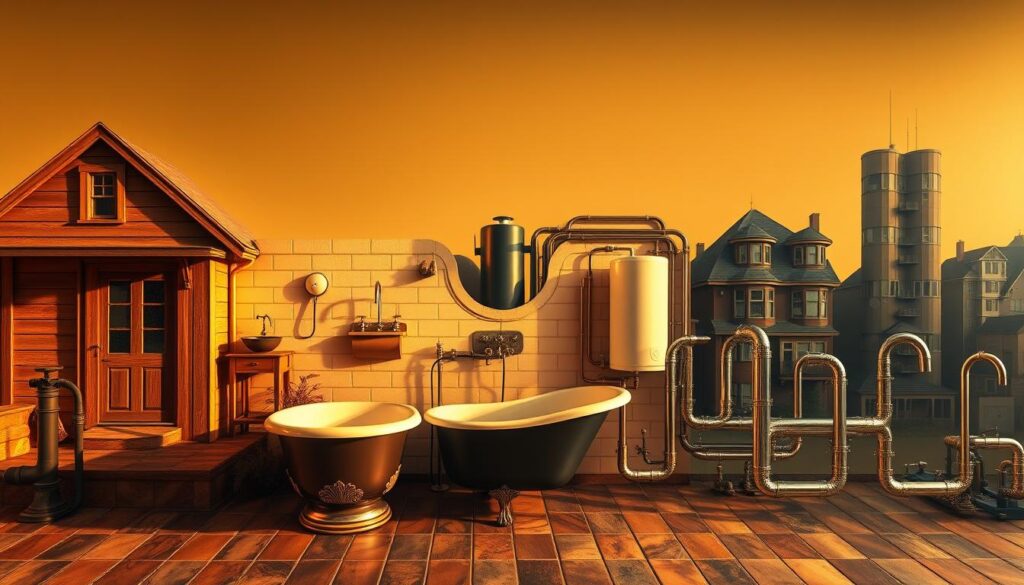
The change in residential plumbing history is a key moment in American home design. In the 1840s, indoor water systems started to become more common. They moved from being a luxury for the rich to something middle-class families could have.
Technology was key in making plumbing better in homes. Homeowners faced big challenges during this time. These included:
- High installation costs
- Limited municipal infrastructure
- Rudimentary pipe and drainage technologies
As society changed, so did plumbing. Economic growth and better manufacturing made water systems cheaper and more reliable.
| Decade | Residential Plumbing Milestone |
|---|---|
| 1840s | First widespread indoor water systems in wealthy homes |
| 1870s | Emerging middle-class plumbing installations |
| 1900s | Standardized residential plumbing infrastructure |
Learning about the growth of residential plumbing helps us see how it changed life and health in America.
Modern Plumbing Materials and Technology
The way we manage water systems in homes has changed a lot. New technology has made indoor water systems safer and more efficient.
In the mid-20th century, big changes happened in plumbing materials. Wartime metal shortages led to finding new materials. This led to a big change in plumbing.
From Lead to PVC Innovation
Old lead pipes were harmful to health. Moving to safer materials was a big step forward. Polyvinyl chloride (PVC) became a key material because of its benefits:
- Corrosion resistance
- Lightweight design
- Cost-effective production
- Longer durability
Smart Plumbing Solutions
Today, we have smart water management systems. These systems change how we use our plumbing. They offer:
- Real-time water consumption tracking
- Leak detection capabilities
- Remote monitoring through smartphone apps
- Water conservation features
Your plumbing system is now a network of smart technology. It’s designed to make your home more efficient and sustainable.
Indoor Plumbing’s Impact on Public Health
Indoor plumbing is a major step forward in public health. Before it, waterborne diseases were a huge problem. These diseases killed many people. Modern plumbing has greatly reduced these risks and made life cleaner.
By the mid-1930s, doctors and lawmakers knew how important good plumbing was. They made rules that changed health standards in cities and towns. These rules covered:
- Water quality control
- Waste management systems
- Sewage treatment protocols
- Hygienic installation standards
Thanks to better plumbing, diseases like:
- Cholera
- Typhoid
- Dysentery
- Hepatitis
became less common. Plumbing became key to keeping people healthy. It brought clean water and took away waste, making communities healthier.
Knowing how plumbing helps health shows us the power of investing in our infrastructure. It’s not just about pipes and fixtures. It’s about keeping people safe and healthy.
Clean water is not just a convenience—it’s a fundamental human right that protects entire populations from preventable diseases.
Conclusion
The history of indoor plumbing is a key part of human progress. It started with ancient civilizations like Egypt and Rome. Now, we have smart water systems.
This journey shows our ability to solve big problems. It’s not just about technology. It’s about how we’ve changed our lives, health, and cities.
Every step forward, from clay pipes to PVC, shows our dedication to better living. We keep working to make our homes safer and more efficient.
Looking back, we see that plumbing is always evolving. We face new challenges like saving water and using technology wisely. The story of indoor plumbing is ongoing, full of human creativity and progress.
Today’s plumbing systems are a result of our hard work and smart ideas. What started as simple channels has grown into a complex network. It supports our health, comfort, and quality of life worldwide.