
Affiliate Disclosure
Plumber Guide Guys is a participant in the Amazon Services LLC Associates Program, an affiliate advertising program designed to provide a means for sites to earn advertising fees by advertising and linking to Amazon.
When Was Galvanized Plumbing Used? Did you know that nearly 70% of homes built before the 1960s used galvanized plumbing? This plumbing system is a key part of American construction history. It affects millions of homeowners today. Knowing the galvanized plumbing timeline can help spot problems in your home’s plumbing.
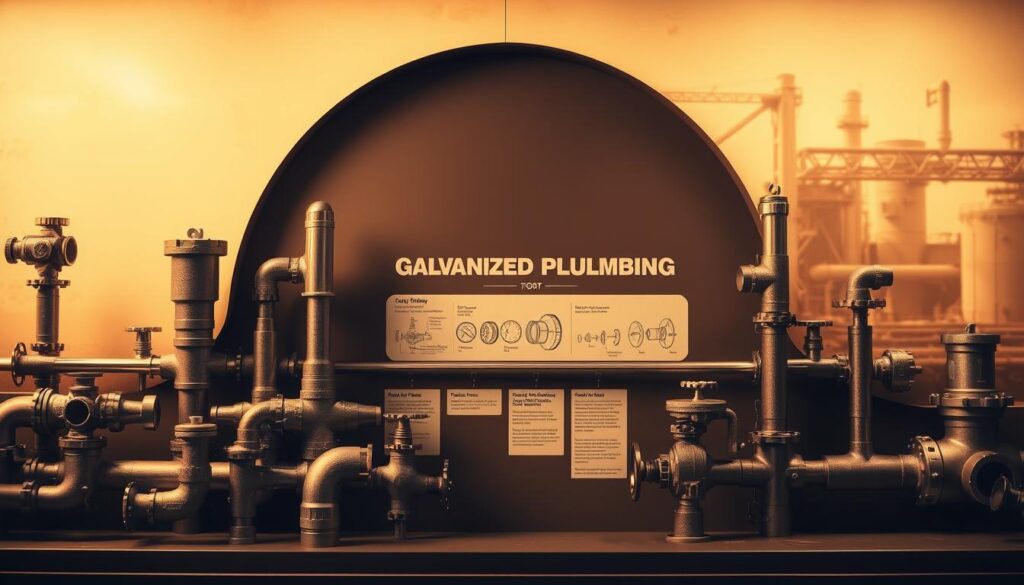
The use of galvanized plumbing started in the late 19th century and lasted until the mid-20th century. These steel pipes, coated with zinc, changed how homes were built and water was distributed in the U.S.
Homeowners and property managers should understand this history. Knowing how galvanized plumbing evolved can guide your maintenance, replacement, and renovation choices.
Key Takeaways
- Galvanized plumbing emerged in the late 19th century
- Zinc coating provided initial corrosion protection
- Widespread use peaked between 1900-1950
- Copper piping gradually replaced galvanized pipes
- Most homes built before 1960 likely have galvanized pipes
Table of Contents
The Origins of Galvanized Plumbing: Late 19th Century Beginnings
The history of galvanized pipes starts with a big leap in science. In the late 19th century, a new way to protect metal changed building and plumbing forever. This method, called galvanization, was a major breakthrough that shaped the era of galvanized plumbing.
The Discovery of Galvanization Process
In 1742, French scientist P. J. Melouin first talked about coating iron with zinc. A big step came in 1836 when Stanislaus Tranquille-Modeste Sorel patented a full method for galvanizing steel. This was a key moment in metal science.
Early Applications in Construction
Soon, builders and engineers saw the value of galvanized materials. The zinc layer offered great protection against rust and corrosion. This made it perfect for many construction uses, including plumbing.
- Increased durability of water infrastructure
- Resistance to environmental degradation
- Cost-effective metal protection method
Initial Benefits and Popularity
Galvanized pipes had many benefits. They were stronger, lasted longer, and were better protected than regular metal pipes. People and builders loved this new tech, making it popular in homes and businesses.
| Benefit | Description |
|---|---|
| Corrosion Resistance | Zinc coating prevents rust and extends pipe lifespan |
| Structural Integrity | Maintains pipe strength under various environmental conditions |
| Cost Efficiency | Lower maintenance and replacement costs |
By the early 20th century, galvanized plumbing was common in modern buildings. It paved the way for its long use in American homes and buildings.
When Was Galvanized Plumbing Used: Understanding the Peak Era
The galvanized plumbing era was a key time in American home building, lasting from 1900 to 1950. During this period, galvanized steel pipes were the main choice for homes across the U.S. People chose them for their strength and value.
To understand when galvanized plumbing was used, we need to look at important historical moments. The early 1900s saw fast growth in cities and new buildings. Galvanized pipes were seen as a strong way to carry water, better than old materials.
- Peak usage: 1900-1950
- Primary regions: Urban and suburban areas
- Key characteristics: Zinc-coated steel pipes
If your home was built during this time, it might have galvanized plumbing. Makers chose these pipes for their long life and fight against rust. The galvanized era was a big step forward in home water systems.
Not all places used galvanized pipes the same way. Cities in the Northeast and Midwest took to them faster than rural areas. The growth of these cities led to quicker building of water systems.
“Galvanized pipes were the backbone of American water infrastructure for half a century” – Plumbing Historical Society
Knowing when galvanized plumbing was used helps us see how home water systems have changed. It also shows us what older homes might need in terms of upkeep.
The Science Behind Galvanized Pipes: Manufacturing and Properties
Galvanized plumbing is a blend of metallurgy and engineering. It’s interesting to learn how these pipes are made. This knowledge helps homeowners understand the risks and make better choices for their homes.
Making galvanized pipes is a detailed process. It turns regular steel into a system that protects water from corrosion. These pipes were once seen as a big step forward in plumbing.
The Galvanization Process Explained
The journey of making galvanized pipes starts with careful steps:
- First, the steel is cleaned with a diluted sulfuric acid solution.
- Then, a flux treatment is applied to the metal surface.
- Lastly, the pipes are dipped in hot zinc.
Material Composition and Structure
Galvanized pipes are mostly steel with a zinc coating. This special coating offers several layers of protection against damage from the environment.
| Component | Percentage | Function |
|---|---|---|
| Steel | 95-98% | Primary structural material |
| Zinc | 2-5% | Protective coating |
Protective Zinc Coating Function
The zinc layer is a protective shield. It keeps the steel inside from corroding. When zinc meets moisture and oxygen, it oxidizes first. This protects the steel inside the pipes.
Though groundbreaking at the time, this technology has its limits. Modern plumbing has found ways to improve upon it.
Widespread Adoption in American Homes (1900-1950)
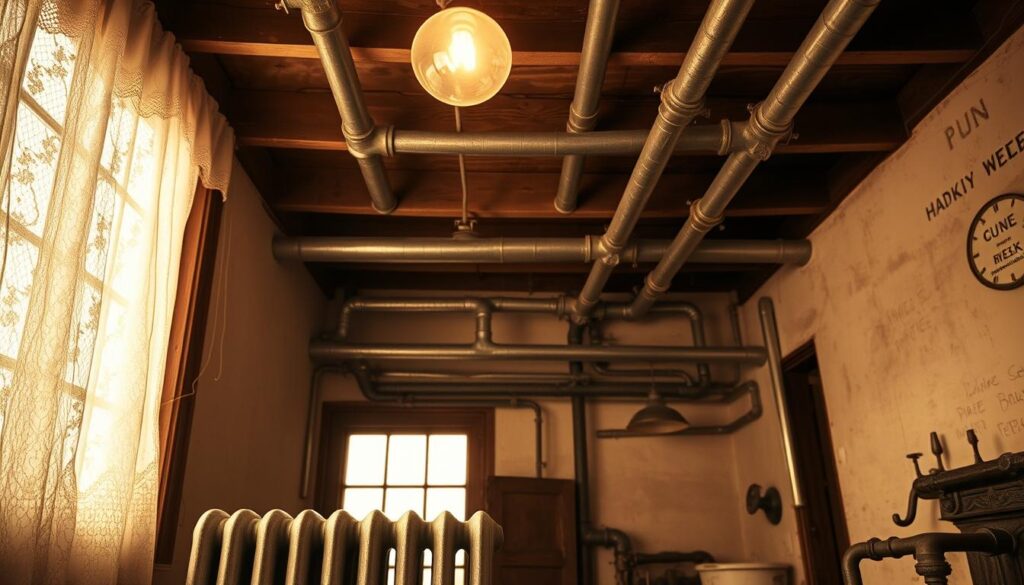
When was galvanized plumbing used most extensively? The years from 1900 to 1950 were key for water systems in American homes. Galvanized water lines became the top choice for homes, changing how water was brought into and moved around homes.
Homebuilders chose galvanized pipes for good reasons:
- They were cheaper than other materials
- They seemed strong and durable
- They resisted corrosion at first
- They were made in a standard way
The use of galvanized pipes showed big advances in technology. In places like Minnesota, these pipes were the main choice for homes until about 1950. Homeowners liked the zinc coating that kept steel pipes from rusting quickly.
“Galvanized pipes represented the pinnacle of home plumbing technology for the first half of the 20th century” – Plumbing History Archives
Not all areas adopted these systems at the same time. Cities often used them sooner than rural areas. The pipes’ dependability made them a favorite for building new neighborhoods in the mid-20th century.
Knowing when galvanized plumbing was used helps understand older homes’ needs. It’s important for fixing and updating these homes today.
The Transition Period: From Galvanized to Copper Pipes
The plumbing world changed a lot in the mid-20th century. People started seeing the problems with galvanized pipes. This led to big changes in how homes and buildings were built.
By the 1960s, copper pipes became the top choice over galvanized ones. This change was because of several important reasons. These reasons made it clear that galvanized pipes needed to be replaced.
Reasons for Replacing Galvanized Pipes
- Accelerated corrosion and rust buildup
- Reduced water quality and flow
- Potential health risks from deteriorating pipe materials
- Decreased structural integrity over time
Timeline of Replacement
| Decade | Replacement Characteristics |
|---|---|
| 1950s | Initial copper pipe introduction |
| 1960s | Widespread adoption of copper piping |
| 1970s-1980s | Comprehensive galvanized pipe replacement |
Impact on Construction Industry
The move away from galvanized pipes brought big changes to construction. Plumbers and builders quickly learned new ways to install pipes. They focused on making systems last longer and work better.
“The shift from galvanized to copper pipes represented more than a material change—it was a fundamental improvement in building infrastructure.” – Plumbing Industry Expert
Knowing when and why to replace galvanized pipes helps homeowners. Taking care of plumbing systems early can avoid water and structural problems.
Identifying Galvanized Plumbing in Your Home
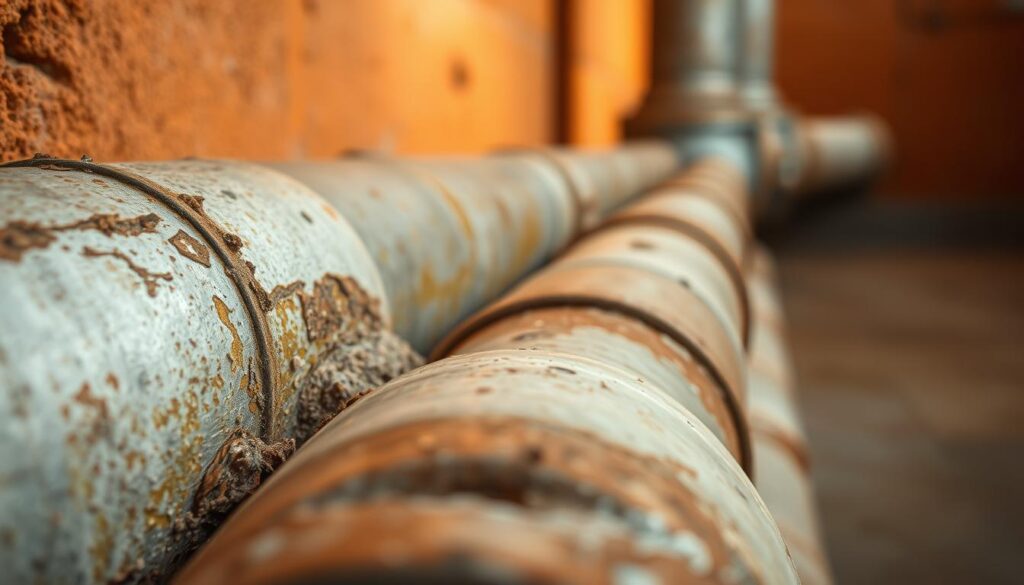
Knowing what kind of plumbing your home has is key to keeping it in good shape. Homes built before the 1960s often had old galvanized water pipes. Spotting these can help you plan for upkeep and future updates.
To spot galvanized plumbing, look for these signs:
- Pipe color: Dull gray metallic appearance with a rough texture
- Threaded pipe connections instead of soldered joints
- Pipes with visible rust or mineral buildup
The best places to find old galvanized pipes are:
- Basement or crawl space water supply lines
- Areas near the main water shutoff valve
- Exposed pipes in utility rooms
Pro tip: If your home was built between 1900 and 1950, it likely has galvanized pipes. Homes built after 1960 are less likely to have them.
If you’re unsure, get a professional plumber to check. They can do a detailed inspection and offer advice on your plumbing.
Common Issues and Signs of Deterioration
Many older homes hide dangers in their plumbing. Old galvanized water pipes can cause big problems. These issues affect your home’s water quality and structure.
It’s important to know the warning signs to avoid water system failures. These pipes slowly get worse, affecting your plumbing.
Corrosion Problems
Corrosion is the biggest threat to galvanized pipes. The zinc coating wears off, exposing the iron to water and oxygen. This leads to:
- Internal pipe wall degradation
- Rust accumulation
- Potential water contamination
Water Pressure Issues
Sediment buildup narrows the pipe, causing water pressure problems. As pipes age, water flow gets, affecting your home’s water system.
Visual Indicators
Spotting pipe problems early can save money. Look out for these signs:
- Discolored water with rusty appearance
- Visible corrosion around pipe joints
- Persistent leaks near pipe connections
- Unusual metallic taste in drinking water
Regular inspections and timely replacements are key to managing old galvanized plumbing.
Modern Alternatives to Galvanized Plumbing
Homeowners now have many new options for replacing galvanized pipes. Knowing when these pipes were last used helps you choose the best for your home.
The plumbing world has changed a lot. New materials offer better performance and last longer. These modern choices make water systems more reliable and efficient.
- Copper Piping: Dominant from the 1950s to early 2000s
- PEX (Cross-linked Polyethylene): Current preferred material
- CPVC (Chlorinated Polyvinyl Chloride): Affordable plastic option
PEX tubing is now the top choice for new homes. It’s flexible, doesn’t corrode, and is easy to install. This makes it better than old galvanized pipes.
| Pipe Material | Lifespan | Cost Effectiveness |
|---|---|---|
| Galvanized Steel | 40-50 years | Low |
| Copper | 50-70 years | Medium |
| PEX | 40-50 years | High |
Choosing a pipe material depends on your budget, local rules, and your home’s needs. Talking to a professional plumber can help you pick the right option for your project.
When to Replace Your Galvanized Pipes
It’s important to know when to replace your galvanized pipes. This keeps your plumbing safe and efficient. Older homes may have hidden dangers in their galvanized plumbing.
Here are signs you might need to replace your pipes:
- Pipes are over 50 years old
- Visible rust or discoloration on pipes
- Frequent water pressure drops
- Rusty or brownish water
- Recurring leaks or pipe damage
If your home was built before 1960, get a professional plumber to inspect it. Age is the most critical factor in determining pipe replacement necessity. Older pipes corrode easily, which can harm your water and plumbing.
The replacement process includes several steps:
- Comprehensive plumbing system assessment
- Detailed pipe condition evaluation
- Cost estimation for replacement
- Selection of modern piping materials
- Professional installation
Replacing galvanized pipes might cost a lot, but it’s worth it. It saves you from expensive water damage and health risks. Replacing them keeps your home’s value up and ensures clean water for your family.
Conclusion
The history of galvanized plumbing in American homes is quite interesting. It was a big step forward for water systems from 1900 to 1950. Knowing this history can help keep your water safe and your home strong.
It’s important to know when your pipes might be getting old. The zinc coating wears off over time, which can harm your water and pipes. If your home was built during the galvanized era, getting a professional to check your pipes is a good idea.
Today, we have better plumbing options like copper, PVC, and PEX. These are safer and work better than old galvanized pipes. Knowing about your home’s plumbing history helps you make smart choices for clean water and avoids big repair costs.
Being informed is key to avoiding plumbing problems. Regular checks, knowing your home’s plumbing history, and being ready to update can keep your water system safe and efficient. This way, you can enjoy clean water for many years.