
Affiliate Disclosure
Plumber Guide Guys is a participant in the Amazon Services LLC Associates Program, an affiliate advertising program designed to provide a means for sites to earn advertising fees by advertising and linking to Amazon.
When Did PVC Plumbing Start? Ever thought about how a simple plastic pipe changed water transport in our homes? The story of PVC pipes is quite interesting. It shows how a lab idea became a key part of our buildings.
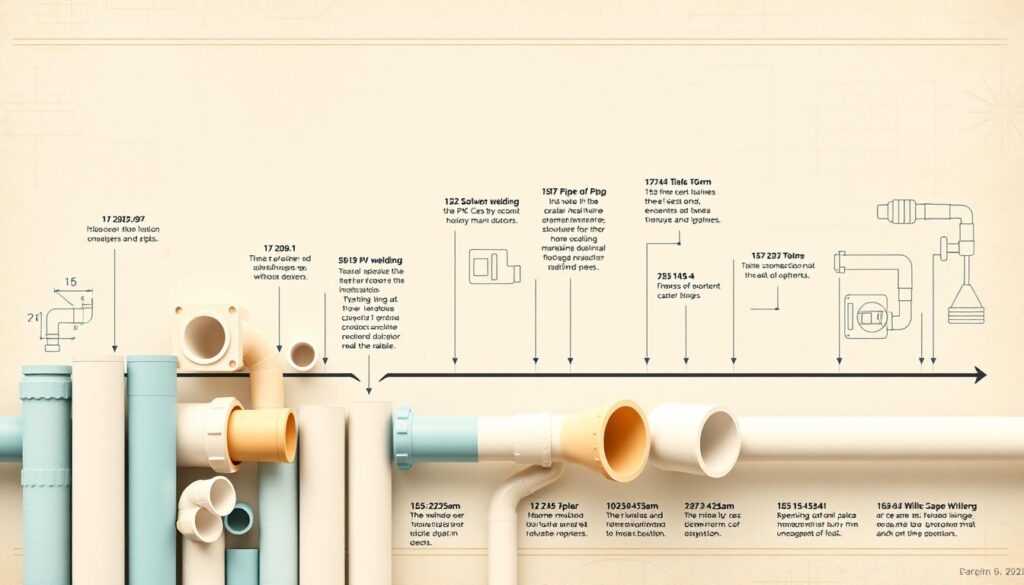
When did PVC plumbing start? The story of plastic pipes is full of science and engineering. It shows how a European lab idea changed the world of construction and water management.
To understand PVC plumbing, we need to look at its science, tech, and the people who saw its value. From the first tests to its wide use, PVC has changed how we manage water and build structures.
Key Takeaways
- PVC plumbing represents a significant technological advancement
- Scientific discovery preceded practical application
- Material innovation changed infrastructure design
- Early experiments were key for modern developments
- Global engineering collaboration drove progress
Table of Contents
The Discovery and Early Development of PVC
The history of PVC pipes started with a major scientific find. This find changed the world of plastics forever. It was a time when materials science was ready for a big leap.
Polyvinyl chloride (PVC) has its roots in a key moment in science. German chemist Eugen Baumann made PVC in 1872. This was a big step in making new materials.
First Scientific Observations
Baumann’s early work showed PVC’s special traits. These traits were key to its later success:
- Unique molecular structure
- Unexpected chemical stability
- Potential for versatile applications
Early Laboratory Challenges
But PVC was tough to work with at first. It didn’t fit with old ways of making things.
“A material ahead of its time, waiting for technology to catch up.” – Industrial Materials Research Journal
Initial Development Attempts
| Year | Development Stage | Key Characteristics |
|---|---|---|
| 1872 | Initial Synthesis | Laboratory Discovery |
| 1900-1920 | Experimental Processing | Limited Practical Applications |
| 1926 | First Patent | Potential Industrial Use |
Over time, scientists figured out PVC’s tricky nature. This paved the way for its big role in plumbing and making things.
Industrial Revolution of PVC in Germany (1912-1935)
The early 20th century saw a big change in Germany. From 1912, scientists and makers started to see the power of polyvinyl chloride. It was a new material that could change plumbing forever.
During this time, many important steps were taken:
- Improved chemical processing techniques
- Development of more stable PVC copolymers
- Enhanced material malleability
- Reduced manufacturing complexity
Researchers worked hard to fix big problems in making PVC. They found ways to make it easier to work with. This was key for using it in big projects later on.
The German industrial approach transformed PVC from a laboratory curiosity into a commercial material.
By the mid-1930s, German makers had made PVC much stronger. These changes made it ready for use in many fields. Plumbing and building were among them.
When Did PVC Plumbing Start?
The start of PVC pipes was a big change in plumbing. It all began in 1936. That’s when German engineers first used PVC pipes on a big scale. This changed water systems forever.
In the early days, PVC plumbing was tested carefully. Scientists were looking at how it could be used in homes and cities.
First PVC Pipe Installation
In 1936, German engineers did important tests with PVC pipes in several cities. They found that PVC had great qualities:
- It was much more durable than metal pipes
- It didn’t corrode easily
- It was cheaper to install and maintain
- It was light and easy to move
Early Residential Applications
Between 1936 and 1939, over 400 homes in central Germany tested PVC pipes. These tests showed how well PVC worked in real life.
Performance Testing and Results
Tests from 1936 to 1941 showed PVC pipes were top-notch. They leaked very little, needed less upkeep, and saved money. These results were very good.
The start of PVC pipes was a big step forward in plumbing. It paved the way for its use in many places in the future.
Post-World War II PVC Evolution
The post-war era was a big change for pvc plumbing. After 1945, PVC became very popular in industry. People found new ways to use PVC’s special qualities, changing plumbing forever.
People quickly saw how great PVC was. The United States led in making PVC, using natural gas and rock salt. These materials helped make PVC cheaper to make.
PVC pipe technology moved from the lab to homes and businesses. It became a common choice for pipes.
“The post-war period transformed PVC from a laboratory curiosity to an industrial powerhouse” – Plastics Engineering Journal
As time went on, making PVC pipes got better. Pipes became stronger, more flexible, and could handle chemicals better. PVC was seen as a better choice than metal pipes because it was lighter and didn’t rust.
By the early 1950s, PVC was a key part of our buildings. It paved the way for more plumbing improvements in the future.
Manufacturing Breakthroughs in the 1950s
The 1950s were a key time for PVC pipe history. New ways to make PVC pipes were found. This was to meet the growing demand in the market.
At this time, making PVC pipes needed to be faster and cheaper. New methods were introduced. These changes would forever alter the world of plumbing materials.
Introduction of the Extruder Method
The extruder method was a big leap in PVC production. It brought many benefits. These included:
- Creating longer, more uniform pipes
- Less waste of materials
- More efficient production
- Lower costs per pipe
Cost-Effective Production Techniques
Companies worked hard to make PVC pipe making cheaper. They focused on:
- Improving how raw materials were mixed
- Using continuous extrusion
- Creating precise temperature control systems
| Production Method | Efficiency Improvement | Cost Reduction |
|---|---|---|
| Traditional Casting | Low | High Cost |
| Extruder Method | High | Significant Savings |
| Continuous Extrusion | Very High | Minimal Production Expenses |
These breakthroughs changed how PVC was made. They made it possible for PVC to be used more in homes and businesses.
PVC’s Introduction to American Plumbing
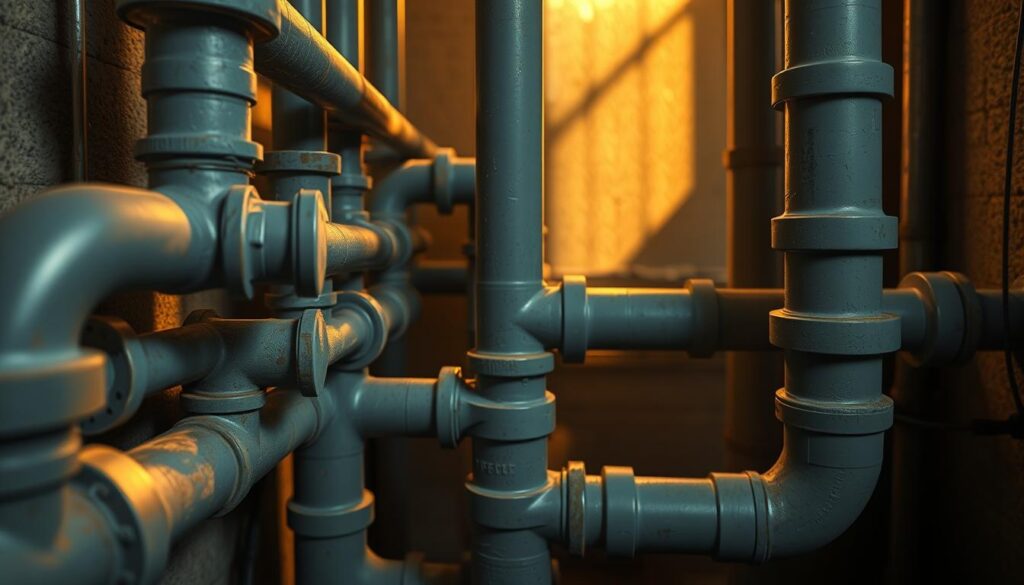
The 1950s were a big change for plumbing in America. PVC pipes were introduced for homes and businesses. They were seen as better than copper pipes, leading to big changes in building and infrastructure.
People saw many good things about PVC over copper:
- Lower material costs
- Exceptional durability
- Resistance to corrosion
- Easier installation process
- Lighter weight compared to metal pipes
Plumbers loved PVC pipes for their great performance. They were strong, didn’t corrode, and worked well in different temperatures. This made PVC a great choice for plumbing.
| Property | PVC Pipes | Copper Pipes |
|---|---|---|
| Cost | Lower | Higher |
| Corrosion Resistance | Excellent | Limited |
| Installation Complexity | Simple | Complex |
By the late 1950s, PVC was the go-to for plumbing in America. It changed how buildings were made, making things easier and cheaper.
Technical Improvements and Safety Developments
The mid-20th century saw big changes in PVC plumbing. Manufacturers worked hard to fix its early problems, like being too stiff.
In the 1960s, PVC technology hit a major milestone. Scientists and engineers found ways to make it better and more flexible.
Addressing Rigidity Issues
Old PVC pipes were too stiff to use everywhere. To fix this, experts added special ingredients. These made the material more flexible and less likely to break.
- Increase material plasticity
- Reduce structural brittleness
- Improve overall pipe durability
Integration of Flexible Plastics
Adding flexible plastics to PVC was a game-changer. This made plumbing systems much better, able to handle more stress and changes in the environment.
“Flexibility became the key to PVC’s long-term success in modern infrastructure.” – Polymer Engineering Journal
Thanks to these changes, PVC became a top choice for plumbing. It offered better performance, was more affordable, and reliable.
Chemical Composition and Properties
Knowing what PVC is made of is key in plumbing history. PVC, or polyvinyl chloride, is a flexible plastic that changed plumbing forever.
PVC stands out for its special qualities. Its makeup gives it unique traits that other plumbing materials don’t have:
- High chemical resistance
- Exceptional durability
- Lightweight design
- Corrosion-proof performance
In PVC’s history, two main types were developed: rigid and flexible. Rigid PVC is strong for water systems. Flexible PVC fits different needs.
“PVC represents a breakthrough in modern plumbing technology, combining engineering innovation with practical performance.” – Materials Engineering Research Institute
PVC is made from chlorine and ethylene. These are mixed to make a strong material. This mix helps PVC handle extreme temperatures and last long.
| PVC Type | Primary Characteristics | Common Applications |
|---|---|---|
| Rigid PVC | High strength, low flexibility | Water supply lines, drainage systems |
| Flexible PVC | Adaptable, bendable | Electrical conduits, irrigation |
Understanding PVC’s chemistry shows why it’s a key part of modern plumbing.
Modern Applications in Plumbing Systems
PVC has changed how we manage water in homes and businesses. It’s a top pick for plumbing because it’s versatile and better than copper in many ways.
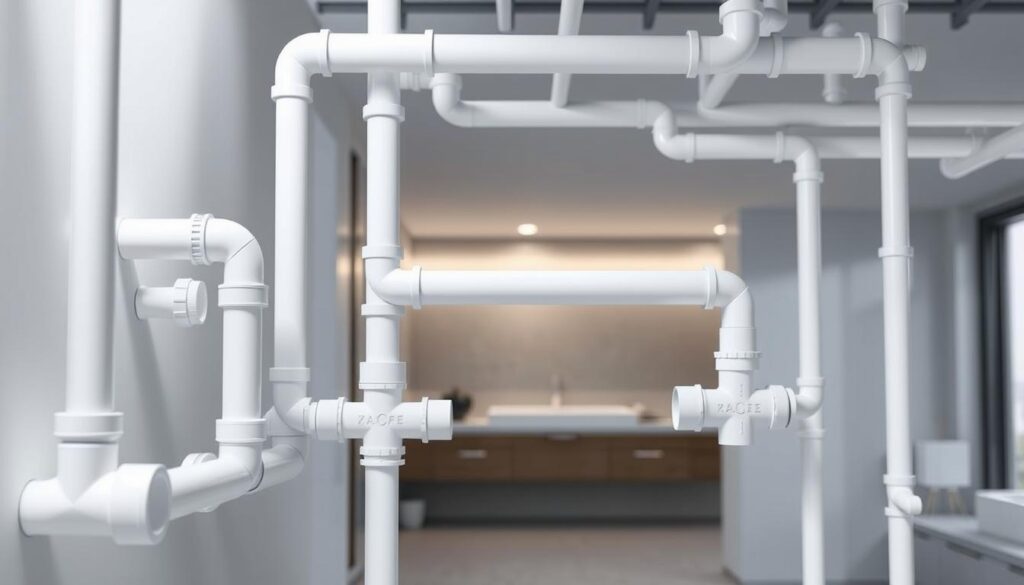
- It’s cheaper than copper
- It’s light and easy to install
- It resists corrosion and chemicals
- It needs less upkeep
Residential Usage
In homes, PVC is key to modern plumbing. About 66% of U.S. homes use PVC. People like it because it’s tough and can bend easily.
- It’s used for water lines
- For drainage
- In irrigation systems
- For waste pipes
Commercial Applications
Businesses also choose PVC for its strength. Half of the world’s PVC resin is used in big pipes for cities and factories. PVC works well in big water systems and complex drainage.
Builders and engineers pick PVC for its great performance. It’s a key part of building modern structures.
Environmental Impact and Sustainability
The start of plastic pipe use has changed a lot. Now, we think a lot about how it affects the environment. PVC pipes mix new tech with caring for our planet.
Companies have worked hard to make PVC better for the environment. They’ve done things like:
- Starting recycling programs for PVC pipes
- Lowering carbon emissions during making
- Creating ways to make production more energy-efficient
- Finding sustainable ways to get materials
PVC pipes have a big chance to help the environment. They need less energy to make and move than metal pipes. They also last a long time, which means they don’t need to be replaced as often.
“Sustainability in plumbing is not just about material selection, but complete lifecycle management” – Environmental Engineering Research Institute
New PVC pipe tech uses recycling in big ways. Some makers use up to 45% recycled material in their pipes. This is a big step toward better infrastructure.
Knowing about the environment in plumbing can help make a difference. It supports building and fixing things in a way that’s good for our planet.
Current Industry Standards and Regulations
PVC plumbing has changed a lot, thanks to strict standards for safety and quality. These rules help keep consumers safe and ensure plumbing materials work well.
The plumbing world has set clear rules to make sure PVC pipes are reliable. These guidelines cover important parts of making and installing pipes.
Safety Requirements
Safety is the top priority in PVC plumbing. Companies must follow strict rules to keep pipes safe and protect people’s health.
- Rigorous material testing
- Chemical composition verification
- Pressure resistance evaluation
- Temperature performance assessment
Quality Control Measures
Quality checks in plumbing have grown a lot. Today, making PVC pipes involves many checks.
| Quality Control Stage | Purpose | Verification Method |
|---|---|---|
| Raw Material Inspection | Ensure material purity | Chemical analysis |
| Manufacturing Process | Verify consistent production | Dimensional precision checks |
| Final Product Testing | Confirm performance standards | Pressure and durability tests |
“Standardization is the cornerstone of reliable plumbing infrastructure.” – American Plastics Council
Companies need to get certified by groups like ASTM International and NSF. This shows their products meet national standards.
Conclusion
When did PVC plumbing start? It all began in 1872 with a groundbreaking discovery by Eugen Baumann. This marked the start of a major change in plumbing technology. PVC has become a key part of our water systems, changing how we manage water at home and in businesses.
The creation of PVC pipes was a big step forward. It solved old problems with plumbing materials. Now, PVC is known for being strong, resistant to corrosion, and affordable. You can learn more about PVC’s history through detailed guides online.
PVC is essential in today’s plumbing systems. It’s light, easy to install, and lasts a long time. As technology gets better, PVC will keep adapting to new challenges.
The story of PVC plumbing is not just about technology. It shows our creativity and desire to make things better. From its early days to its widespread use today, PVC is a key part of our progress.