

Affiliate Disclosure
Plumber Guide Guys is a participant in the Amazon Services LLC Associates Program, an affiliate advertising program designed to provide a means for sites to earn advertising fees by advertising and linking to Amazon.
When Was Indoor Plumbing Invented? Did you know indoor plumbing has a history of 4,600 years? This journey shows how humans have always sought to improve their living conditions. It’s a story of creativity and progress.
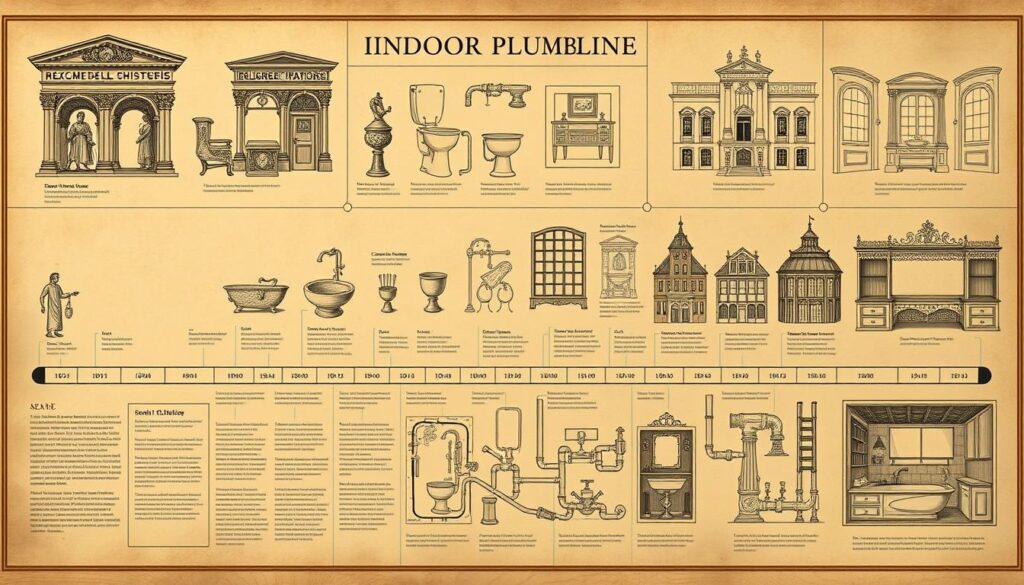
The history of indoor plumbing is both complex and interesting. It spans from ancient times to today’s cities. Water systems have always been key to our survival and growth.
Learning about indoor plumbing is more than just facts. It’s about how humans have innovated to meet basic needs. It’s a tale of health improvements and creative solutions over the centuries.
Key Takeaways
- Indoor plumbing has roots dating back to ancient civilizations
- Water management was critical for human settlement development
- Technological innovations transformed sanitation practices
- Plumbing systems significantly impacted public health
- Cultural approaches to water management varied globally
Table of Contents
Understanding Ancient Plumbing Systems
The history of plumbing started thousands of years ago. Ancient people created water management systems that are the base of today’s sanitation. Their engineering skills are amazing and studied by researchers today.
These early systems showed how ancient societies tackled big infrastructure problems. They managed water and waste in ways that were advanced for their time.
The Indus Valley’s Revolutionary Water Management
The Indus Valley Civilization was a leader in plumbing technology. Their cities had drainage systems that were unmatched in their era.
- Sophisticated underground drainage networks
- Brick-lined sewage channels
- Individual home water connections
- Public bath facilities with complex water management
Egyptian Innovations in Early Plumbing
Ancient Egyptian engineers were ahead in water transport. Copper pipes found in digs show their skill in water management.
“The Egyptian approach to water management was centuries ahead of its time.” – Archaeological Quarterly
Mesopotamian Clay Pipe Systems
Mesopotamian people also made big contributions to plumbing. They used clay pipes for water, making networks for growing cities.
| Civilization | Key Plumbing Innovation | Estimated Time Period |
|---|---|---|
| Indus Valley | Underground Drainage Systems | 3300-1300 BCE |
| Egypt | Copper Water Pipes | 2500-1500 BCE |
| Mesopotamia | Clay Pipe Networks | 4000-2000 BCE |
These ancient civilizations showed great knowledge of water management. They paved the way for plumbing advancements around the world.
The Roman Empire’s Remarkable Plumbing Achievement
The ancient Romans changed how we manage water with their amazing engineering. Their plumbing systems made cities better and set high standards for building across the ancient world.
Roman engineers built water networks that were way ahead of their time. Their smart water management ideas helped start the modern sewage systems we have today.
Aqueducts: Engineering Marvels of Water Transportation
Roman aqueducts were huge technological wins. These structures carried water over long distances, using gravity and careful planning to bring fresh water to cities.
- Transported water from mountain springs
- Used complex architectural techniques
- Covered distances up to 60 miles
The Cloaca Maxima: Ancient Sewer System
The Cloaca Maxima was Rome’s main sewer system. It showed great urban planning. This underground system handled wastewater and helped keep cities healthy, showing early knowledge of sanitation.
“No civilization before Rome had created such an advanced water management system” – Ancient Engineering Experts
Lead Pipe Networks and Water Distribution
Romans built wide lead pipe networks to bring water to cities. Even though we worry about lead today, their engineering made sure water was clean. It went to public fountains, bathhouses, and homes.
Their water systems were a big step forward in city technology. They greatly influenced how future civilizations managed water and kept people healthy.
What Year Was Indoor Plumbing Invented: The Historical Beginning
Exploring the start of indoor plumbing is a journey of human creativity. The first indoor bathrooms didn’t happen overnight. Instead, they evolved over many years. Archaeologists have found signs of early water systems from ancient times.
The 16th century was a big leap forward. During this time, complex pipe systems were created. They used materials like:
- Lead pipes
- Wooden conduits
- Iron water channels
Rich people in Europe started using these advanced water systems in their homes. These early setups helped water reach different rooms. This laid the groundwork for today’s indoor plumbing.
At first, the technology had its flaws. Early pipes often leaked, corroded, or made water dirty. But, these early steps were key to making homes more comfortable and clean.
The growth of indoor plumbing was more about ongoing improvements than a single discovery.
New technologies in water management changed how we lived. Having water whenever we needed it changed our daily lives. It paved the way for even more sanitation advancements.
Medieval Plumbing Developments in Europe and Asia
The medieval period saw big steps forward in plumbing across the world. Water management and sanitation tech changed a lot. It showed how smart people were in solving big problems.
In the medieval times, people around the globe found new ways to handle water and stay clean. The story of indoor plumbing is full of tech progress and cultural values.
Islamic World’s Advanced Sanitation
The Islamic world was very focused on cleanliness and water use. Their sanitation systems were ahead of their time. They had:
- Big public bath places
- Smart water delivery systems
- Complex drainage in big cities
European Monastery and Castle Systems
Monasteries and castles in Europe had their own ways to manage water. Monks and nobles came up with clever plumbing ideas. They included:
- Underground water paths
- Systems to catch rainwater
- Early versions of flush toilets
Asian Innovation in Water Management
Asian cultures made big contributions to water tech. Chinese and Japanese engineers built complex irrigation and water transport systems. They showed amazing engineering skills.
These medieval steps were key for today’s plumbing. They show how various cultures tackled water and sanitation issues.
The Victorian Era: Birth of Modern Plumbing
The Victorian era was a time of big changes in plumbing. The Industrial Revolution brought new technologies to Britain and the United States. These changes greatly affected how people used water and handled waste.
New plumbing innovations changed city life. Cast iron pipes became a key improvement, replacing old wooden and clay pipes. These pipes could handle more water pressure and lasted longer.
- Introduction of cast iron water distribution networks
- Development of more efficient water pumping systems
- Improved sewage management techniques
- Enhanced public health infrastructure
These new plumbing systems made city life better. Cities could grow bigger with reliable water and better waste removal. Rich homes got indoor bathrooms, and cities built better water systems.
The Victorian period transformed plumbing from a luxury to a fundamental urban necessity.
These technological advances were a big step towards modern sanitation. Mechanical pumps, precise pipes, and better drainage systems were huge improvements. They helped shape our understanding of water systems today.
Sir John Harrington and the First Flush Toilet
The story of indoor toilets starts with Sir John Harrington, a genius from the 16th century. He created a device that changed how people handled waste at home.
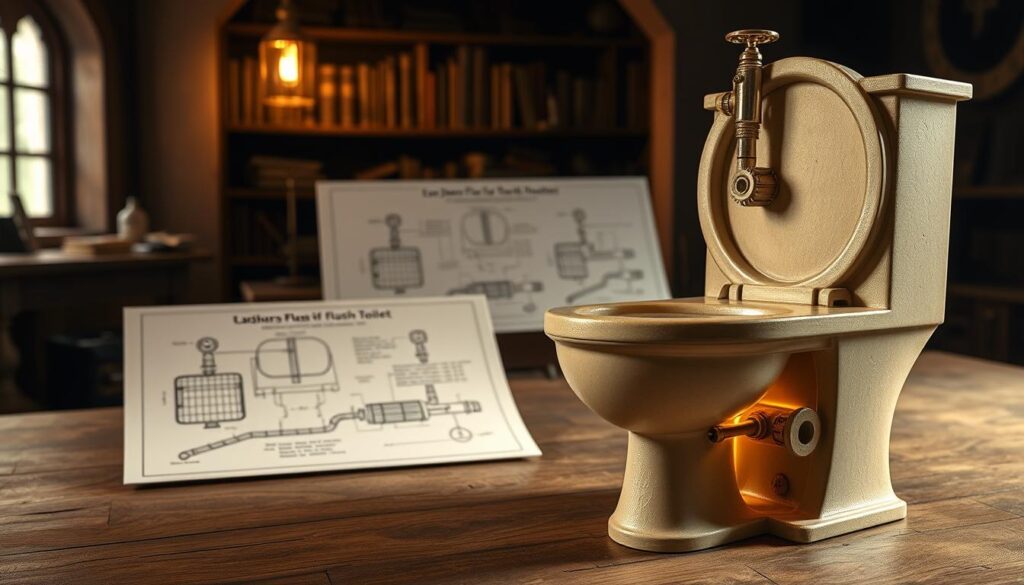
Harrington’s toilet was a big step in engineering back then. He made it for Queen Elizabeth I, showing a huge leap in indoor toilet tech.
The Queen’s Private Water Closet
In 1596, Harrington made a flush mechanism that was:
- Divert waste through a water-filled basin
- Provide a more hygienic waste removal system
- Reduce unpleasant odors in royal living spaces
“A device so clean and ingenious, it shall change how we think about personal sanitation,” Harrington might have proclaimed.
Impact on British Sanitation Standards
At first, people didn’t believe in his invention. But Harrington’s design was the start of better plumbing.
It took centuries for everyone to use indoor toilets. But Harrington showed that good sanitation was possible with smart design.
The Great Sanitation Revolution of the 1800s
The 1800s were a turning point for urban planning, with a big focus on plumbing. Cities were growing fast, and they needed better ways to handle waste. This was because crowded cities were full of diseases, causing a big health problem.
People started working on new sewage systems to solve these issues. Engineers and health experts came up with new ideas to make cities cleaner. They knew that clean water and good waste management were key to stopping sickness.
- Urban populations expanded dramatically during the 19th century
- Disease outbreaks highlighted critical infrastructure weaknesses
- Technological innovations transformed waste management practices
“Sanitation is the foundation of public health and urban civilization.” – Edwin Chadwick, Sanitary Reform Pioneer
Some big changes happened during this time:
- Comprehensive sewer network designs
- Advanced pipe manufacturing techniques
- Standardized building and plumbing regulations
- Professional plumbing trade certification
This revolution changed how cities were built. It made cities healthier places to live. Today, we have the sanitation systems we need thanks to these early efforts.
Chadwick’s Sanitary Report and Public Health Reform
The mid-19th century was a key time for public health and city growth. Edwin Chadwick’s report changed how we think about stopping diseases and living in cities.

In 1842, Chadwick’s report showed the bad health in British cities. He found a strong link between bad sanitation and many diseases. This report led to big changes in public health.
Urban Sewage Systems Transformation
Chadwick’s ideas led to the creation of modern sewage systems. Important changes included:
- Comprehensive waste management strategies
- Improved water distribution networks
- Systematic urban drainage systems
Impact on City Infrastructure
Chadwick’s work changed how cities were planned. Cities started focusing on:
- Systematic sewage disposal
- Clean water access
- Disease prevention infrastructure
By 1883, the first plumbing codes were made. These set important safety standards for public health. These rules changed how cities handled sanitation, laying the groundwork for today’s city design.
“Sanitation is the primary foundation of public health and urban civilization.” – Edwin Chadwick
Understanding city development starts with these key reforms. Chadwick’s ideas are key to how we design and manage cities today.
Development of Modern Sewage Systems
The Industrial Revolution changed how we manage sewage. Cities grew fast, making good plumbing key for health and infrastructure. Cast iron pipes and new pumping tech made water management better.
Understanding sewage systems starts with the big changes in the 19th century. Engineers and planners worked hard to solve urban sanitation problems. The advancement of water supply and sanitation was vital for better health.
- Introduction of advanced filtration methods
- Development of biological treatment processes
- Creation of large-scale urban sewage networks
- Implementation of chemical treatment techniques
Modern sewage systems faced big challenges. They had to handle more wastewater and protect the environment. Technological innovations were the answer to these problems.
By the early 20th century, sewage treatment had evolved a lot. Cities spent a lot on infrastructure to keep people healthy. This helped reduce diseases and supported growing cities.
The true measure of a civilization’s progress can be found in its ability to manage and treat wastewater effectively.
20th Century Plumbing Innovations
The 20th century saw big changes in household plumbing. Your home’s water systems got a lot better, changing daily life. By the 1920s, most American cities had indoor toilets. This was a big step forward for comfort and health.
Many innovations changed how we use water and deal with waste:
- Introduction of PVC pipes, replacing traditional metal systems
- Development of energy-efficient water heaters
- Advanced water filtration technologies
- Improved sewage treatment methods
Getting indoor toilets became common. Cities started using better water treatment. This cut down on waterborne diseases a lot.
| Decade | Plumbing Innovation | Impact |
|---|---|---|
| 1920s | Chlorination | Reduced waterborne illness |
| 1940s | PVC Pipe Introduction | Improved durability |
| 1960s | Water Filtration Systems | Enhanced water quality |
These changes made plumbing better for health and home life. Now, plumbing is more efficient, green, and easy to use.
Conclusion
The history of indoor plumbing is a story of human creativity and progress. It started in ancient times and has come a long way to today’s smart home systems. This journey has changed how we handle water, sanitation, and health.
Learning about plumbing’s history shows us a complex journey of technology. We’ve moved from clay pipes and Roman aqueducts to modern water systems. Today, plumbers use advanced tech for clean water and waste management.
Every step in plumbing’s history has made cities better and life better for people. New systems like water saving and digital monitoring are leading the way. These innovations help solve big problems in water use and building design.
Thinking about plumbing’s history shows us its true value. It’s not just about pipes and systems. It’s about human creativity and progress. Plumbing will keep getting better, helping future generations live in a cleaner, more efficient world.