

Affiliate Disclosure
Plumber Guide Guys is a participant in the Amazon Services LLC Associates Program, an affiliate advertising program designed to provide a means for sites to earn advertising fees by advertising and linking to Amazon.
What Type of PVC for Pool Plumbing? Ever wondered why some pools stay clear while others need constant upkeep? The answer is in the right pool plumbing materials. Choosing the right PVC can greatly improve your pool’s performance and life.
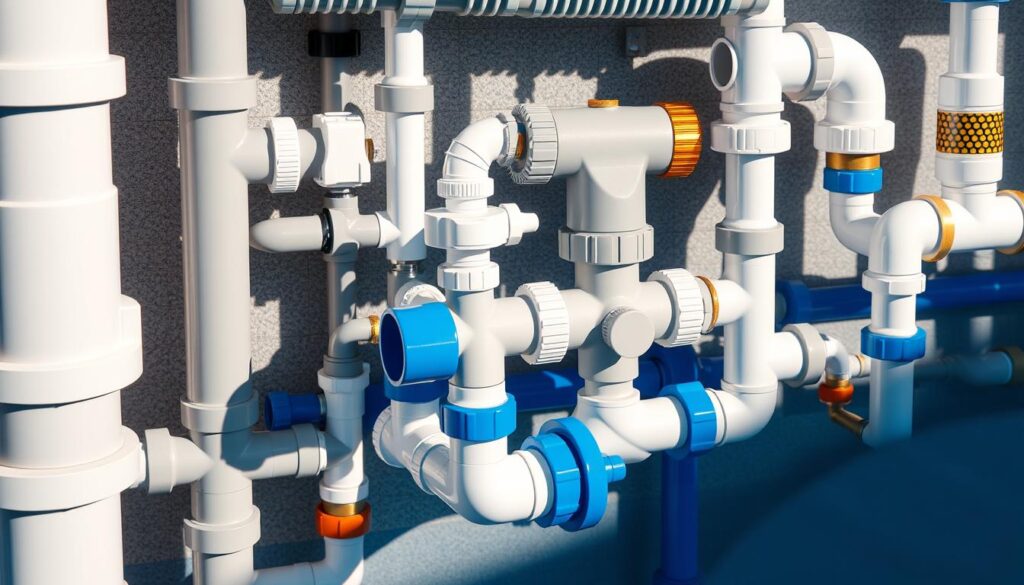
Pool plumbing is like the heart of your pool, moving water, filtering it, and keeping it clean. Knowing which PVC to use is key to a reliable and efficient pool system. This keeps your water sparkling and your investment safe.
This guide will cover everything about pool plumbing materials. You’ll learn from the basics to picking the best PVC pipes and fittings. You’ll be ready to make smart choices for your pool installation.
Key Takeaways
- PVC is vital for pool circulation and water management
- Different PVC types have unique benefits for pool plumbing
- Choosing the right material affects pool performance and durability
- Knowing pipe specs helps avoid installation problems
- Getting expert advice can enhance your pool plumbing system
Table of Contents
Understanding Pool Plumbing Fundamentals
Swimming pool plumbing is a complex system. It keeps your pool water clear and running well. The system includes pipes, valves, and parts that work together.
Pool circulation is key to your pool’s function. Knowing about swimming pool pipe specs and diameter is vital. It helps create an efficient water system.
Key Components of Pool Circulation
A typical pool plumbing system has several important parts:
- Skimmers: Collect surface debris
- Suction lines: Transport water to the pump
- Pool pump: Drives water through the system
- Filters: Remove contaminants
- Return lines: Distribute cleaned water back to the pool
Water Flow and Pressure Dynamics
The success of your pool’s plumbing depends on water flow and pressure. Pipe diameter is key to water circulation efficiency. Too narrow pipes can slow water, while too wide might harm pump performance.
Selecting the Right Plumbing Configuration
Choosing the right pipe specs for your pool is important. It depends on your pool’s size, equipment, and use. Experts suggest calculating the exact pipe diameter for best water flow and system performance.
Proper pool plumbing is not just about moving water—it’s about creating a balanced, efficient aquatic environment.
What Type of PVC for Pool Plumbing: Materials and Specifications
Choosing the right PVC for pool plumbing is key for a reliable system. You’ll find two main types: Schedule 40 and Schedule 80 PVC pipes.
Pressure rated PVC pipes have special features for pools. The main difference is in wall thickness and pressure:
- Schedule 40 PVC: Thinner walls, lower pressure rating
- Schedule 80 PVC: Thicker walls, higher pressure resistance
Schedule 40 PVC is often used for home pools. It’s durable and cost-effective. Pools with lower water pressure needs usually work well with this type.
Experts suggest considering a few things when picking PVC pipes:
- Pipe diameter needs
- Pool equipment specs
- Local building codes
- Expected water pressure
Even though pressure rated PVC is the best choice, knowing the differences helps you decide for your pool.
Schedule 40 vs Schedule 80 PVC Pipe Comparison
Choosing the right PVC pipe for your pool is key. Schedule 40 and Schedule 80 pipes have different features. These can affect your pool’s plumbing and how long it lasts.
When picking Schedule 40 PVC for your pool, think about a few things. Each pipe type has its own benefits. These benefits make them good for different needs in pool plumbing.
Pressure Ratings and Wall Thickness
The main difference is in wall thickness and pressure:
- Schedule 40 PVC: Thinner walls, lower pressure resistance
- Schedule 80 PVC: Thicker walls, higher pressure tolerance
| Characteristic | Schedule 40 PVC | Schedule 80 PVC |
|---|---|---|
| Wall Thickness | Standard thickness | Increased thickness |
| Pressure Rating | Up to 150 PSI | Up to 250 PSI |
| Typical Use | Standard pool circulation | High-pressure systems |
Temperature Resistance and UV Protection
Temperature and UV protection are important. Schedule 80 PVC is better at handling extreme temperatures and sun. It’s great for outdoor pools.
Cost and Durability Factors
Cost and durability are important when choosing:
- Initial installation costs
- Long-term durability
- Specific pool system requirements
Schedule 80 PVC is pricier but lasts longer. It’s better for complex or high-stress systems.
Common PVC Fittings for Pool Installation
Choosing the right PVC fittings for your pool’s plumbing is key. It ensures water flows well and prevents leaks. Knowing the different types helps build a strong and efficient plumbing system.
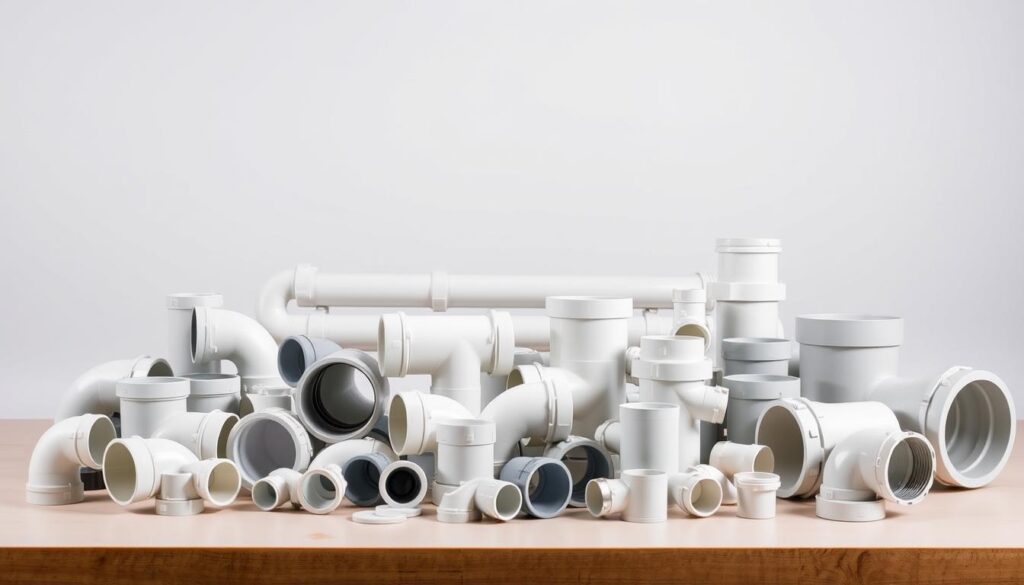
Pool plumbing needs several important PVC fittings. They each have a specific role in your system. Here are the most common ones you’ll find:
- Elbows: These 90-degree or 45-degree angle connectors help redirect water flow around corners in your pool plumbing
- Couplings: Used to connect straight sections of pipe, ensuring secure and leak-free connections
- Tees: Three-way fittings that allow water to branch into different directions within the plumbing system
- Adapters: Critical for connecting pipes of different sizes or transitioning between materials
When picking PVC fittings for your pool, keep these points in mind:
- Make sure they fit your pipe size
- Check if they can handle the pressure
- Think about where you’ll install them
- Consider if they can handle chemicals and temperature
Choosing the right PVC fittings keeps your pool’s plumbing system working well. It should be leak-free and keep water flowing smoothly. Always pick fittings made for pools and spas to ensure they last and perform well.
Proper Sizing and Diameter Requirements
Choosing the right pool plumbing diameter is key for a smooth swimming pool system. Your pool’s performance depends on the right pipe sizes and flow rates. Knowing these details helps improve water flow and equipment work.
When picking the right swimming pool pipe sizes, several important factors come into play. The pipe diameter affects water flow, pump efficiency, and system reliability.
Flow Rate Calculations
Calculating flow rates is vital for finding the best pool plumbing diameter. You need to think about a few key things:
- Total pool volume
- Pump capacity
- Desired water turnover rate
- Equipment specifications
Pipe Diameter Selection Guide
| Pool Size | Recommended Pipe Diameter | Typical Flow Rate |
|---|---|---|
| Small Pools (up to 15,000 gallons) | 1.5 inches | 40-60 GPM |
| Medium Pools (15,000-30,000 gallons) | 2 inches | 60-80 GPM |
| Large Pools (over 30,000 gallons) | 2.5 inches | 80-100 GPM |
Matching Equipment Specifications
Matching your pool plumbing diameter with your equipment is important. Using the wrong pipe sizes can lower efficiency and raise energy costs. Always check the manufacturer’s advice when picking pipe sizes for your pool system.
Pro tip: Larger diameter pipes reduce friction and improve overall water circulation, potentially extending the life of your pool equipment.
Installation Best Practices and Tips
Installing the best PVC pipe for swimming pools needs precision and detail. The right installation can greatly affect your pool’s plumbing and how long it lasts.
Here are key tips for using PVC pipes in pool plumbing:
- Use high-quality primer and cement made for PVC pool plumbing
- Clean the pipe surfaces well before joining
- Let the primer dry fully before applying cement
- Avoid sharp 90-degree turns to keep water flowing well
Cutting PVC pipes right is very important. Use a sharp cutter or a fine-toothed saw for clean cuts. Bad cuts can cause leaks in your pool’s plumbing.
Supporting the pipes is also vital. Properly securing them prevents damage. Use supports or hangers often, mainly for long pipes.
Pro tip: Always choose sweep elbows over sharp 90-degree elbows to maintain optimal water flow and reduce system strain.
When picking PVC pipe for pools, look at temperature ratings and UV resistance. Some pipes handle sunlight and weather better, which is key for outdoor pools.
- Check if the pipe works with pool chemicals
- Look for signs of wear on connections
- Apply thread sealant on threaded parts
By following these tips, you’ll have a strong and efficient pool plumbing system. It will last for many years.
UV Protection and Weather Resistance
Keeping your pool plumbing safe from UV rays is key to keeping your system strong. UV damage can weaken PVC pipes, affecting their performance.
Knowing how UV affects pipes helps pool owners protect them better. PVC pipes are not safe from UV rays, which can shorten their life.
Paint and Coating Solutions
To shield your PVC pipes from the sun, you need a solid plan:
- Apply acrylic-based latex paint for UV protection
- Use special UV-blocking exterior coatings
- Try light-colored paints that reflect heat
Maintenance Requirements
Keeping your pool plumbing in check is vital. Check your pipes every year for UV damage signs, like:
- Discoloration
- Surface cracking
- Brittleness
Longevity Considerations
With the right protection, your pool’s PVC pipes can last longer. Coatings and avoiding direct sunlight are key to keeping your system strong for years.
Troubleshooting Common PVC Plumbing Issues
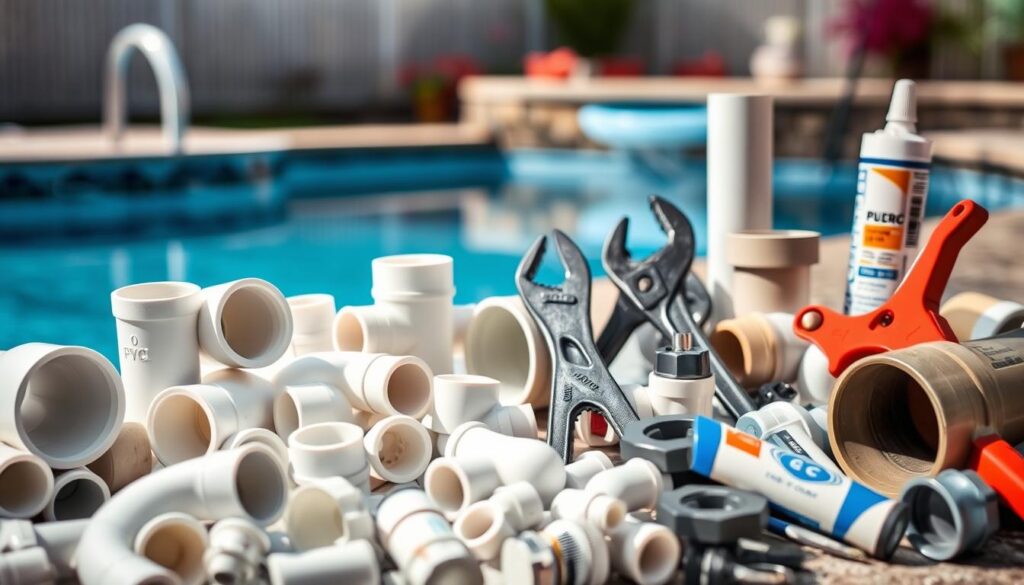
Pool plumbing materials can face problems over time. It’s important to diagnose and fix these issues. Knowing common problems helps keep your pool’s system running smoothly and avoids expensive repairs.
Leaks are a big issue in pool plumbing. Regular checks on your materials can help find problems early. Finding where leaks come from can save you a lot of time and money.
- Check pipe joints for visible water seepage
- Examine connections for loose fittings
- Look for water puddles near pipe connections
- Inspect pipe surfaces for hairline cracks
Air leaks in the suction side of pool plumbing can harm water flow and pump health. These leaks often happen at connections or damaged seals.
| Problem | Potential Cause | Recommended Action |
|---|---|---|
| Joint Leakage | Worn O-rings | Replace O-rings and apply pipe sealant |
| Pipe Cracking | Temperature Stress | Use Schedule 80 PVC for better durability |
| Air Infiltration | Loose Connections | Tighten fittings and check seal integrity |
Cracked pipes, often from freezing, need quick replacement. Prevention is always better than reactive repair. Insulating pipes and using the right materials can help avoid damage.
Pro tip: Regular maintenance checks can prevent 80% of common pool plumbing issues.
Safety Considerations and Building Codes
When you’re setting up swimming pool pipes, knowing the safety rules is key. The Virginia Graeme Baker Pool and Spa Safety Act sets important guidelines for pool plumbing. It aims to prevent drowning and entrapment risks.
Important safety points for pool plumbing include:
- Ensuring proper drain cover specifications
- Implementing multiple drain systems
- Maintaining appropriate pipe pressure ratings
- Following local building code requirements
Local building codes can vary and affect swimming pool pipe specs. These rules cover important areas like:
- Pipe material durability
- Minimum wall thickness standards
- Specific installation techniques
- Pressure and temperature resistance requirements
Professional pool installers must stay updated on current safety standards to guarantee compliant and secure pool plumbing systems. Not following these rules can lead to legal problems and risk swimmer safety.
Safety should always be the primary consideration when designing and installing pool plumbing infrastructure.
Talking to local building inspectors and certified pool experts can guide you through pool plumbing safety rules. This ensures your swimming pool meets all required standards.
Conclusion
Choosing the right PVC for pool plumbing is key to a reliable swimming pool system. Knowing about materials, specs, and how to install them is important. Each PVC type, like Schedule 40 or Schedule 80, affects water flow and system strength.
When picking PVC for pool plumbing, remember to consider pressure ratings, UV resistance, and local codes. Some might prefer flexible PVC for tricky spots or where pipe movement is needed.
This guide has given you the tools to tackle your pool plumbing project. Focus on the right size, know your equipment, and choose top-notch materials. Doing so will give you a strong, efficient pool plumbing system that lasts.
With all you’ve learned about PVC selection, installation, and upkeep, you’re ready to make smart choices. These choices will protect your pool and make your swimming better.