

Affiliate Disclosure
Plumber Guide Guys is a participant in the Amazon Services LLC Associates Program, an affiliate advertising program designed to provide a means for sites to earn advertising fees by advertising and linking to Amazon.
What Is Wet Venting in Plumbing? Ever wondered how plumbing systems are so efficient and save space? There’s a secret that lets many fixtures use one vent pipe without losing drainage quality.
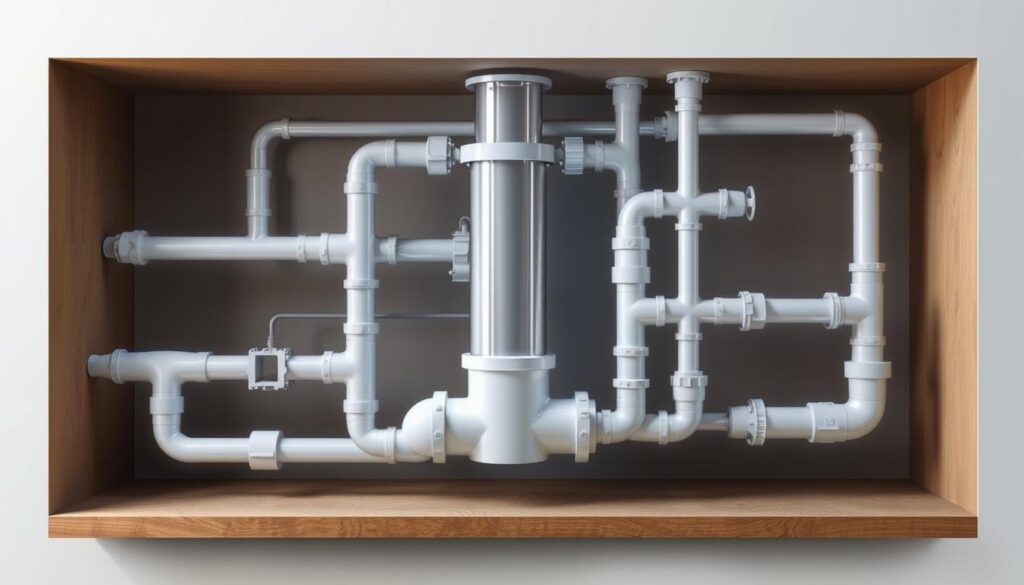
Wet venting is a new way to improve plumbing systems. It lets many fixtures use one vent pipe. This makes plumbing designs more efficient and cheaper.
Learning about wet venting helps homeowners and pros make better choices. It combines drainage and ventilation, making plumbing more flexible and saving space and resources.
Plumbing experts created wet venting to solve complex drainage problems. It’s a big step forward in plumbing design for homes and businesses.
Key Takeaways
- Wet venting allows multiple fixtures to share a single vent pipe
- Reduces overall plumbing installation complexity
- Provides more efficient space utilization
- Meets modern wet vent plumbing code requirements
- Offers cost-effective drainage solutions
- Simplifies overall plumbing system design
Table of Contents
Introduction to Plumbing Vent Systems
It’s important to know how plumbing vent systems work. They keep your home’s drainage system healthy and efficient. These systems protect your plumbing and help remove waste properly.
Plumbing ventilation has changed a lot over time. Today’s systems tackle tough drainage issues and work well.
The Evolution of Plumbing Ventilation
Setting up plumbing vents used to be hard and not very effective. Old plumbers faced:
- Hard time managing air pressure
- Not knowing much about drainage
- Basic pipe designs
Basic Principles of Plumbing Ventilation
So, how does wet venting work? It’s all about balancing air pressure in drainage systems. This stops problems like:
- Trap seal issues
- Sewer gas getting in
- Drainage problems
“Proper ventilation is the unsung hero of effective plumbing systems.” – Professional Plumbing Association
Why Proper Venting Matters
Good plumbing venting keeps your drainage system running well. Without it, you might face big plumbing problems. These could harm your whole home.
It’s not just about avoiding bad smells. Venting keeps your plumbing system healthy and working right.
What Is Wet Venting in Plumbing
Wet venting in plumbing is a smart way to save space. It lets many fixtures use one vent pipe. This makes your plumbing system more efficient by cutting down on the number of vent pipes needed.
With wet venting, you can link up different plumbing fixtures to one vent pipe. This is great for small spaces where you need to keep plumbing simple.
- Reduces overall pipe complexity
- Saves installation time
- Minimizes material costs
- Improves drainage efficiency
To understand wet venting, you need to know how it works. It connects fixtures so waste and air move well, avoiding clogs and keeping air pressure right.
| Fixture Type | Wet Venting Compatibility |
|---|---|
| Bathroom Sink | High |
| Shower | Moderate |
| Toilet | Low |
| Kitchen Sink | High |
To use wet venting, you must follow local building rules and pick the right pipe size. A pro plumber can design a system that fits your needs and saves space.
Wet venting is a modern fix for old plumbing problems. It gives homeowners a better way to handle waste and air.
Understanding the Core Components of Wet Venting
Wet venting is a key plumbing method that lets many fixtures use one ventilation system. Knowing its parts helps you see how efficient it is for home plumbing.
A wet vent system does both drainage and ventilation at once. It’s a smart way to handle plumbing in small spaces. It makes plumbing simpler without losing performance.
Essential Parts of a Wet Vent System
The main parts of a wet vent system are:
- Vent pipes
- Fixture drain connections
- Trap arms
- Horizontal and vertical pipe sections
Different Types of Wet Vent Configurations
Wet vent systems need different setups based on your plumbing layout. You’ll usually see two main types:
- Horizontal wet venting: Good for bathrooms with fixtures near each other
- Vertical wet venting: Ideal for buildings with more than one floor
Material Requirements for Wet Venting
Choosing the right materials is key for a good wet vent system. Plumbers often use:
| Material Type | Best Used For | Durability Rating |
|---|---|---|
| PVC Pipe | Residential applications | High |
| ABS Pipe | Cold weather installations | Medium-High |
| Cast Iron | Commercial and multi-unit buildings | Very High |
“Proper wet venting requires precise planning and expert installation to ensure optimal performance.” – Professional Plumbing Association
Knowing these parts helps you see how complex and efficient wet venting systems are in modern plumbing.
How Wet Venting Differs from Dry Venting
It’s important to know the difference between wet and dry venting for good plumbing design. These methods have different roles in your home’s plumbing. Each one affects how well your plumbing works.
Wet venting is great for saving space. It uses one pipe for many tasks. This is different from dry venting, where you need separate pipes for drains and vents. Wet venting makes plumbing easier to set up.
- Wet Venting Key Characteristics:
- Single pipe serves multiple purposes
- More compact system design
- Reduced material requirements
- Dry Venting Key Characteristics:
- Separate pipes for drainage and ventilation
- More complex installation
- Increased material costs
Wet venting is best for small spaces like bathrooms. It’s perfect for places where you need to use space wisely.
| Feature | Wet Venting | Dry Venting |
|---|---|---|
| Pipe Configuration | Single multi-purpose pipe | Separate drainage and vent pipes |
| Installation Complexity | Simpler | More complex |
| Cost Efficiency | Lower material costs | Higher material costs |
| Best Used In | Compact residential spaces | Large commercial buildings |
Deciding between wet and dry venting depends on your plumbing needs. Talk to a professional plumber to find the best option for your home.
Benefits and Advantages of Wet Venting Systems
Residential wet venting systems are a smart choice for efficient plumbing. They offer many advantages for modern homes and renovations.
- They need less material than old venting methods.
- They save space in homes.
- They’re easier to install.
- They cost less overall.
Space and Material Savings
Wet venting systems are great for small spaces. They combine waste and vent into one pipe. Homeowners can save up to 30% on material costs and keep plumbing working well.
Installation Efficiency
Plumbers like how easy these systems are to install. They need fewer connections and are less likely to leak. This means lower labor costs and faster projects.
Cost-Effectiveness Analysis
Wet venting is cost-effective in the long run. It costs less to start with and saves on materials and upkeep. Homeowners save money and get a reliable plumbing system.
Professional plumbers often suggest wet venting for its practical and economic benefits in homes.
Common Applications in Residential Plumbing
Residential wet venting systems are great for modern homes. They let many fixtures use one vent. This makes plumbing in bathrooms, kitchens, and laundry rooms more efficient.
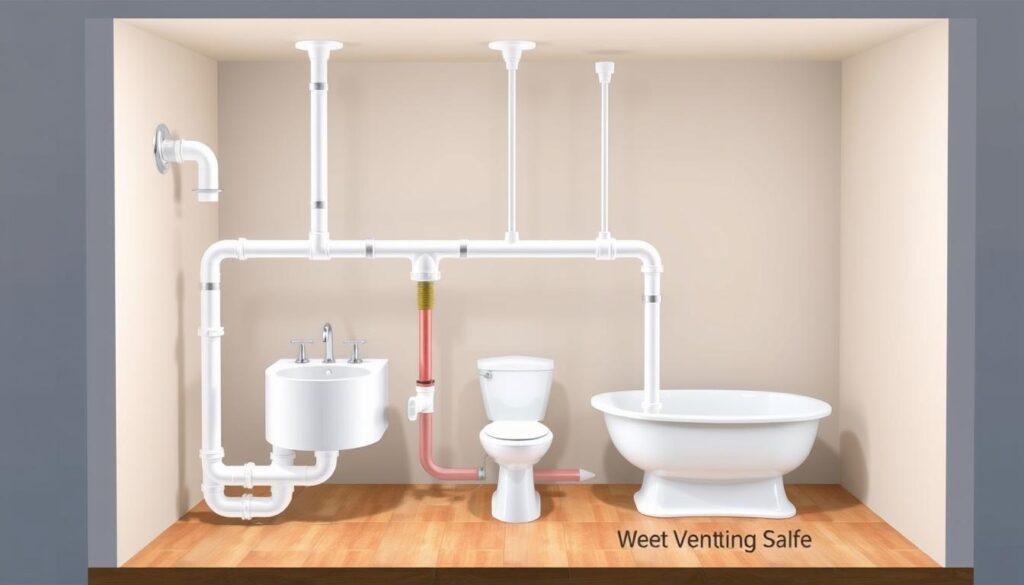
Wet venting is popular for saving space and money. It’s good for many areas in the home:
- Bathroom groups with toilets, sinks, and showers
- Kitchen sink and dishwasher combinations
- Laundry room washer and utility sink setups
- Multi-story home plumbing configurations
Wet venting is used in many places:
| Location | Typical Fixtures | Venting Approach |
|---|---|---|
| Master Bathroom | Toilet, Sink, Shower | Shared Vertical Vent |
| Kitchen | Sink, Dishwasher | Integrated Wet Vent |
| Laundry Room | Washer, Utility Sink | Parallel Wet Venting |
Plumbers must follow building codes and fixture rules when installing wet venting. Proper installation ensures optimal drainage and prevents plumbing issues.
Professional tip: Always check local building rules when using wet venting in your home.
Wet Vent Sizing Requirements and Regulations
Understanding plumbing codes can be tough, but it’s key for safety and efficiency. Knowing the rules helps your plumbing system work right and follow the law.
Wet vent sizing isn’t a one-size-fits-all deal. Each place has its own rules for contractors and DIY folks. These rules stop plumbing problems and keep systems running well.
Code Compliance Guidelines
For wet venting, you must think about a few important things:
- Local building codes specific to your area
- Total number of fixtures connected to the wet vent
- Vertical and horizontal pipe measurements
- Pipe material and diameter specifications
Proper Pipe Diameter Selection
Choosing the right pipe size is vital. Consider these factors:
- Fixture unit load
- Drainage system configuration
- Pipe slope and length
- Anticipated water flow volume
Maximum Distance Requirements
“Proper wet venting depends on precise measurements and strategic fixture placement.” – Professional Plumbing Association
Distance limits are key to avoid venting problems. Common limits include:
- Horizontal wet vent length limits
- Vertical stack connection points
- Fixture proximity to main venting system
Professional tip: Always check local building codes and talk to a licensed plumber to meet wet vent plumbing code requirements.
Installation Best Practices and Techniques
Setting up a wet venting system needs precision and careful planning. Your success depends on knowing key techniques for proper installation. Professional plumbers say that paying attention to details is key for a good drainage system.
When you start with wet venting installation, focus on a few important things:
- Maintain proper pipe slope for efficient drainage
- Select appropriate pipe materials
- Ensure correct pipe sizing
- Follow local building code requirements
Pipe slope is very important in wet venting installation. You need a slope of at least 1/4 inch per foot. This ensures wastewater flows well and prevents blockages.
“Precision in wet venting installation separates amateur work from professional results.” – Master Plumbing Association
For your wet venting installation, keep these techniques in mind:
- Carefully map out the entire plumbing wet venting route
- Use appropriate pipe connections
- Verify all joints are properly sealed
- Test the system thoroughly before completing installation
Remember, each wet venting installation is different. Local building codes can change, so always check them before starting. Getting help from professionals can guide you through complex requirements.
Potential Problems and Troubleshooting
Wet venting in plumbing can face several challenges. Homeowners need to know about these issues. Spotting early signs can avoid big problems and costly fixes.
Spotting problems in wet venting systems needs careful watching. Look for signs that show there’s a bigger issue.
Common Issues in Wet Vent Systems
- Slow drainage in multiple fixtures
- Persistent gurgling sounds
- Unpleasant sewer gas odors
- Frequent pipe blockages
- Water backup in drainage systems
Prevention and Maintenance Tips
Keeping up with maintenance can help avoid many problems. Regular checks and knowing your plumbing’s needs are key to keeping it working well.
| Maintenance Action | Frequency | Purpose |
|---|---|---|
| Professional inspection | Annually | Detects venting issues |
| Clear drain lines | Every 6 months | Prevents clogs |
| Check vent pipe conditions | Seasonally | Ensures airflow |
When to Call a Professional
Some problems need a pro’s help. Don’t try to fix complex issues yourself. Call a licensed plumber for:
- Persistent sewer gas smells
- Repeated drainage system failures
- Visible pipe corrosion
- Significant water pressure changes
Knowing about wet venting plumbing helps manage your home’s drainage better. Stay alert and fix problems quickly to keep your plumbing in top shape.
Design Considerations for Wet Venting
When planning a bathroom wet venting diagram, several key factors must be evaluated. The layout and needs of your plumbing system are vital. They help decide the best wet venting approach.
- Fixture placement and proximity
- Building structural constraints
- Total system capacity requirements
- Local plumbing code specifications
Creating an effective bathroom wet venting diagram requires careful planning. You should aim to design for maximum efficiency and avoid system issues.
| Design Factor | Consideration | Impact |
|---|---|---|
| Fixture Spacing | Minimum required distances | Ensures proper venting performance |
| Pipe Diameter | Appropriate sizing | Prevents drainage restrictions |
| Vertical Alignment | Proper slope and positioning | Facilitates efficient waste removal |
Professional tip: Always consult local building codes and consider professional assessment when designing your wet venting system.
A well-designed wet venting system can significantly improve your plumbing’s overall performance and longevity.
Your bathroom wet venting diagram should be flexible for future changes. By carefully considering these elements, you can create a reliable and efficient plumbing ventilation system.
Maintenance and Care Guidelines
Keeping your residential wet venting systems in top shape is key. Regular care stops plumbing problems and keeps your system running well for years.
Your wet venting system needs regular checks to spot problems early. Homeowners can do several important tasks to protect their plumbing:
- Do quarterly visual checks of vent pipes
- Look for signs of blockage or odd drainage
- Clean vent openings to stop debris buildup
- Listen for gurgling sounds that might mean venting issues
Preventative care means knowing what can harm your systems. Don’t throw grease, big food bits, or non-biodegradable stuff down the drain. These can block your pipes and harm your plumbing network.
Experts say get a full check-up of your wet venting system every year. During these visits, pros can:
- Do detailed pipe checks
- Find stress points
- Suggest repairs or upgrades
- Make sure everything meets codes
Spotting problems early can save you a lot of time and money on plumbing fixes.
Conclusion
Wet venting is a smart choice for today’s plumbing systems. It offers efficient drainage and ventilation. Homeowners and plumbers can use it to make plumbing setups better and cheaper.
Wet venting makes plumbing easier to install. It uses one pipe for both drainage and air, saving money and effort. Plumbers find it useful for homes and businesses.
Wet venting can greatly improve your plumbing projects. It saves space, makes systems simpler, and manages waste and air well. As plumbing techs grow, wet venting remains a top choice for its smart mix of cost, efficiency, and practicality.
In the future, wet venting will be key in plumbing design. Knowing about these advanced methods helps you make better choices for your home’s plumbing. This can save you time, money, and effort.