
Affiliate Disclosure
Plumber Guide Guys is a participant in the Amazon Services LLC Associates Program, an affiliate advertising program designed to provide a means for sites to earn advertising fees by advertising and linking to Amazon.
What Is Roughed In Plumbing? Ever wondered what happens behind walls before your bathroom fixtures appear? Rough-in plumbing is the key that turns an empty space into a working home.
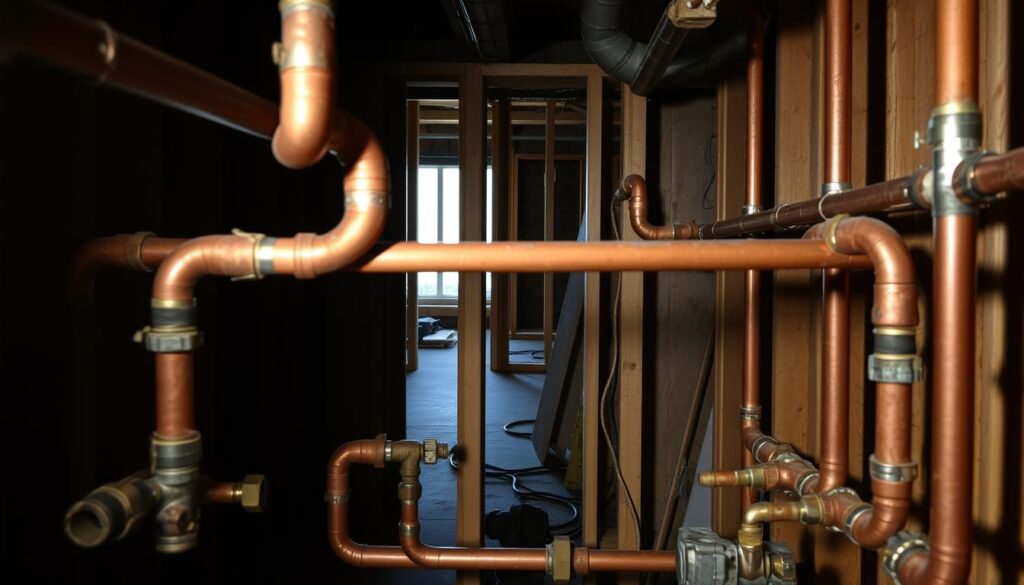
So, what is roughed in plumbing? It’s the first step in plumbing setup where pipes and connections are placed before fixtures are added. This work makes sure your home’s water and waste systems work right.
Rough-in plumbing is a vital part of building and fixing homes. Experts put water lines, drainage, and ventilation in walls, floors, and ceilings. Knowing about this helps homeowners see how complex a good plumbing system is.
Key Takeaways
- Rough-in plumbing prepares infrastructure before final fixture installation
- Precise measurements are critical for successful rough-in work
- Professional planning prevents costly future modifications
- Building codes govern rough-in plumbing standards
- Proper rough-in work ensures long-term plumbing system reliability
Table of Contents
Understanding the Basics of Plumbing Rough-In
Plumbing rough-in is a key part of building a home. It lays the groundwork for your home’s water and waste systems. Knowing the basics can save you time, money, and trouble later.
This stage involves setting up the plumbing before finishing the walls and floors. Your measurements are vital for a good fit and efficiency. Whether it’s a new home or upgrading your plumbing, understanding the basics is essential.
Core Components of Rough-In Plumbing
At the heart of plumbing rough-in are several key parts:
- Pipe framework for water distribution
- Drainage system connections
- Vent pipes for proper air circulation
- Fixture mounting locations
Water Supply System Elements
The water supply system is vital for clean water in your home. Basement plumbing rough-in needs special care due to space issues. Common parts include:
- Main water line connection
- Branch lines to different rooms
- Shut-off valves for individual sections
- Pressure regulation mechanisms
Drainage and Waste Systems
Your home’s drainage system is just as important. Good plumbing rough-in ensures waste flows well. This means placing drain pipes right, connecting fixtures, and ensuring waste removal slope.
Proper planning prevents poor performance in plumbing installations.
What Is Roughed In Plumbing and Why It Matters
Starting with new construction plumbing rough-in is key. It’s the first step in plumbing, where pipes and systems are set before walls and floors are done. This stage is vital for your home’s plumbing setup.
So, what is roughed in plumbing? It’s the basic setup for your home’s water and waste systems. Plumbers put in the main parts like:
- Water supply lines
- Drain pipes
- Vent stacks
- Preliminary fixture locations
This early work shapes your home’s plumbing. It makes sure you have:
- Good water pressure
- Effective waste removal
- Code compliance
- Smooth integration with other parts of the house
Experts carefully plan each pipe’s route. They think about the building’s layout, where fixtures will go, and future changes. Doing this right saves money and trouble later.
“A well-executed rough-in is the blueprint of a home’s plumbing success.” – Professional Plumbing Association
Essential Measurements for Plumbing Rough-In
Getting your plumbing rough-in measurements right is key for a successful home renovation or new construction. Precise measurements ensure your fixtures fit well and work efficiently. Knowing these dimensions helps you avoid costly mistakes and makes installation smoother.
Accurate measurements are vital for any plumbing installation. Whether it’s a bathroom, kitchen, or laundry room, knowing the standard dimensions saves time and money.
Standard Bathroom Fixture Measurements
Toilet rough-in dimensions are critical for bathroom installations. The standard is 12 inches from the wall, but some older homes might have 10 or 14-inch setups. Here are important measurements to remember:
- Toilet centerline: 12 inches from the back wall
- Sink vanity depth: 21-24 inches
- Shower rough-in: 80-84 inches high for showerhead
Kitchen Plumbing Dimensions
Kitchen sink rough-in needs careful planning. The dimensions and placement depend on your layout and appliance needs.
- Kitchen sink base cabinet: 36 inches wide
- Dishwasher rough-in: 24 inches wide
- Sink drain height: 16-20 inches from floor
Laundry Room Requirements
Laundry room plumbing rough-in measurements are vital for washer and dryer installation. Proper spacing and connection points ensure they work well.
- Washer water supply: Hot and cold lines 36 inches above floor
- Drain standpipe: 30-96 inches high
- Typical space between fixtures: 36-42 inches
Pro tip: Always double-check local building codes, as measurement requirements can vary by region.
Common Rough-In Plumbing Materials and Tools
Knowing the right materials and tools is key for a new construction plumbing rough-in. The success of your project depends on the right pipes, fittings, and equipment. They must meet specific installation needs.
When looking at rough-in plumbing, you’ll find several important material types. Each is suited for different uses:
- PVC Pipes: Lightweight, corrosion-resistant, and great for drainage systems
- Copper Pipes: Durable and perfect for water supply lines
- PEX Tubing: Flexible, easy to install, and withstands temperature changes well
Professional plumbers use specific tools for precise installations:
- Pipe cutters for clean, accurate cuts
- Levels to keep pipes aligned
- Measuring tape for exact measurements
- Soldering equipment for copper pipe connections
For drain, waste, and vent needs, PVC pipes are often the top choice. In places like Texas, PVC outperforms ABS under high temperatures. This makes it a top pick for plumbing rough-ins.
Pro tip: Always check local building codes and manufacturer specs when picking materials for your plumbing rough-in.
Bathroom Plumbing Rough-In Guide
Designing a bathroom needs careful planning in plumbing rough-in. Getting it right saves money and makes installation easier. The bathroom’s layout depends on good planning and accurate measurements.
Knowing what each fixture needs helps create a space that looks good and works well.
Toilet Rough-In Specifications
Toilet rough-in sizes are key for correct installation. Most toilets need a 12-inch rough-in. But, some older homes might have 10-inch or 14-inch sizes.
- Measure from the wall to the toilet flange’s center
- Make sure there’s 15 inches of space on each side of the toilet
- Keep at least 21 inches of space in front of the toilet
Shower and Tub Installation Requirements
Shower rough-in needs precise water supply and drainage spots. The drain must be placed right to ensure water flows well and avoid leaks.
| Fixture | Standard Dimensions | Minimum Clearance |
|---|---|---|
| Shower Drain | 2 inches | 24 inches |
| Shower Mixing Valve | Center at 48 inches | 18 inches |
Vanity and Sink Placement Guidelines
When planning your bathroom, think about where to put the vanity and sink. Vanities are usually 32-36 inches tall. Sinks are often centered at 36 inches from the floor.
- Make sure there’s 24 inches of space in front of the vanity
- Place water supply lines where they’re easy to reach
- Ensure the drainage slope is right for water to flow well
Pro tip: Always check local building codes and get expert advice to make sure your bathroom plumbing meets all the rules.
Kitchen Sink and Appliance Rough-In Standards
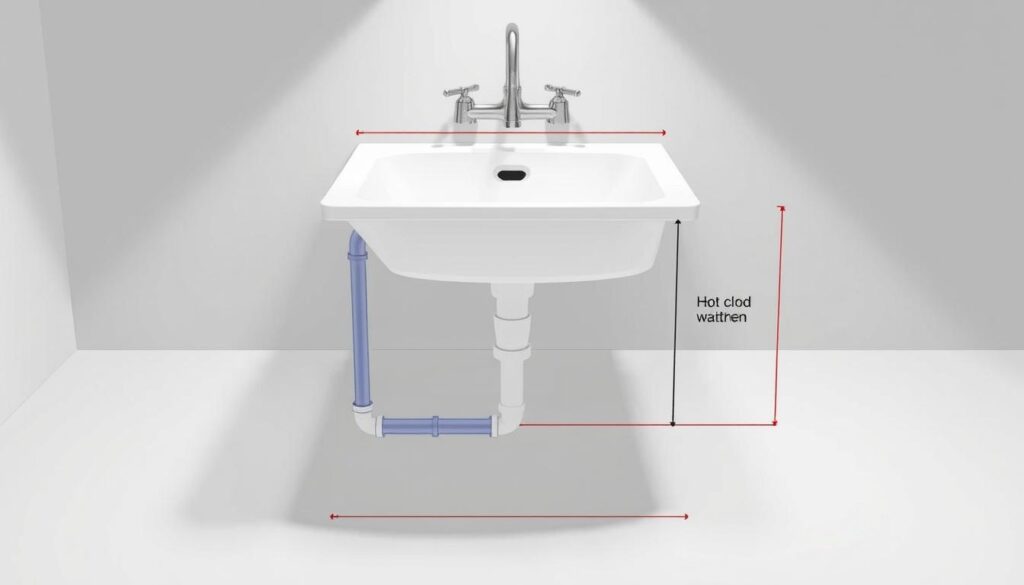
When you’re planning a kitchen renovation, you need to focus on plumbing measurements. Where you place your kitchen sink and connect appliances is key. It affects your kitchen’s design and function. Getting it right saves you from costly changes later.
For a kitchen sink installation, consider these important factors:
- Precise sink location measurements
- Water supply line positioning
- Drainage system requirements
- Garbage disposal and dishwasher connections
The standard measurements for kitchen sinks involve precise drain and water supply line placement. Most sinks need a standard setup for future appliances and a good workspace.
Important things to think about for kitchen sink plumbing include:
- Drain line placement at proper angles
- Water supply line connections
- Vent stack positioning
- Ensuring adequate clearance for under-sink accessories
Pro tip: Always check local building codes to make sure your kitchen sink meets all regional standards.
Building Codes and Compliance Requirements
Understanding plumbing regulations can be tough for homeowners and contractors. Knowing the building codes is key for a successful plumbing project. These rules ensure safety, function, and meet local standards.
When you do a rough-in plumbing inspection, there are important things to keep in mind. They can affect your project’s success.
Local Code Considerations
Every area has its own plumbing rules. Your local building department sets these rules. They cover things like:
- Pipe material specifications
- Installation techniques
- Water pressure standards
- Drainage system requirements
Permit Requirements
You need the right permits before starting plumbing work. The steps include:
- Submitting detailed plumbing plans
- Paying required fees
- Getting approval from local authorities
- Scheduling mandatory inspections
Inspection Checkpoints
A detailed plumbing inspection looks at many things. Inspectors check for:
- Proper pipe alignment
- Correct slope for drainage pipes
- Appropriate material usage
- Compliance with local building codes
“Attention to detail during the rough-in stage prevents costly corrections later.”
Passing these inspections is key for final approval. It ensures your plumbing system is safe and works well.
Professional Tips for Successful Rough-In Installation
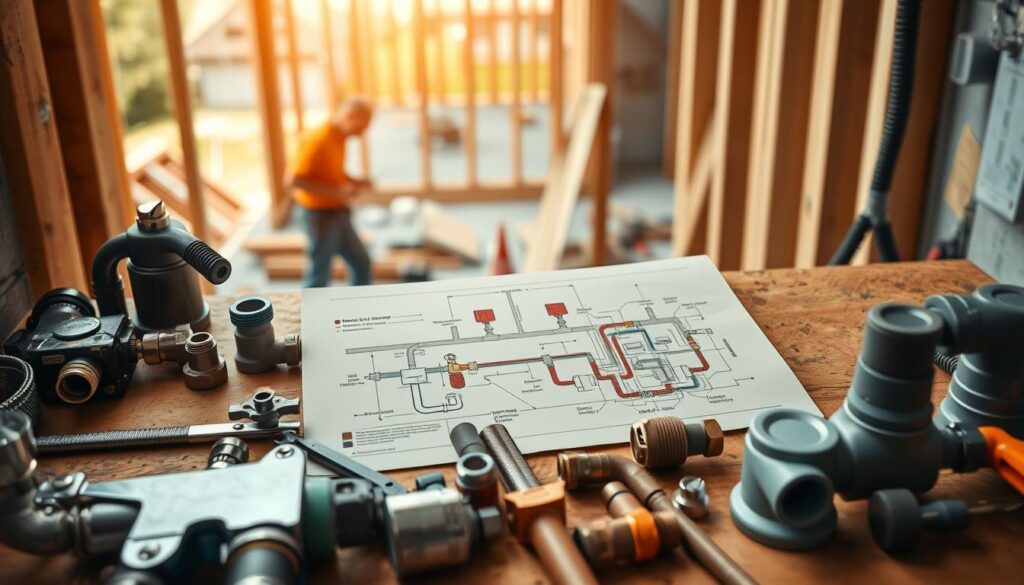
When you’re working on plumbing rough-in, having a pro’s help can really make a difference. Knowing the plumbing rough-in measurements is key to a system that works well.
Experts say there are a few important steps for a good rough-in installation:
- Plan out your plumbing layout carefully before starting
- Choose high-quality materials that follow local building codes
- Make sure pipe sizes are right for good water flow
- Think about future changes or growth
Being precise with plumbing rough-in measurements is essential. Getting measurements right helps avoid expensive errors and makes installing fixtures easier. Keep these points in mind:
- Double-check your measurements before cutting pipes
- Use top-notch measuring tools
- Leave some extra space for changes later
- Check local building codes for specific rules
Good ventilation is also key in plumbing rough-in. It stops pressure buildup and helps water drain well. Take the time to understand your home’s plumbing needs for a strong and efficient system.
“Measure twice, cut once” – A golden rule in plumbing rough-in installation
Common Rough-In Plumbing Mistakes to Avoid
Rough-in plumbing can be tricky, even for DIY experts. Knowing common mistakes helps avoid costly repairs. It ensures a smooth bathroom plumbing process.
When working on a plumbing project, knowledge is key. Many homeowners unknowingly create problems. These can harm their entire plumbing system.
Measurement Errors That Derail Your Project
Accuracy is vital in rough-in plumbing. Small measurement mistakes can cause big problems:
- Incorrect fixture spacing
- Misaligned drain pipes
- Improper vent stack positioning
Ventilation Challenges
Good ventilation stops drainage problems. Bad venting leads to:
- Slow drainage
- Sewer gas buildup
- Potential code violations
Material Selection Pitfalls
Choosing the wrong materials can ruin your project. Be careful of:
- Low-quality pipe materials
- Incompatible connection types
- Incorrect pipe diameter
Always check local building codes. Consider hiring a pro if unsure about your plumbing project.
Conclusion
Knowing what roughed in plumbing is key for any construction or renovation. It’s the base of your plumbing system’s performance and reliability. Planning and doing the rough-in phase right can avoid water damage and costly fixes later.
A detailed rough-in plumbing check makes sure all pipes and fixtures are up to standard. Plumbers say it’s important to spend time and effort here. Doing so will give you a plumbing system that works well for many years.
Good rough-in work is more than just putting things together. It needs accurate measurements, quality materials, and knowledge of local codes. Whether updating a kitchen, bathroom, or a whole house, the rough-in phase is critical for great plumbing.
While DIY efforts are great, plumbing work is often too complex for amateurs. Getting help from a licensed plumber can save you a lot of time, money, and trouble. Your home’s plumbing is a big investment. Protect it with careful planning and expert help.