
Affiliate Disclosure
Plumber Guide Guys is a participant in the Amazon Services LLC Associates Program, an affiliate advertising program designed to provide a means for sites to earn advertising fees by advertising and linking to Amazon.
What Is FIP in Plumbing? Ever wondered about a code that could prevent plumbing problems? FIP might be the answer to understanding key pipe connections in your home’s water system.
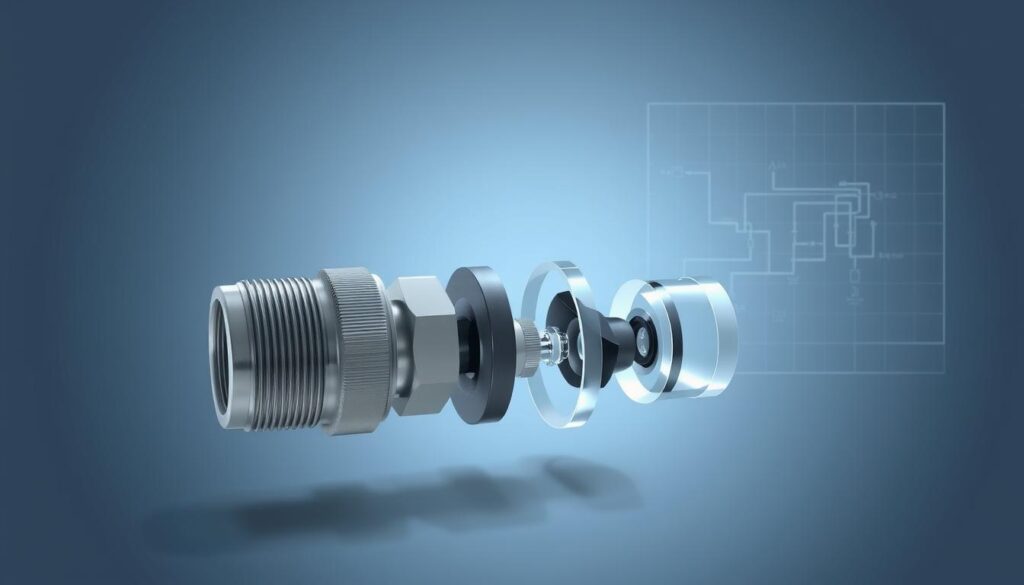
Exploring what is FIP in plumbing opens up important knowledge. It changes how you see residential and commercial piping systems. FIP, short for Female Iron Pipe, is a key part in making plumbing connections safe and reliable.
Knowing what FIP means is more than just a term. These fittings with internal threads are vital for linking pipes. They make sure water moves well and safely in your home’s setup.
Whether you’re a DIY fan or a pro plumber, learning about FIP connections is empowering. It lets you handle plumbing tasks with confidence and accuracy.
Key Takeaways
- FIP stands for Female Iron Pipe with internal threading
- Essential for creating secure plumbing connections
- Used in residential and commercial water systems
- Interchangeable with terms like FPT and FNPT
- Critical for water supply, drainage, and heating applications
Table of Contents
What Is FIP in Plumbing
Exploring plumbing connections, knowing what FIP means is key for DIY fans or pros. FIP stands for Female Iron Pipe. It’s a basic idea in plumbing that ensures pipe connections are safe and strong.
The female iron pipe connection has special features. These make it vital in many piping systems. Let’s look at the main points of this important plumbing part.
Definition of Female Iron Pipe
A female iron pipe connection has internal threading. This lets it hold male-threaded pipes or fittings. But, modern FIP fittings are made from different materials:
- Brass
- Stainless steel
- Copper
- PVC
How FIP Fittings Work in Plumbing Systems
To grasp what is FIP in plumbing, you need to understand how these fittings work. FIP connections have a unique design. They use a tapered thread system for tighter seals as you put them together.
The mechanics of FIP fittings make connections strong. They:
- Ensure precise thread engagement
- Create a mechanical seal
- Prevent leaks with accurate thread pitch
- Keep the system intact
Whether you’re working on water lines, drainage, or gas systems, knowing about female iron pipe connections is vital. It’s key for finishing projects well.
Understanding FIP vs MIP Fittings
When you’re working with plumbing, knowing the difference between FIP and MIP fittings is key. These fittings are vital for making sure your plumbing system is secure and doesn’t leak.
FIP (Female Iron Pipe) and MIP (Male Iron Pipe) fittings are made to work together. The main difference is in their thread setup:
- FIP fittings have internal threads
- MIP fittings have external threads
To make a strong connection, you need to pair these fittings correctly. The male threads of an MIP fitting fit into the female threads of an FIP fitting, making a tight seal.
| Characteristic | FIP Fittings | MIP Fittings |
|---|---|---|
| Thread Location | Internal (inside) | External (outside) |
| Connection Type | Receives male threads | Inserts into female threads |
| Common Application | Valves, Fixtures | Pipe Connections |
When picking fittings for your project, remember that both FIP and MIP use NPT (National Pipe Thread) standards. This makes them work well with many plumbing parts. To get a tight seal, wrap plumber’s tape on the male threads before connecting.
Pro Tip: Always check thread sizes and types to prevent cross-threading and ensure a leak-free connection.
FIP Thread Size and Standard Dimensions
Knowing about fip thread size and dimensions is key for plumbing success. The right fitting is vital for a leak-free connection.
Plumbers need exact measurements for proper connections. The National Pipe Thread (NPT) standards guide them in choosing the right fip thread size.
Common FIP Thread Sizes
Residential and commercial plumbing often use specific sizes. Here are the most common ones:
- 1/8″ (27 threads per inch)
- 1/4″ (18 threads per inch)
- 3/8″ (18 threads per inch)
- 1/2″ (14 threads per inch)
- 3/4″ (14 threads per inch)
- 1″ (11.5 threads per inch)
National Pipe Thread (NPT) Standards
The NPT standard covers important pipe threading details:
- Thread taper angle of 1° 47′
- Specific threads per inch for each size
- Precise engagement length requirements
Measuring FIP Connections Accurately
To get a perfect fit, follow these steps for measuring fip thread size:
- Use a thread pitch gauge for precise measurements
- Measure the outside diameter carefully
- Count threads over a one-inch length
- Consult professional dimension charts
Remember, the nominal pipe size doesn’t always match the actual diameter. Careful measurements and understanding standard fip dimensions ensure the right fitting every time.
Female Iron Pipe Plumbing Connection Types
Knowing the different types of female iron pipe connections is key for plumbing success. These fittings help build strong and flexible piping systems. They meet various installation needs.
There are several important female iron pipe connection options:
- FIP Couplings: Connect two male-threaded pipes in a straight line
- FIP Elbows: Change pipe direction at 45° or 90° angles
- FIP Tees: Create branch connections from main supply lines
- FIP Caps: Seal pipe ends for testing or unused lines
- FIP Unions: Enable easy pipe disconnection for maintenance
Professional plumbers use specific connections to tackle unique challenges. Bushings help fit different pipe sizes. Adapters switch between connection methods like compression or PEX fittings.
| Connection Type | Primary Function | Common Applications |
|---|---|---|
| FIP Coupling | Straight pipe connection | Extending pipe runs |
| FIP Elbow | Change pipe direction | Navigating around obstacles |
| FIP Tee | Create branch lines | Distributing water to multiple fixtures |
Choosing the right female iron pipe connection depends on your project needs. It also depends on the pipe materials and where you’re installing it.
Materials Used in FIP Pipe Fittings
Choosing the right material for your fip pipe fittings is key for lasting performance. Each material has its own benefits for different plumbing needs.
When picking FIP fittings, you’ll find several main materials. Each has its own traits that affect how well it works for different uses.
Brass FIP Fittings: The Industry Standard
Brass is the top pick for homes and businesses. It’s great for many reasons:
- It resists corrosion well
- It’s very durable
- It’s made at a good price
- It’s easy to work with and install
“Brass FIP fittings offer the best mix of quality and cost.” – Plumbing Professionals Association
Stainless Steel and Copper Alternatives
For special needs, stainless steel and copper are great:
| Material | Key Benefits | Best Applications |
|---|---|---|
| Stainless Steel | Top corrosion resistance | Marine areas, chemical plants |
| Copper | Natural germ-fighting | Water systems |
Your choice depends on your setting and needs. Think about the water, temperature, and pressure when picking.
FIP Plumbing Adapter Applications
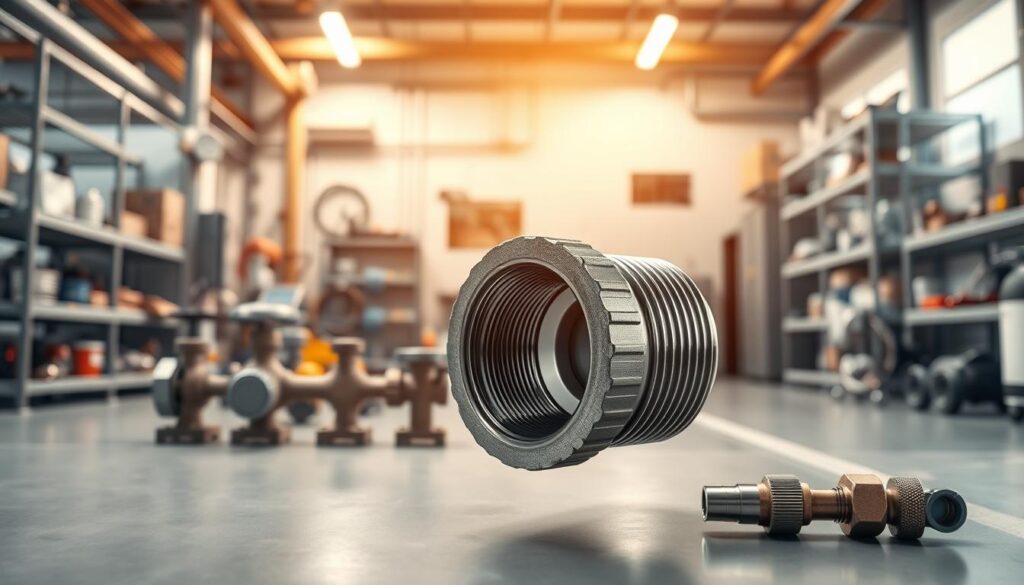
A fip plumbing adapter is key in modern plumbing. It connects different pipes, solving problems in various setups.
Plumbers and DIY fans use fip adapters for smooth pipe connections. They come in many types, like:
- FIP-to-compression adapters
- FIP-to-PEX adapters
- FIP-to-sweat adapters
- FIP-to-barb adapters
- FIP-to-flare adapters
Each adapter has its own use. FIP-to-compression adapters are great for shut-off valves. FIP-to-PEX adapters help mix old and new plumbing systems.
| Adapter Type | Primary Application | Best Used In |
|---|---|---|
| FIP-to-Compression | Connecting shut-off valves | Faucet and toilet installations |
| FIP-to-PEX | Transitioning pipe systems | Home renovations and retrofits |
| FIP-to-Sweat | Joining threaded and copper pipes | Hybrid plumbing systems |
When picking a fip adapter, think about your project’s needs. The right size and material ensure strong, leak-free connections.
Choosing the right adapter can save you time, money, and future plumbing troubles.
Installing FIP Connections Properly
Learning how to install Female Iron Pipe (FIP) connections is key for a reliable plumbing system. Whether you’re a DIY fan or a pro plumber, knowing about plumbing pipe thread types can prevent leaks and save money.
Essential Tools for FIP Installation
Before you start your plumbing project, make sure you have the right tools. This will help you make a successful FIP connection:
- Adjustable wrenches or pipe wrenches
- Teflon tape (PTFE thread seal tape)
- Pipe dope (thread sealant)
- Clean cloth or wire brush
- Thread gauge (optional)
Step-by-Step Installation Process
Here are the exact steps to make a watertight FIP connection:
- Clean the threads well, removing any dirt or old sealant
- Check the threads for damage or wear
- Put Teflon tape on the male threads clockwise
- Hand-tighten the connection smoothly
- Use a wrench for the final tightening
Avoiding Common Installation Mistakes
Stay away from these common mistakes to avoid problems:
- Don’t put tape on in the wrong direction
- Avoid over-tightening or under-tightening
- Don’t cross-thread
- Check if different plumbing pipe thread types fit
- Look for any damage on fittings before you install them
Creating a proper FIP connection needs patience and careful attention. Take your time, follow these steps, and you’ll make a secure, leak-free plumbing joint that lasts.
Plumbing Pipe Thread Types and FIP Compatibility
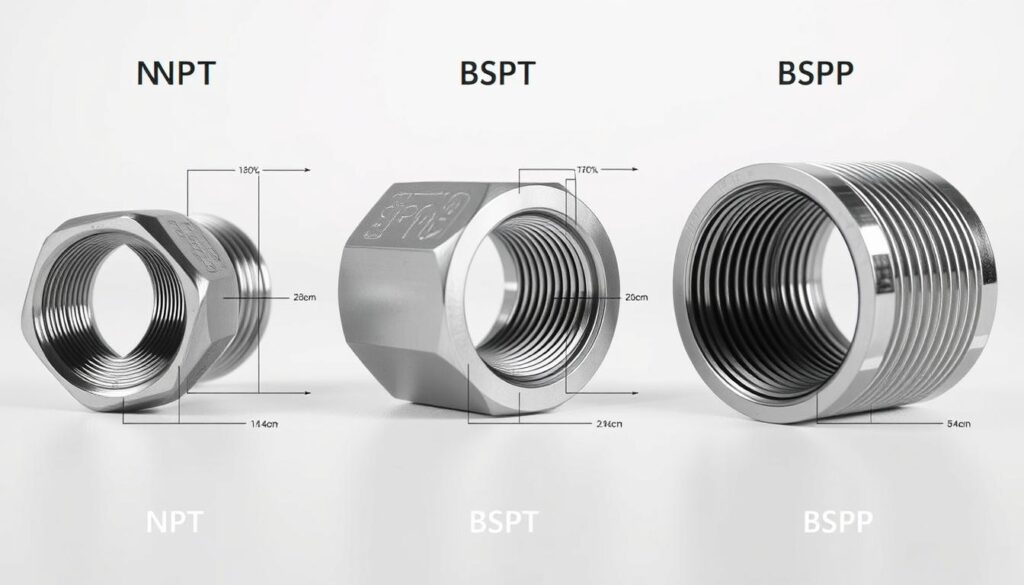
Knowing about plumbing pipe thread types is key for making pipe connections work. Different thread standards can cause big problems during installation. These issues might lead to leaks or damaged fittings.
In the United States, there are a few main plumbing pipe thread types:
- NPT (National Pipe Thread): The standard for most US plumbing applications
- NPTF (National Pipe Thread Fuel): Used in specialized systems
- NPS (National Pipe Straight): Parallel thread design
- BSPT (British Standard Pipe Thread): International threading standard
NPT threads have a special 1° 47′ taper that makes a tight seal. This design is great for creating a strong connection when installed right. Your FIP (Female Iron Pipe) fittings usually match NPT standards. This means they fit well with matching male pipe threads.
When dealing with plumbing pipe thread types, remember these important points:
- Thread angle (usually 60 degrees for NPT)
- Taper specifications
- Thread pitch
- Sealing method requirements
Using the wrong thread types can cause bad connections, leaks, and costly fixes. Always check thread specs before connecting pipes or fittings. This ensures they match up right.
Troubleshooting FIP Connection Issues
Understanding FIP connections is more than just setting them up. Plumbing systems face many challenges that need careful checking and smart fixes. Knowing how to spot and fix FIP connection problems can prevent expensive water damage and big repairs.
Working with FIP connections can lead to several issues that need your focus. It’s key to find and stop leaks to keep your plumbing system strong.
Identifying Leaks in FIP Fittings
Finding leaks in FIP connections needs a detailed plan. Here are some ways to spot problems:
- Look for water stains or mineral buildup
- Use tissue paper to check for moisture
- Test new installations with pressure
Leak signs can tell you what’s wrong. Slow weeping might mean the sealant isn’t right, while sudden leaks could mean the fitting is damaged or too tight.
Preventing Corrosion and Thread Damage
To keep your FIP connections from corroding, try these steps:
- Put dielectric unions between different metals
- Watch the water’s chemistry and pH
- Apply the right protective coatings
- Keep the water pressure right
Knowing about FIP connections means understanding their weak spots. Galvanic corrosion happens when metals touch, so insulation is key for a lasting system.
Proactive maintenance prevents expensive plumbing repairs.
By using these troubleshooting tips, you’ll make your FIP connections last longer and avoid sudden plumbing problems.
Conclusion
Learning about FIP in plumbing makes you more confident in DIY projects. Female Iron Pipe (FIP) connections are key in both homes and businesses. You now know about thread types, materials, and how to install them.
With this knowledge, you can handle plumbing tasks better. You know the difference between brass and stainless steel fittings. Remember, the right fitting is chosen based on the job. Also, installing them right means paying attention to threads, sealants, and how tight to make them.
While you can fix some FIP connections yourself, others need a pro. Always follow safety rules and local building codes. This guide will help you feel more sure and skilled in your plumbing work.
Knowing about FIP plumbing helps keep your home safe and working well. Your effort to learn these skills will save you from leaks and water damage. You’ll have reliable plumbing for many years.