
Affiliate Disclosure
Plumber Guide Guys is a participant in the Amazon Services LLC Associates Program, an affiliate advertising program designed to provide a means for sites to earn advertising fees by advertising and linking to Amazon.
Ever wonder what makes a plumbing issue an emergency? Knowing this can save you from costly damage and keep your family safe. It’s all about understanding when to act fast.
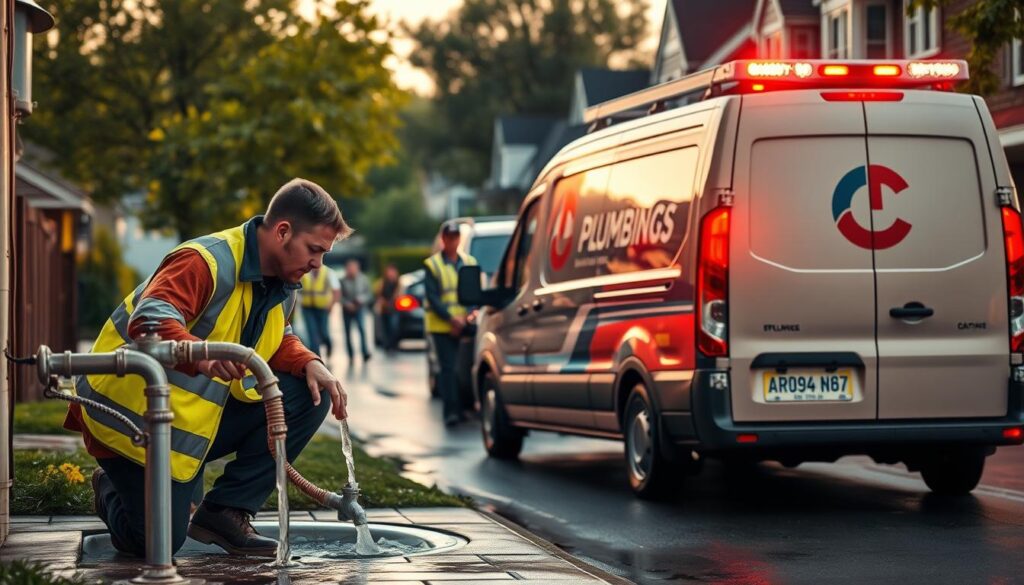
Plumbing emergencies need quick help from experts. They can cause big water damage, harm your home’s structure, and even risk your health. If water is flooding, pipes are bursting, or sewage is backing up, you need emergency plumbing services right away.
It’s important to know when a plumbing problem is serious. Some issues might seem small but can quickly become big problems. Knowing when to call a pro can save you from expensive repairs.
Key Takeaways
- Plumbing emergencies can cause rapid and extensive property damage
- Immediate professional intervention is critical in emergency situations
- Some plumbing issues can quickly escalate from minor to catastrophic
- Water damage can compromise structural integrity of your home
- Emergency plumbing services are essential for preventing long-term problems
Table of Contents
Understanding Plumbing Emergencies and Their Impact
Plumbing emergencies can happen without warning, turning your home into a disaster area. The average home loses about 10,000 gallons of water each year due to leaks. This is a big risk to your property and safety. Knowing the signs of a plumbing emergency can prevent major damage.
Water damage can grow from a small problem to a huge issue quickly. Here are some key concerns:
The Cost of Water Damage to Your Property
- Structural damage to walls and foundations
- Destruction of personal belongings
- Potential electrical system compromises
- Decreased property value
| Damage Type | Estimated Repair Cost |
|---|---|
| Minor Water Leak | $500 – $1,500 |
| Significant Water Damage | $5,000 – $25,000 |
| Structural Repairs | $25,000 – $100,000 |
Health and Safety Risks of Plumbing Issues
Urgent plumbing repairs are key to avoid health dangers. Stagnant water and moisture can lead to:
- Harmful mold and mildew
- Bacterial growth
- Respiratory health risks
- Pest infestations
“Water damage isn’t just about property—it’s about protecting your family’s health and safety.” – Professional Plumbing Association
When Time is Critical in Plumbing Situations
Every minute is important during a plumbing emergency. Quick action can stop big damage, cut down repair costs, and keep your home safe. Always have the number of a trusted plumber ready.
What Is Considered a Plumbing Emergency
Knowing when a plumbing issue is an emergency can prevent costly damage and health risks. Emergency plumbing services are vital for urgent situations that need quick professional help.
Not every plumbing problem is an emergency. But some situations are urgent and need immediate action. Knowing these can help you act fast and avoid damage to your home.
- Severe water leaks that can cause structural damage
- Complete loss of water supply
- Sewage backups
- Gas leaks
- Burst pipes
“When in doubt, call a professional emergency plumbing service to assess the situation quickly.”
Emergency plumbing services focus on issues that could harm your property or health. They aim to respond quickly to stop problems from getting worse.
Some signs you might have a plumbing emergency include:
- Water flooding your home or property
- No water pressure throughout your house
- Potential gas leaks
- Sewer system backing up
- Burst or severely damaged pipes
Your safety and property should always come first when facing plumbing emergencies. Spotting these urgent situations helps you act fast and avoid long-term damage.
Burst Pipes and Severe Water Leaks
A burst pipe can turn your home into a disaster zone fast. Water can spread quickly, damaging walls, floors, and furniture. This can cost thousands to fix. Knowing the risks and how to act can save you from big water damage.
Water leaks are more than a hassle. They can weaken your home’s structure and lead to mold. Spotting early signs is key to avoiding big damage.
Signs of Pipe Damage
- Unexplained water stains on walls or ceilings
- Unusual musty odors
- Visible water puddles near pipes
- Decreased water pressure
- Unusual sounds like whistling or banging in pipes
Immediate Actions to Take
- Shut off the main water supply immediately
- Remove valuable items from affected areas
- Use towels and buckets to collect water
- Contact an emergency plumber
- Document damage for insurance purposes
Prevention Methods
To avoid a burst pipe, maintain your plumbing. Check your pipes often, insulate them in cold spots, and keep your home warm in winter.
| Prevention Strategy | Estimated Cost | Potential Savings |
|---|---|---|
| Pipe Insulation | $100-$500 | Up to $5,000 in water damage |
| Annual Plumbing Inspection | $200-$400 | Potential leak prevention |
| Pressure Valve Maintenance | $50-$150 | Reduces pipe stress |
Quick action during a severe water leak can greatly reduce damage and repair costs.
Sewer System Backups and Overflows
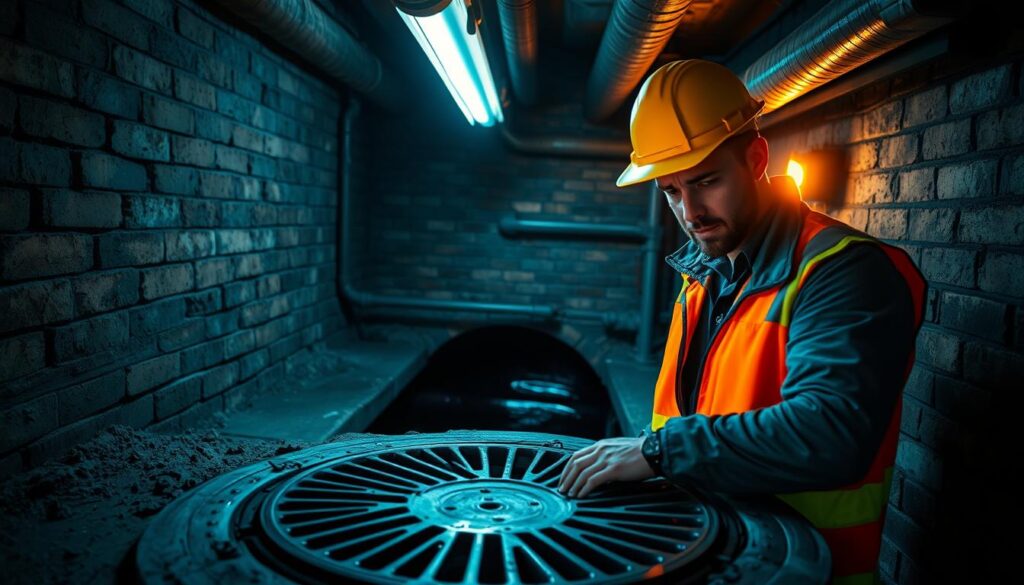
A sewer backup emergency can quickly turn into a nightmare for homeowners. These plumbing disasters create significant health risks and can damage your property. They need immediate attention from emergency plumbing services.
Sewer system backups happen when wastewater can’t flow through pipes. It starts to go back up. Several factors can cause these emergencies:
- Tree roots getting into underground pipes
- Old sewer infrastructure
- Debris and grease clogging pipes
- Broken or collapsed sewer lines
When a sewer backup occurs, you’ll see warning signs. These include:
- Many drain clogs at once
- Gurgling sounds from toilets and drains
- Foul sewage smells in your home
- Water pooling around basement floor drains
“A single sewer backup can release thousands of bacteria and harmful contaminants into your living space.” – Plumbing Safety Institute
Protect your home by recognizing these signs and calling emergency plumbing services right away. Professional technicians can quickly find and fix sewer backup emergencies. This prevents water damage and health hazards.
Quick action is key when facing a sewer system overflow. It helps minimize damage and protect your family’s health.
Gas Leaks and Water Heater Failures
Keeping your home safe means spotting serious plumbing and gas issues fast. Water heater problems and urgent plumbing fixes can be dangerous. They can harm your home and your safety.
Detecting Gas Leaks
Gas leaks are a big danger at home. Spotting the signs early can save lives and avoid big damage. Look out for these important signs:
- Rotten egg or sulfur-like smell
- Hissing sounds near gas lines
- Physical symptoms like dizziness or nausea
- Dead plants near gas lines
“When in doubt, evacuate and call professionals immediately.” – National Safety Council
Water Heater Emergency Signs
Water heater troubles can surprise you. Spotting problems early stops big water damage and expensive fixes.
- Inconsistent water temperature
- Unusual noises from the tank
- Visible water leaks or pooling
- Rusty or discolored water
Safety Protocols
When facing a water heater failure or gas leak, follow these steps:
- Turn off main gas or water supply
- Ventilate the area
- Evacuate immediately if gas is suspected
- Contact emergency services
- Call a licensed professional plumber
Remember: Your safety always comes first when dealing with gas leaks or water heater emergencies.
Flooding and Water Damage Scenarios
Water damage can ruin your home in just a few minutes. A severe water leak can cause a lot of damage quickly. Dealing with a flooded basement is one of the toughest challenges for homeowners.
Knowing the risks of water damage is key to acting fast. Different flooding situations need different solutions:
- Storm-related basement flooding
- Pipe burst incidents
- Sewage backup events
- Appliance malfunction water damage
Ignoring water damage can lead to serious problems. Possible damages include:
| Damage Type | Potential Impact |
|---|---|
| Structural Damage | Foundation weakening |
| Mold Growth | Health risks within 24-48 hours |
| Electrical Hazards | Short circuits and fire risks |
Getting help from water damage experts is vital. They can reduce damage and keep your home safe.
Remember: Quick action is your best defense against extensive water damage.
Critical Plumbing Issues in Winter
Winter brings unique plumbing challenges for homeowners. Cold weather can lead to burst pipes if not handled quickly. Knowing how to protect your pipes and respond to issues can prevent costly repairs and water damage.
Frozen pipes are a big risk in the cold months. Water in pipes can freeze, expand, and damage your plumbing system. Knowing when to call an emergency plumber can prevent major water damage.
Preventing Pipe Freezing
- Insulate pipes in unheated areas like attics, crawl spaces, and exterior walls
- Maintain indoor temperatures above 55°F, even when away
- Seal air leaks near pipe locations to reduce cold air exposure
- Open cabinet doors to allow warm air circulation around pipes
Emergency Thawing Procedures
If you find frozen pipes, act fast. Never use an open flame to thaw pipes. Instead, use these safe methods:
- Apply gentle heat using a hairdryer or heating pad
- Gradually warm the pipe, starting from the faucet end
- Keep faucets open to allow water flow during thawing
| Pipe Location | Freezing Risk | Recommended Action |
|---|---|---|
| Exterior Walls | High | Extra insulation required |
| Crawl Spaces | Medium | Heat tape and insulation |
| Basement | Low | Maintain consistent temperature |
A burst pipe emergency needs quick help from a professional. Call an emergency plumber if you can’t thaw pipes safely or see major damage. Plumbers have the tools to tackle winter plumbing problems.
Signs of Serious Drain and Pipe Blockages
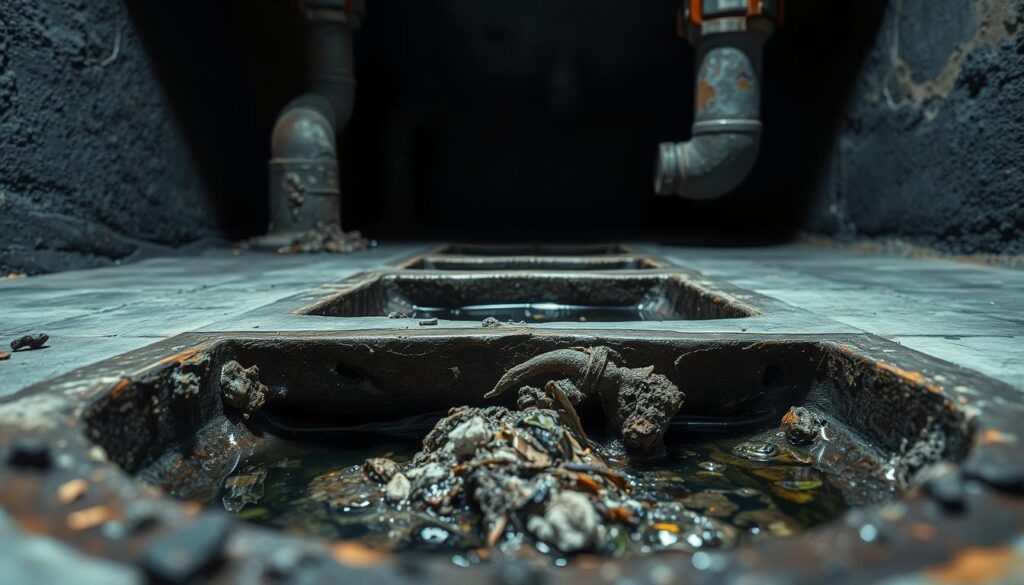
Knowing when you have a plumbing emergency can prevent big problems and save money. Drain and pipe blockages often start with small signs that should not be ignored.
Some key signs of serious drain issues include:
- Multiple drains clogging at once
- Unusual gurgling sounds from toilets or sinks
- Water backing up into different fixtures
- Foul sewage odors coming from drains
- Slow drainage in many household plumbing fixtures
Severe blockages can quickly turn from small problems to big emergencies. The risks include:
| Blockage Severity | Potential Consequences |
|---|---|
| Minor Blockage | Slow drainage, localized clogs |
| Moderate Blockage | Multiple fixture disruptions |
| Severe Blockage | Potential sewer line damage, sewage backup |
If you keep having drainage problems, call a professional plumber. Trying to fix it yourself can make things worse and cause more damage. Plumbers have the tools to find and fix complex blockages fast and right.
Ignoring plumbing emergencies can lead to water damage, health risks, and high repair costs. Trust your gut and get professional help when drainage issues don’t go away with simple fixes.
When to Contact an Emergency Plumber
Knowing when to call an emergency plumber can save you money and prevent damage. Not all plumbing problems need immediate help. But, some situations are urgent.
It’s important to know the difference between a regular plumbing call and an emergency. You should call an emergency plumber for serious issues that could harm your home.
Emergency vs. Regular Service Calls
Some plumbing problems need quick action. Here are situations that call for emergency plumbing services:
- Burst pipes causing extensive water damage
- Sewage backups creating health hazards
- Complete loss of water pressure
- Gas leaks or suspected gas line problems
- Flooding that threatens structural integrity
Cost Considerations for Emergency Services
Emergency plumbing services cost more. Plumbers charge extra for calls outside regular hours. Expect to pay anywhere from $100 to $500 more than standard service rates.
Before calling an emergency plumber, think about the situation. You can try to fix things temporarily. For example, shut off water valves or use shut-off switches. This can help reduce damage until a plumber can come during business hours.
Pro tip: Always keep your local emergency plumber’s contact information handy. This way, you can act fast in urgent plumbing situations.
Conclusion
Knowing what counts as a plumbing emergency can save your home from big damage and expensive fixes. We’ve looked at the key signs of a plumbing emergency that need quick action. These include burst pipes, sewer backups, gas leaks, and water heater failures.
Being alert and taking action early is key to handling plumbing emergencies. Spotting early signs can stop small problems from becoming big ones. Water damage, structural risks, and health hazards show why acting fast is so important.
Your home’s safety relies on knowing and acting on plumbing emergencies. Always have the number of a trusted emergency plumber handy. Regular checks, quick responses, and knowing emergency signs can reduce damage and keep your home’s systems working well.
Prevention is cheaper than fixing emergencies. Spend time on regular checks, learn about your plumbing, and get help when you think there’s a big problem. Being proactive can save you a lot of stress, money, and damage to your property.