
Affiliate Disclosure
Plumber Guide Guys is a participant in the Amazon Services LLC Associates Program, an affiliate advertising program designed to provide a means for sites to earn advertising fees by advertising and linking to Amazon.
What Is An Electrical Plumbing? Ever thought about how water and electrical systems work together in your home? Home electrical plumbing is key to keeping your home comfortable, safe, and working well.
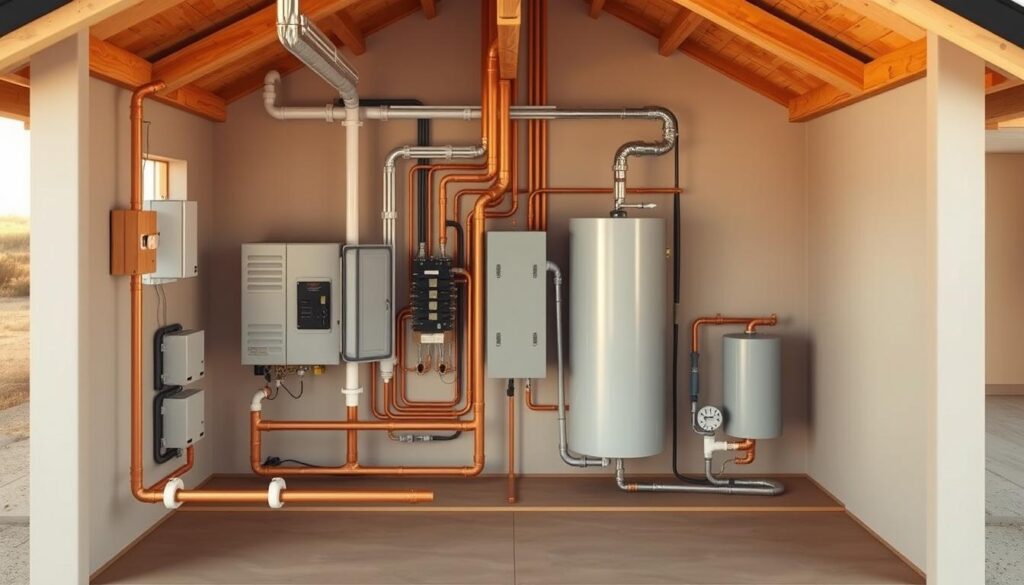
So, what is an electrical plumbing system? It’s not just about pipes and wires. It’s a complex network that links water, drainage, and electricity. This system is designed to manage your home’s needs every day.
Electrical plumbing is more than you might think. It connects water systems with electrical tech for better home management. With smart water heaters and leak detection, it changes how we handle our home utilities.
Key Takeaways
- Electrical plumbing combines water and electrical systems for enhanced home functionality
- Modern systems integrate smart technologies for better monitoring and control
- Comprehensive approach improves home efficiency and safety
- Essential for maintaining modern residential infrastructure
- Provides advanced solutions for water management and electrical integration
Table of Contents
Understanding Plumbing and Electrical Systems Integration
Modern homes have complex systems that link water and electricity. These systems are vital for your home’s smooth operation. They must work together well and safely.
It’s important for homeowners to know how these systems interact. This knowledge helps keep your home safe and efficient. Integrating plumbing and electrical parts needs careful planning and expert help.
Supply Line Network Basics
The supply line network is the core of your home’s water system. It has key features like:
- Water pressure management
- Cold and hot water distribution
- Pipe material selection
- Connection points for fixtures
Electrical Components Overview
Electrical systems power your home’s key parts through smart wiring and circuit management. Important parts include:
- Circuit breaker panels
- Grounding mechanisms
- Waterproof electrical connections
- Power distribution networks
Safety Considerations for Combined Systems
Installing electric plumbing systems needs strict safety rules. Risks include electrical shorts, water damage, and system failures.
| Safety Aspect | Recommended Action |
|---|---|
| Waterproof Connections | Use specialized waterproof electrical components |
| Grounding | Implement robust grounding techniques |
| Professional Inspection | Schedule annual system evaluations |
Professional expertise ensures your combined plumbing electrical systems remain safe, efficient, and reliable.
What Is An Electrical Plumbing
Electrical plumbing is a mix of old plumbing and new electrical parts. It makes water systems in homes smarter and more efficient. This way, managing water and utilities becomes easier.
It combines pipes with smart electrical systems. Your home’s water system now has tech that tracks and controls water use. It does more than just move water.
- Smart water heaters with digital temperature controls
- Intelligent leak detection sensors
- Automated water filtration systems
- Energy-efficient pump mechanisms
Electrical plumbing has changed how we manage water at home. Now, you can see how much water you use, stop leaks, and save energy. All thanks to tech that works together.
| Component | Function | Technology |
|---|---|---|
| Smart Water Meter | Real-time consumption tracking | Wireless monitoring |
| Digital Valve Control | Remote shut-off capabilities | IoT connectivity |
| Pressure Sensors | Leak prevention | Automated alerts |
Knowing about electrical plumbing means seeing its many benefits. These systems offer control, efficiency, and safety for your home’s water.
Modern electrical plumbing turns old water systems into smart, adaptable networks. They meet your home’s unique needs.
Core Components of Modern Plumbing Systems
Knowing about the parts of residential electrical plumbing is key for homeowners. It helps them keep and improve their home’s setup. Today’s plumbing systems use advanced tech that mixes electrical and water management parts well.
Your home’s plumbing is a complex system. It has many parts working together to give you clean water and handle waste well. When installing electrical plumbing, you must think about these important parts carefully.
Pipes and Fittings Explained
Different materials for pipes are important in electrical plumbing. Here are some main ones:
- Copper pipes: Durable and resistant to corrosion
- PVC pipes: Affordable and light
- PEX tubing: Flexible and simple to put in
- Stainless steel pipes: Very strong and lasts a long time
Fixtures and Appliances
Modern plumbing uses smart tech in old fixtures. Now, you can find:
- Touchless faucets with sensors
- Smart water heaters that connect to WiFi
- Leak detection systems
- Shower systems controlled by electronics
Valves and Control Mechanisms
Good water management needs advanced valve systems. Electronic controls help manage water flow, pressure, and temperature well.
Choosing and installing the right valves can greatly improve your home’s water use and avoid damage.
Picking the best parts for your electrical plumbing ensures it works well, lasts long, and saves water in your home.
Essential Materials and Installation Methods
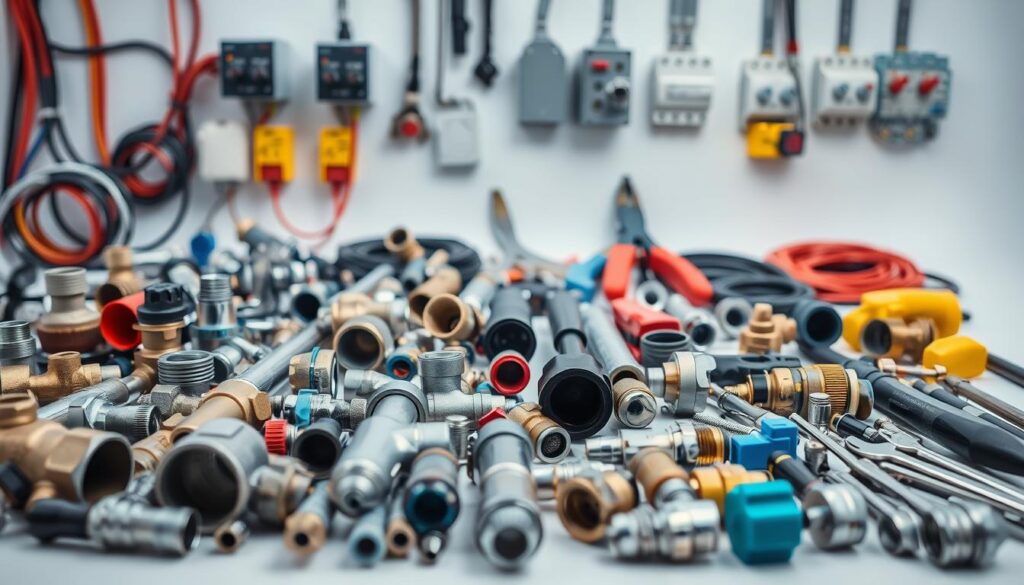
Choosing the right materials is key for a good electrical plumbing job. Your plumber will suggest materials based on local codes and your project needs.
Each pipe material has its own role in your plumbing. Knowing about these materials ensures your plumbing lasts long and works well.
- PVC Pipes: Ideal for drain systems with excellent corrosion resistance
- Copper Pipes: Preferred for water supply lines due to durability
- PEX Tubing: Flexible and easy to install for various applications
- ABS Pipes: Commonly used for waste and drainage systems
When picking materials for your plumbing, think about these important points:
| Material | Best Used For | Durability Rating |
|---|---|---|
| Copper | Hot and cold water lines | High (50+ years) |
| PEX | Flexible connections | Medium (40-50 years) |
| PVC | Drain and waste systems | Medium (25-40 years) |
Experts say the right materials and installation are vital for a good plumbing system. Choosing the right materials and getting expert installation are essential for a reliable plumbing system.
Always check local building codes and talk to experts before starting any plumbing project.
Planning Your Home’s Electrical Plumbing Layout
Creating an efficient home electrical plumbing system needs careful planning. Your layout affects your home’s function, energy use, and upkeep costs.
Good home electrical plumbing design involves key steps. These steps can make your home more efficient and practical.
Efficient Fixture Placement Strategies
Smart placement of fixtures can cut down on installation costs and complexity. Here are some tips:
- Group water-intensive fixtures close together
- Minimize pipe length between water sources
- Create logical flow patterns for water and electrical connections
- Prioritize accessibility for maintenance
Direct Pipe Runs Optimization
Direct pipe runs in your system reduce leak points and costs. Straight pipes make installation easier and improve system performance.
- Map out the most direct path for pipes
- Avoid unnecessary bends and turns
- Consider structural limitations
- Consult professional designers for complex layouts
Future-Proofing Your Electrical Plumbing
Planning for future needs can save time and money. Strategic planning makes upgrades and changes easier to your home’s electrical plumbing.
- Install flexible connection points
- Leave space for future expansions
- Use adaptable piping materials
- Document your current system layout
By thinking ahead, you can build a strong, efficient home electrical plumbing system. It will meet your current needs and be ready for future upgrades.
Common Installation Practices and Standards
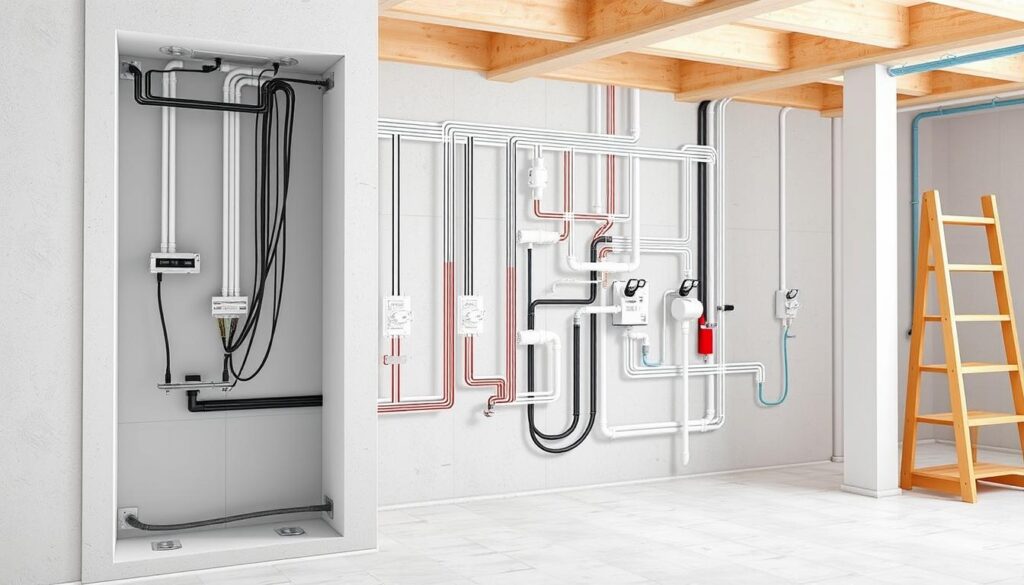
Professionals follow strict standards for electrical plumbing installation. This ensures safety and performance. Your plumbing with electrical components needs careful attention and adherence to best practices.
Modern plumbing systems require specific installation practices. These include:
- Proper pipe support and anchoring to prevent structural stress
- Creating accessible cleanouts for easy maintenance
- Strategic pipe insulation to enhance energy efficiency
- Compliance with local building codes and manufacturer guidelines
Pipe support is key in electrical plumbing. Experts suggest using specialized hangers to reduce vibration and prevent damage.
Energy efficiency is important in modern plumbing. Proper insulation can reduce heat loss and lower utility costs. This makes your installation environmentally friendly and cost-effective.
Precision in installation means a reliable and performing system in the long run.
Always choose professional expertise for complex plumbing with electrical components. Certified technicians know the detailed requirements of modern standards. They ensure your system meets all safety and operational benchmarks.
Maintenance and Troubleshooting Guide
Keeping your home’s electrical and plumbing systems in top shape is key. Homeowners need to know the difference between electrical and plumbing work. This helps manage your home’s systems well.
Regular maintenance stops expensive repairs and keeps systems running smoothly. Knowing when to fix things yourself and when to call experts saves time and money. It also keeps you safe.
Identifying System Issues
Watch out for these warning signs:
- Unusual water pressure changes
- Persistent electrical circuit breaker trips
- Unexplained water stains or moisture
- Flickering lights near water fixtures
- Strange noises in pipes or electrical panels
Preventive Maintenance Steps
Keep your home’s systems safe with these steps:
- Check visible pipes and electrical connections every quarter
- Test ground fault circuit interrupters (GFCIs) monthly
- Look for hidden leaks around water-connected appliances
- Clean aerators and showerheads to prevent mineral buildup
When to Call Professionals
Some problems need a pro:
| Issue Type | Professional Intervention Required |
|---|---|
| Major Electrical Problems | Rewiring, panel upgrades, complex circuit issues |
| Plumbing Complications | Sewer line repairs, underground pipe damage |
| System Integration | Water heater electrical connections, smart home installations |
Remember, while DIY maintenance can help, professional expertise ensures safety and long-term system reliability.
Energy Efficiency and Water Conservation
Modern electric plumbing systems are changing how we manage home energy. They help cut down on utility bills by using smart tech to save water and energy. Combined plumbing electrical systems bring new ways to live green.
Improving energy efficiency means:
- Installing low-flow water fixtures
- Implementing tankless water heaters
- Using smart leak detection systems
- Integrating automated water management technologies
Smart home tech is changing water management. Intelligent sensors watch water use, find leaks, and adjust systems. These systems save money and help the planet.
| Technology | Water Savings | Energy Reduction |
|---|---|---|
| Smart Water Heaters | 15-20% | 10-25% |
| Leak Detection Systems | Up to 35% | 5-15% |
| Low-Flow Fixtures | 40-60% | 8-12% |
Choosing modern plumbing systems makes your home greener. They save money and help the environment.
Safety Protocols and Compliance Requirements
When it comes to electrical vs plumbing work, safety is key for homeowners. Professional plumber electrician services stress the need for strict safety rules. These rules help protect your home and keep you safe.
Working with electrical and plumbing systems is complex. You need to know all about safety standards and rules. It’s important to be careful and well-informed when handling these systems.
Building Codes and Regulations
It’s vital to understand local building codes for any electrical or plumbing project. These rules make sure:
- Things are installed correctly
- Electrical and water systems work well together
- Your home meets safety standards
Emergency Procedures
Knowing how to act in emergencies is important. It can stop big problems and keep you safe. Here’s what you should have ready:
- The location of your main water shut-off valve
- Where to find your primary electrical panel
- Emergency contact info for plumber electrician services
Professional Certification Requirements
| Certification Type | Required For | Minimum Qualifications |
|---|---|---|
| Journeyman Plumber | Complex Plumbing Work | 4-5 Years Apprenticeship |
| Master Electrician | Advanced Electrical Systems | 7-8 Years Experience |
Putting safety and professional skill first keeps your home’s systems working well and safe.
Conclusion
Knowing about electrical plumbing systems is key for today’s homeowners. Your home’s systems need regular care and smart upkeep. Learning about home electrical plumbing helps protect your property and keeps it running well.
Smart homeowners avoid costly repairs by being proactive. Regular checks, knowing your systems, and keeping up with new tech are important. For tough issues, getting help from experts is a must.
New tech is changing how we handle home electrical plumbing. Smart systems and energy-saving designs can make your home better and cheaper to run. Keeping up with new ideas helps you make smart choices for your home.
By learning and caring for your home’s electrical plumbing, you boost comfort, safety, and value. Keep learning, plan wisely, and get expert checks to keep your home modern and safe.