
Affiliate Disclosure
Plumber Guide Guys is a participant in the Amazon Services LLC Associates Program, an affiliate advertising program designed to provide a means for sites to earn advertising fees by advertising and linking to Amazon.
What Is an AAV in Plumbing? Ever thought about how plumbing systems handle ventilation without roof holes? Air admittance valves (AAVs) are the smart solution you might not know about.
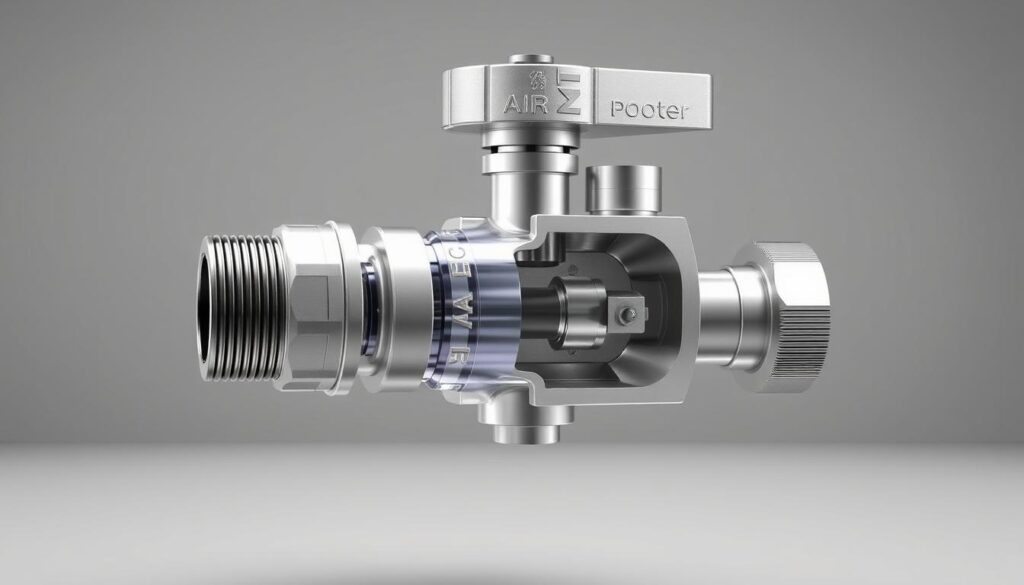
An air admittance valve is a clever device that changes the game for plumbing systems. It’s a smart way to handle ventilation, keeping sewer gases out of your home. It’s a game-changer for both homes and businesses.
If you’re a homeowner, contractor, or just interested in plumbing, this guide is for you. We’ll cover everything about AAVs in plumbing and why they’re important for your property.
Key Takeaways
- AAVs eliminate the need for traditional roof penetrations
- Perfect for kitchen island sinks and remote bathroom installations
- Provides cost-effective ventilation solutions
- Reduces complex plumbing installation requirements
- Helps maintain proper drainage system functionality
Table of Contents
What Is an AAV in Plumbing
Air admittance valves (AAVs) are new plumbing vent options that change how we design drainage systems. They are smart solutions for homes and businesses where roof vents are hard or not possible.
Understanding Air Admittance Valves
An AAV is a mechanical valve that lets air into your plumbing but keeps sewer gases out. Brands like Oatey Sure-Vent and Studor vent make these valves popular among plumbers.
- Compact design that fits under sinks or in walls
- Eliminates need for extensive roof penetrations
- Provides efficient air circulation in drainage systems
How AAVs Differ from Traditional Plumbing Vents
Traditional plumbing vents are always open pipes through your roof. But, an AAV is a dynamic ventilation solution that only opens when needed.
Here’s what sets them apart:
- Reduced roof penetrations
- Fewer possible leak points
- Greater flexibility in fixture placement
When you think about what is an AAV in plumbing, it’s a modern, smart choice. It’s better than old venting methods in many ways.
The Purpose of Air Admittance Valves in Your Home
Knowing how air admittance valves work is key to a healthy drainage system in your home. These devices are vital in keeping your home safe from plumbing problems.
An air admittance valve (AAV) has several important roles in your home’s plumbing:
- Protect trap seals from negative pressure
- Prevent sewer gas from entering your living space
- Equalize pressure in the drainage system
- Reduce possible drain-related issues
AAVs are key in stopping sewer gas from getting into your home. Your home’s P-traps have a water seal that keeps out harmful gases. But, when water flows, it can create negative pressure that might break this seal.
AAVs solve this problem by letting air into the system when needed. They keep your trap seals safe, keeping your home free from bad sewer gases.
By letting air in at the right time, AAVs stop issues like slow drains and gas leaks. They are a must-have in modern plumbing, adding safety and flexibility to your home.
How AAV Valves Work in Plumbing Systems
AAV valves are cleverly designed to solve ventilation problems in plumbing. They use a special pressure-based mechanism. This makes them essential in modern plumbing systems.
Negative Pressure Activation Explained
Water flowing through your pipes creates a vacuum-like effect. This is called negative pressure activation. It pulls air along, creating a pressure drop.
This drop in pressure is what makes the AAV work. It’s a key part of how AAVs keep your plumbing system working right.
- Typical activation occurs at -0.01 psi pressure
- Valve responds instantly to pressure changes
- Prevents siphoning of trap water
The One-Way Valve Mechanism
The AAV’s valve mechanism is truly impressive. It has a spring-loaded diaphragm that stays closed unless needed. Negative pressure activation opens it, letting air in.
This valve is special because it lets air in but keeps sewer gases out. When pressure is equal, the spring and gravity close it again. This keeps your home smelling fresh and clean.
AAVs are a smart choice for plumbing ventilation. They don’t need electricity or complex upkeep.
When to Use AAV: Ideal Applications and Scenarios
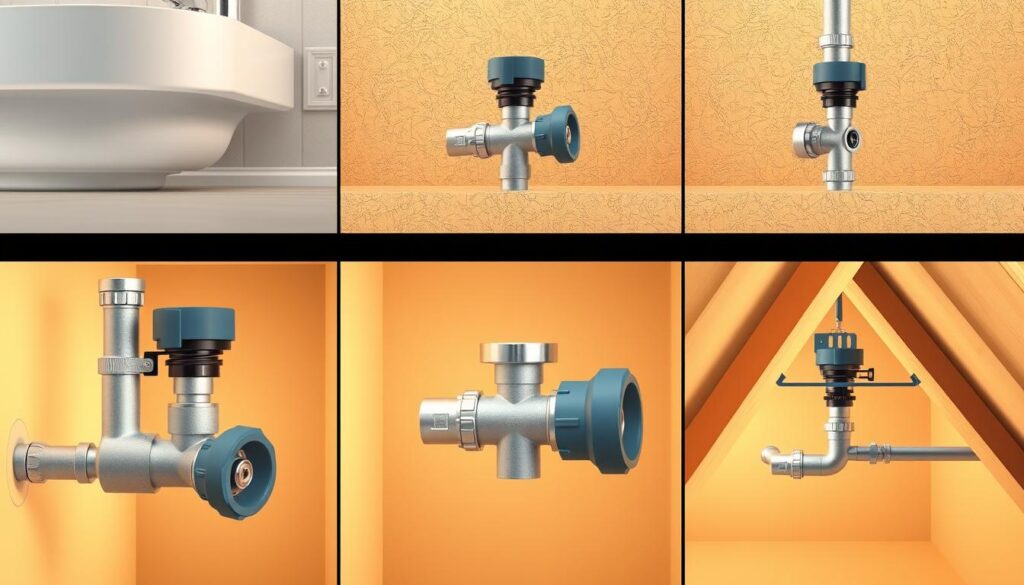
Deciding when to use an Air Admittance Valve (AAV) can greatly improve your kitchen remodel or renovation projects. These innovative plumbing solutions are perfect for tricky fixture placement scenarios.
AAVs are most useful in several situations:
- Kitchen island sink installations
- Remote bathroom plumbing
- Renovation projects with complex layout challenges
- Locations where traditional roof venting is impractical
When planning your kitchen remodel, an AAV is key for island sinks. Traditional venting would need expensive piping through floors and roofs. An AAV installed in the island cabinet offers a simple solution that keeps plumbing working right.
Remote bathroom scenarios are another great use for AAVs. Adding a bathroom in a basement, attic, or far from existing vents? An AAV can save you hundreds or thousands of dollars on complex venting.
Pro Tip: AAVs work best as supplementary venting for individual fixtures, not as a complete replacement for your home’s entire venting system.
Renovation projects also benefit a lot from AAV installations. They let you move fixtures easily, avoiding big changes to walls and ceilings. This keeps your home’s structure intact while giving you plumbing flexibility.
AAV Installation Requirements and Best Practices
Installing an Air Admittance Valve (AAV) needs careful attention and specific guidelines. Knowing the right installation steps ensures your plumbing works well and follows local codes.
Choosing the Correct AAV Size Based on DFU Load
Choosing the right AAV size is based on the Drain Fixture Unit (DFU) load. Your DFU load shows the total water from connected fixtures. Here’s a quick guide to size your AAV:
- Bathroom sink: 2 DFU
- Toilet: 3-4 DFU
- Kitchen sink with disposal: 2 DFU
When venting multiple fixtures, add their DFU loads. Pro tip: Always pick an AAV that can handle your total load to avoid drainage problems.
Proper Placement and Positioning Guidelines
Vertical installation is key for AAV performance. Follow these important placement rules:
- Install within 15 degrees of vertical alignment
- Position at least 4 inches above the horizontal drain pipe
- Ensure free air access to the valve
- Maintain accessibility for future maintenance
Step-by-Step Studor Vent Installation Process
Follow these steps for a proper AAV setup:
- Remove protective packaging
- Measure and cut PVC pipe accurately
- Deburr pipe edges
- Apply PVC primer and cement
- Wrap Teflon thread sealant tape clockwise
- Thread AAV into adapter hand-tight
- Test installation by running water
Proper installation means your AAV will work well for decades. It’s a great alternative to traditional venting methods.
Plumbing Code Requirements for AAVs
Understanding the plumbing code for AAVs can be tricky. This is because rules change from place to place in the United States. It’s key to know the local building code before putting in an air admittance valve (AAV) at home.
The United States doesn’t have one plumbing code for everyone. Two main codes rule AAV setups:
- International Plumbing Code (IPC)
- Uniform Plumbing Code (UPC)
The IPC allows AAVs, but the UPC often says no without local okay. Your local Authority Having Jurisdiction (AHJ) decides what’s okay.
Always check local code approval before installing an AAV. This ensures you follow rules and avoid inspection problems.
Important plumbing code points for AAVs are:
- AAVs must be at least 4 inches above horizontal branch drains
- At least one traditional vent stack must go through the roof
- AAVs can’t replace traditional roof venting systems
Important tip: Talk to your local building department to know specific UPC rules and local code needs before installing an AAV.
Following local building code rules makes sure your plumbing works right and meets all standards.
Air Admittance Valve Problems and Troubleshooting
Air admittance valves (AAVs) are key in modern plumbing. But, they can have problems that need attention. Knowing the signs of AAV failure and how to fix issues can save you money and avoid plumbing headaches.
Common AAV Failure Signs
Spotting air admittance valve problems early can stop bigger plumbing issues. Look out for these signs of AAV failure:
- Persistent sewer odor around sinks or in cabinets
- Unusual gurgling sounds when water drains
- Slow drainage, meaning poor venting
- Sewer flies or drain flies near the valve
These signs mean your AAV’s seal is broken, letting sewer gases into your home. Even though AAVs last about 30 years, they can fail mechanically.
Maintenance and Replacement Considerations
Keeping your AAV in good shape can make it last longer and avoid failures. Here are some important maintenance tips:
- Wipe the AAV with a damp cloth to clean off dust
- Never paint or lubricate the valve
- Make sure it’s installed vertically
- Check if it’s covered by warranty for replacements
When dealing with AAV problems, it’s often better to replace it than fix it. Most makers offer warranties from one to several years. Always follow the manufacturer’s instructions to keep your warranty valid during maintenance or replacement.
Pro tip: If you keep smelling sewer odors or have drainage issues, call a professional plumber to check your air admittance valve system.
AAV vs Traditional Plumbing Vents: Pros and Cons
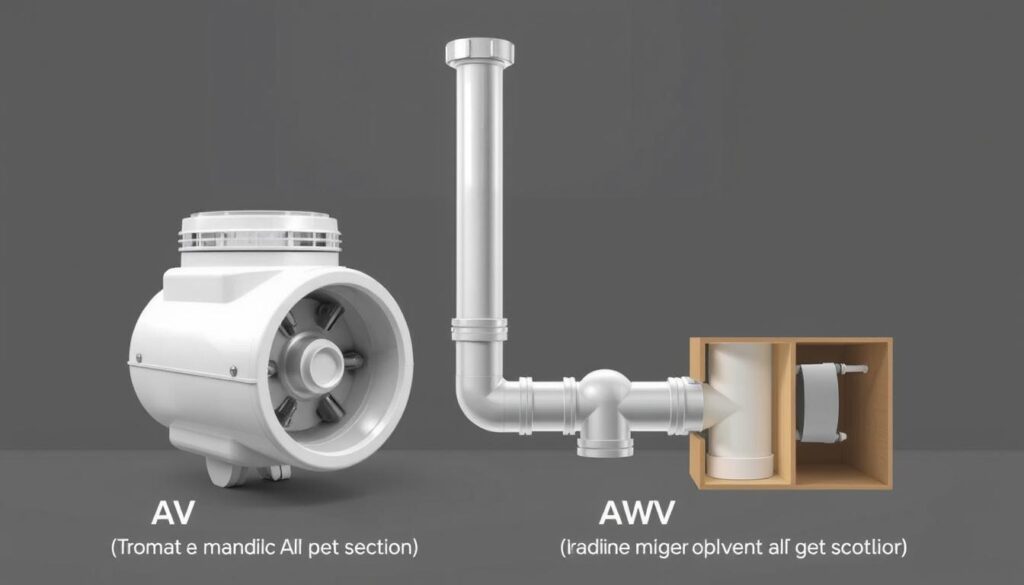
Choosing between air admittance valves (AAVs) and traditional plumbing vents is a tough decision for homeowners. Each option has its own benefits for your plumbing system. The right choice depends on your specific needs.
Cost and Installation Considerations
AAV systems are often cheaper and easier to install. Traditional plumbing vents need more roof work and complex pipes, which can be expensive. AAVs:
- Save on materials
- Shorten installation time
- Make retrofitting simpler
- Need fewer roof holes
Performance and Maintenance
Maintenance for AAVs and traditional vents is quite different. Traditional vents don’t have moving parts, while AAVs do. This means AAVs might need to be replaced more often.
| Feature | AAV | Traditional Vents |
|---|---|---|
| Lifespan | 20-30 years | Indefinite with proper installation |
| Maintenance | Periodic replacement | Minimal maintenance |
| Installation Complexity | Low | High |
What you need for your plumbing and local rules will decide the best choice. Some places don’t allow AAVs, so check the rules first.
Professional plumbers suggest looking at your home’s layout and ventilation needs when picking between AAVs and traditional vents.
Choosing between AAVs and traditional vents depends on your home, budget, and local rules. The right choice will ensure your plumbing works well.
Conclusion
Air admittance valves are a new way to solve plumbing problems. They are a flexible option compared to old venting systems. Knowing how they work helps you choose the best for your home.
It’s important to follow local building codes when using air admittance valves. Your area might have special rules for these devices. Check your local codes before installing to make sure it’s done right.
AAVs are great for certain situations like kitchen island sinks or complex remodels. They save money and are easier to install than traditional vents. With the right choice and placement, they can handle your home’s drainage well.
Even though air admittance valves have many benefits, they’re not for every situation. Talking to a licensed plumber can help find the best solution for your home. This careful planning ensures your plumbing system works well for a long time.