
Affiliate Disclosure
Plumber Guide Guys is a participant in the Amazon Services LLC Associates Program, an affiliate advertising program designed to provide a means for sites to earn advertising fees by advertising and linking to Amazon.
What is a Union in Plumbing? Ever wondered how plumbers quickly disconnect pipes without cutting through entire sections of your home’s plumbing system? The secret lies in a small but mighty component called a plumbing union.
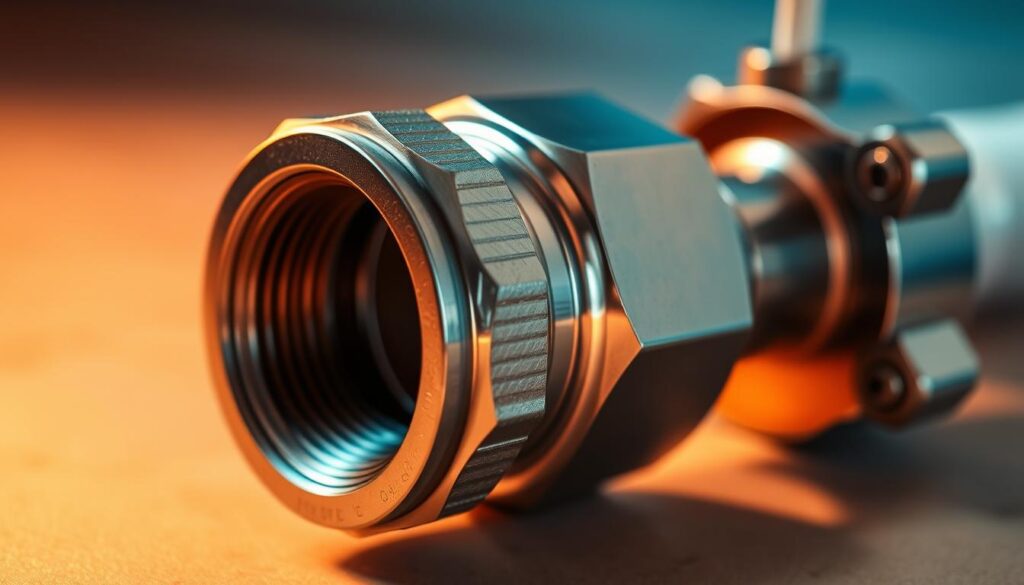
A plumbing union is a specialized fitting designed to connect pipes while providing an easy method for disconnection and maintenance. Unlike traditional connections that require cutting or extensive dismantling, a union in plumbing offers a simple solution for pipe connections that can be quickly separated when needed.
These ingenious fittings are critical in residential, commercial, and industrial plumbing systems. By understanding the plumbing union fitting purpose, you can appreciate how this small component makes complex plumbing repairs and maintenance significantly easier.
Key Takeaways
- Plumbing unions allow easy pipe disconnection without extensive cutting
- Provides quick access for maintenance and repairs
- Consists of three primary components for secure connections
- Used in various plumbing applications across different industries
- Reduces overall time and cost of plumbing work
Table of Contents
Understanding Plumbing Unions: Basic Components and Functions
Working with piping systems means knowing about threaded plumbing unions. They are key for setting up and keeping pipes in good shape. A union nut lets you easily take apart and put back together pipes.
Plumbing unions are made to connect pipes securely and reliably. They are designed to disconnect quickly without harming the system.
Three Main Parts of a Plumbing Union
A plumbing union has three main parts:
- Male End: Threads into the pipe for the first connection
- Female End: Takes the male end for a tight seal
- Union Nut: Holds both ends together tightly
How Plumbing Unions Create Watertight Seals
The union nut is key to a leak-free connection. When tightened, it presses a special gasket between the pipe ends. This makes a seal that stops water leaks.
Types of Thread Patterns and Connections
There are different thread patterns for plumbing unions:
- NPT (National Pipe Thread)
- BSPP (British Standard Parallel Pipe)
- BSPT (British Standard Taper Pipe)
Each pattern has its own benefits for plumbing needs. Choosing the right one ensures your system works well and reliably.
What is a Union in Plumbing?
A plumbing union is a key connection component. It lets you easily disconnect and reconnect pipes. This way, you don’t have to cut or damage your whole plumbing system. Unlike other fittings, a plumbing union fitting has special benefits for upkeep and fixing.
To understand a plumbing union, start with its three-part design. These fittings have:
- Two end connections
- A central nut
- Sealing mechanism
The main purpose of a plumbing union is more than just connecting pipes. It gives both pros and DIY folks a flexible way to handle pipe systems with little hassle.
Plumbing unions are a game-changer for pipe connections. They make quick and easy system changes possible.
Plumbing unions are used in homes, businesses, and industries. They’re great for places where you often need to do maintenance or might change the system later.
| Union Type | Primary Use | Material Compatibility |
|---|---|---|
| Threaded Union | Residential Plumbing | Brass, Steel |
| Compression Union | High-Pressure Systems | Copper, Stainless Steel |
| Welded Union | Industrial Applications | Carbon Steel |
Choosing the right union for your needs ensures your plumbing system works well and lasts long.
Key Advantages of Using Plumbing Unions
Plumbing unions are great for both pros and DIY fans. They make working with pipes easier, faster, and cheaper in the long run.
Plumbing unions do more than just connect pipes. They change how you install and fix pipes.
Easy Maintenance and Repair Access
Learning to use plumbing unions shows their biggest plus: easy maintenance. They let you disconnect quickly without taking apart the whole pipe. This is super helpful in tight spots or complex systems.
- Enables rapid equipment replacement
- Minimizes system disruption during repairs
- Reduces labor-intensive pipe cutting
Time-Saving Installation Benefits
Professionals love unions for how fast they install. They skip the need for welding or threading, cutting down project time a lot.
| Installation Method | Time Required | Complexity |
|---|---|---|
| Traditional Pipe Connection | 2-3 hours | High |
| Union Connection | 30-45 minutes | Low |
Cost-Effectiveness in Long-Term Maintenance
Choosing good plumbing unions saves money over time. They make repairs quicker and cut down on downtime. This means less money spent on labor and parts.
Things like pumps work better with unions. They can be taken out without messing with the whole pipe system.
Different Types of Plumbing Unions
Plumbing unions are key parts that link pipes in many systems. Knowing the different types helps you pick the right one for your project.
Experts identify several main types of plumbing unions. These are based on the material and how they’re used:
- Copper pipe union: Great for water lines and heating systems
- PVC union fitting: Best for drainage and low-pressure needs
- Brass unions: Good for high-pressure and where corrosion is a problem
- Stainless steel unions: Ideal for industrial and chemical use
Each type has its own benefits for different plumbing needs. The material affects how well it works, lasts, and fits with other pipes.
| Union Type | Material | Primary Application | Temperature Range |
|---|---|---|---|
| Copper Pipe Union | Copper | Residential Water Lines | -20°F to 250°F |
| PVC Union Fitting | Polyvinyl Chloride | Drainage Systems | 32°F to 140°F |
| Dielectric Union | Brass/Steel | Preventing Galvanic Corrosion | -40°F to 300°F |
When choosing a plumbing union, think about the pipe material, pressure, and the environment. This ensures it works well and lasts long.
Materials Used in Plumbing Union Construction
Choosing the right material for your plumbing union is key for lasting performance. Different materials have their own benefits based on your piping needs and the environment.
Plumbing unions are made from various materials, each suited for different needs. Your choice greatly affects your piping system’s durability and function.
Metal Union Materials
Metal unions are a top pick for many plumbing jobs. A copper pipe union is known for its durability and resistance to corrosion. Here are some metal options:
- Brass: Great for water and gas lines
- Stainless steel: Offers high strength and rust resistance
- Bronze: Best for marine and high-pressure settings
Plastic Union Materials
Plastic unions are becoming more popular in plumbing. A PVC union fitting is light, affordable, and works well for many tasks.
- PVC: Light and resistant to chemicals
- CPVC: Better for high temperatures
- ABS: Strong for drainage systems
Specialty Union Materials
For specific needs, unique materials are used. A dielectric union is key for joining different metals to avoid corrosion.
“The right union material can prevent system failures and extend your plumbing’s life.” – Plumbing Engineering Quarterly
When picking a plumbing union, think about temperature, chemical safety, and pressure. This ensures your system works its best.
Union vs Coupling: Understanding the Differences
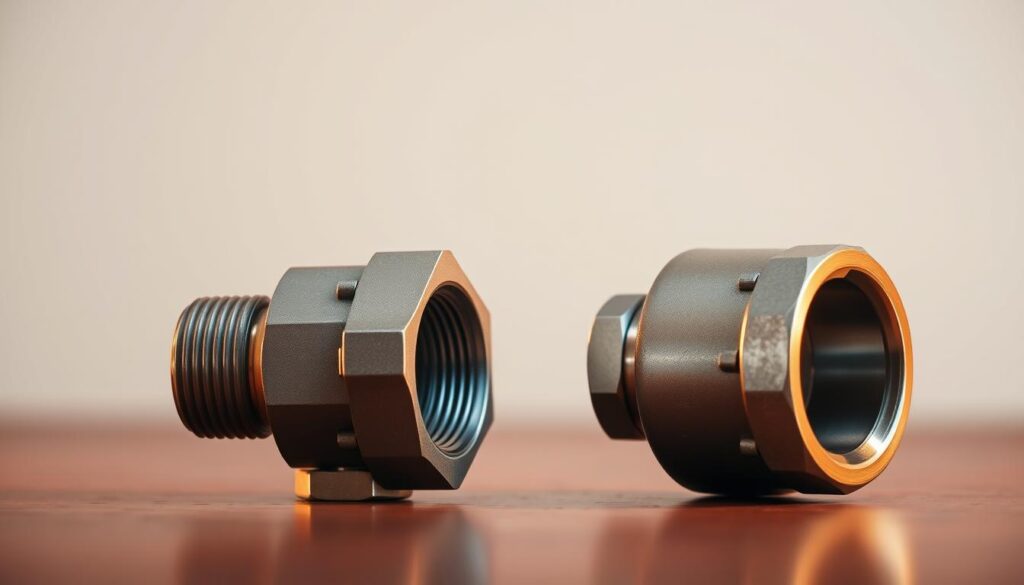
Working with plumbing systems means knowing the difference between unions and couplings. Both are key for pipe connections, but they serve different roles. This can affect your project’s success.
Plumbing unions have big advantages over couplings. They let you disconnect pipes easily without cutting or rotating the whole pipe. This is great for maintenance and repairs.
- Unions allow easy pipe disconnection
- Couplings create a permanent connection
- Unions feature a distinctive three-piece design
The main difference between unions and couplings is their design and use. A union has three parts:
- Nut
- Male end
- Female end
“Unions provide flexibility where standard couplings cannot,” says professional plumber Mark Rodriguez.
When picking between a union and a coupling, think about your plumbing needs. Unions are best for frequent disconnections or maintenance. Couplings are better for permanent connections.
Knowing the difference helps you choose the right fitting for your project. This saves time and avoids installation problems.
Common Applications for Plumbing Unions
Plumbing unions are key in making connections flexible and efficient. They are used in both homes and businesses. Knowing how they work helps everyone improve their plumbing setups.
These unions are very adaptable, making them essential in many places. They let you easily connect and disconnect without damaging pipes or needing special tools.
Residential Plumbing Uses
In homes, copper pipe unions are very useful for many tasks:
- Water heater connections
- Under-sink plumbing modifications
- Bathroom and kitchen fixture replacements
- Irrigation system maintenance
Commercial and Industrial Applications
Businesses use plumbing unions for bigger projects:
| Industry | Specific Applications |
|---|---|
| HVAC Systems | Flexible ductwork and piping connections |
| Manufacturing | Process piping repairs and reconfigurations |
| Municipal Water | Large-scale distribution network maintenance |
Plumbing unions are very useful in many places. They help with quick fixes and changes without much trouble.
Installation Guidelines for Plumbing Unions
Installing a threaded plumbing union needs precision and attention to detail. To install a plumbing union right, follow a step-by-step guide. This ensures a tight and leak-free connection.
Before starting, make sure you have these tools:
- Pipe wrench
- Thread sealant or pipe tape
- Clean cloth
- Protective gloves
The main steps for installing a threaded plumbing union are:
- Clean the pipe ends well, removing dirt or debris
- Check the pipe threads for damage or issues
- Apply thread sealant or pipe tape carefully
- Align the union parts exactly
- Hand-tighten the connections first
- Use a pipe wrench for the final tightening
“Proper alignment is critical to preventing leaks and ensuring a successful plumbing union installation.”
When working with different pipe materials, check for compatibility. Brass unions fit well with copper, while galvanized steel unions work with iron pipes. Always follow the manufacturer’s guidelines and local plumbing codes for a safe installation.
Pro tip: Don’t over-tighten the union. This can damage the threads and ruin the seal. A gentle, controlled tightening is best for installing your plumbing union.
Maintenance and Troubleshooting of Plumbing Unions
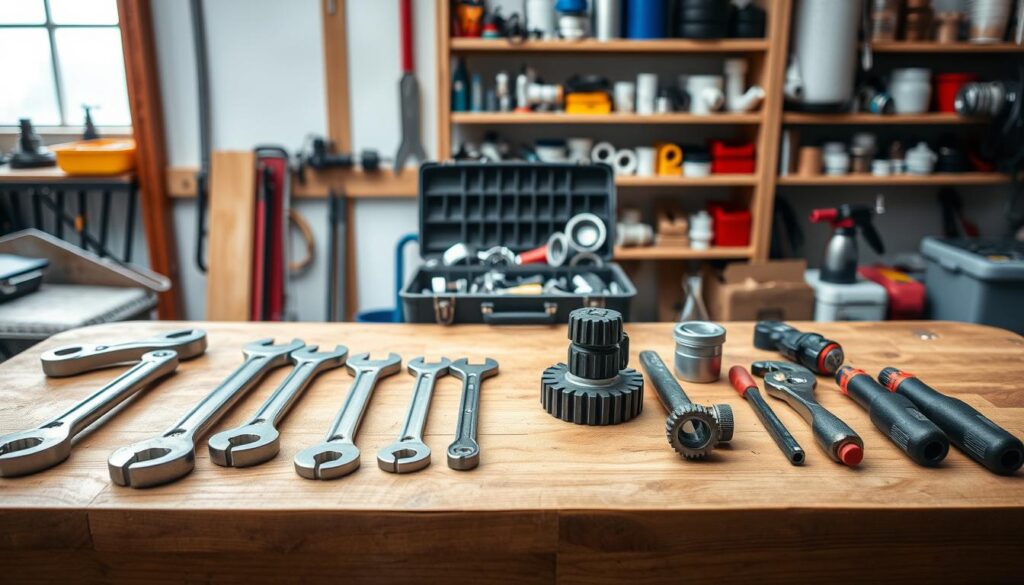
Keeping union nuts in plumbing well-maintained is key for lasting pipe connections. Regular checks and care stop leaks and make your plumbing last longer.
Learning to install plumbing unions means knowing some important maintenance tips:
- Check unions often for wear or rust
- Clean the threads and surfaces
- Use the right lubricant
- Make sure everything is aligned right
Fixing common union problems needs a careful plan. Finding issues early can save you a lot of time and money.
| Union Problem | Potential Solution |
|---|---|
| Minor Leakage | Tighten the union nut carefully |
| Corrosion | Replace the union and clean the area |
| Stuck Union | Use penetrating oil and gentle force |
Always put safety first when working with plumbing unions. Wear gloves and have the right tools ready for any maintenance or repairs.
Pro tip: A well-maintained union can last for years with minimal effort.
Regularly lubricating the union nut helps prevent it from sticking. This makes it easier to disconnect later. Use a good pipe thread sealant or a lubricant made for plumbing connections.
Safety Considerations When Using Unions
Plumbing unions are key to secure pipe connections. But, knowing their safety limits is vital to avoid failures. When using different types of plumbing unions, it’s important to focus on several safety factors. This ensures they work well and keep the system safe.
Understanding the limits of your chosen union is where safety starts. Experts must look at several important points before they install them.
Pressure Ratings and System Limitations
Each dielectric union has a specific pressure limit that must not be crossed. Going over this can cause serious system failures. Important things to think about include:
- Maximum allowable working pressure
- Pressure class ratings
- Material strength capabilities
- Operating environment conditions
Temperature Performance Factors
Temperature is a big factor in how unions perform. Different types of plumbing unions can handle different temperatures. This affects their strength and how well they seal.
- Recommended temperature ranges
- Thermal expansion characteristics
- Material heat resistance
- Potential thermal degradation risks
Chemical Compatibility Assessment
Choosing unions that resist chemicals is key to avoiding corrosion. It’s important to check if the union materials can handle the fluids they’ll carry. This prevents harmful chemical reactions.
By looking at pressure limits, temperature needs, and chemical resistance, you can make sure your plumbing unions are safe and reliable. This is true for many different uses.
Choosing the Right Union for Your Project
Choosing the right plumbing union is key to a successful project. It’s important to know the differences between various plumbing unions and their uses.
When looking at pvc union fitting and copper pipe union options, consider a few things:
- Material compatibility with existing piping systems
- Pressure and temperature requirements
- Environmental conditions
- Budget constraints
Each plumbing union type has its own benefits. Brass unions are great for high-pressure systems because they’re durable. PVC fittings are best in corrosive or low-pressure situations.
“The right union can make or break your plumbing project’s long-term performance and reliability.”
Here are some important things to think about:
- Pipe material matching
- System pressure ratings
- Temperature tolerance
- Chemical resistance
- Installation complexity
Experts say to carefully check your project needs before picking a union. Talking to a local plumber can help you choose the best option for your project.
Conclusion
Plumbing unions are key in making piping systems flexible and easy to maintain. They are used in homes, businesses, and factories. A union lets you easily fix or change pipes without cutting too much or taking things apart.
These fittings do more than just connect pipes. They help both pros and DIY folks quickly swap out pipe parts. This means less time waiting for repairs and lower costs. Unions are a must-have for keeping plumbing systems running smoothly.
When picking unions for your project, think about what material they’re made of, how much pressure they can handle, and the environment they’ll be in. Choosing the right ones ensures your plumbing system works well and can change with your needs. As plumbing tech gets better, unions will keep being a key part of it.
Knowing about plumbing unions can really help your pipes last longer and work better. Take the time to learn about them. This way, you can make smart choices that keep your plumbing in top shape.