

Affiliate Disclosure
Plumber Guide Guys is a participant in the Amazon Services LLC Associates Program, an affiliate advertising program designed to provide a means for sites to earn advertising fees by advertising and linking to Amazon.
What Is A Smoke Test For Plumbing? Ever wondered how pros find hidden leaks in plumbing without tearing down walls? A plumbing smoke test is a clever solution you might not know about.
A plumbing smoke test is a smart way to find hidden leaks in plumbing systems. It uses non-toxic smoke to show where leaks might be. Plumbers use it to find leaks that are hard to see.
This method can find problems deep underground, showing exactly where leaks might be. It’s a powerful tool for keeping plumbing systems in good shape and catching problems early.
Key Takeaways
- Smoke tests detect hidden plumbing leaks with precision
- Non-toxic smoke reveals possible system weaknesses
- Can spot issues up to 100 feet underground
- Helps avoid expensive damage to buildings
- Key tool for a thorough plumbing check
Table of Contents
Understanding Plumbing Smoke Tests: Basic Overview
Smoke testing for sewer line leaks is a key method for finding hidden pipe damage. It helps homeowners and plumbers spot problems that might not be seen with other methods. This technique is precise and efficient.
Plumbers use smoke testing to find underground pipe issues that other methods might miss. They use non-toxic smoke to find leaks and weak spots in pipes.
What Makes Smoke Testing Effective
Smoke testing is a powerful tool for several reasons:
- It finds hidden leaks in complex pipe systems
- It can spot problems up to 30 meters underground
- It gives a full system check
- It’s a gentle way to inspect systems
Types of Non-toxic Smoke Used
Experts use special smoke generators to make safe, visible smoke. These include:
| Smoke Type | Characteristics | Primary Use |
|---|---|---|
| Mineral Oil-Based Smoke | Dense, long-lasting visibility | Underground pipe inspections |
| Glycol-Based Smoke | Quick dissipation, light trace | Surface-level leak detection |
| Water-Based Smoke | Environmentally friendly | Residential plumbing systems |
Key Benefits of Smoke Testing
Smoke testing offers many benefits:
- It quickly finds problems
- It’s a cost-effective way to diagnose
- It stops big damage before it starts
- It shows clear signs of issues
Smoke testing is a smart and simple way to uncover plumbing system problems.
Essential Equipment and Materials for Smoke Testing
Getting ready for a DIY plumbing smoke test means picking the right tools. You need professional plumbing smoke test equipment. Knowing how each tool works is key to finding leaks.
- Smoke generator or smoke machine
- Non-toxic colored smoke tubes
- Protective safety gear
- Measuring tools
- Sealing plugs and adapters
Professional kits have better features than DIY ones. They help find even small pipe leaks more accurately.
“The right equipment can make the difference between identifying a hidden leak and missing critical infrastructure problems.” – Professional Plumbing Association
Your safety gear should include:
- Respirator mask
- Safety goggles
- Protective gloves
- Ventilated work area
If you’re doing it yourself, you can rent equipment from local stores. Prices vary from $50 to $300. This depends on the kit’s features and what it comes with.
Pro tip: Always check if the equipment fits your plumbing system before you start.
What Is A Smoke Test For Plumbing
Smoke testing plumbing systems is a key method for finding hidden leaks and issues in pipes and drainage. It helps homeowners and professionals spot problems early. This way, you can avoid big damage later on.
Plumbing leak detection has improved a lot, with smoke testing being a top choice. It’s a non-invasive way to check complex pipe systems. By using special smoke, technicians can find weak spots and problems quickly.
How Smoke Testing Identifies Leaks
Technicians use non-toxic smoke to test your plumbing. The smoke shows where there are leaks or problems. This makes it easy to find:
- Hairline pipe fractures
- Damaged pipe seals
- Improper pipe installations
- Underground pipe breaches
Common Problem Areas Detected
Smoke testing finds important issues in many plumbing areas. These include:
- Sewer line connections
- Roof vent pipes
- Basement drainage systems
- Underground pipe networks
Duration and Testing Process
A smoke test usually takes 15 to 30 minutes. It depends on your property’s size and how complex it is. Technicians watch the smoke to find leaks or problems.
“Smoke testing provides a complete look at your plumbing system’s health. It shows problems before they cost a lot to fix.” – Professional Plumbing Association
Safety Considerations During Smoke Testing
When you do a smoke test vs water test on plumbing, safety is key. The smoke used is non-toxic and safe for homes. Knowing when to use smoke testing helps protect your property and keeps risks low.
Professional plumbers follow strict safety steps during smoke testing:
- They use only safe, non-hazardous smoke generators.
- They wear the right protective gear.
- They make sure there’s good air flow during the test.
- They keep the time spent in smoke to a minimum.
Safety Tip: If smoke gets into living areas, open windows and leave the room. The smoke is safe but might bother you if it’s too thick.
Smoke testing has a big plus over water testing. It finds leaks without adding moisture to your pipes. This makes smoke testing a safe and quick way to find problems.
Professional plumbers say smoke testing is a safe way to find hidden pipe and drain issues.
When picking a smoke testing method, remember these safety tips:
- Choose certified professionals.
- Make sure the equipment is set right.
- Follow the maker’s safety advice.
- Wear the right protective gear.
Knowing the safety rules lets you use smoke testing safely and effectively for your plumbing.
Step-by-Step Smoke Testing Procedure
Doing a plumbing smoke test needs careful planning and exact steps. Whether you’re a pro plumber or a DIY fan, knowing how to do a smoke test helps find hidden leaks and problems in your plumbing.
Before starting the plumbing smoke test, you need to get the right tools and set up your workspace. The right steps help find leaks and avoid messing up your plumbing.
System Preparation Steps
To do a smoke test in plumbing right, follow these key steps:
- Seal all drain openings and pipe connections
- Check if it’s safe to test around electrical stuff
- Clear out any flammable stuff from the area
- Put on the right protective gear
- Make sure the area has good air flow
Smoke Introduction Process
The main part of the plumbing smoke test is putting non-toxic smoke into your pipes. Use a top-notch smoke machine made for plumbing checks.
- Hook up the smoke machine to the main entry point
- Slowly turn up the smoke pressure
- Keep the smoke flowing smoothly
- Look for smoke coming out where it shouldn’t
Monitoring and Documentation Methods
It’s key to document what you find during a smoke test. Watching closely and keeping good records helps spot plumbing problems.
- Take photos of where the smoke comes out
- Mark where leaks are found
- Measure how big and far away leaks are
- Write up a detailed report of what you found
Remember, a good smoke test takes time and focus. By following these steps, you can find plumbing problems early and fix them before they get worse.
Common Issues Revealed Through Smoke Testing
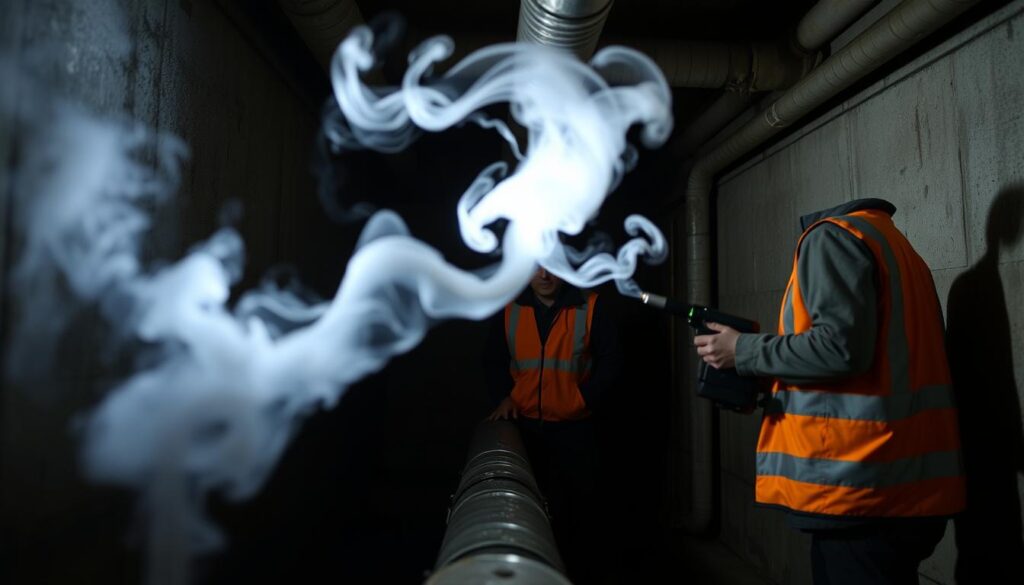
Smoke testing for sewer line leaks is a key method for finding hidden problems in your home’s drainage system. It can spot critical issues before they turn into expensive repairs.
During a smoke test, several common plumbing issues can be identified:
- Cracked or damaged sewer pipes
- Improper pipe connections
- Faulty seals and gaskets
- Broken underground drainage lines
- Illegal connections to municipal sewer systems
Smoke testing can find major problems like structural defects in your drainage system. Hairline cracks might seem small but can cause big water damage and foundation issues if not fixed.
Smoke testing can also spot warning signs like:
- Unexpected smoke coming from unexpected places
- Visible leaks in pipe joints
- Gaps in pipe connections
- Deteriorated pipe sections
By finding these issues early, you can avoid expensive repairs and health risks from bad plumbing. Professional smoke testing gives a detailed look at your home’s underground drainage.
Professional vs DIY Smoke Testing
Deciding between a professional plumbing smoke test and DIY depends on several factors. Your situation, skills, and budget are key. They help decide the best way to find plumbing system leaks.
Professional plumbing smoke testing finds leaks that DIY methods can’t. They use special equipment and know-how. This helps spot even tiny system problems.
When to Call a Professional
- Complex plumbing systems with many connections
- Suspected big underground pipe damage
- Testing commercial or municipal systems
- Lack of personal technical skills
Cost Comparison Analysis
Professional smoke test equipment costs $200 to $500, based on your property’s size and complexity. DIY kits are cheaper, costing $50 to $150. But, they might not be as precise as professional tools.
| Service Type | Average Cost | Accuracy Level |
|---|---|---|
| Professional Smoke Test | $200 – $500 | High |
| DIY Smoke Test | $50 – $150 | Medium |
Required Certifications and Permits
Some places need special permits for plumbing smoke testing. Pros usually handle these, making sure you follow local rules. Always check your local building codes before doing any plumbing checks.
“Knowing when to DIY and when to call a professional can save you significant time and money in plumbing maintenance.” – Professional Plumbing Association
Alternative Leak Detection Methods
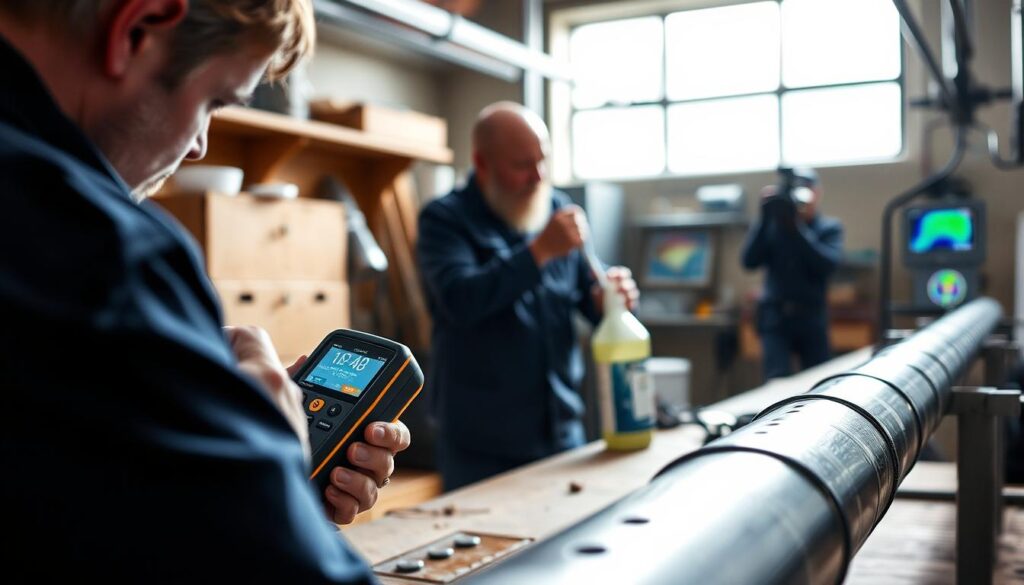
Smoke testing is a strong method for finding leaks in plumbing. But, there are other ways to spot hidden water problems in your home. Knowing these methods helps you pick the best one for your needs.
Pressure Testing: A Precise Leak Detection Approach
Pressure testing is a top choice for finding leaks. It works by:
- Sealing pipe systems
- Introducing controlled air pressure
- Monitoring pressure drops that indicate leaks
Ultrasonic and Electronic Leak Detection
New tech brings advanced ways to find leaks. Ultrasonic and electronic methods use sound and sensors to find leaks accurately.
- Ultrasonic detectors capture sound frequencies from water escaping pipes
- Electronic moisture meters identify hidden water damage
- Thermal imaging cameras detect temperature variations suggesting leaks
Comparing Detection Methods
Each leak detection method has its own benefits. Your choice depends on:
- Pipe accessibility
- Budget constraints
- Complexity of your plumbing system
Professional plumbers can guide you in choosing the right method for your plumbing needs.
Conclusion
Learning about smoke tests for plumbing can really help homeowners keep their homes in good shape. Smoke tests are a key tool for finding hidden leaks and other plumbing problems. They help avoid costly repairs by catching issues early.
Knowing when to use smoke testing is important for home upkeep, when selling a house, or dealing with ongoing drainage issues. Using smoke testing can save you a lot of money. It also helps prevent water damage to your home’s foundation and structure.
Experts say it’s smart to make smoke testing a part of your regular home care. This way, you can spot problems early and keep your plumbing system working well. Smoke testing is great for both new and older homes, giving you a peek into your plumbing’s health.
While some people can do simple smoke tests, more complex issues need a pro. Talking to certified plumbers can give you a detailed check-up. They’ll find the right fixes for your plumbing system.