
Affiliate Disclosure
Plumber Guide Guys is a participant in the Amazon Services LLC Associates Program, an affiliate advertising program designed to provide a means for sites to earn advertising fees by advertising and linking to Amazon.
What Is a Plumbing Emergency? Ever wonder when a simple plumbing problem turns into a big emergency? Knowing what makes a plumbing emergency can save you a lot of money and keep your family safe.
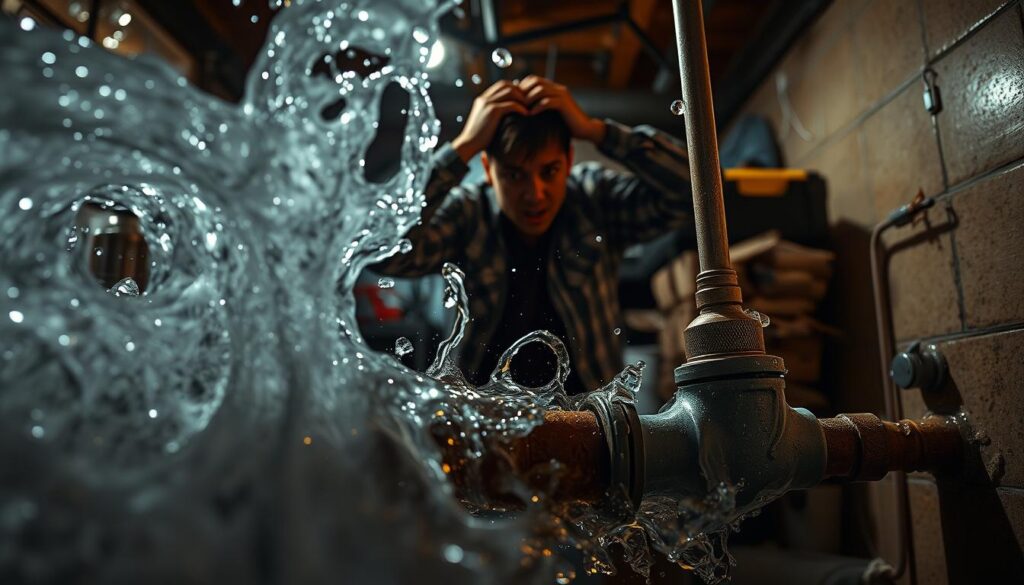
A plumbing emergency is not just a hassle. It’s a serious situation that needs fast help from an emergency plumber. This is to avoid big water damage, structural problems, and health risks. A small leak can quickly become a big disaster.
Understanding plumbing emergencies helps homeowners spot warning signs early. This means acting fast to avoid big problems. Whether it’s a burst pipe or sewage backup, quick professional help is key to avoid long-term damage.
Key Takeaways
- Plumbing emergencies require immediate professional intervention
- Quick response can prevent significant property damage
- Some issues pose serious health and safety risks
- Recognizing warning signs is critical for homeowners
- Proper preparation can minimize emergency impacts
Table of Contents
Understanding Plumbing Emergencies: Signs and Symptoms
Spotting a water leak emergency early can prevent expensive damage and health issues. Plumbing problems can get worse fast. It’s key to know when to call a plumber and spot important warning signs.
Common Warning Signs of Urgent Plumbing Issues
Your home shows distress through several signs that mean a plumbing emergency might be coming:
- Sudden drops in water pressure
- Unexplained puddles or water stains on walls and ceilings
- Unusual gurgling or bubbling sounds in pipes
- Persistent musty odors suggesting hidden moisture
- Water discoloration or strange taste
Risk Assessment: When Time is Critical
Not all plumbing issues need quick action, but some do. Water leak emergencies can quickly turn from small problems to big threats to your home’s structure.
Scenarios that need fast action include:
- Continuous water flow from pipes or fixtures
- Significant water accumulation in living spaces
- Visible pipe damage or significant corrosion
- Complete loss of water pressure
Health and Safety Concerns
Water leak emergencies are not just about property damage. They also pose serious health risks. Prolonged moisture creates ideal conditions for mold growth, which can cause breathing problems and allergies.
Experts say quick action is needed to avoid contamination and damage. Knowing these signs helps you protect your home and family’s health.
Immediate Actions During a Plumbing Crisis
When a burst pipe or flooding happens, acting fast is key. Quick actions can save your property from major damage. It’s important to think clearly and act quickly to protect your home.
Your safety is the first thing to consider in a plumbing emergency. Make sure to turn off all electrical systems before you start fixing the pipe or dealing with the flood. This step helps avoid the risk of getting electrocuted.
- Shut off the main water supply immediately
- Unplug electrical devices near the water damage
- Move valuable items away from the affected area
- Use towels, buckets, and mops to contain water spread
If you have a burst pipe, find the exact pipe that’s leaking. Try to stop the water from spreading. Use rubber patches, pipe repair tape, or a temporary clamp to slow down the water flow. This will help until a professional can fix it.
| Emergency Action | Purpose | Recommended Tools |
|---|---|---|
| Water Supply Shutdown | Stop water flow | Main water valve wrench |
| Water Containment | Prevent further damage | Towels, buckets, mops |
| Temporary Pipe Repair | Reduce water leakage | Pipe repair tape, rubber patches |
Pro tip: Know your home’s main water valve location before an emergency strikes. Every minute counts when dealing with flooding in home scenarios.
Take photos of the damage for insurance purposes. These pictures are very important when you file a claim for water damage to your property.
What Is a Plumbing Emergency: Key Situations That Require Urgent Help
Plumbing emergencies can happen without warning, putting your home at risk. Knowing when to act fast can help avoid big problems and save money on repairs.
Some plumbing problems need quick action to avoid water damage and health issues. Spotting these situations early can save you a lot of money on repairs.
Burst or Frozen Pipes
Frozen pipes are a big worry in cold weather. When water freezes, it expands and can burst pipes. This can lead to a lot of water damage to your home.
- Temperatures below 32°F increase burst pipe risks
- Pipes in unheated areas are most vulnerable
- Immediate shut-off of water supply is key
Severe Water Leaks and Flooding
Water leaks can quickly turn into big problems. They can harm your home’s foundation and cause electrical dangers. They also lead to mold growth.
- Check for water stains on ceilings and walls
- Monitor unusual sounds in plumbing systems
- Look for unexplained increases in water bills
Sewer System Backups
A sewer backup is a serious plumbing emergency. When sewers get blocked, dirty water can flow back into your home. This is a health risk and needs quick help from a professional.
- Foul odors from drains indicate a sewer backup
- Multiple drain clogs suggest systemic issues
- Water rising in toilet or shower drains is a red flag
Pro tip: Always keep contact information for a reliable emergency plumber handy to handle these urgent situations fast.
The Critical First Steps: Shutting Off Water Supply
Learning to shut off your water supply is key in a water leak emergency. Knowing where your main water shut-off valve is can prevent big damage.
When a plumbing emergency hits, you must act fast. Your main goal is to stop water flow to avoid more damage. The main water shut-off valve is usually found in these spots:
- Near the water meter
- Where the main water line enters your home
- In the basement
- In a crawl space
- Outside near the foundation
To get ready for plumbing emergencies, do these things:
- Find your main water shut-off valve before trouble starts
- Make sure everyone in your family knows where it is
- Keep the area around the valve clear and easy to reach
- Check the valve often to make sure it works well
Pro tip: Label your main water shut-off valve with a bright, easy-to-see tag. This helps anyone find it quickly during a water leak emergency.
Remember, seconds count when water is flooding your home. Knowing how to shut off your water supply can save thousands in damage.
Emergency Tools and Equipment Every Homeowner Should Have
Being prepared for plumbing emergencies can save you a lot of trouble. A good emergency plumbing kit is key when water problems pop up. Knowing when to call a plumber and having the right tools can help with small fixes.
Having the right equipment ready can make a big difference. An emergency plumber suggests keeping a detailed toolkit for quick fixes.
Essential Emergency Plumbing Kit Contents
- Plunger: Critical for clearing toilet and drain blockages
- Adjustable pipe wrench
- Plumber’s tape (Teflon tape)
- Bucket for water collection
- Waterproof flashlight
- Utility knife
- Rubber gloves
- Drain snake or auger
Strategic Storage and Usage Guidelines
Keep your emergency plumbing kit in a dry, easy-to-reach spot. It should be near main water shut-off valves and in a place that’s not too hot or cold. Make sure you know how to use each tool before you need it.
“Preparation is the key to managing unexpected home maintenance challenges.” – Professional Plumbing Association
While these tools can handle some problems, know when to call a plumber for bigger issues. Some problems need a pro to avoid serious damage or structural problems.
Maintenance Tips for Your Emergency Kit
- Check tools annually for rust or damage
- Replace worn-out equipment
- Ensure all family members know the kit’s location
- Periodically review tool functionality
Remember, an emergency plumber can help fast, but having the right tools can help you fix things quickly in those first moments of a plumbing crisis.
Water Damage Prevention and Control Measures
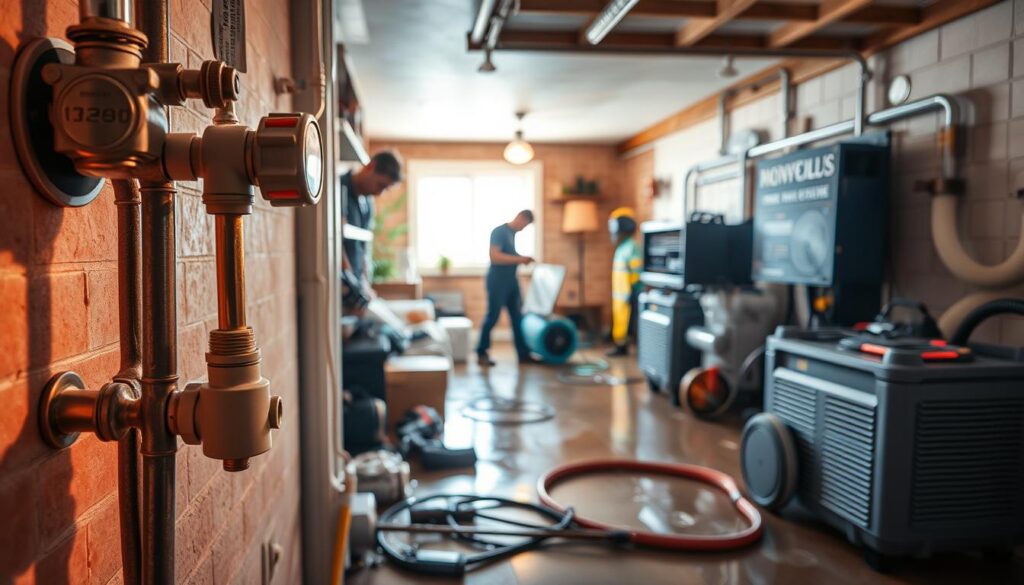
Dealing with flooding in your home can be overwhelming. But, quick action can save you thousands in damage. When a burst pipe happens, your fast response is key to lessening water damage.
To control water spread during a plumbing emergency, consider these strategies:
- Create immediate water barriers using towels and plastic sheeting
- Remove valuable items from affected areas quickly
- Use wet vacuums or water extraction tools
- Elevate furniture and electronics off wet surfaces
Your main goals should be in three areas:
- Containment: Stop water from spreading to unaffected areas
- Protection: Safeguard valuable belongings
- Mitigation: Reduce long-term structural damage
Experts say to document all damage for insurance. Take photos and videos of the affected areas before cleaning. This is key for insurance claims related to burst pipes.
“Speed is your best ally when managing water damage in your home.” – Professional Water Restoration Expert
Some water damage might not be seen right away. Check hidden spots like under carpets, behind walls, and inside cabinets for moisture. This could lead to mold growth.
When to Call a 24-Hour Emergency Plumber
Knowing when to call a 24-hour plumber can prevent big water damage and expensive fixes. Not all plumbing problems need quick help. But, some need urgent care from an emergency plumber.
Identifying True Plumbing Emergencies
Some plumbing issues need fast action. Learn to spot the signs that mean you need a 24-hour emergency plumber:
- Significant water flooding your home
- Sewage backing up into living spaces
- Complete loss of water pressure
- Burst pipes causing structural damage
- Gas leaks or possible gas problems
Assessing Service Needs
When deciding if you need an emergency plumber, think about these points:
- Potential for immediate property damage
- Risk to personal health and safety
- Ability to temporarily fix the issue
- Availability of other solutions
What to Expect from Emergency Plumbing Services
A 24-hour plumbing service usually responds quickly. Expect skilled techs who can quickly find and fix urgent plumbing problems. They come ready with the right tools and know-how to solve issues fast.
Remember: Delaying professional help during a serious plumbing emergency can lead to extensive and expensive damage to your property.
Emergency plumber rates are often higher because they work outside regular hours. Be ready to give clear details about the problem and make sure the technician can get in safely.
Cost Considerations for Emergency Plumbing Services
When you face a plumbing emergency, knowing the cost is key. A 24-hour plumbing service costs more than regular repairs because it’s urgent. Homeowners should expect to pay more for emergency plumber services.
The cost of emergency plumbing depends on several things:
- Time of day (after-hours calls cost more)
- Complexity of the plumbing issue
- Required materials and replacement parts
- Travel distance for the emergency plumber
Emergency plumbing costs can vary a lot. You might see:
- Flat-rate emergency calls: $100-$500
- Hourly rates: $75-$250 per hour
- Weekend or holiday services: Additional 1.5x standard rates
To deal with unexpected costs, think about saving for emergencies. Regular checks by a 24-hour plumbing service can spot problems early. This can save you from big, costly emergencies later.
“An ounce of prevention is worth a pound of cure” – this is true for plumbing emergencies!
Even though it might seem pricey, fixing plumbing issues fast can prevent bigger, more costly problems later.
Preventive Maintenance to Avoid Plumbing Emergencies
To keep your home safe from plumbing problems, you need to act early and often. Knowing what a plumbing emergency is helps you stop big issues before they start. Regular checks and care can save you a lot of time, money, and stress.
Stopping plumbing emergencies starts with a good maintenance plan. You should find problems early to avoid big issues like no hot water or water damage.
Regular Inspection Checklist
- Check visible pipes for signs of corrosion or leaks
- Test water pressure in different areas of your home
- Inspect under sinks for moisture or water stains
- Look for any unusual sounds in pipes or water lines
- Examine water heater for possible problems
Seasonal Maintenance Tips
| Season | Maintenance Action |
|---|---|
| Winter | Insulate pipes to prevent freezing |
| Spring | Check outdoor faucets and irrigation systems |
| Summer | Flush water heater and check expansion tank |
| Fall | Prepare pipes for possible cold temperatures |
Pro tip: Get a yearly plumbing check to find problems early and keep your system working well. This can greatly lower the chance of sudden plumbing emergencies.
Professional vs. DIY Emergency Solutions
Dealing with a water leak emergency can be tough for homeowners. Some small plumbing problems can be fixed with DIY skills. But, knowing when to call a plumber is key to avoid big damage.
Not all plumbing issues are the same. Some need a pro’s help to keep you safe and avoid costly errors. Here are some things to think about when choosing DIY or professional help:
- Minor repairs like replacing a faucet washer can be DIY-friendly
- Complex issues involving main water lines require professional skills
- Risks of DIY repairs include water damage and structural issues
- Specialized tools and knowledge are essential for advanced plumbing challenges
Safety should always be your primary concern. Trying to fix complex problems without the right training can cause big water damage, electrical dangers, and expensive fixes later.
“Know your limits: A small mistake can turn a minor issue into a major emergency.” – Professional Plumbing Association
It’s clear when to call a plumber in these situations:
• Sewage backups
• Major pipe breaks
• Gas line complications
• Persistent water leak emergencies
• Significant water pressure problems
Getting professional help might cost more at first. But, it can save you thousands in damage and future repairs.
Conclusion
Knowing what a plumbing emergency is can save you from big costs and stress. This guide has taught you how to spot, manage, and fix unexpected plumbing problems. Taking care of your home ahead of time is the best way to avoid disasters.
It’s important to know when to fix a problem yourself and when to call a plumber. Every plumbing issue needs a careful look and quick action. By following the maintenance tips we’ve shared, you can lower the chance of sudden water problems at home.
Make sure you have the right tools and know-how for emergencies. Regular checks, quick action plans, and knowing the risks will help you keep your home safe. Remember, calling a pro is usually the best and quickest way to handle big plumbing issues.
Stay up to date, be alert, and take care of your home’s plumbing. With the right information and tools, you can handle plumbing problems well and keep your property safe.