
Affiliate Disclosure
Plumber Guide Guys is a participant in the Amazon Services LLC Associates Program, an affiliate advertising program designed to provide a means for sites to earn advertising fees by advertising and linking to Amazon.
What Is a Plumbing Check Valve? Ever thought about what stops water from flowing backward in your home? A plumbing check valve is the hero you might not know about but really need.
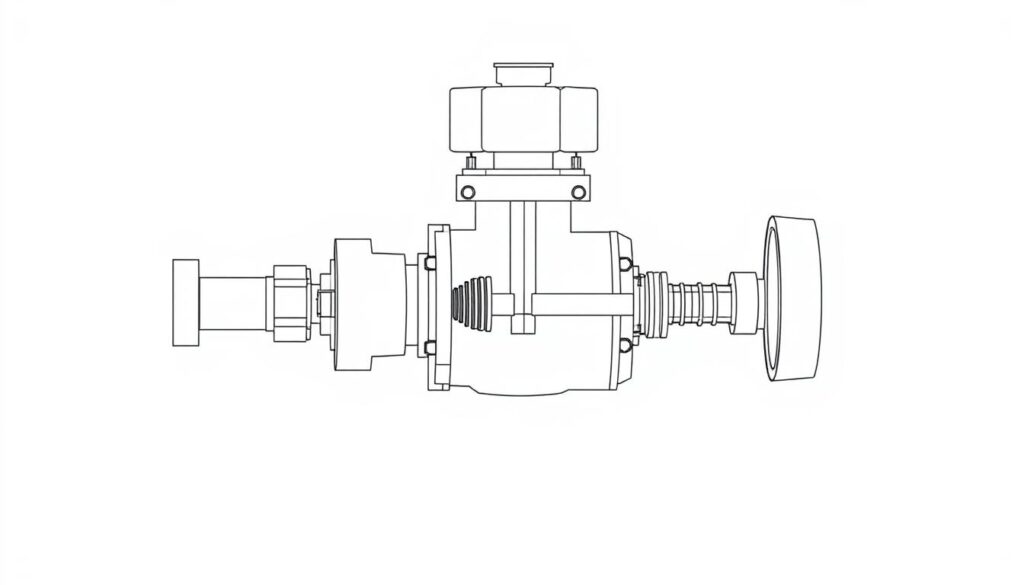
A check valve is a key safety feature in your plumbing. It lets water and gases flow one way but stops them from going back. Knowing about plumbing check valves helps keep your water safe and clean.
These small but mighty devices work on their own to keep your water systems safe. They’re important in homes and big industrial places. Check valves make sure fluids go where they’re supposed to.
Key Takeaways
- Check valves prevent unwanted backflow in plumbing systems
- They automatically control fluid direction without external intervention
- Essential for maintaining water quality and system integrity
- Used in residential, commercial, and industrial applications
- Protect against possible contamination and system damage
Table of Contents
Understanding the Basics of Check Valves in Plumbing
Check valves are key in plumbing systems, making sure water flows only one way. They are vital for your home’s water system. They help stop backflow and keep your water safe.
Core Components of Check Valves
A check valve works thanks to its design. It has a few main parts:
- Valve body: The main housing that contains internal mechanisms
- Disc or ball: The moving element that controls water flow
- Spring mechanism: Helps regulate valve closure in some designs
How Pressure Affects Valve Operation
Pressure makes a check valve work. When water pressure is high enough, the valve opens. This lets fluid flow. But when pressure goes down or changes direction, the valve closes. This stops backflow.
| Pressure Level | Valve Response |
|---|---|
| Forward Pressure | Valve Opens |
| Reverse Pressure | Valve Closes |
| Low Pressure | Valve Remains Closed |
Common Installation Locations
Check valves are placed in important plumbing spots. You’ll find them in:
- Main water supply lines
- Water heater cold water inlets
- Sump pump discharge pipes
- Irrigation system connections
Knowing these basics shows how check valves protect your home’s water system. They keep it safe from contamination and damage.
What is a Plumbing Check Valve
A plumbing check valve is key in your home’s water system. It controls the flow of liquids, making sure water moves only one way. This stops backflow. Knowing how a backflow prevention valve works shows its vital role in keeping your plumbing safe.
Check valves work by opening and closing with water pressure. They act as a barrier against contamination. Your plumbing system needs these valves to keep water clean and prevent damage.
- Prevents water from flowing backward
- Protects against system contamination
- Maintains water system integrity
“A check valve is your plumbing system’s silent guardian, protecting water quality without manual intervention.”
The main job of a backflow prevention valve is to stop water from flowing backward. This stops contaminated water from mixing with clean water. This could be harmful to your health.
| Valve Type | Primary Function | Best Used In |
|---|---|---|
| Swing Check Valve | Prevents backward flow | Residential plumbing |
| Ball Check Valve | Controls liquid direction | High-pressure systems |
Understanding what a plumbing check valve does helps you see its importance. It keeps your home’s water system safe and efficient.
Essential Functions and Benefits of Check Valves
Check valves are key to keeping your plumbing safe from harm. They do more than just manage water flow. Knowing how they work helps you see their value in keeping your plumbing in top shape.
Backflow Prevention Capabilities
A plumbing backwater valve guards against contamination and water damage. It stops water from flowing back in your pipes. This prevents issues like:
- Contamination of clean water supplies
- Potential sewage backup
- Damage to sensitive plumbing infrastructure
System Protection Features
Check valves protect your plumbing system in many ways. They stop water hammer, keep pumps safe, and keep pressure steady. These valves work quietly and need little upkeep, yet they offer great protection.
Energy Efficiency Advantages
Check valves save energy by cutting down on water circulation and pump strain. They help:
- Reduce pump workload
- Minimize energy consumption
- Prevent unnecessary water movement
Quality check valves save money and boost system performance over time. Their flow control is vital for both homes and businesses.
Types of Check Valves for Plumbing Systems
Exploring check valves reveals several key designs that safeguard your plumbing. These designs prevent backflow and damage. Knowing about these valve types helps you choose the best for your home’s water system.
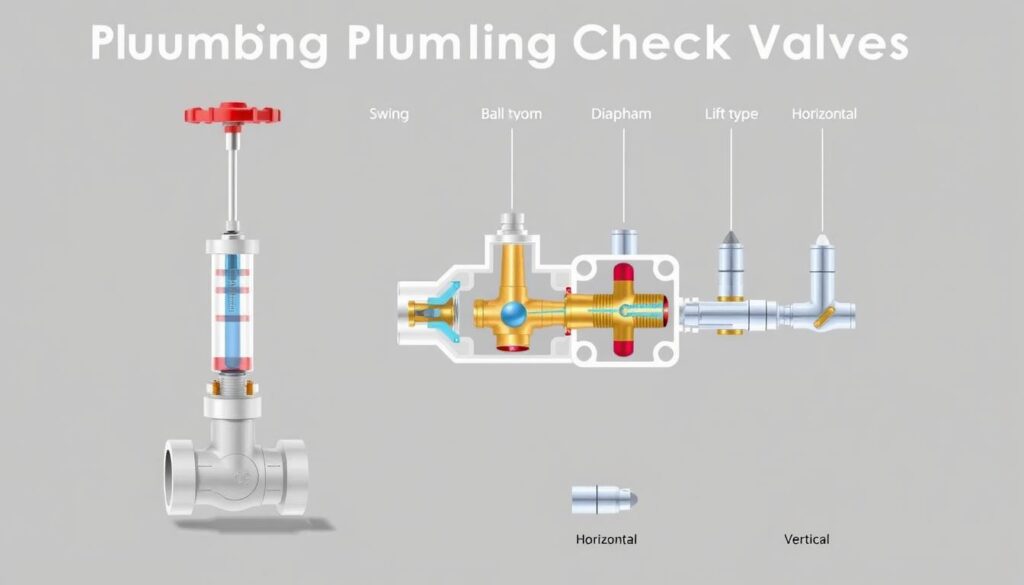
- Swing Check Valve: A common choice, it uses a hinged disc to stop water from flowing backward. Swing check valves are great for horizontal pipes and ensure backflow protection.
- Ball Check Valve: It has a floating ball that stops water from moving backward, perfect for vertical pipes.
- Lift Check Valve: This valve has a disc that rises to let water flow forward and falls to block it from flowing backward.
- Silent Check Valve: It’s designed to reduce water hammer and noise during operation.
Each check valve type has its own benefits, depending on your plumbing needs. Swing check valves, for example, are excellent for homes where water flow must always go in one direction.
Choosing the right check valve depends on several factors. These include pipe orientation, water pressure, and your system’s specific needs. Talking to a professional plumber can guide you in picking the best valve for your system.
How Check Valves Operate in Plumbing Systems
Check valves are key in plumbing systems. They stop backflow and keep the system working right.
A spring check valve is a clever, simple device. It controls water flow in one direction. It uses mechanical rules to keep water moving forward and stop it from going back.
Opening and Closing Mechanisms
The valve works based on pressure. When the pressure is high enough, it opens and lets water flow. It has important features:
- It works automatically, without needing someone to control it
- It reacts fast to changes in pressure
- It manages water flow direction well
Flow Direction Control
Check valves are made with care. They stop water from moving backward. This keeps your plumbing safe from harm or contamination.
“Precision in flow control is the hallmark of an effective check valve system.” – Plumbing Engineering Quarterly
Pressure Requirements
Each spring check valve needs a certain pressure to work right. Knowing these pressures helps keep your system running well.
- Minimum cracking pressure varies by valve type
- Pressure needs depend on your system’s details
- Choosing the right size is key for good performance
Installation Guidelines and Best Practices
Installing a plumbing backwater valve needs careful attention and specific knowledge. Your success depends on following key installation guidelines. These protect your plumbing system from backflow issues.
Before starting the check valve installation, consider these important steps:
- Inspect the specific pipe diameter and valve compatibility
- Verify appropriate flow direction markings
- Ensure clean, debris-free pipe surfaces
- Gather necessary installation tools and protective equipment
Proper orientation is key when installing check valves. Always follow the manufacturer’s specifications closely. Incorrect installation can lead to significant system failures and water damage.
Professional plumbers suggest these key installation practices:
- Measure pipe dimensions precisely
- Use appropriate sealing materials
- Check valve alignment meticulously
- Test valve functionality immediately after installation
While many homeowners try DIY check valve installation, complex systems might need a pro. Local plumbing codes can differ, so a licensed plumber ensures compliance and performance.
Remember: A correctly installed check valve prevents costly water damage and maintains system integrity.
Maintenance and Troubleshooting Tips
Keeping your check valve in good shape is key to a long-lasting plumbing system. A well-cared-for one-way valve can save you from expensive fixes and system breakdowns.
Knowing how to care for your check valve is important. It helps protect your home’s water system and keeps problems at bay.
Common Issues and Solutions
Check valves can face several common problems:
- Leaking: Usually due to worn seals or damaged parts
- Sticking: Caused by debris in the valve mechanism
- Noisy operation: Shows wear or misalignment inside
Preventive Maintenance Schedule
Regular upkeep of your check valve includes:
- Check valve connections every three months
- Clean valve surfaces every six months
- Look for corrosion or mineral buildup
- Lubricate parts once a year
When to Replace Your Check Valve
Knowing when to replace your check valve is vital. Look out for:
- Persistent leaks
- Lower water pressure
- Visible damage
- Valves over 7-10 years old
Experts say replacing your valve early keeps your system running smoothly. It also prevents water damage.
Applications in Residential and Commercial Plumbing
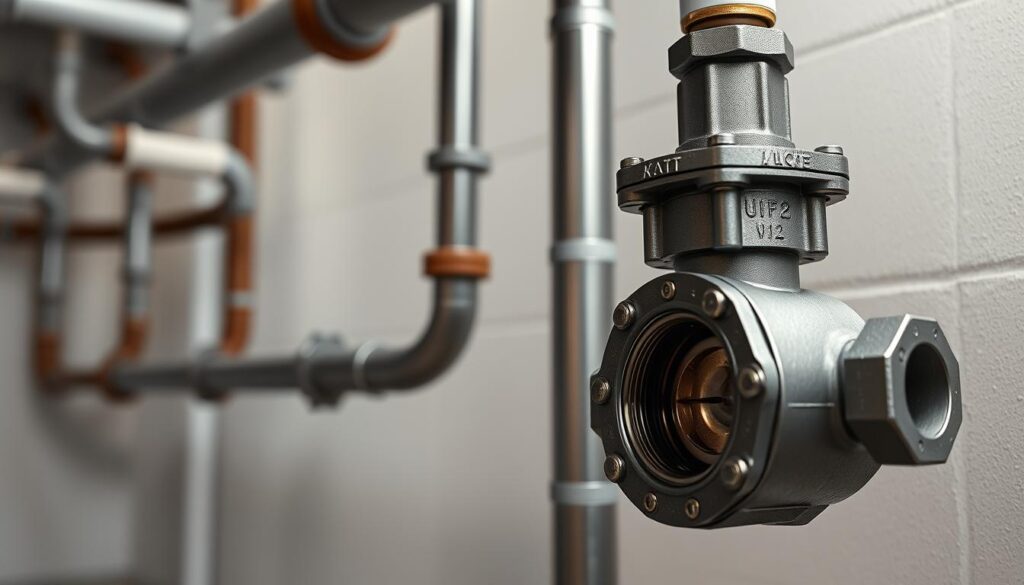
Check valves are key in both home and business plumbing. They keep your water safe and stop contamination. This is thanks to advanced backflow prevention valve tech.
In homes, plumbing backwater valves do a lot:
- They stop sewer backflow when it rains a lot.
- They protect water heaters from flowing backward.
- They keep water quality good in home irrigation systems.
- They keep your home’s water lines safe from contamination.
Businesses use check valves in more complex ways:
| Industry | Check Valve Application |
|---|---|
| Municipal Water Systems | Protecting large water distribution systems |
| Fire Protection | Making sure sprinkler systems work right |
| Industrial Processes | Stopping cross-contamination in big piping systems |
Knowing how check valves work in different places shows their critical role. They help keep plumbing safe and working well everywhere.
Choosing the right valve is key to keeping systems safe and running well.
Selecting the Right Check Valve for Your Needs
Choosing the perfect check valve for your plumbing system is important. It prevents costly mistakes and ensures your system works well.
When looking at check valves, focus on key factors:
- Fluid compatibility
- Pressure requirements
- Flow rate specifications
- Temperature ranges
- Installation environment
Installing a check valve needs precision. First, understand your plumbing system’s unique needs. Material selection is key for long-term reliability. Different materials work better with different fluids and environments.
Here are important selection tips:
- Measure your system’s maximum operating pressure
- Calculate the required flow rate
- Evaluate possible corrosion risks
- Check installation location limitations
- Review manufacturer specs carefully
Professional plumbers suggest buying high-quality check valves that fit your system’s needs. Cheaper options might save money at first but could cost more later.
“The right check valve is an investment in your plumbing system’s future performance and reliability.”
For those watching their budget, consider the long-term costs. A more expensive valve that lasts longer is often cheaper in the long run.
Safety Considerations and Regulations
Keeping your plumbing system safe is key. A backflow prevention valve is vital for water quality and system safety. Knowing the safety rules helps keep your home or business safe.
Choosing a check valve means looking at more than just how it works. Rules from regulatory bodies ensure plumbing is safe and reliable.
Industry Standards
Plumbers follow strict standards for check valve quality and performance. Important groups that set these standards include:
- American Society of Mechanical Engineers (ASME)
- American Society for Testing and Materials (ASTM)
- National Sanitation Foundation (NSF)
Building Code Requirements
Building codes set safety rules for plumbing. These rules make sure backflow prevention valves work right.
| Code Category | Key Requirements |
|---|---|
| Water Safety | Prevent contamination through proper valve installation |
| Structural Integrity | Ensure valves can withstand system pressure |
| Material Standards | Use corrosion-resistant materials |
Safety Certifications
Check for safety certifications when picking a check valve. Certified valves are tested thoroughly to prove they work well under different conditions.
- NSF/ANSI 61 Certification for drinking water safety
- ISO 9001 Quality Management Standard
- Underwriters Laboratories (UL) Mark
Understanding these safety points helps you pick and install check valves safely. This ensures your plumbing system is protected and meets important rules.
Conclusion
Knowing what a plumbing check valve is key to keeping your home or business pipes safe. These devices stop unwanted backflow, keeping your water system clean and working right. They protect your pipes from damage and contamination.
A backflow prevention valve is more than just a part. It’s a smart way to make sure water flows the right way. This keeps you and your plumbing safe from problems caused by water flowing backward. The right check valve can also save you money by avoiding costly repairs.
Choosing the right check valve is important for your plumbing system’s health. Whether you live in a house or manage a building, learning about these parts is vital. Regular checks and updates can keep your system running well and meet local rules.
Start by checking your plumbing setup today. Talk to a plumber to find out what you need. Taking care of your plumbing system now means less trouble later and more peace of mind.