
Affiliate Disclosure
Plumber Guide Guys is a participant in the Amazon Services LLC Associates Program, an affiliate advertising program designed to provide a means for sites to earn advertising fees by advertising and linking to Amazon.
What Is a Plumbing Chase? Ever thought about how buildings hide their complex pipe networks? A vertical plumbing chase is a key part of modern construction. It keeps your living areas clean, organized, and functional.
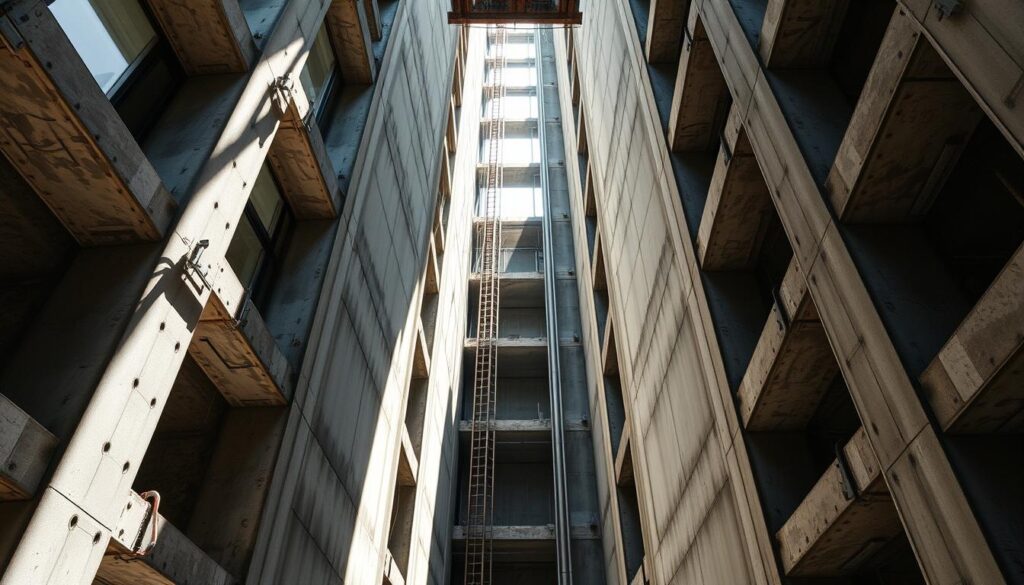
A plumbing chase is a smart design that hides important utility systems in walls. It lets pipes, electrical wires, and mechanical parts move through buildings without messing up the look inside.
But a plumbing chase is more than just a hidden path. It’s a vital part of a building’s structure. It makes sure systems are easy to get to, safe, and well-organized from the ground up.
Key Takeaways
- Plumbing chases create dedicated vertical spaces for utility systems
- They protect pipes and mechanical systems from external damage
- Chases help maintain clean and uncluttered interior design
- Essential for proper building infrastructure and maintenance
- Enables easier repairs and future system upgrades
Table of Contents
Understanding What Is a Plumbing Chase
A utility chase is a key part of modern building design. It offers a special vertical space for important infrastructure. This concept is about a hidden path that keeps critical building utilities safe.
Plumbing chases are smartly placed in homes and businesses. They help organize mechanical systems. These hidden paths play a big role in building construction.
Core Definition and Purpose
A utility chase is a vertical or horizontal space for building utilities. It includes:
- Water supply lines
- Waste and vent pipes
- Gas transmission lines
- Fire sprinkler pipes
- HVAC condensate drains
Typical Building Locations
Plumbing chases are often found in:
- Bathroom walls
- Kitchen interior spaces
- Utility room partitions
- Vertical building shafts
- Multi-story building cores
Utility Accommodation Spectrum
Modern buildings use plumbing chases for various utilities. They can be made of wood or metal. This keeps the building looking good and working well.
“A well-designed plumbing chase is the hidden backbone of efficient building infrastructure.”
Knowing about utility chases helps us see their role in building design. They make buildings more organized and efficient.
Benefits of Proper Chase Installation
Installing a plumbing chase is key for building design and upkeep. It saves time, money, and avoids future problems. A well-made chase is a smart choice for your plumbing setup.
Protection and Organization
A good plumbing chase protects your building’s essential lines. It offers a safe vertical space for:
- Shielding pipes from damage
- Keeping pipes safe from the environment
- Lowering the chance of pipe damage
- Organizing pipes in one place
Code Compliance Advantages
A structured plumbing chase ensures your building follows safety and building rules. It makes following local and national codes easy.
| Compliance Aspect | Chase Benefit |
|---|---|
| Fire Safety | Contained utility corridor |
| Structural Integrity | Controlled utility placement |
| Inspection Requirements | Easy access for verification |
Maintenance Accessibility
The biggest plus of a good plumbing chase is maintenance accessibility. Experts can check, fix, or swap out lines easily. This saves money and keeps repairs quick.
- Streamlined maintenance procedures
- Reduced repair time
- Lower long-term maintenance expenses
Plumbing Chase Dimensions and Requirements
Knowing the right plumbing chase dimensions is key for a good vertical utility space in your building. The size of your plumbing chase depends on several important factors. These include the types of pipes, the number of utilities, and local building codes.
When planning plumbing chase dimensions, you’ll need to consider several things:
- Pipe diameter and quantity
- Required insulation space
- Future maintenance access
- Potential system expansions
Typical plumbing chase dimensions vary based on specific requirements. Here’s a breakdown of standard measurements:
| Utility Type | Depth Range | Width Range |
|---|---|---|
| Water Supply Lines | 6-8 inches | 12-16 inches |
| Drain/Vent Stacks | 10-16 inches | 18-24 inches |
| Multi-Service Chase | 12-24 inches | 24-36 inches |
Pro tip: Always allow extra clearance for possible pipe movement, insulation, and future changes.
“Proper plumbing chase dimensions are the foundation of an efficient and compliant building utility system.” – Professional Plumbing Engineering Association
Local building codes are very important in setting precise plumbing chase dimensions. Talk to a professional plumber or building inspector. They can help make sure your chase meets all rules and works well for your project.
Essential Components and Materials
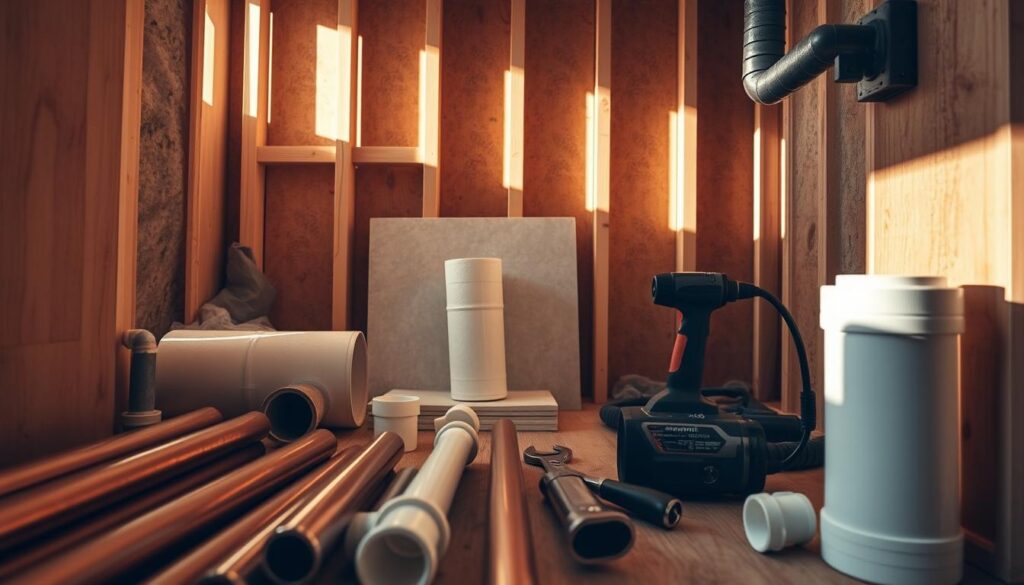
Choosing the right parts and materials is key when building a plumbing chase. It must be strong, quiet, and easy to get into for upkeep. The right materials make your plumbing chase work well.
Framing Materials
The strength of your chase comes from the framing. You have two main choices:
- Wooden studs (2×4 or 2×6) for homes
- Metal studs for big buildings
Insulation and Soundproofing Techniques
Insulation is vital for a plumbing chase. Soundproofing materials cut down on noise and make buildings more comfortable. Here are some insulation tips:
- Acoustic mineral wool
- Fiberglass insulation batts
- Spray foam for small spots
Access Panel Options
Access panels are important for upkeep and fixes. You can choose from:
- Hinged metal panels
- Magnetic closure panels
- Removable drywall sections
“A well-designed plumbing chase combines structural integrity, sound management, and maintenance accessibility.” – Professional Construction Magazine
By picking the right materials and following best practices, you’ll make a useful utility space. It will meet both home and business standards.
Chase Construction Methods
Building a plumbing chase needs careful planning and precise steps. The process involves several key steps. These steps ensure your vertical utility space works well for a long time.
Start your chase construction with detailed design and measurement. Good planning helps avoid future problems in your plumbing system.
- Measure the chase area accurately
- Choose the right framing materials
- Plan pipe routing and support
- Think about future maintenance access
Framing is a key part of building a plumbing chase. Use strong materials like 2×4 or 2×6 wooden studs or metal framing. The frame must support pipes well and allow for future changes.
Installing pipes needs precision. Make sure pipes are aligned and securely mounted. Use insulation to reduce noise and temperature changes.
- Install the main structural framing
- Put in pipe supports
- Run the plumbing lines
- Apply insulation
- Install fire-resistant barriers
The final steps are firestopping and finishing. Use fire-rated materials at penetration points. Finish the chase with drywall or sheathing to meet building codes.
Fire Safety and Building Codes
Fire safety is key when designing a plumbing chase. Knowing building codes helps protect lives and property. It also ensures the structure is safe.
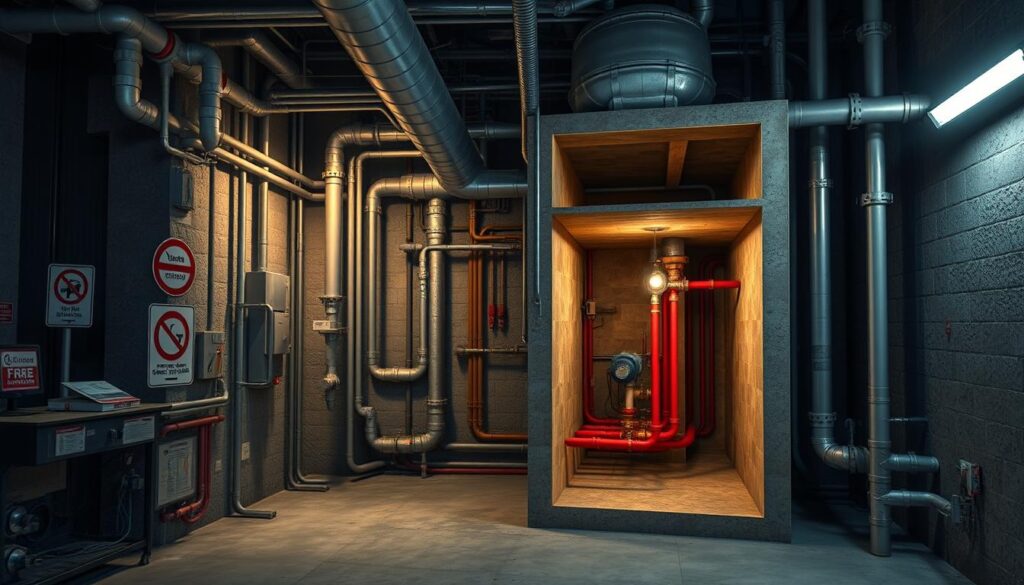
Fire safety in plumbing chases involves many strategies. These help prevent hazards. Experts must follow strict rules to keep buildings safe from fires.
Rating Requirements
Fire ratings depend on the building type and what it’s used for. Important things to consider are:
- One-hour fire-resistant construction for multi-unit residential buildings
- Two-hour fire ratings for commercial structures
- Special requirements for high-rise buildings
Firestopping Measures
Firestopping stops fire and smoke from spreading through plumbing chases. Important methods include:
- Installing fire-resistant sealants around pipe penetrations
- Using intumescent materials that expand when exposed to heat
- Implementing continuous fire barriers between floors
Compliance Standards
Builders must follow national and local building codes, like the International Building Code (IBC). Proper documentation and professional inspection are key. They ensure your plumbing chase meets all safety rules.
“Fire safety in construction is not an option, it’s a necessity.” – Building Safety Professionals Association
Differences Between Chase Wall and Standard Wall
It’s important to know the difference between a plumbing chase wall and a standard wall. A chase wall is not just for looks. It has a special role in building design and managing utilities.
Here are the main differences:
- Structural Purpose: Standard walls mainly support the building or divide rooms. Chase walls protect and hide utility systems.
- Internal Composition: Chase walls have special spaces for plumbing, electrical, and mechanical systems.
- Thickness and Design: Chase walls are thicker and more carefully planned.
Chase walls offer big benefits for keeping buildings in good shape. They make maintenance and managing utilities easier. These walls are great for:
| Feature | Chase Wall | Standard Wall |
|---|---|---|
| Utility Access | Easy maintenance | Limited access |
| Sound Insulation | Enhanced noise reduction | Minimal soundproofing |
| Space Efficiency | Integrated utility routing | Separate utility management |
When planning buildings, think about using chase walls. They help with utility management and improve building performance. Using chase walls wisely can make your building more functional and easier to maintain.
Common Installation Mistakes to Avoid
Learning how to build a plumbing chase can save you time and money. It also prevents future problems. You need to plan well and pay attention to important details.
Many people make mistakes when building a plumbing chase. These mistakes can affect how well it works and if it’s safe. Here are some common errors to avoid:
- Inadequate Chase Dimensions: A chase that’s too narrow makes it hard to do maintenance or replace pipes
- Not doing firestopping to stop fires from spreading
- Not putting in access panels for easy maintenance of valves and cleanouts
- Not adding sound insulation for noisy pipes
- Using different plumbing systems in the same chase
Experts say to measure your space carefully and plan your chase for easy access later. Make sure there’s room for upgrades and regular maintenance.
“A well-designed plumbing chase is like an insurance policy for your building’s infrastructure.” – Professional Plumbing Association
Following building codes is very important when building a plumbing chase. Always check local rules and talk to a licensed pro to make sure your chase is safe.
Conclusion
A plumbing chase is a key part of building design today. Knowing about plumbing chases can really improve how well a building is made. These vertical spaces help organize utility lines while keeping the building strong and looking good.
When you’re building a house or a business, knowing how important a plumbing chase is helps a lot. It makes sure systems work well and keeps them safe. This means less trouble later and a better working building for years.
Both builders and homeowners need to know a lot about plumbing chases. Using the best ways to build them helps systems work together smoothly. This follows building codes and makes buildings better.
In the end, a plumbing chase is more than just a passageway. It’s a smart way to handle building systems while keeping spaces clean and useful. Understanding plumbing chases helps make buildings better and more sustainable.