
Affiliate Disclosure
Plumber Guide Guys is a participant in the Amazon Services LLC Associates Program, an affiliate advertising program designed to provide a means for sites to earn advertising fees by advertising and linking to Amazon.
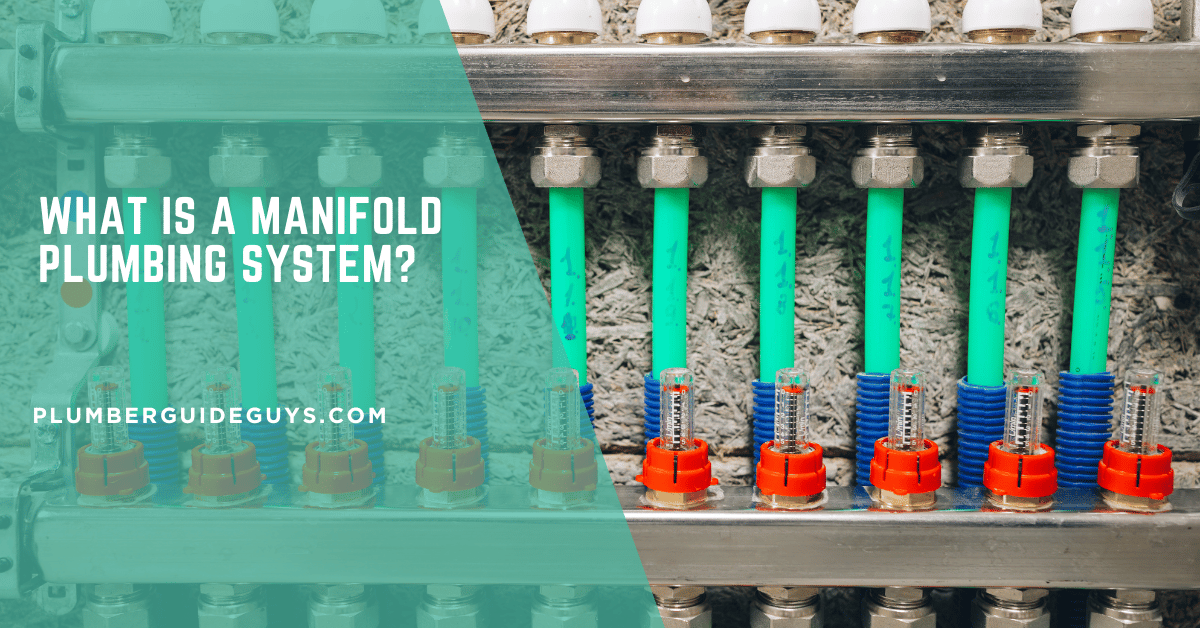
What is a Manifold Plumbing System? Ever wondered how homes get hot water so fast and efficiently to many places? It’s thanks to a new water distribution manifold system. This system is changing plumbing in homes.
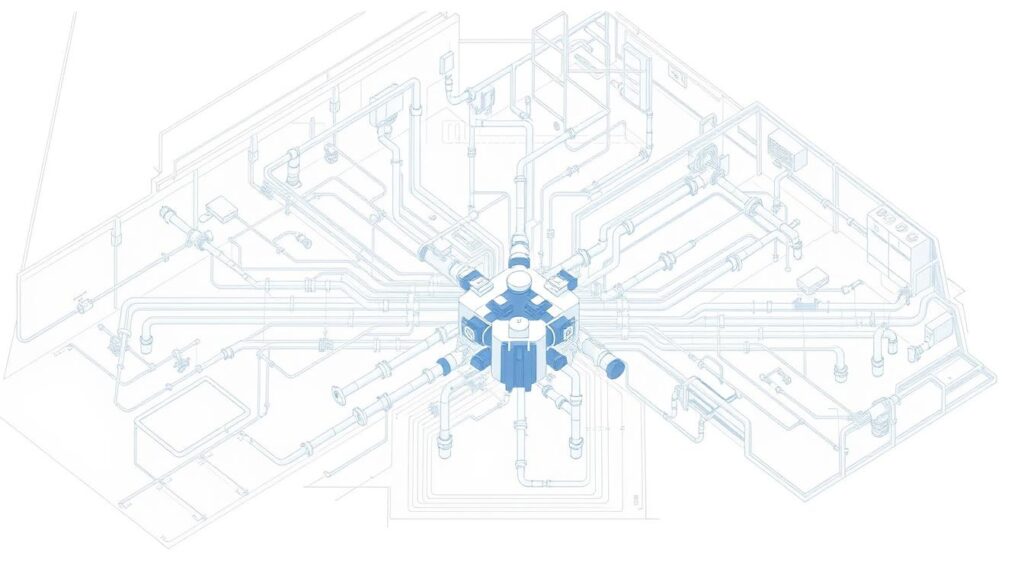
A water distribution manifold is a key part of plumbing. It’s different from old ways of plumbing. This system sends water directly to each fixture in your home. It’s like a central control center for water.
This system uses ½” take-offs near your home’s hot water source. It means no more waiting for water to get hot. It makes getting hot water fast and cuts down on water waste.
Key Takeaways
- Centralized water distribution hub for modern homes
- Eliminates long wait times for hot water
- Reduces water waste significantly
- Provides direct routing to individual fixtures
- Improves overall plumbing system efficiency
Table of Contents
Understanding Modern Plumbing Distribution Systems
Residential plumbing has changed a lot over the years. Homes are now bigger and more complex. This has made old water distribution methods outdated.
Evolution of Home Plumbing Design
Home plumbing has moved from simple designs to more advanced systems. Manifold plumbing offers better water delivery and reliability. The old trunk-and-branch system can’t handle today’s larger homes.
- Increased home square footage
- More complex water distribution needs
- Greater emphasis on water efficiency
The Rise of Efficient Water Distribution
Modern plumbing systems face new challenges. Manifold vs traditional plumbing shows a big change in water distribution. These new systems offer better control, less waste, and better performance.
| Plumbing System | Water Efficiency | Installation Complexity |
|---|---|---|
| Traditional Trunk-and-Branch | Low | Simple |
| Manifold Plumbing | High | More Complex |
Modern Plumbing Challenges in Larger Homes
As homes get bigger, water distribution gets harder. Longer pipe runs and more outlets need better plumbing. Manifold systems are a new solution for these challenges, bringing flexibility and efficiency.
What is a Manifold Plumbing System
A water distribution manifold is a modern plumbing solution. It changes how water flows through your home. Unlike old plumbing systems, it acts as a central hub for water distribution. This ensures efficient and precise water delivery to every fixture in your house.
The manifold is usually mounted on a wall near your main water supply entry point. This location makes water management streamlined. The system connects directly to both cold and hot water sources, creating a centralized distribution network.
- Provides dedicated supply lines to individual fixtures
- Enables precise water flow control
- Simplifies installation and maintenance
The key components of a manifold plumbing system include:
- Central manifold hub
- Cold water input line
- Hot water input line
- Individual fixture supply lines
PEX tubing is often used in manifold systems, with color-coded lines for easy identification. Red typically represents hot water lines, while blue indicates cold water lines. This color-coding makes installation and future repairs much more straightforward for homeowners and plumbing professionals.
A well-designed water distribution manifold can significantly improve your home’s overall plumbing efficiency and reliability.
Traditional vs Manifold Plumbing: Key Differences
Plumbing systems have changed a lot over time. Manifold plumbing is now a modern choice instead of old piping methods. Knowing the differences between manifold and traditional plumbing helps homeowners choose the best for their homes.
Structure and Components
Traditional plumbing uses a trunk-and-branch layout with copper pipes. Copper manifold plumbing, on the other hand, has a more central water distribution. Here are the main differences in structure:
- Traditional systems have a main ¾” diameter pipe and smaller ½” branch lines
- Manifold systems have water distribution from one central point
- Manifold systems have fewer connections and joints, which means fewer leak points
Water Flow Patterns
Water distribution methods differ a lot between traditional and manifold plumbing. Traditional systems often have uneven water pressure, which is a big problem in big homes. Manifold plumbing fixes this by:
- Creating direct lines to each fixture
- Reducing pressure drops
- Allowing control of water supply to different areas
Installation Requirements
Installation complexity is a big difference between manifold and traditional plumbing. Manifold systems need less pipework and are more flexible in home design. Important installation points include:
- Less pipe connections needed
- Easier to route through walls and floors
- Simple maintenance access
Understanding these differences shows why many homeowners choose manifold plumbing for better water distribution.
Benefits of Installing a Manifold System
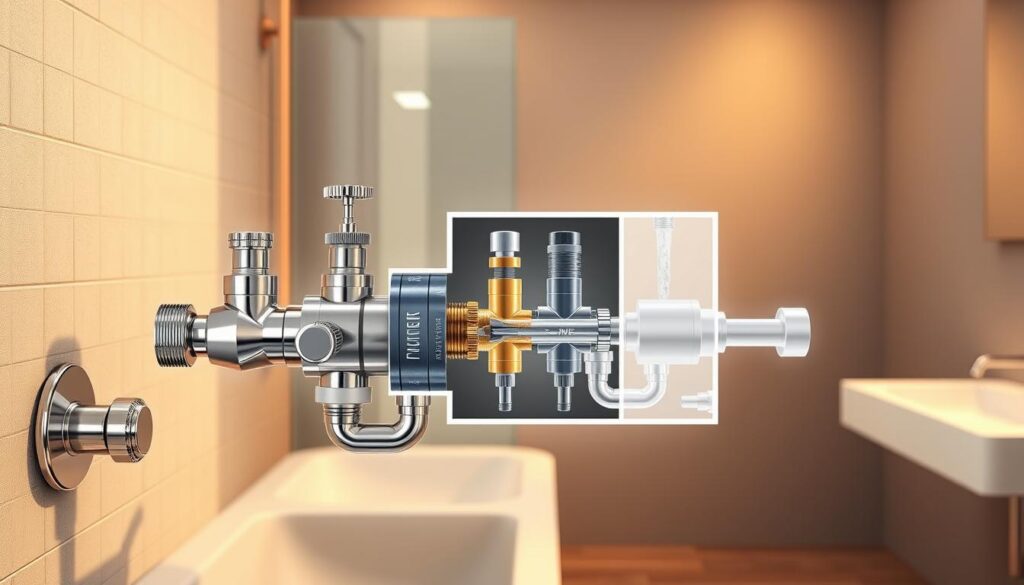
A hot water manifold system changes your home’s plumbing for the better. It brings big advantages for those who want water to flow efficiently. These systems are way better than old plumbing methods.
Manifold plumbing does more than just bring water to your home. It centralizes water, giving you many benefits:
- Enhanced water pressure across all fixtures
- Reduced water waste
- Faster hot water delivery
- Individual fixture shut-off capabilities
The hot water manifold system makes water heating and distribution much more efficient. Homeowners save a lot on energy thanks to its compact design and smart water flow.
| Benefit Category | Specific Advantage | Potential Savings |
|---|---|---|
| Energy Efficiency | Reduced heating time | 10-15% lower utility costs |
| Water Conservation | Minimized pipe volume | Up to 5 gallons saved per use |
| Maintenance | Easy fixture isolation | Simplified repair processes |
Choosing a manifold plumbing system means you’re getting a modern fix for long-term comfort and efficiency in your home.
PEX Tubing and Manifold Integration
PEX tubing has changed plumbing systems a lot. It makes them more flexible and efficient. This material helps water flow better in homes and businesses. It gives homeowners a dependable and flexible way to manage water.
Types of PEX Configurations
When setting up a hot water manifold system, you’ll find three main PEX setups:
- Trunk and Branch: A classic setup with a main line branching to different fixtures
- Home Run: A direct line from the manifold to each fixture
- Remote Manifold: A central point for distributing water to many lines
Color-Coding and Organization
PEX tubing has a simple color code for easier installation and upkeep:
- Red: For hot water lines
- Blue: For cold water lines
- White: Can be for either hot or cold water
Installation Best Practices
To get the most out of your pex manifold systems, follow these important steps:
- Make sure PEX tubing has support every 32 inches
- Allow for thermal expansion with gentle curves
- Use approved connections like crimp or expansion fittings
- Keep tubing away from direct sunlight and damage
Knowing these key points about PEX tubing helps you set up a hot water manifold system. It will meet your home’s water needs efficiently and reliably.
Cost Considerations and Long-term Savings
Homeowners should think about more than just the upfront cost when considering a plumbing manifold. A manifold system might cost more at first, but it saves money in the long run.
The cost to install a manifold plumbing system varies. It can be from $500 to $2,000, based on your home’s size and layout. This might seem high compared to traditional plumbing. But, the manifold system’s benefits soon make up for the initial cost.
- Reduced water waste
- Lower energy consumption
- Simplified maintenance
- Longer system lifespan
The savings become clear when looking at the long-term financial benefits. Manifold systems have shorter pipes. This means less water is wasted and hot water is delivered faster.
| Cost Factor | Traditional Plumbing | Manifold System |
|---|---|---|
| Initial Installation | $400-$1,500 | $500-$2,000 |
| Annual Energy Savings | $50-$100 | $150-$300 |
| Maintenance Costs | Higher | Lower |
“Investing in a manifold system is not an expense, but a strategic home improvement decision.” – Plumbing Efficiency Expert
Many utility companies give rebates for installing efficient plumbing systems. This can lower your overall cost even more. By choosing a manifold system, you’re not just upgrading your plumbing. You’re making a smart financial choice that will save you money for years.
Manifold System Installation Process
Installing a home plumbing manifold system changes how water flows in your home. PEX manifold systems make water distribution easier and more efficient. They simplify the traditional plumbing methods.
Before starting your installation, planning is key. Think about your home’s layout and how much water you use.
Planning Your Manifold Layout
For a successful pex manifold system, placement is important. Keep these points in mind:
- Place it near the main water supply.
- Choose an area that’s easy to reach for maintenance.
- Put it close to where you use the most water.
- Keep it away from very cold or hot spots.
Essential Tools and Materials
Here’s what you’ll need for your installation:
- PEX tubing cutter
- Pipe wrench
- Measuring tape
- Manifold assembly
- Mounting brackets
- Crimping tool
Step-by-Step Implementation
Follow these steps for your installation:
- Turn off the main water supply.
- Mount the manifold on the wall securely.
- Connect the main water line to the manifold.
- Run PEX lines to each fixture.
- Check the connections for leaks.
- Insulate any exposed pipes.
Pro tip: While DIY installation is possible, getting a professional plumber ensures your pex manifold system works best.
Maintenance and Troubleshooting
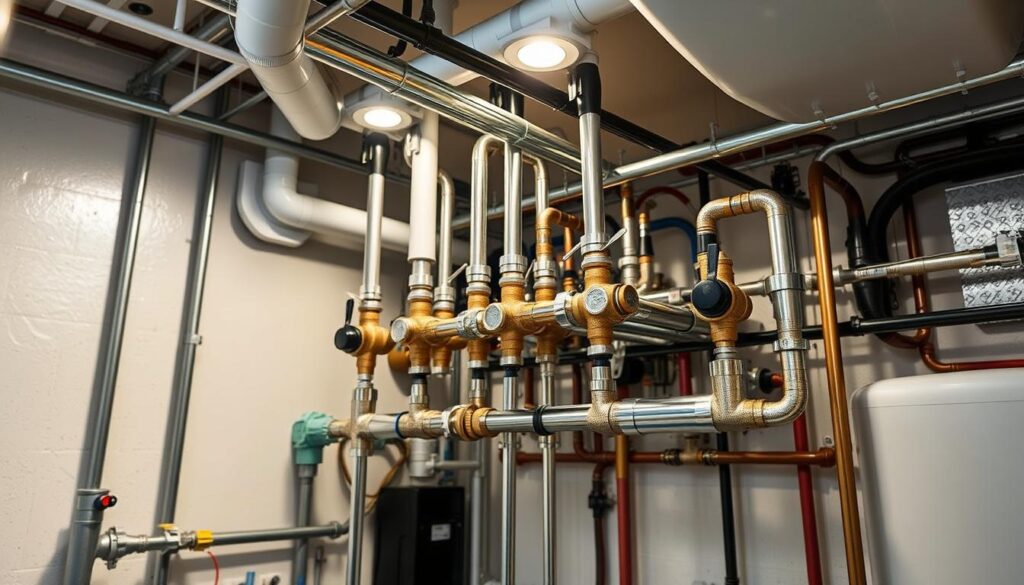
Keeping your water distribution manifold in good shape is key. A well-maintained system avoids expensive fixes and keeps water flowing smoothly. Regular checks can spot problems early.
Here are some important steps for your manifold plumbing system:
- Check for visible leaks around connections
- Inspect shut-off valves for proper functionality
- Monitor water pressure levels
- Examine PEX tubing for signs of wear
When you’re troubleshooting your water distribution manifold, watch each line closely. Manifold systems let you fix one line without stopping water for the whole house.
| Maintenance Task | Frequency | Purpose |
|---|---|---|
| Visual Inspection | Every 6 months | Detect early signs of wear |
| Pressure Check | Annually | Ensure optimal water flow |
| Valve Testing | Every 12 months | Confirm shut-off valve functionality |
If you see leaks, pressure drops, or system problems, call a pro. Some tasks you can do yourself, but complex issues need a plumber’s skills.
Preventative maintenance saves money over emergency repairs. Knowing your hot water manifold system helps it last longer and work better.
Conclusion
Manifold plumbing systems change how water is distributed in homes. They have special designs for each appliance or fixture. This makes managing water in your home more efficient and controlled.
These systems offer many benefits over old plumbing methods. They improve water flow, make maintenance easier, and are more reliable. By using them, you can prevent water damage and make your plumbing more adaptable to your needs.
Manifold plumbing is a smart choice for new homes or upgrades. It ensures better water distribution, easier upkeep, and can save money in the long run. It’s a modern and practical way to manage water in your home.
The future of home plumbing is about smart, efficient systems. By choosing manifold plumbing, you’re leading the way in home infrastructure innovation.