
Affiliate Disclosure
Plumber Guide Guys is a participant in the Amazon Services LLC Associates Program, an affiliate advertising program designed to provide a means for sites to earn advertising fees by advertising and linking to Amazon.
What Is A Manifold In Plumbing? Ever thought about how water gets to every corner of your home without a mess of pipes? The answer is a manifold.
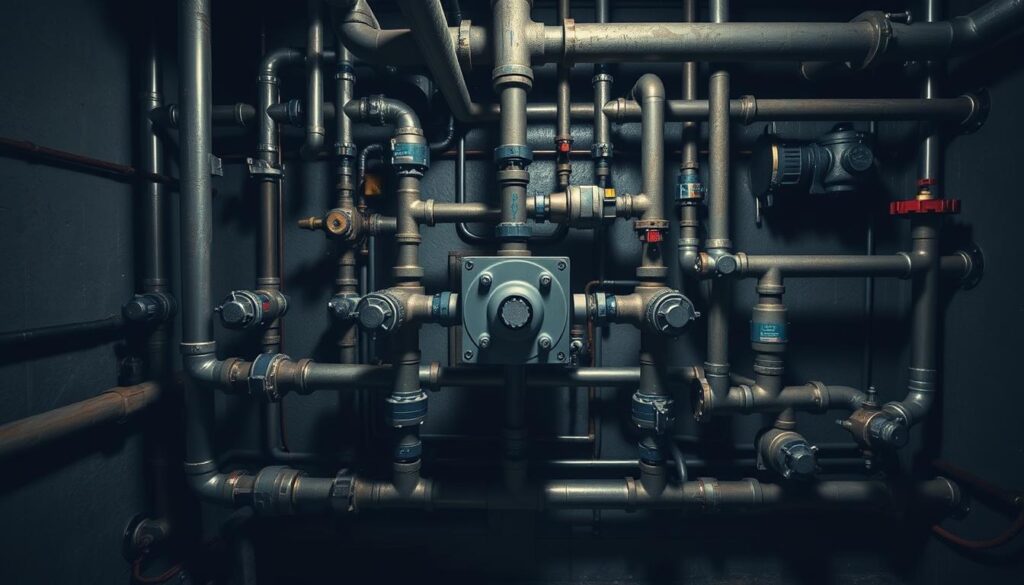
A manifold system is the main hub for water in your home. It’s like the heart of your plumbing, sending hot and cold water to different places. This helps avoid leaks.
Unlike old plumbing ways, manifolds make water flow simpler. They offer better control and fewer pipe connections. This makes your water system more dependable and easier to keep up.
Key Takeaways
- Manifolds act as central water distribution points in residential plumbing
- Reduces possible leak risks by cutting down pipe connections
- Makes water flow and pressure management more efficient
- Works well with modern piping like PEX
- Makes keeping your home’s water system in check simpler
Table of Contents
What Is A Manifold In Plumbing
A plumbing manifold is the heart of your home’s water system. It’s like a traffic controller for water, directing it to various fixtures and appliances efficiently.
Plumbing manifolds are key in modern water systems. They are complex systems that manage water flow and pressure across many connections.
Basic Components and Structure
Manifolds have a few main parts:
- Main service line input
- Central tubular chamber
- Multiple outflow connections
- Shut-off valves for individual circuits
Main Functions in Water Distribution
The manifold’s role is vital for steady water pressure and flow. It helps you:
- Control water distribution to different zones
- Isolate specific circuits for maintenance
- Reduce pressure variations
Role in Modern Plumbing Systems
PEX manifold installation has changed residential plumbing. These systems offer flexible and efficient water distribution, unlike traditional pipes.
| Manifold Material | Key Characteristics | Common Applications |
|---|---|---|
| Copper | Durable, corrosion-resistant | Traditional residential systems |
| PEX | Flexible, cost-effective | Modern home renovations |
| Brass | Strong, long-lasting | Commercial and industrial settings |
Knowing about your manifold’s structure and function can improve your home’s water system management.
Types of Plumbing Manifolds and Their Applications
Residential plumbing manifolds come in various designs. Each is tailored to specific water distribution needs. Knowing the different types helps you pick the best system for your home.
Compression and Crimp Manifolds
Compression manifolds are great for small homes. They use special fittings for tight seals. This reduces the risk of leaks.
- Best for compact residential installations
- Provides precise water distribution
- Reduces possible connection failures
MANABLOC and PEX Systems
MANABLOC technology is a standout in water management. It controls both hot and cold water flows. This gives you unmatched control in your plumbing network.
| Manifold Type | Key Features | Best Application |
|---|---|---|
| MANABLOC | Dual temperature control | Modern home installations |
| PEX Press | Flexible connection methods | Retrofit and new construction |
Copper and Bronze Manifolds
Copper and bronze manifolds are classic choices. They’re durable and resistant to corrosion. They’re reliable for long-term use in water systems.
Selecting the right manifold depends on your specific plumbing requirements and home infrastructure.
Experts say to consider your home’s water pressure, layout, and future needs. This helps choose the right manifold type.
Understanding Manifold System Architecture
Professional plumbers design water distribution manifolds to be efficient and easy to access. The plumbing manifold system is the main hub for water in your home. It connects the main water supply to each fixture with precision.
Plumbers place the manifold in key spots for best access and function. These spots are often:
- Basement utility areas
- Ground-level utility closets
- Central mechanical rooms
The design of a modern plumbing manifold system needs specific space for installation and upkeep. Important space needs include:
- At least 18 inches of horizontal space
- 36 inches of vertical space from water heaters
- Close to the home’s water service line
Unlike traditional plumbing, manifold systems are more efficient. They have a compact design for better control and less water waste. This makes managing your home’s water easier and more efficient.
Benefits of Installing a Plumbing Manifold System
Plumbing manifolds change how water is distributed in homes and businesses. They bring big benefits that make old piping systems better. Your home’s water system can get a lot better with a manifold system.
Homeowners looking for better water management will find many benefits in manifold systems. These systems are becoming more common in new buildings.
Enhanced Water Pressure Control
Manifolds are great for controlling water pressure. They keep the water pressure the same everywhere, so you don’t get sudden drops when using water at the same time.
- Maintains steady water pressure in multiple rooms
- Reduces pressure drops during peak usage times
- Supports smaller supply lines without compromising performance
Simplified Maintenance Access
Manifolds make your plumbing system easier to manage. You can fix one fixture without affecting the whole system. This makes repairs simpler.
“A well-designed manifold system turns complex plumbing maintenance into a simple, efficient process.” – Professional Plumbing Association
Reduced Risk of Leaks
Manifolds have fewer connections, which means fewer chances for leaks. This reduces the risk of water damage and expensive fixes.
| Manifold System Feature | Leak Prevention Benefit |
|---|---|
| Fewer Connection Points | 70% Reduction in Possible Leak Locations |
| Precision Engineering | Better Seal Quality |
| Modular Design | Easy to Replace Parts |
Choosing manifold plumbing means you get a reliable and efficient water system. It’s a smart investment for the long term.
Installation Guidelines for Plumbing Manifolds
Installing residential plumbing manifolds needs careful planning and precise steps. Whether you’re doing it yourself or getting professional help, knowing the pex manifold installation process is key. It ensures your home’s water is distributed well.
Before starting, make sure you have all the tools and materials. You’ll need:
- Pipe cutter
- Adjustable wrench
- Level
- Mounting brackets
- PEX piping
- Manifold system
Choosing the right spot for your manifold is important. Look for a spot that:
- Is near water fixtures
- Is easy to get to for upkeep
- Is between wall studs if possible
- Avoids electrical panels or other equipment
Here are the main steps for installation:
| Step | Description |
|---|---|
| 1. Preparation | Measure and mark where to mount |
| 2. Mounting | Attach manifold brackets to wall studs |
| 3. Connection | Connect main water supply to manifold |
| 4. Piping | Link individual PEX lines to manifold ports |
Pro tip: While many can install a pex manifold, complex systems might need a pro. If unsure, get a licensed plumber to set it up right and follow local codes.
Comparing Traditional vs. Manifold Plumbing Systems
Plumbing technology has changed a lot, giving homeowners better ways to manage water. The choice between old branch plumbing and new manifold systems is a big deal. Homeowners want the best way to handle water.
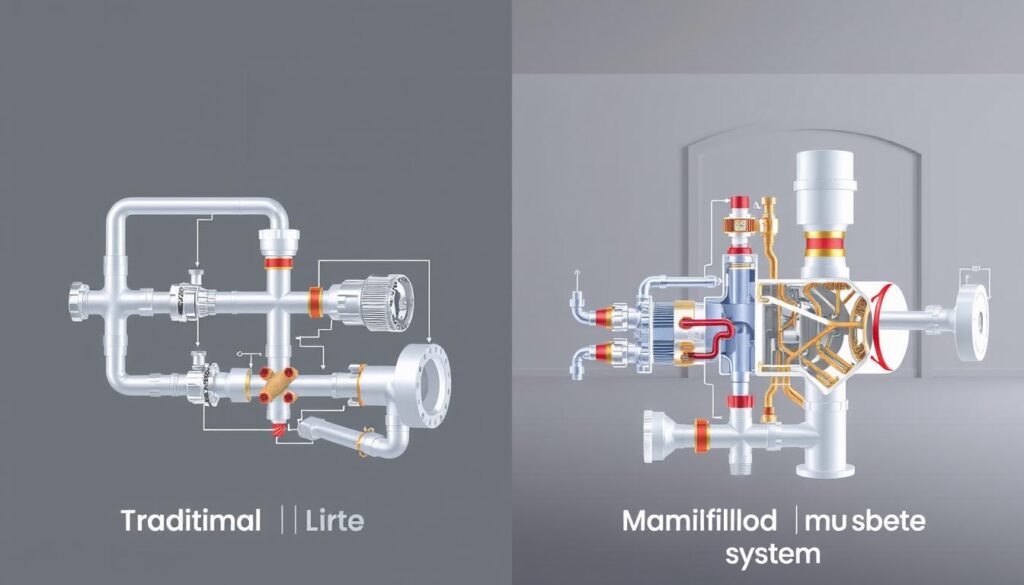
Cost Efficiency Analysis
Looking at copper manifold vs pex systems, cost is key. Old branch plumbing needs more stuff and work, making it pricey at first. But, manifold plumbing saves money in the long run:
- Less waste of materials
- Easier to set up
- Cheaper to keep up over time
Performance Differences
Manifold plumbing systems beat traditional ones in water flow. They send water straight to each fixture, giving:
- Even water pressure
- Hot water faster
- Better flow
Long-term Maintenance Considerations
Manifold systems are a breeze to maintain. PEX piping is great because it doesn’t freeze and bends easily. Copper manifolds are tough, but PEX needs less fixing and works well in many places.
The right plumbing system can save you money and prevent future headaches.
Water Distribution and Pressure Management
Knowing how a water distribution manifold works is key to keeping your plumbing in top shape. A good manifold system gives you steady water pressure and smooth flow to every tap. This beats the old plumbing ways.
Water distribution manifolds are the heart of your home’s water system. They manage water flow by linking the main water line straight to your taps. This cuts down on pressure loss and fewer spots for leaks.
- Balanced water pressure across all fixtures
- Reduced risk of pressure inconsistencies
- Direct routing of water lines
- Simplified maintenance access
The water manifold function does more than just distribute water. It lets you adjust water flow rates. This means you can control your water use and pressure exactly.
| Manifold Feature | Performance Benefit |
|---|---|
| Centralized Control | Individual fixture regulation |
| Direct Routing | Minimized pressure loss |
| Fewer Connections | Reduced leak possibility |
By getting into manifold technology, homeowners can boost their water system. You’ll get a more efficient, dependable, and easy-to-manage water supply in your home.
Manifold Integration with PEX Piping Systems
PEX piping systems have changed plumbing for the better. They offer flexibility and top-notch performance for homes and businesses. Knowing how to integrate a pex manifold is key for the best water flow.
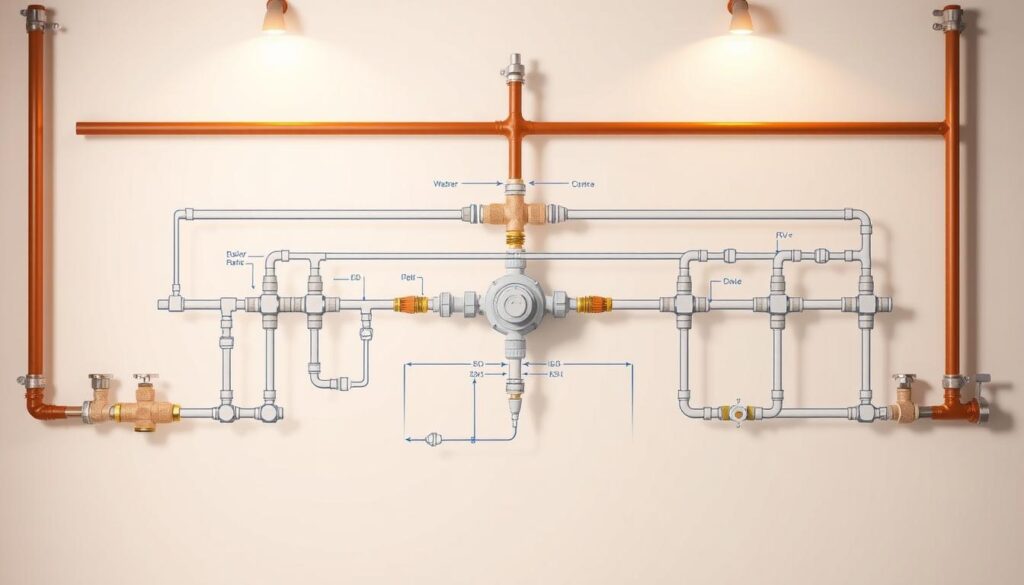
The plumbing manifold system makes water distribution easy. It ensures water flows well to all fixtures and zones.
Compatibility Requirements
Choosing the right parts for your PEX manifold system is important. You need to think about a few things:
- Make sure the manifold and PEX pipes are compatible
- Match the diameter for the best water pressure
- Check the temperature and pressure ratings
- Make sure it meets local plumbing codes
Connection Methods
There are several ways to connect PEX pipes to manifolds:
- Crimp Connections: Fast and reliable, using copper rings
- Expansion Connections: Strong and leak-free
- Push-to-Connect Fittings: Easy to install without tools
System Optimization Tips
Here are some tips to make your plumbing manifold system better:
- Size manifold branches correctly
- Keep pipe lengths short to avoid pressure drops
- Use thermal insulation to save energy
- Check connection points often
By following these tips, you can build a strong and efficient water system. It will meet your plumbing needs perfectly.
Maintenance and Troubleshooting Tips
Keeping your residential plumbing manifolds in good shape is key. Knowing how to maintain them can save you money and hassle. Regular upkeep can also make your plumbing last longer.
Here are some important maintenance tasks for your hot water manifold system:
- Regular visual inspections for possible leaks
- Checking valve functionality every six months
- Cleaning manifold connections to prevent mineral buildup
- Monitoring water pressure levels
When you run into problems with your plumbing manifolds, follow these steps:
- Find out which zone or fixture is having trouble
- Check if the valves are working right
- Look for signs of wear on pipe connections
- Check the water pressure at different outlets
“A well-maintained manifold system can prevent 80% of possible plumbing emergencies.” – Professional Plumbing Association
Here are some warning signs that mean you need a plumber right away:
| Warning Sign | Potential Issue | Recommended Action |
|---|---|---|
| Persistent leaking | Seal or valve failure | Contact professional plumber |
| Inconsistent water pressure | Manifold blockage | Inspect and clean manifold system |
| Unusual noises | Potential pipe stress | Immediate professional evaluation |
Pro tip: Always keep a detailed maintenance log to track your residential plumbing manifolds’ performance and identify possible issues early.
Conclusion
Learning about manifold plumbing shows a new way to manage water in homes and businesses. It offers many benefits over old piping methods. It lets homeowners and professionals control water flow and pressure better than ever before.
Your plumbing system is key to your property’s function. Manifold systems make it more efficient and reliable. They reduce maintenance needs, lower leak risks, and improve water pressure control.
More plumbers suggest using manifold systems for new buildings and updates. They help manage water better, reduce upkeep, and last longer. The right manifold system boosts your plumbing’s efficiency.
If you’re thinking about upgrading your plumbing, talk to a certified plumber. They can check if a manifold system fits your needs. This ensures you choose wisely, balancing performance and cost.