
Affiliate Disclosure
Plumber Guide Guys is a participant in the Amazon Services LLC Associates Program, an affiliate advertising program designed to provide a means for sites to earn advertising fees by advertising and linking to Amazon.
What Does MPT Mean in Plumbing? Ever wondered about the code MPT in plumbing? It’s key for anyone working with pipes. This includes both professional plumbers and DIY fans fixing their homes.
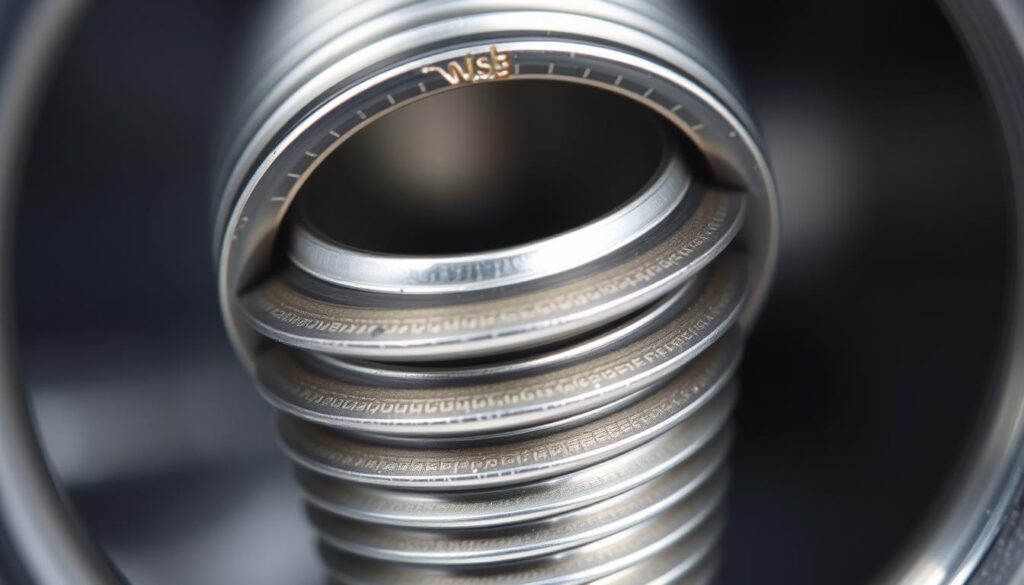
MPT stands for Male Pipe Thread. It’s a vital part of plumbing systems. It helps pipes and fittings connect smoothly. Think of it as the male end of a threading system for tight, watertight connections.
This threading system is important in many places. It’s used in homes, businesses, and factories. Knowing about male pipe thread helps you understand how pipes work together well.
Key Takeaways
- MPT refers to Male Pipe Thread used in plumbing connections
- Essential for creating secure pipe connections
- Used across residential and commercial plumbing systems
- Part of the broader National Pipe Thread (NPT) standard
- Critical for ensuring watertight and reliable pipe joints
Table of Contents
Understanding Basic Plumbing Thread Types
Plumbing thread types are key for making strong and reliable pipe connections. Knowing the different plumbing thread standards can save you time and avoid leaks. Plumbing threads are complex but vital for both pros and DIY fans.
Pipe threading systems have grown a lot over time. They now have standardized methods for consistent and reliable connections. These systems aim to create tight seals and stop leaks in various plumbing situations.
Common Thread Standards in Modern Plumbing
The main plumbing pipe thread standards are:
- NPT (National Pipe Taper) – The most common in the U.S.
- BSPT (British Standard Pipe Taper) – Used a lot worldwide
- BSPP (British Standard Parallel) – Another global threading standard
The Evolution of Pipe Threading Systems
Plumbing thread types have changed a lot from the early industrial days. Makers have kept improving threading methods. This has led to more reliable and efficient pipe connections that meet today’s needs.
Key Components of Threading Systems
Knowing the main parts of threading systems helps you choose the right pipe connections. These parts include thread angle, thread pitch, and sealing mechanisms. They ensure a tight seal.
Choosing the right thread is key to avoiding leaks and ensuring plumbing lasts a long time.
Each threading standard has special features for different plumbing needs. By learning about these thread types and meanings, you can pick the best connections for your project.
What Does MPT Mean in Plumbing
Knowing what MPT means in plumbing is key for anyone dealing with pipe connections. Male Pipe Thread (MPT) is a specific threading used in plumbing. It ensures secure connections in various plumbing tasks.
The male pipe thread definition is simple. MPT is the external threads on a pipe or fitting. It connects with a female pipe thread (FPT). These threads follow the National Pipe Thread (NPT) standard, common in the U.S.
- MPT has a tapered design
- It provides a tight seal when connected
- Works well with standard FPT fittings
- Used in both home and commercial plumbing
Plumbers and DIY fans count on MPT for its dependability and flexibility. The threading ensures a strong connection that can handle different pressures and conditions. Knowing MPT is vital for making connections that are both strong and leak-free, whether in water lines, gas pipes, or hydraulic systems.
The History and Development of NPT Standards
The story of plumbing pipe thread standards starts in America’s industrial heart. In the 19th century, fast technological growth made standard pipe connections vital. They had to handle the growing industrial needs.
The National Pipe Thread (NPT) standard was a key answer to these challenges. Before it, pipe connections were unreliable and not efficient.
Origins in Industrial Revolution
As industries grew, plumbing pipe thread standards became key. They ensured:
- Consistent pipe connections
- Improved mechanical reliability
- Standardized manufacturing processes
Evolution of Threading Standards
The NPT standard evolved a lot in the late 19th and early 20th centuries. Manufacturers worked together. They created precise threading specifications for various industrial uses.
Impact on Modern Plumbing Practices
Now, the NPT standard is a core part of plumbing systems. Its impact shows how standardization boosts innovation and efficiency in industries.
The NPT standard marks a key moment in American industrial engineering. It changed how we connect and manage fluid systems.
Distinguishing Between MPT and FPT Connections
It’s important to know the difference between Male Pipe Thread (MPT) and Female Pipe Thread (FPT) connections. These connections are key to making sure your plumbing works well and doesn’t leak.
Male threaded pipe fittings have some key features. These features help us understand the main differences:
- MPT has external threads that stick out
- FPT has internal threads that fit the male connection
- Each type has its own role in plumbing
When you connect MPT and FPT, the male threads fit into the female threads. This makes a tight seal that stops leaks in plumbing.
| Connection Type | Thread Characteristic | Primary Use |
|---|---|---|
| MPT (Male Pipe Thread) | External threads | Connecting pipes to fixtures |
| FPT (Female Pipe Thread) | Internal threads | Receiving male connections |
Choosing between MPT and NPT plumbing connections depends on your project’s needs. Different projects need different threading setups for the best results.
Proper thread matching is essential for creating secure and leak-free pipe connections.
Professional plumbers pick the right thread type for system safety. This prevents water damage or pressure problems.
Essential Characteristics of Male Pipe Threads
Understanding male threaded pipe fittings is key for plumbing success. Male pipe threads (MPT) are vital for secure connections in piping systems. They ensure a tight seal and proper flow of fluids or gases.
Identifying MPT fittings involves recognizing their unique design. The standard NPT design has a specific thread angle and precise measurements.
Thread Angle and Design Features
Male threaded pipe fittings have a distinct thread design. Key features include:
- 60-degree thread angle
- Tapered thread profile
- Consistent thread pitch
- Standardized thread dimensions
Sealing Mechanisms and Requirements
Sealing is critical in MPT connections. The threads are made to create a mechanical seal to prevent leaks. Various sealing methods are used based on the application:
- Thread tape
- Pipe dope
- Specialized gasket materials
Installation Best Practices
Installing male threaded pipe fittings needs care. Ensure clean, undamaged threads and use the right sealants. Follow the manufacturer’s guidelines to avoid leaks or connection failures.
Precision in thread alignment and careful tightening are key to a successful MPT connection.
MPT vs NPT: Understanding the Differences
When working with plumbing, knowing the difference between Male Pipe Thread (MPT) and National Pipe Thread (NPT) is key. MPT is the male version of NPT, with external tapered threads. These threads are important in many plumbing jobs.
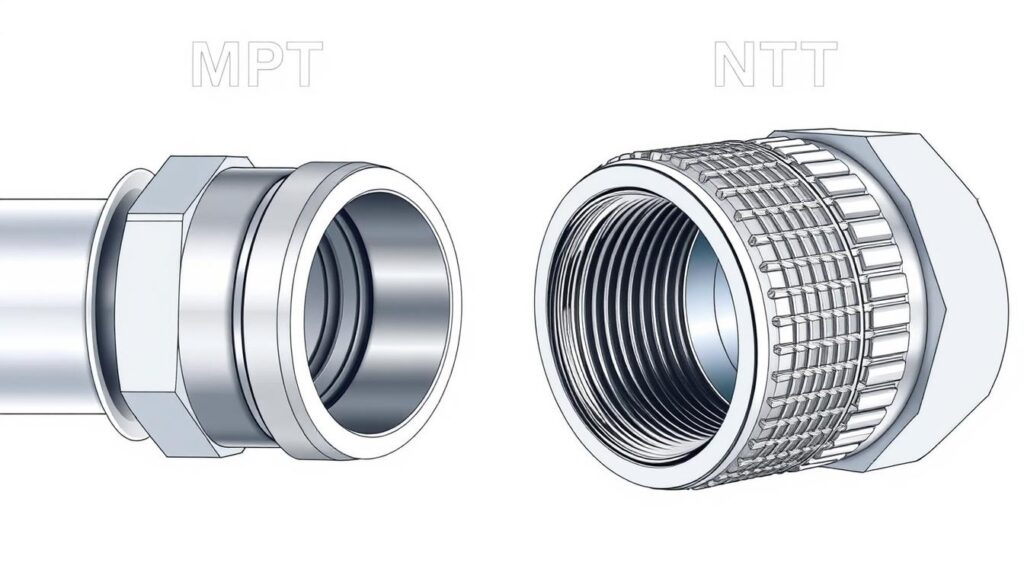
The main differences between MPT and NPT are in their characteristics and uses. Let’s look at the main differences:
- Thread Direction: MPT has external threads, while NPT can be either male or female
- Sealing Mechanism: Both use tapered threads for tight, leak-resistant connections
- Interchangeability: MPT fits with standard NPT fittings
Professionals know that knowing these small differences can stop installation mistakes. It ensures reliable plumbing connections.
Choosing between MPT and NPT depends on several things:
- What your project needs
- The type of pipe
- The pressure and temperature
- Industry standards
When picking between MPT vs NPT, think about your project’s needs. Even though they’re similar, small differences can affect how well the system works and its reliability.
Common Applications of MPT Fittings in Plumbing
The MPT plumbing connections guide shows how versatile male pipe threads are. They are key in many important uses. These fittings help manage fluid systems in different places.
Knowing how MPT fittings are used helps both pros and DIY folks. They make better choices for their plumbing needs.
Residential Plumbing Essentials
In homes, MPT fittings are vital for solid connections in various systems:
- Water heater installations
- Kitchen and bathroom sink connections
- Shower and bathtub plumbing
- Irrigation system configurations
Commercial and Industrial Landscape
MPT plumbing connections guide experts through tough infrastructure needs:
- Manufacturing water distribution networks
- HVAC system pipework
- Large-scale waste management systems
- Chemical processing equipment
Specialized Industry Applications
Special areas use MPT fittings for exact engineering and fluid control:
- Automotive cooling systems
- Agricultural irrigation equipment
- Marine vessel hydraulic connections
- Aerospace pneumatic systems
“MPT fittings represent the backbone of modern fluid transfer technologies across multiple industries.” – Plumbing Engineering Quarterly
Proper Installation Techniques for MPT Fittings
Working with MPT plumbing connections requires knowing the right installation steps. This ensures your pipe system is secure and leak-free. Your mpt plumbing connections guide starts with preparation and precise steps.
First, check the MPT fittings for damage or debris. To identify mpt fittings, look for consistent threads and the standard tapered pipe thread.
- Clean threads with a wire brush to remove any dirt or rust
- Inspect threads for consistent pitch and alignment
- Select appropriate thread sealant or tape for your specific application
Sealing properly is key to avoiding leaks. Wrap thread sealant tape clockwise around male pipe threads. Make sure to cover all threads without overlapping too much. Use high-quality PTFE tape for a reliable seal.
When tightening, be precise. Use the right wrenches and follow these steps:
- Hand-tighten initially to prevent cross-threading
- Use a wrench to complete the connection, but avoid over-tightening
- Rotate threads smoothly without forcing or applying excessive torque
Professional plumbers suggest checking the connection for smooth rotation and consistent thread engagement. A well-installed MPT fitting should have a tight seal without gaps or misalignment.
Troubleshooting MPT Connection Issues
Working with mpt plumbing connections can sometimes lead to problems. These issues can affect the safety and function of your pipes. It’s important to know how to find and fix these problems to keep your plumbing system working well.
Many issues with MPT plumbing connections come from mistakes during installation or damage to the threads. Here are some tips to help you fix these problems:
- Leak Detection: Look for water leaks around the connections. This means the seal isn’t working right.
- Thread Alignment: Check if the threads are crossed or not aligned properly.
- Fitting Compatibility: Make sure the threads on the male and female parts match exactly.
To fix leaks in your MPT connections, follow these steps:
- Clean the thread surfaces well.
- Use thread tape or sealant correctly.
- Apply the right amount of torque without over-tightening.
- If a fitting is damaged, replace it if you can’t fix it.
Experts say to use the right tools, like pipe wrenches, and check the threads before connecting. If you keep getting leaks or see a lot of thread damage, it’s best to get help from a professional. They can help avoid water damage.
Proper thread engagement is the key to a reliable and leak-free plumbing connection.
Maintenance and Care of Threaded Connections
Keeping your plumbing connections in good shape is key. It makes sure your MPT plumbing connections last longer and work better. Taking care of threaded connections helps avoid costly fixes.
Plumbers know that keeping threads strong is important. Regular checks can stop leaks and failures before they happen.
Regular Inspection Procedures
Checking your connections often is a must. Here’s what to do:
- Look for corrosion or rust on threads
- Check threads for damage or wear
- Test if connections are tight and sealed well
- Watch for small leaks or moisture around threads
Preventing Thread Damage
To keep your threads safe, follow these steps:
- Use the right thread sealants and tape
- Don’t over-tighten connections
- Clean threads before you install them
- Keep threaded fittings in a clean, dry place
Replacement Guidelines
| Condition | Recommended Action |
|---|---|
| Visible corrosion | Replace immediately |
| Thread erosion | Replace before it fails |
| Persistent leaks | Check and replace damaged parts |
Looking after your plumbing connections can save you a lot of time and money.
Safety Considerations and Best Practices
Working with plumbing pipe thread standards is a job that needs careful safety. When you’re working with MPT plumbing connections, keeping yourself safe and installing them right is key. These steps are important for any project.
Your safety starts with knowing how to handle threaded connections the right way. The mpt plumbing connections guide talks about several important safety tips:
- Always wear the right protective gear, like safety glasses and work gloves
- Use the correct tools made for pipe threading
- Check the threads well before you install them to avoid leaks
- Don’t over-tighten connections, as it can harm the thread
Plumbing work can have big risks. High-pressure systems and certain fluids need extra care. Professional plumbers say to follow local plumbing codes and manufacturer guidelines to stay safe.
Important safety steps for MPT connections are:
- Check the pipe thread standards before starting any installation
- Make sure the threads are aligned right
- Use the right thread sealants
- Do pressure tests after you’ve installed it
Safety in plumbing is not an option—it’s a necessity.
By sticking to these guidelines, you’ll keep yourself safe and make sure your plumbing connections are reliable and leak-free. They’ll meet professional standards too.
Conclusion
Knowing what MPT means in plumbing is key for both pros and DIY fans. Male pipe threads are essential for making plumbing systems safe and leak-free. They are used in homes, businesses, and factories.
Male pipe threads are more than just a detail. They are critical for pipe connections to work well. They ensure the system works right and lasts long. Plumbing has come a long way, from old industrial methods to today’s advanced connections.
As plumbing tech gets better, knowing about MPT and other threads is more important. Whether you’re fixing up a house or handling big projects, understanding these basics is vital. It helps you make smart choices and get great results.
Keep learning and paying attention to the small stuff in plumbing. It’s complex, but with the right knowledge, you can do great work. Always aim for precision and excellence in your projects.