

Affiliate Disclosure
Plumber Guide Guys is a participant in the Amazon Services LLC Associates Program, an affiliate advertising program designed to provide a means for sites to earn advertising fees by advertising and linking to Amazon.
What Does MIP Stand for in Plumbing? Ever wondered about the secret code plumbers use for pipe connections? It’s time to explore the world of male iron pipe (MIP) connections. They are key in today’s plumbing systems.
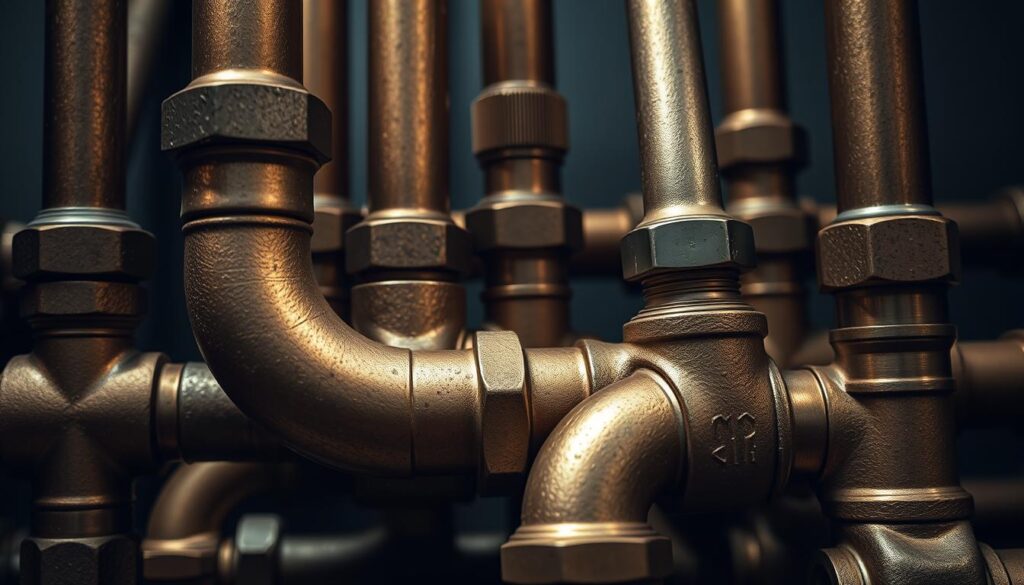
Learning what MIP means in plumbing changes how you see pipe installations. Male iron pipe (MIP) is a critical part in making plumbing connections strong and reliable. It’s used in homes and big buildings.
MIP fittings are special threaded connections for pipes. They are made to connect pipes with precision and strength. These parts are important for making tight seals that stop leaks and move fluids smoothly.
Key Takeaways
- MIP stands for Male Iron Pipe with external threading
- Essential for creating secure plumbing connections
- Used in both residential and industrial plumbing systems
- Provides robust and leak-resistant pipe connections
- Enables flexible piping configurations
Table of Contents
Understanding MIP Definition and Basic Terminology
Male Iron Pipe (MIP) fittings are key in plumbing. They help make strong connections in different piping systems. Both pros and DIY folks use them for various plumbing jobs.
MIP fittings have special threading on the outside. This lets them fit perfectly with female fittings. Knowing standard pipe thread sizes is vital for right installation and avoiding leaks.
Key Components of MIP Fittings
The main features of MIP fittings are:
- External threads for precise connections
- Works with many piping materials
- Makes tight, secure seals
Common Materials Used in MIP Connections
MIP fittings are made from strong materials for different needs:
| Material | Key Properties | Typical Applications |
|---|---|---|
| Steel | High strength, durability | Industrial piping systems |
| Brass | Corrosion resistance | Residential plumbing |
| PVC | Lightweight, chemical resistance | Water distribution systems |
Standard Sizing and Measurements
Precision matters in picking MIP fittings. Sizes range from 1/8 inch to 2 inches. Each size is made for the best performance and fit.
“Choosing the right MIP fitting is about understanding both its material and precise measurements.” – Plumbing Professional
MIP vs FIP: Essential Differences in Plumbing Connections
Understanding the difference between Male Iron Pipe (MIP) and Female Iron Pipe (FIP) connections is key. These fittings are vital for a plumbing system that works well. They help ensure your plumbing is safe and reliable.
MIP and FIP connections serve different purposes. MIP fittings have threads on the outside, while FIP fittings have them inside. This makes them fit together perfectly in plumbing setups.
- MIP fittings: External threading design
- FIP fittings: Internal threading configuration
- Complementary connection system
The design of these connections helps pipes and parts fit together tightly. It’s important for plumbers and DIY fans to know how they work. This knowledge helps avoid leaks and keeps your system working right.
When picking between MIP and FIP, consider a few things:
- Pipe diameter requirements
- Specific application needs
- Material compatibility
- Pressure and flow specifications
Choosing the right connection type ensures optimal performance and longevity of your plumbing system.
What Does MIP Stand for in Plumbing?
Plumbing terms can be tricky, but knowing what MIP means is key. MIP stands for Male Iron Pipe threading. It’s a common way to connect pipes in many systems.
MIP fittings have come a long way in plumbing technology. They’ve changed how we design and build water and gas systems in various fields.
Historical Development of MIP Fittings
The history of MIP fittings is quite interesting. In the past, plumbing connections were simple. But MIP threading became a standard for strong, leak-free connections.
- Originated in late 19th-century industrial applications
- Developed to improve pipe connection reliability
- Standardized by major manufacturing associations
Modern Applications in Plumbing Systems
Now, MIP fittings do more than just connect pipes. They’re key in homes, businesses, and industries. They help move water, gas, and other fluids safely and efficiently.
Industry Standards and Regulations
MIP fittings must meet strict standards for safety and quality. Plumbers and makers follow rules on materials, thread details, and how connections are made.
Precision in MIP threading is not just about connection – it’s about maintaining system reliability and preventing possible failures.
Thread Types and Design Features of MIP Fittings
Knowing about pipe thread types is key when you’re working with plumbing fittings. MIP (Male Iron Pipe) fittings have special design features. These make them stand out in plumbing connections.
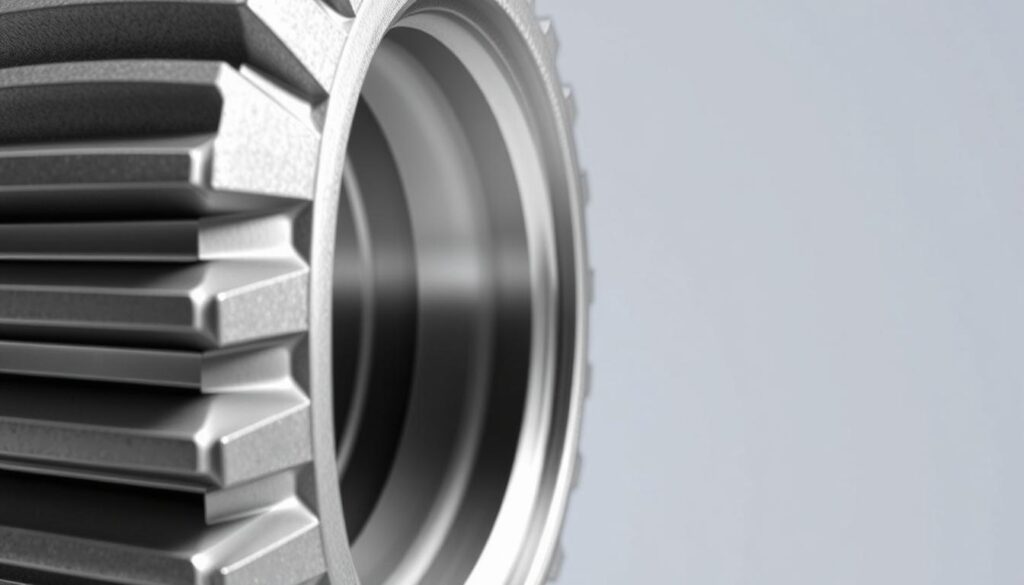
The thread design of MIP fittings is very important for strong pipe connections. These fittings usually have straight threads. This is different from tapered threads found in NPT (National Pipe Thread).
- Straight threads have a consistent diameter all the way through.
- Thread pitch shows how close the threads are together.
- Thread depth affects how strong the connection is.
When picking MIP fittings, look at a few important design features:
- Thread pitch: It affects how tight the connection is.
- Material: It decides how durable and resistant to corrosion the fitting is.
- Thread profile: It’s key for a good seal and preventing leaks.
Professional plumbers know that thread types are very important. They make sure the connections are strong and leak-free. Choosing the right MIP fitting means understanding how thread design helps.
Proper thread selection is the foundation of reliable plumbing connections.
Installation Techniques for MIP Connections
Installing male iron pipe fittings needs precision and attention to detail. Plumbing connections require specific methods for a secure and leak-free setup. Knowing the right steps can save time and prevent water damage.
Proper Threading Methods
Proper threading is key when working with male iron pipe fittings. Here are the essential steps:
- Clean threads well to remove debris or old sealant
- Check threads for damage or wear before you start
- Align pipes carefully to avoid cross-threading
- Use gentle, straight motions when connecting pipes
Sealing and Leak Prevention
Sealing effectively is vital for plumbing connections. Experts suggest:
- Use high-quality thread sealant or Teflon tape
- Wrap tape clockwise around male threads
- Make sure all threads are covered
- Avoid too much tape
Common Installation Mistakes to Avoid
Many DIYers make big mistakes with male iron pipe fittings. Be careful of these common errors:
- Don’t over-tighten, as it can damage threads
- Use the right sealant type
- Always check pipe alignment
- Don’t skip thread preparation
By following these tips, you can make professional-quality connections. They will last a long time in your plumbing system.
Comparing MIP and NPT Threading Systems
Knowing about pipe thread types is key for plumbing success. MIP (Male Iron Pipe) and NPT (National Pipe Taper) threads seem alike at first. But, they have big differences that can affect your project.
NPT threads have a tapered design for a tight seal. MIP threads are straight. This difference changes how we measure and use thread sizes in plumbing.
- NPT Threads:
- Tapered design
- Self-sealing mechanism
- Commonly used in pressurized systems
- MIP Threads:
- Straight thread configuration
- Requires additional sealing materials
- Versatile in different plumbing applications
When picking between these threads, think about your project needs. Compatibility is key. Not all fittings work together, so knowing their differences is vital for a good install.
Experts say to match thread types for the best connection. This prevents leaks and ensures your system lasts long.
Applications and Uses in Residential Plumbing
Male iron pipe (MIP) fittings are key in home plumbing. They offer reliable connections for many household needs. Knowing their uses helps homeowners make better plumbing choices.
Common Household Applications
MIP fittings are vital in many home plumbing tasks. They connect important systems:
- Water heater installations
- Kitchen and bathroom faucet connections
- Washing machine hookups
- Dishwasher water supply lines
- Outdoor spigot and irrigation systems
Maintenance and Repair Considerations
Keeping plumbing connections in good shape is important. Regular checks can stop leaks and system failures. Look for wear, corrosion, or mineral buildup on MIP fittings.
| Maintenance Task | Frequency | Purpose |
|---|---|---|
| Visual Inspection | Every 6 months | Detect early signs of damage |
| Thread Lubrication | Annually | Prevent seizing and ensure smooth connections |
| Leak Check | Quarterly | Identify possible water damage risks |
DIY vs Professional Installation
Some people like to install MIP fittings themselves. But, a pro can do a better job. Think about your skills and the project’s complexity before you decide.
- DIY Pros: Saves money, feels rewarding
- DIY Cons: Might install wrong, could void warranty
- Professional Pros: Work guaranteed, knows what they’re doing
- Professional Cons: Costs more upfront
Getting MIP fittings installed and maintained right is essential for good home plumbing.
Professional Tips for Working with MIP Fittings
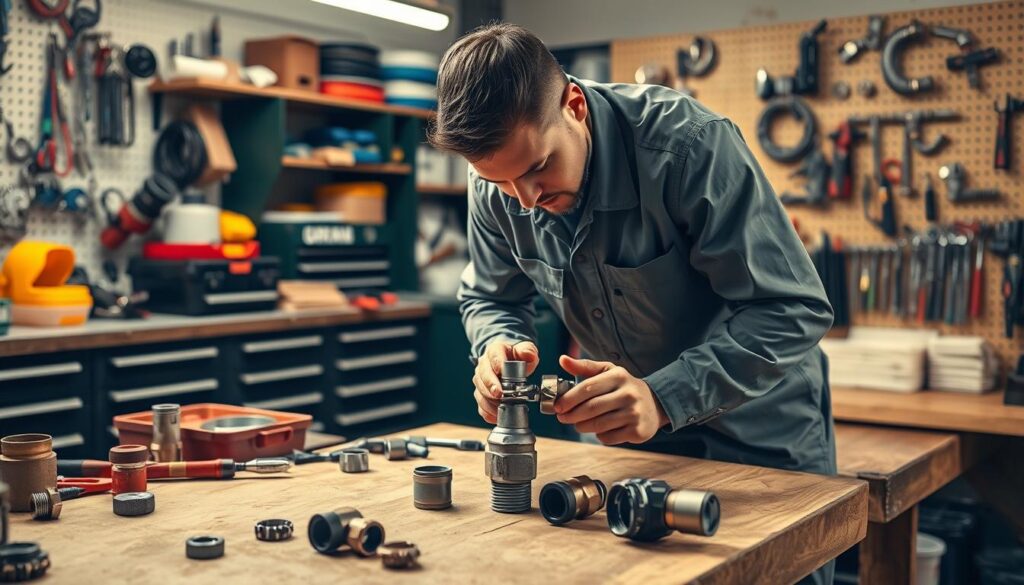
Professional plumbers know how to work with male iron pipe (MIP) fittings. It’s important to understand plumbing terms to do the job right. How you connect MIP fittings can greatly affect the system’s performance.
Here are some expert tips for working with MIP fittings:
- Select high-quality pipe threading tools
- Use appropriate thread sealants
- Inspect threads for damage before installation
- Ensure proper alignment during connection
Experts suggest certain methods for making MIP connections reliable:
- Clean threads thoroughly before assembly
- Apply thread tape or pipe compound carefully
- Use correct wrench size to prevent thread damage
- Check for proper torque without over-tightening
| Tool | Purpose | Recommended Usage |
|---|---|---|
| Pipe Wrench | Tightening Connections | Use with moderate pressure |
| Thread Sealant | Preventing Leaks | Apply sparingly and evenly |
| Thread Gauge | Checking Thread Compatibility | Verify before final installation |
Pro tip: Always test MIP connections for leaks after installation to ensure system integrity.
Troubleshooting Common MIP Connection Issues
Connecting plumbing fixtures can be challenging, mainly with male iron pipe (MIP) fittings. Knowing common problems helps you fix them fast. This prevents water damage and expensive fixes.
Spotting the main causes of MIP connection troubles needs a close look. Leaks usually come from a few main reasons in plumbing terms and how to connect them.
- Improper thread alignment causing cross-threading
- Inadequate pipe thread sealing
- Damaged or worn pipe threads
- Incorrect fitting size or type
To fix MIP connections, follow these important steps:
- Inspect threads for visible damage or wear
- Check for proper thread engagement
- Verify pipe and fitting compatibility
- Apply appropriate thread sealant
Experts say to use pipe tape or liquid sealant to stop leaks. Wrap tape clockwise around male threads for a tight seal. But don’t over-tighten, as it can harm the threads and the connection.
Proper installation and maintenance are key to preventing MIP connection failures.
Some problems need a pro’s help. If you’re not sure about fixing a plumbing issue, get a licensed plumber. They ensure a safe and right fix.
Maintenance and Best Practices for MIP Fittings
Keeping MIP (Male Iron Pipe) fittings in good shape is key for a reliable plumbing system. Knowing about plumbing terms and standard pipe sizes helps maintain your connections well.
Regular upkeep stops costly fixes and water damage. Your efforts can make your plumbing last longer.
Regular Inspection Guidelines
When checking MIP fittings, pay attention to these points:
- Look for signs of corrosion
- Check threads for damage or wear
- Watch for leaks around connections
- Make sure seals are tight
Preventive Maintenance Steps
To keep your MIP fittings working well, do these things:
- Clean threads before reconnecting
- Apply the right pipe sealant
- Use the right tightening method
- Keep an eye on water pressure
When to Replace MIP Fittings
It’s important to know when to replace MIP fittings for a strong plumbing system. Replace them if you see:
| Condition | Recommended Action |
|---|---|
| Significant corrosion | Replace right away |
| Persistent leaks | Check and replace fitting |
| Thread damage | Replace to avoid future problems |
| Age over 15 years | Think about replacing early |
Early spotting and regular care can prevent costly plumbing repairs.
Conclusion
Knowing what MIP stands for in plumbing is key for anyone working with pipes. Male Iron Pipe (MIP) fittings are essential for making strong and dependable plumbing connections. They are used in both homes and businesses.
Installing and keeping MIP connections right needs careful attention and knowing how to thread. You should pick the right materials, make sure threads line up, and use the right seals to avoid leaks. Plumbers use these skills to do top-notch work that lasts.
When you start any plumbing job, remember that getting better takes practice and learning. Whether you’re doing it yourself or you’re a pro, learning about MIP fittings helps make plumbing systems better. Knowing the technical stuff makes a big difference in how well your pipes work.
Remember, knowledge is your best tool for plumbing projects. By using what you know about MIP fittings, you can tackle tough plumbing jobs and get results like a pro.