

Affiliate Disclosure
Plumber Guide Guys is a participant in the Amazon Services LLC Associates Program, an affiliate advertising program designed to provide a means for sites to earn advertising fees by advertising and linking to Amazon.
What Does IPS Stand for in Plumbing? Ever wondered why plumbers use specific measurements? It’s like a secret code. Iron Pipe Size (IPS) is key to keeping your water systems working right.
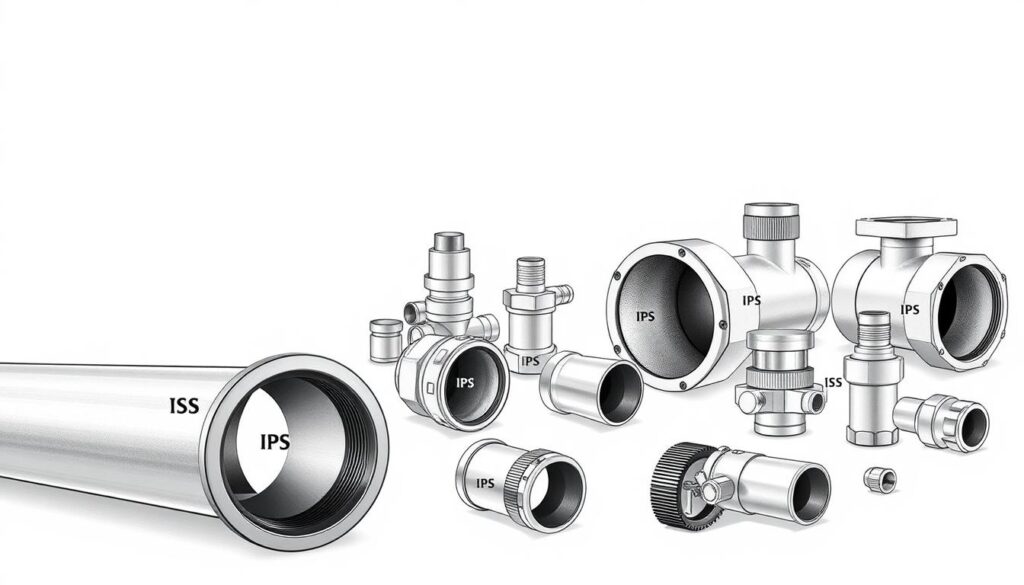
Knowing what IPS stands for can save you time and money. It’s a standard system for picking the right pipes and fittings. It helps both pros and DIY folks.
This system started in the 19th century. It’s important in plumbing today. Whether it’s a home fix or a big industrial job, understanding IPS is essential.
Key Takeaways
- IPS means Iron Pipe Size, a standard measurement system
- Used for determining pipe and fitting dimensions
- Helps ensure compatibility in plumbing systems
- Applies to both residential and commercial projects
- Originated in the 19th century and remains relevant today
Table of Contents
Understanding the Basics of IPS in Plumbing Systems
Iron Pipe Size (IPS) is a key term in plumbing. It’s a standard for measuring pipe diameters. This system is important for professionals to size pipes correctly in different situations.
Historical Development of Iron Pipe Size
The history of IPS goes back to a time when making pipes was harder. Plumbers used a system based on the inside diameter of pipes. This system has changed a lot over the years.
- Originated in the late 19th century
- Developed to standardize pipe measurements
- Adapted as manufacturing technologies improved
Modern Applications in Plumbing
Today, IPS is very important in plumbing. It helps professionals make sure pipes are the right size. This is true for homes, businesses, and big industrial places.
| Application Area | IPS Usage |
|---|---|
| Residential Plumbing | Water supply lines |
| Industrial Systems | High-pressure fluid transport |
| HVAC Systems | Cooling and heating pipelines |
Key Characteristics of IPS
To understand IPS, you need to know its unique way of measuring. IPS focuses on the outer diameter of pipes. This is different from other systems that look at the inside diameter.
IPS provides a standardized method for pipe sizing that ensures compatibility across different manufacturing processes.
When picking pipes for your project, think about how IPS standards help. They make plumbing connections precise and reliable.
What Does IPS Stand for in Plumbing?
When you see IPS in plumbing, it’s about a key standard for pipe sizes. IPS means Iron Pipe Size. It’s a standard used in the U.S. for water and gas pipes.
Knowing about iron pipe size is important for choosing the right pipes. IPS is different because it offers a standard way to measure pipes. This ensures pipes fit together right in plumbing systems.
- IPS represents the traditional method of measuring pipe diameter
- Used extensively in water supply and gas distribution networks
- Provides consistent sizing standards for plumbing components
The plumbing world uses IPS for uniformity in pipes and materials. Knowing IPS helps you pick the right pipes and fittings for any project.
Accurate pipe sizing is key to avoiding leaks and keeping systems running well.
Experts use IPS to ensure pipes fit together perfectly. This avoids mistakes and keeps plumbing systems strong. Understanding iron pipe size helps you make better choices for your projects.
IPS vs NPT: Understanding the Key Differences
When you’re working with plumbing, knowing the difference between IPS and NPT threads is key. These standards have unique features that can make or break your plumbing project.
Plumbing pros know that threaded pipe connections vary. IPS and NPT differ in thread type, sealing, and use.
Thread Types and Specifications
Here’s what sets IPS and NPT apart:
- NPT has tapered threads for self-sealing
- IPS uses straight threads needing external seals
- Thread angles and pitch vary between them
Sealing Methods and Applications
Choosing between IPS and NPT depends on your project. NPT seals through compression, while IPS might need gaskets or O-rings.
Compatibility Considerations
Choosing the right pipe connections is vital. Mixing IPS and NPT can cause leaks and system failures. Always check compatibility to avoid issues.
Precision in plumbing fitting sizes determines the success of your project.
Standard Measurements and Sizing in IPS Systems
Understanding plumbing pipe measurements can be tricky, even with Iron Pipe Size (IPS) systems. Knowing the pipe diameter standards is key for fitting and connecting pipes right in plumbing.
IPS sizing has its own rules, different from other systems. These rules were made to keep measurements the same across all plumbing parts.
- Sizes up to 12 inches are based on nominal pipe size
- Pipes 14 inches and larger have outside diameters matching their nominal size
- Actual inner diameter often varies from the stated nominal size
Working with IPS systems means you’ll see many measurement standards. Knowing these exact dimensions is vital for making sure connections are right and systems work well.
| Nominal Pipe Size | Actual Outside Diameter | Typical Wall Thickness |
|---|---|---|
| 1/2 inch | 0.840 inches | 0.109 inches |
| 3/4 inch | 1.050 inches | 0.113 inches |
| 1 inch | 1.315 inches | 0.133 inches |
Both professional plumbers and DIY folks need to grasp these detailed measurement standards. This knowledge helps pick the correct pipes and fittings for any job.
Common Applications of IPS Fittings and Connections
Iron Pipe Size (IPS) fittings are key in many plumbing systems. They are used in different areas. Knowing about threaded pipe connections helps pick the best fit for your needs.
Residential Plumbing Solutions
In homes, IPS fittings manage water flow well. Your home’s plumbing needs accurate sizes for good performance. They are used for:
- Water heater connections
- Bathroom and kitchen pipe installations
- Outdoor water line setups
Commercial and Industrial Applications
Industrial places need strong IPS systems. They handle high-pressure water, steam, and chemicals well. IPS is used in:
- Manufacturing facilities
- Chemical processing plants
- Power generation stations
Irrigation Systems
Farmers and landscapers use IPS fittings for water distribution. Precision-engineered threaded pipe connections help water flow well in irrigation systems. They work for small gardens to big farms.
Knowing about IPS applications can make plumbing projects better in homes, businesses, and farms.
IPS Material Types and Their Specifications
When you’re looking at iron pipe size (IPS) for your plumbing, knowing the materials is key. Each material has its own benefits for different needs in plumbing.
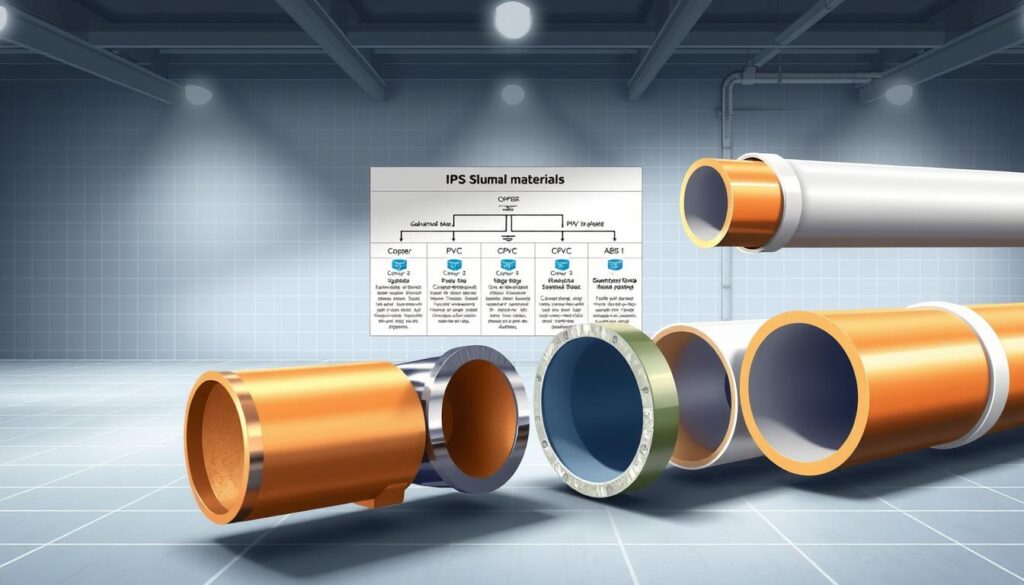
- Steel: Traditional and very durable
- Galvanized Iron: Resists corrosion well
- PVC (Polyvinyl Chloride): Light and affordable
- CPVC (Chlorinated Polyvinyl Chloride): Better for high temperatures
Each material has its own strengths for your plumbing. Steel pipes are strong and last long. On the other hand, plastic options are flexible and easy to install.
| Material | Durability | Cost Range | Primary Applications |
|---|---|---|---|
| Steel | High | $$$ | Industrial, heavy-duty systems |
| Galvanized Iron | Medium-High | $$ | Water supply, outdoor applications |
| PVC | Medium | $ | Drainage, residential plumbing |
| CPVC | Medium-High | $$ | Hot water systems, chemical resistance |
“Choosing the right material is essential for a reliable plumbing system.” – Professional Plumbing Association
Your choice should match your project’s needs, budget, and environment. Think about temperature, pressure, and chemical interactions when picking your IPS pipe material.
Comparing IPS with Other Pipe Sizing Standards
It’s important to know the differences between various pipe sizing standards. This knowledge helps you pick the right plumbing parts. The world of pipe sizes is complex, with many systems used in different places.
Plumbing terms can be tricky, like IPS vs NPS and other systems. Each standard has its own features that affect your project’s outcome.
IPS vs Copper Tube Size (CTS)
The main difference between IPS and CTS is how they measure:
- IPS uses inner diameter for sizing
- CTS measures outer diameter
- Wall thickness is different between them
IPS vs Nominal Pipe Size (NPS)
When looking at IPS vs NPS, you’ll see some key differences:
| Characteristic | IPS | NPS |
|---|---|---|
| Measurement Basis | Inner Diameter | Approximate Diameter |
| Common Applications | Residential Plumbing | Industrial Systems |
| Material Compatibility | Varied Materials | Standardized Specifications |
Selection Criteria for Pipe Standards
Choosing the right pipe standard depends on several things:
- Project needs
- Material options
- Industry standards
- Compatibility with current systems
“Understanding pipe diameter standards is key to successful plumbing installations.” – Professional Plumbing Association
Your project’s needs will guide you to the best pipe standard. Always talk to a pro to make sure you choose and install correctly.
Installation and Maintenance Best Practices for IPS Plumbing
Working with IPS plumbing systems requires careful installation and upkeep. Knowing about plumbing fitting sizes and connections is key. It helps create efficient and reliable plumbing systems.
Professional plumbers stick to certain rules when installing IPS pipes. Your success depends on picking the right pipe sizes and using the right techniques.
- Inspect all components before installation
- Clean threads thoroughly
- Use appropriate thread sealant
- Ensure proper alignment of connections
- Check for possible leaks
“Precision in installation determines the longevity of your plumbing system.” – Professional Plumbing Association
Maintenance is about regular checks and being proactive. You should look at your IPS plumbing system often for signs of wear, corrosion, or leaks.
| Maintenance Task | Frequency | Purpose |
|---|---|---|
| Visual Inspection | Every 6 months | Detect early signs of damage |
| Pressure Testing | Annually | Verify system integrity |
| Thread Sealant Check | Every 2 years | Prevent possible leaks |
By following these best practices, you can make your IPS plumbing system last longer. Taking good care of it ensures reliable connections and saves on repair costs.
Troubleshooting Common IPS Fitting Issues
Working with plumbing fitting sizes can be tough, even with unexpected problems in your IPS system. Knowing common issues with threaded connections helps keep your plumbing running smoothly.
Spotting problems early can save you a lot of time and money. Here are the usual problems with IPS fittings:
- Persistent leaks around connection points
- Corrosion of pipe threads
- Improper sealing and fitting alignment
- Mineral buildup affecting pipe performance
Spotting leaks in your IPS system is key. Look for water spots, listen for odd sounds, and check thread connections for wear. Small leaks can turn into big plumbing problems if not fixed.
| Issue | Potential Cause | Recommended Action |
|---|---|---|
| Thread Corrosion | Water quality, age of pipes | Replace affected fittings |
| Improper Sealing | Incorrect thread tape application | Reapply thread tape, ensure proper wrapping |
| Mineral Buildup | Hard water conditions | Use descaling solutions, consider water softener |
Some minor fixes you can do yourself, but big problems need a pro. If unsure, call a licensed plumber who knows IPS systems. They can stop bigger problems before they start.
Conclusion
Knowing what IPS stands for in plumbing is key for both pros and DIY fans. This system is essential for making plumbing work well in homes, businesses, and factories.
Grasping plumbing terms like IPS can greatly affect your project’s success. It helps you pick the right parts and make sure connections are solid. This knowledge avoids big mistakes and keeps systems running smoothly.
The IPS system is a cornerstone in plumbing, even as tech advances. It’s vital whether you’re fixing a small leak or working on a big project. Knowing IPS lets you work confidently and accurately in plumbing.
Keep learning and stay current with plumbing standards. This will help you face different challenges and create better, more reliable piping solutions for all kinds of projects.