

Affiliate Disclosure
Plumber Guide Guys is a participant in the Amazon Services LLC Associates Program, an affiliate advertising program designed to provide a means for sites to earn advertising fees by advertising and linking to Amazon.
What Does IPS in Plumbing Stand For? Ever wondered about the “IPS” in plumbing standards? Knowing what IPS means can help you save time, money, and avoid installation problems.
IPS stands for Iron Pipe Size. It’s a key standard in plumbing. It helps both pros and DIY folks understand pipe sizes, making sure everything fits right.
IPS is important for all kinds of plumbing, from home water lines to big industrial setups. Knowing these standards can really boost your plumbing skills, whether you’re a pro or just starting out.
Key Takeaways
- IPS stands for Iron Pipe Size, a critical plumbing standard
- Helps standardize pipe measurements across different applications
- Essential for ensuring proper pipe sizing and compatibility
- Used in residential, commercial, and industrial plumbing systems
- Provides consistent guidelines for pipe installation and selection
Table of Contents
Understanding IPS Basic Principles in Modern Plumbing
IPS plumbing is a big step forward in pipe design. It’s key for both plumbing pros and homeowners to know about IPS parts.
The history of IPS plumbing shows great engineering growth. It was made to solve tough water transport problems. Now, it changes how we handle liquids.
Historical Development of IPS Standards
IPS standards came from industrial needs. Important steps include:
- First standardization in mechanical fields
- Improving measurement rules
- Adding precise making methods
Key Components of IPS Systems
Today’s plumbing uses important IPS parts:
| Component | Function | Material |
|---|---|---|
| Pipe Segments | Primary fluid transport | Reinforced Polymers |
| Connection Fittings | Secure Joint Integration | High-Density Polyethylene |
| Pressure Regulators | Flow Management | Precision Engineered Metals |
Modern Applications in Plumbing
Today, IPS tech is used in many fields. It’s used in homes and big industrial places. It offers reliable, efficient ways to manage fluids.
Experts value IPS for its accuracy, lasting quality, and flexibility. It works well in many settings.
What Does IPS in Plumbing Stand For
When you see IPS in plumbing, it means Iron Pipe Size. This method has been around for a long time. It helps plumbers know the size of pipes they need for different jobs.
But IPS isn’t just for iron pipes anymore. Even though we use PVC, copper, and steel now, IPS is a standard for measuring pipe sizes. It’s used everywhere, not just for iron.
- IPS represents a standardized measurement system
- Originated from historical iron pipe manufacturing
- Used across different pipe material types
- Provides consistent sizing references for plumbers
Iron was once the main material for pipes. Plumbers created IPS to make sure all pipes were the same size. This made it easier to work with pipes, even as new materials came along.
Understanding IPS helps you communicate effectively with plumbing professionals and select the right pipes for your project.
Today, IPS is key in plumbing. It helps choose and install pipes in homes, businesses, and factories. It’s a standard that has stood the test of time.
Differences Between IPS and CTS Pipe Systems
It’s important to know the differences between IPS (Iron Pipe Size) and CTS (Copper Tube Size) pipe systems. These differences affect how well they work, how they’re installed, and what they’re made of.
The main differences between IPS and CTS pipe systems are in three areas:
- Dimensional specifications
- Material composition
- Installation requirements
Measuring Methods and Specifications
IPS and CTS measure pipes in different ways. IPS uses a nominal outside diameter that might not match the actual size. On the other hand, CTS gives exact dimensions, including outside diameter and wall thickness.
Material Composition Variations
The materials used in pipes also matter. IPS pipes are often made of PVC, HDPE, or steel. CTS pipes, mainly made of copper or copper alloys, have different properties. These differences affect:
- Corrosion resistance
- Thermal conductivity
- Durability
- Cost-effectiveness
Installation Requirements
Choosing between IPS and CTS depends on your project’s needs. IPS systems need specific tools and methods for installation. It’s key for professionals to know these details to ensure a good fit and lasting performance.
Selecting the right pipe system is critical for successful plumbing projects.
Common IPS Pipe Sizes and Applications
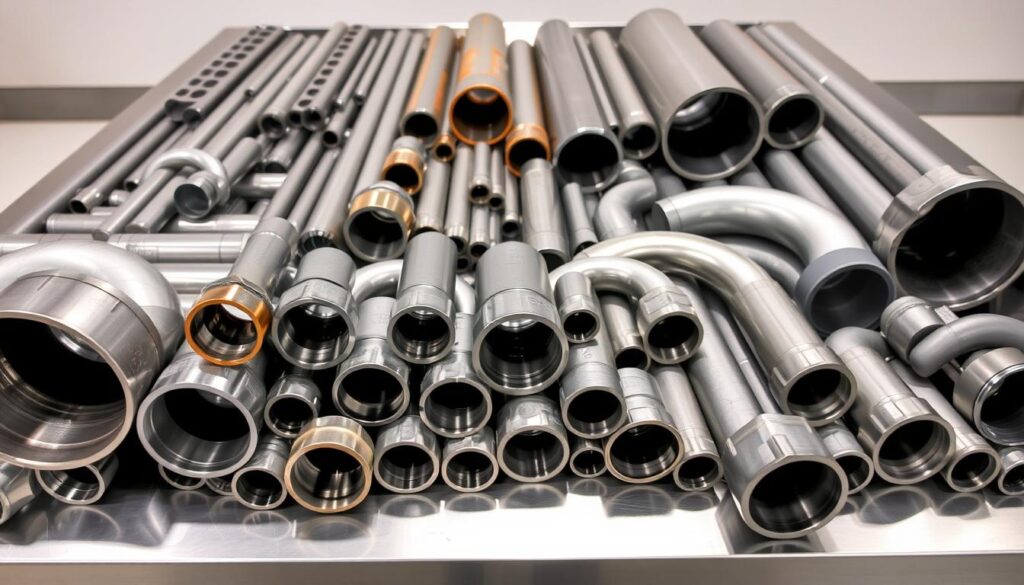
Knowing IPS pipe dimensions is key for plumbing success. IPS (Iron Pipe Size) makes pipe measurements standard. This helps both pros and DIY folks pick the right parts for their jobs. Knowing standard pipe sizes can save time and avoid expensive errors.
Different IPS pipe sizes fit different needs in homes, businesses, and factories. Trusted plumbing experts say to choose pipes based on your project. Here are the most common IPS pipe sizes and where they’re used:
- Small Diameter Pipes (1/2″ to 1″)
- Perfect for home water lines
- Works well in bathrooms and kitchens
- Good for low-pressure water use
- Medium Diameter Pipes (1.5″ to 4″)
- Often found in drain and waste systems
- Right for commercial plumbing
- Handles moderate water and pressure
- Large Diameter Pipes (6″ and above)
- Used in big water projects
- Main water lines
- For moving lots of water
When picking IPS pipe sizes, think about pressure, flow, and installation needs. Talking to a pro plumber can guide you to the best choice for your project.
IPS Standards in Well Pump Installation
Understanding IPS standards is key to a successful well pump installation. It involves looking at pipe specs, pressure ratings, and material choices. These factors are critical for a well pump’s performance.
Today’s well pump systems need high-performance materials that meet strict standards. Choosing the right HDPE pipe can greatly enhance your water system’s life and efficiency.
Depth Considerations and Pressure Ratings
Choosing the right IPS pressure ratings is essential for a well pump’s success. The depth of the well determines the needed pressure specs for best performance:
- Wells up to 350 feet use 160 PSI HDPE black poly pipe
- Pressure ratings must match the well’s depth and pump needs
- NSF Standards 14 and 61 are key for safe drinking water
“Choosing the right pipe is not just about diameter, but about understanding the entire system’s hydraulic demands.” – Water Systems Engineering Experts
HDPE Black Poly Pipe Usage
HDPE black poly pipe is the top choice for well pump installations. It’s known for its durability and performance. These pipes resist environmental stress, chemical damage, and extreme temperatures well.
When planning your well pump installation, remember HDPE pipe’s benefits:
- Superior corrosion resistance
- Flexible and easy to install
- Long-lasting performance under various conditions
- Meets strict potable water safety standards
By understanding IPS standards and picking the right HDPE pipe, you can have a reliable and efficient water system for years.
Understanding SDR and SIDR in IPS Systems
When working with pipe systems, it’s key to know about Standard Diameter Ratio (SDR) and Standard Inside Diameter Ratio (SIDR). These measurements help pick the right pipes for your project. They show the pipe’s wall thickness and how well it works.
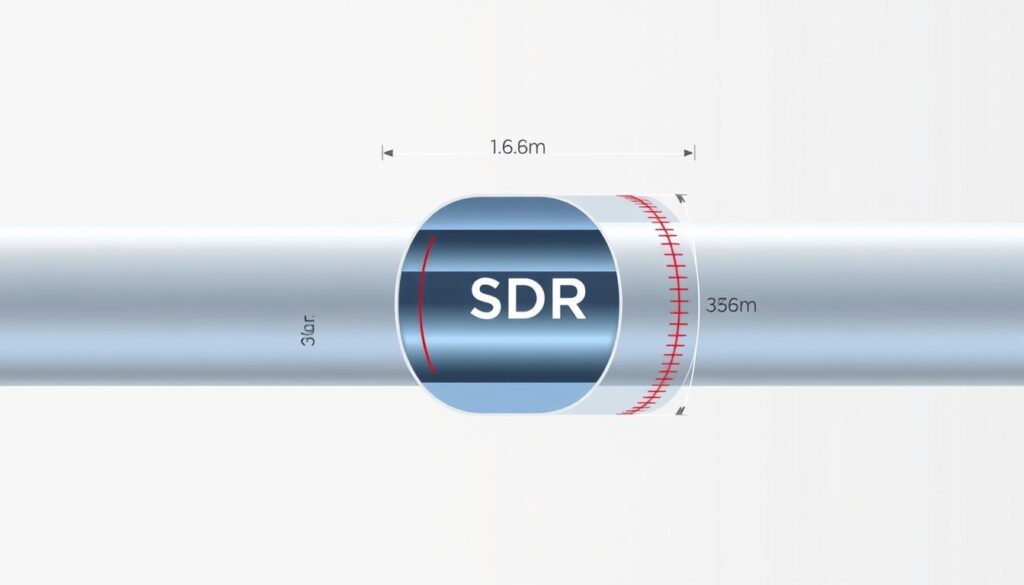
SDR shows how thick a pipe’s wall is compared to its outside diameter. You get SDR by dividing the outside diameter by the wall thickness. A higher SDR means the pipe wall is thinner, affecting its strength and how much pressure it can handle.
- Lower SDR numbers mean thicker pipe walls
- Higher SDR numbers indicate thinner pipe walls
- SDR helps determine pipe performance and durability
SIDR looks at the pipe’s inside dimensions. It divides the inside diameter by the wall thickness. This gives insights into how well the pipe can handle flow and any possible blockages.
| Ratio Type | Calculation Method | Wall Thickness Indication |
|---|---|---|
| SDR | Outside Diameter ÷ Wall Thickness | Higher number = Thinner wall |
| SIDR | Inside Diameter ÷ Wall Thickness | Higher number = More internal space |
When picking pipes for your plumbing project, look closely at SDR and SIDR values. These ratios affect the pipe’s wall thickness, pressure ratings, and system performance. Talking to a professional can help you find the best pipe for your needs.
Proper Installation Techniques for IPS Plumbing
Installing IPS plumbing needs precision and the right tools. It also requires careful safety steps. Both pros and DIY folks must know the key steps and challenges of IPS installation.
Essential Plumbing Tools for IPS Installation
For a successful IPS install, you need the right tools. Experts say to have these ready:
- Pipe cutters with precise cutting capabilities
- Measuring tape for accurate pipe length
- Deburring tools to smooth pipe edges
- Pipe alignment tools
- Torque wrenches for secure connections
Comprehensive Plumbing Safety Guidelines
Keeping safety first is key in IPS pipe installs. Always wear the right gear:
- Safety glasses to protect eyes from debris
- Heavy-duty work gloves
- Steel-toed boots
- Protective hearing equipment
Avoiding Common Installation Mistakes
Experts know some big mistakes in IPS plumbing:
| Common Mistake | Potential Consequence | Prevention Strategy |
|---|---|---|
| Improper pipe alignment | Leaks and structural weakness | Use precision alignment tools |
| Inadequate pipe preparation | Weak connections | Clean and deburr pipe edges thoroughly |
| Overtightening connections | Pipe damage | Use calibrated torque wrenches |
Getting good at IPS installation takes time, patience, and a focus on safety and the right steps.
Maintenance and Troubleshooting IPS Systems
Keeping your IPS system in good shape is key for lasting plumbing performance. Regular upkeep can save you from expensive fixes and make your pipes last longer. Knowing how to maintain your IPS systems is essential for smooth operation.
Good plumbing troubleshooting begins with regular checks. It’s important to have a plan to spot problems early, before they get big.
- Do visual checks every 6 months
- Look for signs of pipe wear
- Watch the water pressure and flow
- Check connections for leaks
Fixing pipes in IPS systems needs special methods. Each material needs a unique fix to keep it strong and avoid more damage.
| Issue Type | Recommended Action | Repair Complexity |
|---|---|---|
| Minor Leaks | Epoxy Patch | Low |
| Pipe Corrosion | Section Replacement | Medium |
| Structural Damage | Full Pipe Replacement | High |
Getting professional help can lower the chance of sudden failures. Invest in preventative care to avoid long-term plumbing problems.
Regular maintenance is cheaper than emergency repairs.
Always put safety first and get expert plumbers for tough IPS system problems. Taking care of your system ahead of time means it will work well and save you money in the long run.
Conclusion
Learning about IPS plumbing standards is key to understanding modern piping systems. You now know the basics that make these standards vital for both professional and home plumbing. The benefits of IPS plumbing go beyond just technical details.
The importance of plumbing standards is huge for reliable water systems. Knowing IPS systems helps you choose the right pipes and how to install them. This knowledge leads to strong infrastructure that meets industry needs.
With this knowledge, you can tackle plumbing projects with more confidence. Whether you’re a contractor or a homeowner doing repairs, knowing IPS specs helps you solve problems better. The standard measurements and materials ensure dependable systems.
As technology grows, IPS plumbing standards will keep getting better. Keeping up with these changes means you’ll always be ahead in plumbing. Use what you’ve learned to improve your work on future projects.