

Affiliate Disclosure
Plumber Guide Guys is a participant in the Amazon Services LLC Associates Program, an affiliate advertising program designed to provide a means for sites to earn advertising fees by advertising and linking to Amazon.
What Are Plumbing Risers? Ever wondered how water gets to the top floors of tall buildings? Or how waste is removed from high-rise structures? The answer is plumbing risers, the hidden heroes of vertical plumbing.
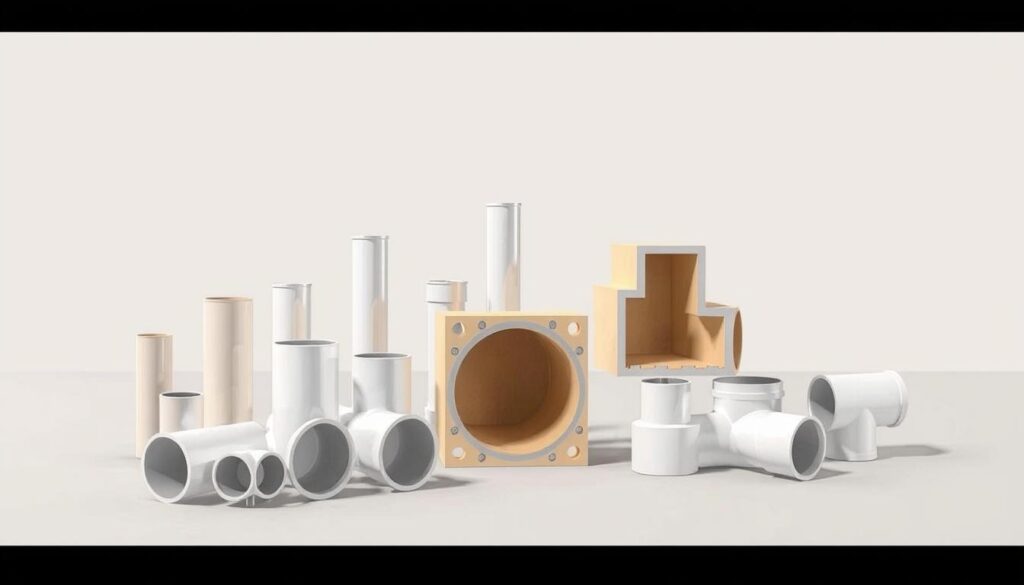
Plumbing risers are vital pipes that do two main jobs. They carry water up and take waste down. These pipes are the heart of plumbing in tall buildings, making sure water and waste move correctly.
Knowing about plumbing risers is important for many people. Homeowners, building managers, and construction experts need to understand them. They are more than just pipes; they are complex systems that need careful planning and upkeep to work well.
Key Takeaways
- Plumbing risers are vertical pipes that distribute water and remove waste
- They are critical in multi-story building infrastructure
- Proper design ensures efficient water flow and waste removal
- Risers connect different building levels through a vertical plumbing system
- Professional installation is key to preventing future plumbing issues
Table of Contents
Types of Plumbing Risers
Plumbing risers are key vertical pipes in buildings. They serve different roles. Knowing about them helps us see their importance in keeping buildings safe and running well.
There are many types of plumbing risers, each for a specific need. They all play a part in bringing services to every floor of tall buildings.
Water Supply Risers
Water supply risers bring clean water to all floors in homes and offices. They keep the water pressure steady. This is important for sinks, showers, and appliances to work right.
- Maintain steady water pressure
- Connect different building levels
- Deliver potable water efficiently
Drain-Waste-Vent (DWV) Risers
DWV risers do two main things: they get rid of wastewater and keep plumbing systems aired. These pipes stop sewer smells from getting inside. They also help waste move smoothly from floor to floor.
- Remove wastewater
- Prevent sewer gas buildup
- Regulate air pressure in plumbing systems
Gas Risers
Gas risers are special pipes that carry natural gas to appliances on different floors. They make sure gas is delivered safely for heating, cooking, and more.
- Transport natural gas
- Ensure safe gas distribution
- Connect gas supply across building levels
Each plumbing riser type is made for a specific need. They are key parts of today’s buildings.
The Function of Plumbing Risers in Building Systems
Plumbing risers are key to building plumbing systems. They are vertical pipes that manage water and waste across floors. They are vital for keeping buildings running well.
Water supply risers form a network of pipes. They bring water to each floor, ensuring water pressure is steady. Without them, buildings with many floors would face water access problems.
- Distribute water vertically through building levels
- Maintain consistent water pressure
- Connect different plumbing fixtures
- Enable efficient waste removal
Building plumbing systems depend on risers. They are the backbone for water and waste management. Architects and plumbers plan these paths carefully to ensure efficiency and avoid problems.
Effective plumbing risers are the foundation of reliable building infrastructure.
Risers do more than just move water. They control water pressure, prevent contamination, and offer access for maintenance. Knowing their role shows the engineering genius behind building plumbing systems.
Components of a Plumbing Riser System
Knowing the parts of a plumbing riser system is key for keeping your vertical plumbing working well. When you look at plumbing stack vs riser, you see they have different but linked roles. They help with your building’s water and waste management.
The main parts of a plumbing riser system are:
- Vertical Pipes: The core of the system, often made from copper, PVC, or cast iron
- Specialized Fittings: These allow connections and changes in pipe direction
- Support Brackets: They keep the vertical pipes stable
- Valves: These control water flow and pressure in the riser system
Plumbing risers are different from standard plumbing stacks. Risers are for water supply across levels, while stacks handle waste and ventilation.
Important things to think about for riser parts are:
- Material durability
- Corrosion resistance
- Pressure handling
- Thermal expansion
Your building’s design and local plumbing rules will decide the exact parts of your plumbing riser system.
Design Considerations for Plumbing Risers
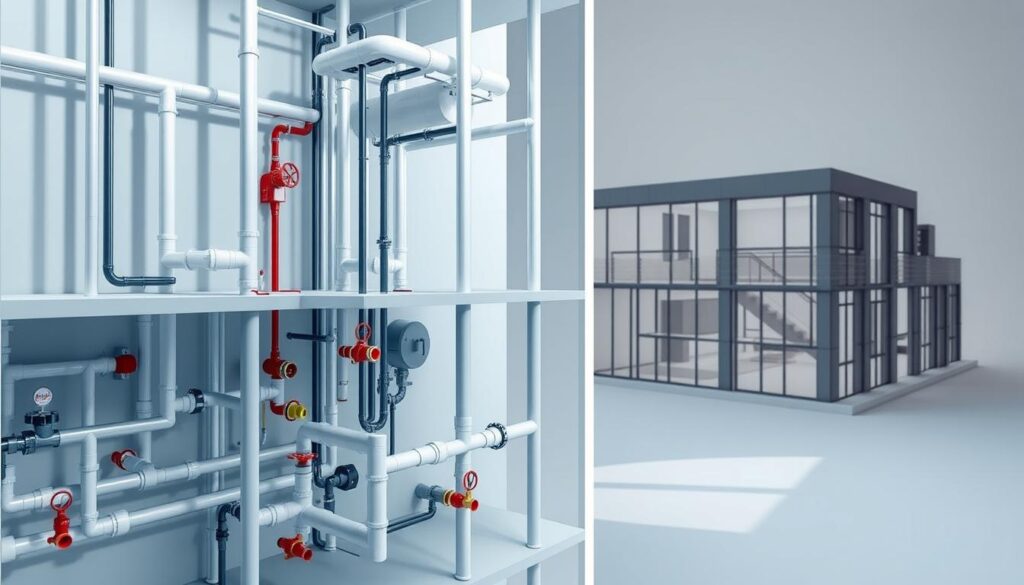
Designing plumbing risers for multi-story buildings needs careful planning and expert knowledge. Your approach to multi-story plumbing design must consider several key factors. These factors impact the system’s performance and efficiency.
Key design considerations include:
- Building height and vertical infrastructure
- Water pressure requirements
- Pipe sizing and material selection
- Structural load and support mechanisms
Water pressure gets more complex in taller buildings. When designing plumbing riser diagrams, engineers must figure out pressure changes across levels. This ensures water flows consistently.
| Design Factor | Critical Considerations |
|---|---|
| Pipe Material | Copper, PEX, CPVC durability |
| Pressure Management | Pressure-reducing valves |
| Vertical Distance | Pressure drop calculations |
Professional engineers use advanced tools to improve multi-story plumbing design. Precise calculations prevent system failures and ensure reliability.
Effective plumbing riser design is an art of engineering precision and practical application.
Installation of Plumbing Risers
Installing drain risers needs precision, skill, and careful planning. Professional plumbers know the key steps for a good plumbing system in homes and businesses.
Before starting a drain riser installation, you must do some important steps. These steps help ensure the system works well and follows local building codes.
Preparation and Planning
Good drain riser installation starts with detailed planning. Your preparation should include:
- Detailed building blueprint review
- Precise measurement of vertical pipe routes
- Selection of appropriate pipe materials
- Verification of local building code requirements
Installation Process
The drain riser installation process has many important stages. These stages need technical skill:
- Mark exact vertical pipe routes
- Cut precise openings in floor and wall structures
- Install supporting brackets and hangers
- Connect pipe segments with appropriate fittings
- Test for proper alignment and water flow
Common Challenges
Professional plumbers often face specific challenges during drain riser installation:
| Challenge | Potential Solution |
|---|---|
| Structural Obstacles | Detailed pre-installation mapping |
| Material Compatibility | Careful material selection |
| Thermal Expansion | Use of expansion joints |
Professional installation ensures your drain riser system operates efficiently and meets all safety standards.
Maintenance and Troubleshooting of Plumbing Risers
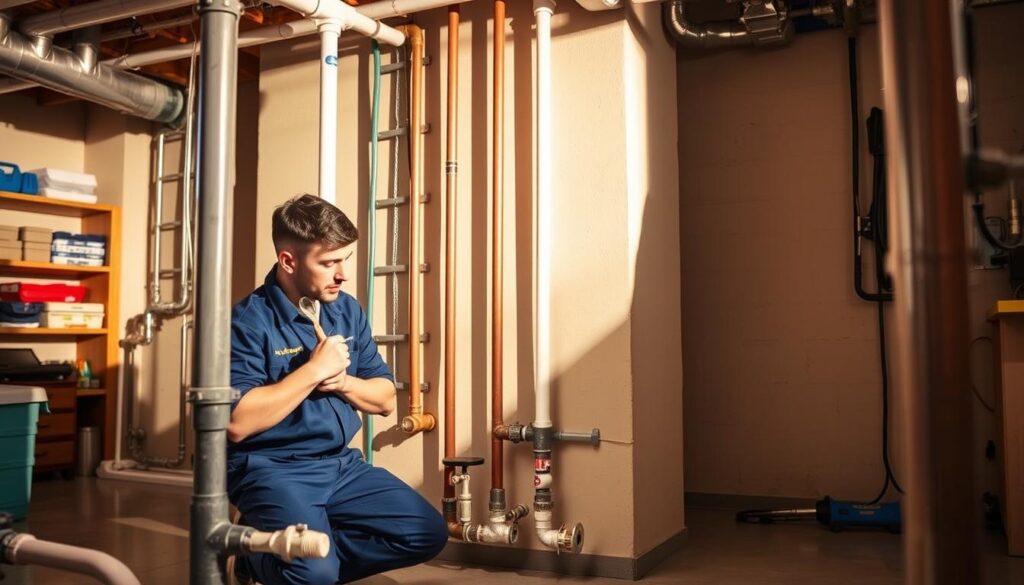
Keeping your plumbing risers in good shape is key. Regular checks can stop big problems and keep water flowing well in your home.
There are a few important steps for maintaining your plumbing risers:
- Do visual checks every six months
- Look for water damage or rust
- Keep an eye on water pressure
- Listen for odd sounds in pipes
Some common problems with plumbing risers include:
- Leaks at connection points
- Mineral buildup blocking water flow
- Pipe material getting weak
- Seals wearing out
When you’re fixing plumbing risers, finding problems early is best. Look out for signs like:
• Water stains you can’t explain
• Lower water pressure
• Strange pipe noises
• Visible damage to pipes
Experts say to get your plumbing checked every year. This keeps your system working right and avoids big problems later.
Plumbing Risers in Different Building Types
Plumbing risers are key parts of buildings that change a lot depending on the type. It’s important to know how they fit into different buildings. This helps manage buildings well.
Every building type has its own plumbing needs. Architects and engineers must think about many things when designing these systems.
Residential Buildings
In homes, plumbing systems aim to be efficient and use space well. They need to:
- Keep water pressure steady on all floors
- Reduce noise between apartments
- Work for different numbers of people
- Ensure good drainage and air flow
Commercial Buildings
Business places need more complex plumbing systems. They handle more water and have special needs. These systems must:
- Deal with more water use
- Fit special fixtures
- Follow strict building rules
- Work 24/7 if needed
Industrial Facilities
Industrial buildings have the toughest plumbing needs. They need strong systems that can handle:
- Big temperature changes
- Chemicals that can harm pipes
- Carrying heavy fluids
- Tough safety and environmental rules
Choosing the right plumbing system depends on knowing each building’s special needs.
Innovations and Trends in Plumbing Riser Technology
The world of building plumbing systems is changing fast. New technologies and a focus on sustainability are leading the way. These changes are making plumbing systems smarter, more efficient, and better for the environment.
Smart monitoring technologies are changing plumbing systems. These advanced tools can detect leaks, monitor pressure, and predict when maintenance is needed. Sensors in plumbing risers can:
- Detect tiny leaks early
- Watch water flow and pressure live
- Send alerts to managers right away
- Foretell when maintenance is coming
There’s also a big shift towards using sustainable materials in plumbing risers. Companies are making eco-friendly pipes and parts. These materials cut down on environmental harm while boosting performance. Corrosion-resistant composite materials are replacing old metal pipes, lasting longer and being more durable.
Energy efficiency is a key area of focus now. New thermal insulation and heat recovery systems are being added to risers. These help lower energy use and cut down on costs.
The future of plumbing is smart, sustainable, and incredibly precise.
New tech like AI diagnostics and IoT monitoring is set to change plumbing system management. These innovations will bring better performance, cost savings, and environmental gains.
Conclusion: The Importance of Understanding Plumbing Risers
Knowing about plumbing risers is key for anyone in building design, maintenance, or management. These vertical pipes are vital for water supply and waste removal in buildings. They ensure plumbing works well in homes, offices, and factories.
Understanding plumbing risers helps you make better choices in design, installation, and upkeep. Whether you own a home, manage properties, or work in construction, knowing about these pipes is important. They are the lifelines that keep water flowing and waste moving without issues.
Taking good care of plumbing risers saves time and money. Regular maintenance, choosing the right materials, and keeping up with new tech are important. This guide will help you handle plumbing risers with confidence and skill.
As buildings change, so do plumbing riser technologies. Be proactive, seek expert advice when needed, and focus on a well-designed plumbing system. Learning about these pipes will greatly improve your building’s performance and lifespan.