

Affiliate Disclosure
Plumber Guide Guys is a participant in the Amazon Services LLC Associates Program, an affiliate advertising program designed to provide a means for sites to earn advertising fees by advertising and linking to Amazon.
What Are Angle Stops in Plumbing? Ever thought about how a small plumbing problem could become a big water disaster at home? The angle stop valve might be your plumbing system’s secret hero.

Angle stops are key parts that control water flow to things like sinks, toilets, and water heaters. They are small but mighty, acting as emergency shut-offs. This lets you stop water quickly without affecting your whole home’s water supply.
Knowing about angle stops in plumbing can help avoid water damage and costly repairs. A plumbing angle stop valve is a vital tool for both homeowners and professionals. It helps manage water with precision.
Key Takeaways
- Angle stops provide localized water flow control
- Essential for emergency water shut-off situations
- Available in multiple valve types and materials
- Critical for individual fixture water management
- Can prevent extensive water damage
Table of Contents
Understanding the Basics of Angle Stop Valves
Angle stop valves are key parts of your home’s plumbing. They control water to different fixtures and appliances. Knowing how they work helps you manage your home’s water better.
Angle shut off valves do more than just control water. They let homeowners manage water flow to certain parts of their plumbing.
Defining Angle Stop Valves
An angle stop valve controls water at a 90-degree angle. You’ll find them near sinks, toilets, and other water fixtures. They let you turn off water fast and accurately.
How Water Supply Angle Stops Control Flow
- Provides precise water flow regulation
- Allows individual fixture water control
- Enables quick emergency water shutoff
- Minimizes water damage risks
Essential Components of an Angle Stop
Knowing the parts of an angle stop valve shows its importance:
- Valve Body: The main part
- Compression Fitting: Connects to pipes
- Stem: Controls water flow
- Handle: For adjusting water flow
Water supply angle stops are built to last. They give homeowners a vital tool for plumbing management.
What Are Angle Stops in Plumbing: Core Functions and Benefits
Angle stops are key parts of your home’s plumbing. They control water flow and offer flexibility. These small valves help manage water to each fixture, letting you turn off one area without affecting others.
Knowing about angle stops is important for homeowners. They are usually found under sinks and behind toilets. These valves bring several benefits:
- Precise water flow control
- Easy fixture maintenance
- Emergency shut-off capabilities
- Space-efficient design
Learning how to use angle stops shows their versatility. They let you:
- Shut off water to specific fixtures
- Do repairs without cutting off the main water
- Stop water damage during maintenance
| Location | Primary Function | Benefit |
|---|---|---|
| Under Sink | Control Water to Faucet | Quick Fixture Isolation |
| Behind Toilet | Manage Water Supply Line | Easy Repair Access |
| Washing Machine | Regulate Water Input | Prevent Overflow |
Their design fits in tight spots where regular valves can’t. Angle stops are a must-have for today’s plumbing systems.
Types of Angle Stop Valves Available Today
Choosing the right angle stops is key for your plumbing system’s success. Different designs offer benefits for homes and businesses.
Today’s plumbing uses specialized angle stop valves to manage water flow well. Knowing about these options helps you choose wisely for your plumbing.
Multi-turn Angle Stops
Multi-turn angle stops are the classic type. They need many turns to open or close fully. They offer precise control but are harder to use.
- Slower water flow adjustment
- More precise control mechanisms
- Longer operational lifespan
Quarter-turn Angle Stops
Quarter-turn angle stops are now more popular. They open or close with just a 90-degree turn. This makes them easy to use.
“Quarter-turn valves offer unparalleled convenience and quick water control,” say professional plumbers.
| Feature | Multi-turn Valve | Quarter-turn Valve |
|---|---|---|
| Rotation Required | Multiple turns | Single 90-degree turn |
| Speed of Operation | Slower | Faster |
| Complexity | Higher | Lower |
Vandal-proof Angle Stops
Vandal-proof angle stops are great for busy or public areas. They have designs that stop tampering or accidental changes.
- Robust construction
- Limited external access
- Enhanced durability
Choosing the right angle stop depends on your plumbing needs, environment, and control level. Talking to a professional plumber can guide you to the best choice.
Materials and Construction Quality Factors
Choosing the right water supply angle stops is key. The materials and how well they’re made affect how well they work and last. Knowing about these factors helps you pick the best for your plumbing.
- Brass: Most popular for water supply angle stops due to corrosion resistance
- Stainless Steel: Excellent durability and strength
- Plastic: Lightweight and cost-effective option
Today’s plumbing angle stop valves focus on using materials that are safe for water. Companies like Oatey make valves with solid brass. These meet strict health standards.
| Material | Durability | Corrosion Resistance | Cost |
|---|---|---|---|
| Brass | High | Excellent | Moderate |
| Stainless Steel | Very High | Superior | High |
| Plastic | Low | Limited | Low |
Look for valves with PTFE seats, parts that resist corrosion, and precise making. These features ensure your valve works smoothly and lasts long.
Installation Guidelines for Angle Stop Valves
Installing angle stop valves needs careful planning and precise steps. Whether you’re a DIY fan or a homeowner, learning how to use angle stops can save time and avoid water damage.
Before starting, make sure you have the right tools and materials. Good preparation is essential for a successful installation.
Required Tools and Materials
- Pipe wrench
- Basin wrench
- Small bucket
- Clean rags
- Teflon tape
- Adjustable wrench
Step-by-Step Installation Process
- Shut off the main water supply completely
- Drain existing water lines
- Clean the pipe connection area thoroughly
- Apply Teflon tape to pipe threads
- Carefully align the angle stop valve
- Tighten connections using appropriate wrenches
- Slowly restore water pressure
- Check for any leaks
Common Installation Mistakes to Avoid
When installing angle stop valves, avoid these key mistakes for a proper and lasting installation:
- Over-tightening connections which can damage valve threads
- Failing to use Teflon tape on pipe connections
- Neglecting to fully clean pipe surfaces before installation
- Improper alignment of valve connections
“Precision and patience are your best tools when installing angle stop valves.” – Professional Plumbing Technician
By following these guidelines, you’ll ensure a secure and reliable water shut-off mechanism in your home’s plumbing system.
Maintaining Your Angle Stop Valves
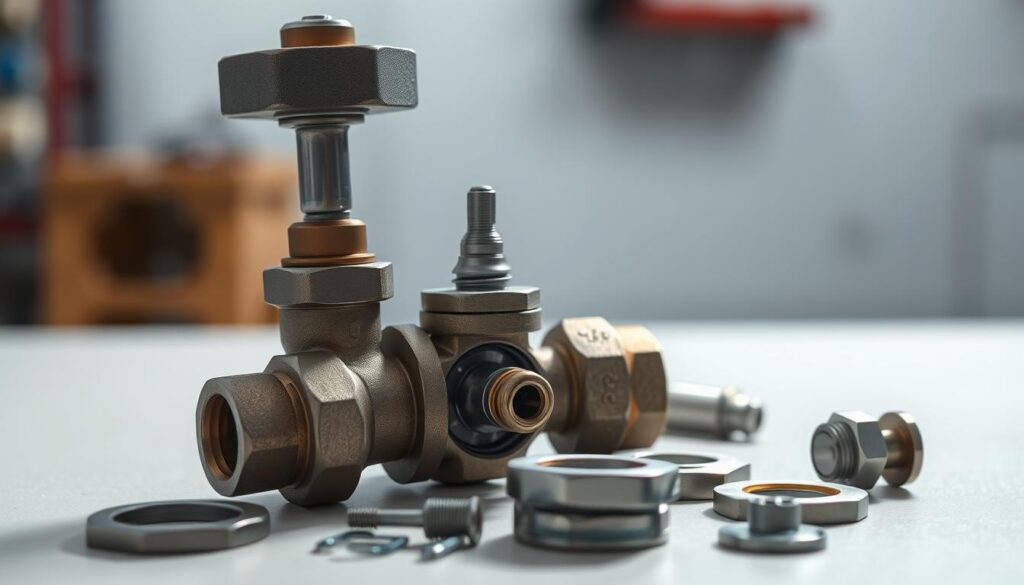
Keeping your plumbing angle stop valve in good shape is key. It helps them work well for a long time and avoids sudden water problems. Even though these valves are made to last, a bit of care can make them last even longer.
Experts say there’s a simple way to keep angle stops working well:
- Move the valve handle annually to keep it working smoothly
- Look for mineral buildup or corrosion
- Check for leaks or water leaks
- Clean the outside to stop dirt from building up
Knowing how to use angle stops means you understand their upkeep. Regular checks can spot problems early, saving you from expensive fixes. Watch the stem and handle closely, as they wear out fast.
“Preventative maintenance is always cheaper than emergency repairs” – Plumbing Industry Professionals
To keep your valve clean, use a soft cloth and a gentle cleaner. Stay away from harsh chemicals or rough cleaners that could harm the valve.
If you see serious corrosion, leaks, or trouble opening the valve, get a pro plumber’s help. They can tell you if fixing or replacing the valve is best.
Troubleshooting Common Angle Stop Problems
Plumbing angle stop valves can face issues over time. It’s important to know how to fix common problems. This can save you time and avoid expensive water damage.
Identifying Leaking Problems
Leaks in angle stop valves can come from a few main areas. Spotting these issues early can help you act fast:
- Worn-out washers causing water seepage
- Corroded valve stems
- Loose connections around the valve
- Mineral buildup preventing proper sealing
Solving Stem and Washer Challenges
When replacing an angle stop valve, pay close attention to the stem and washer. Stem and washer repairs usually involve:
- Shutting off the main water supply
- Removing the valve handle
- Inspecting the stem and washer for damage
- Replacing worn components with matching parts
Replacement vs. Repair Decisions
Not every problem with a plumbing angle stop valve needs a full replacement. Think about these points when deciding:
- Age of the existing valve
- Extent of corrosion or damage
- Cost of replacement parts
- Potential long-term reliability
If your valve is old or has seen a lot of repairs, it might be cheaper to replace it. Always keep your water system safe and avoid water damage.
Choosing the Right Angle Stop for Your Plumbing Needs
Choosing the right angle stop is important. You need to think about a few key things. Different angle stops are good for different plumbing jobs. You need to pick the one that fits your needs best.
When picking angle stops, consider these important points:
- Pipe material compatibility
- Water pressure requirements
- How often you’ll use it
- Where you’ll install it
- Your budget
There are two main types of angle stops: multi-turn and quarter-turn. Multi-turn valves give you more control but take more turns to open or close. Quarter-turn valves are quicker, needing only a 90-degree turn, making them great for emergencies.
Think about these key things when picking your angle stops:
- Connection Type: Make sure it fits your plumbing
- Material Quality: Choose brass or strong synthetic materials
- Size Matching: Check the inlet and outlet sizes match
Experts say to buy high-quality angle stops from trusted makers. While cheaper options are available, spending a bit more can save you money in the long run. It can also prevent water damage.
Pro tip: Always match your angle stop valve to the specific requirements of your plumbing system for optimal performance and reliability.
Safety Considerations and Best Practices
Working with angle stop valves needs careful safety and proper techniques. Knowing the right steps can stop water damage and keep your plumbing working well.
When learning to use angle stops, safety is key. Proper installation and care of angle stop valves can avoid expensive fixes and water disasters.
Emergency Shut-off Procedures
Knowing how to quickly stop water is key in plumbing emergencies. Here are important steps for emergency water control:
- Locate the main water shut-off valve in your home
- Identify individual angle stop valves near fixtures
- Practice turning valves smoothly without excessive force
- Keep a wrench nearby for quick access
Professional vs. DIY Installation
Installing angle stop valves needs special skills and knowledge. While some homeowners can do basic installs, getting a pro is often best.
- DIY Installation Considerations:
- Basic plumbing knowledge
- Proper tools
- Understanding local building codes
- When to Call a Professional:
- Complex pipe configurations
- Lack of specialized tools
- Uncertain about proper techniques
For DIY angle stop valve installs, always put safety first. Turn off water supplies, use the right tools, and follow the manufacturer’s instructions closely.
Safety tip: When in doubt, consult a licensed plumber to prevent water damage or improper installation.
Comparing Angle Stops to Other Valve Types
Understanding angle stops in plumbing is key. They have unique features compared to other valves. Angle stops are great for specific needs in plumbing systems.
Angle stops come in different types for various plumbing setups. Let’s see how they stack up against other valves:
- Straight Stops: Unlike angle stops, straight stops run parallel to the pipe, limiting their installation flexibility
- Gate Valves: Typically used in larger water lines, they require more space and are less precise than angle stops
- Ball Valves: Offer quick shut-off but may not fit as compactly in tight spaces
Angle stops are perfect for precise water control and saving space. Their 90-degree design fits in tight spots where other valves can’t.
| Valve Type | Space Requirements | Precision Control | Installation Flexibility |
|---|---|---|---|
| Angle Stops | Minimal | High | Excellent |
| Straight Stops | Moderate | Medium | Limited |
| Gate Valves | Large | Low | Poor |
“Choosing the right valve can make all the difference in your plumbing system’s efficiency and performance.” – Professional Plumbing Association
Your plumbing needs will decide the best valve for you. Angle stops are a top pick for homes and businesses needing precise water control in tight spaces.
Conclusion
Angle stop valves are key in your home’s plumbing system. They control water flow and act as emergency shut-offs. Knowing about angle stops helps you manage your water system better.
Choosing the right angle stop is important. You need to think about materials, how to install it, and what it does. Whether it’s multi-turn, quarter-turn, or vandal-proof, proper installation and care are essential. This keeps your plumbing system working well for a long time.
It’s smart to have your angle stops checked regularly. This way, you can catch problems early. By understanding these valves and taking care of them, you keep your property safe from water damage. Remember, knowing how to maintain your plumbing is the best way to keep it reliable.
When you start your plumbing projects, remember what we’ve discussed. Angle stops might seem small, but they’re vital for controlling water and protecting your home. Make smart choices, focus on quality, and ask for help when you need it.