

Affiliate Disclosure
Plumber Guide Guys is a participant in the Amazon Services LLC Associates Program, an affiliate advertising program designed to provide a means for sites to earn advertising fees by advertising and linking to Amazon.
Should You Tip a Plumber? Ever thought about giving your plumber a little extra after they fix your pipes? Tipping plumbers can be tricky, like trying to find your way through a maze. It’s different from tipping at restaurants, where it’s more common.

Most plumbers don’t count on tips as part of their job. Your bill usually covers their work, skills, and time. Whether or not to tip depends on several things.
This guide will show you when and how to tip a plumber. We’ll look at the rules of appreciation in the home service world. You’ll learn about the deeper meaning of tipping beyond just money.
Key Takeaways
- Tipping plumbers is not mandatory or expected
- Service fees typically cover standard plumbing work
- Exceptional service might warrant a tip
- Emergency or complex jobs may justify additional appreciation
- Company policies vary on accepting tips
Table of Contents
Understanding Tipping Culture for Service Professionals
Tipping in the United States is complex and varies by industry. Knowing when and how to tip shows appreciation for good work.
Tipping in America has deep roots. It started as a way to help workers earn more, as many had low wages.
The History of Tipping in America
Tipping began in the late 19th century, brought from Europe. By the early 20th century, it was common in many service jobs. Important moments in tipping history include:
- Post-Civil War era: Tipping started with wealthy Americans
- 1930s: Hospitality workers began to rely on tips
- 1960s: Laws allowed lower minimum wages for tipped workers
“Tipping is not just about money—it’s a social contract that recognizes service and human effort.” – Labor Historian
How Tipping Differs Across Service Industries
Not all workers expect tips the same way. Tipping customs vary by industry:
- Hospitality Workers: Rely on tips (waiters, bartenders)
- Transportation: Expect moderate tips (taxi, rideshare drivers)
- Skilled Trades: Rarely tipped (plumbers, electricians)
Knowing these differences helps you tip correctly for different workers.
Should You Tip a Plumber
Many homeowners wonder if they should tip plumbers. Tipping norms for plumbers differ from other service industries. Usually, tipping plumbers is not expected or required.
Plumbers get paid through their standard service charges. These charges include:
- Professional expertise
- Labor costs
- Material expenses
- Travel time
Many plumbing companies have strict no-tipping policies. Some even tell their employees not to accept tips. This ensures clear pricing and avoids the idea of extra payment.
“Our pricing reflects the full value of our professional service,” says Michael Roberts, owner of Advanced Plumbing Solutions in Atlanta.
Self-employed plumbers set their prices to cover all business costs and profit. The quoted price is their full payment.
While tipping isn’t required, there are times when it’s fitting:
- Emergency after-hours service
- Exceptionally complex repairs
- Work done beyond what was expected
- Extraordinarily courteous and professional behavior
Your choice to tip should depend on the service quality and your satisfaction with the work.
When Tipping Your Plumber Is Appropriate
Figuring out when to tip plumbers can be confusing. Not every plumbing job needs a tip. But, some situations make tipping more fitting and welcome.
Knowing when to tip plumbers shows you value their hard work. Certain moments make tipping more fitting. These include:
- Emergency plumbing tips suggest tipping for after-hours or weekend calls
- Complex jobs requiring extensive problem-solving
- Services that go well beyond initial expectations
- Instances of remarkable professionalism
Emergency Plumbing Services and After-Hours Calls
Plumbers deserve extra thanks for emergency work outside regular hours. A burst pipe at night or on a holiday weekend messes with their plans. These unexpected service calls often deserve extra appreciation.
Exceptional Service That Goes Above and Beyond
Some plumbers go the extra mile. They might find and fix more problems, give detailed care tips, or handle tough cases with patience. Their dedication turns a simple fix into a standout service.
Complex Jobs That Take Longer Than Expected
Big plumbing jobs with lots of steps, unexpected issues, or detailed checks are great times to show thanks. When a plumber puts in a lot of time and effort to solve your problem, a tip is a way to say thanks for their hard work and skill.
How Much to Tip a Plumber for Their Work
Figuring out how much to tip plumbers can be confusing. Most people use a simple rule to show appreciation and fairness.
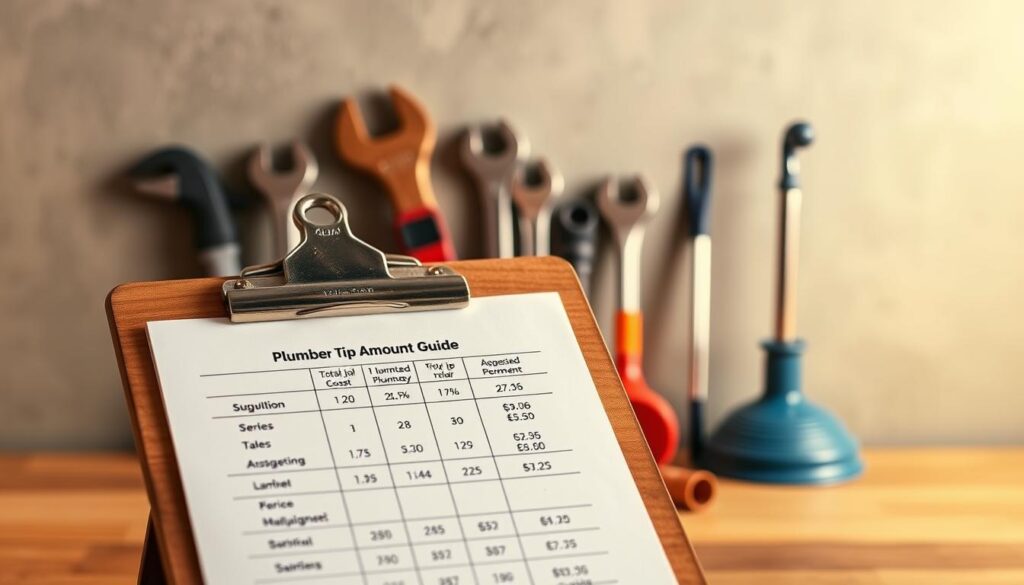
The usual tip for plumbers is 10-15% of the total cost. This helps you know if the service was good. For small jobs, a $20-$50 tip is often enough.
- Minor repairs: $20-$40 tip
- Standard service calls: 10-15% of bill
- Complex jobs: $50-$100 for exceptional work
Think about these things when deciding on a tip:
- How hard the plumbing job was
- How long it took
- How well the plumber did their job
- How tough the repair was
“A tip is always a gesture of appreciation, not an obligation.” – Professional Plumbing Association
| Job Type | Recommended Tip |
|---|---|
| Emergency Service | 15-20% or $50-$100 |
| Routine Maintenance | 10-15% of total bill |
| Complex Repair | $75-$150 for extensive work |
Remember, tipping is always optional but appreciated. The most important thing is recognizing excellent service and showing gratitude for a job well done.
Factors That Influence Whether to Tip Your Plumber
Deciding whether to tip a plumber can be confusing. Several things affect your choice, like company policies and the plumber’s service quality. Knowing these factors helps you decide if you should tip.
Company Policies on Tip Acceptance
Many plumbing companies have rules about tips. Here are some key things to remember:
- Some businesses don’t let employees accept tips
- Each company has its own policy
- Talking directly to the company is important
Employment Status Matters
The plumber’s job type affects tipping:
| Employment Type | Tipping Considerations |
|---|---|
| Company Employee | Often not allowed to accept tips |
| Self-Employed Contractor | Usually gets full payment for services |
Evaluating Service Quality
When thinking about tips, look at these service standards:
- Punctuality and reliability
- Good communication
- Quality of work
- Cleanliness and organization
If a plumber does a great job in these areas, tipping might be right—if the company allows it. Always check with the service provider first.
Alternative Ways to Show Appreciation Beside Cash Tips
When you can’t or don’t want to tip, showing plumbers you care in other ways is great. It’s not just about money. It’s about showing you value their hard work.

There are many ways to show plumbers you’re grateful. Here are some ideas:
- Write Detailed Online Reviews
- Provide Personal Referrals
- Share Social Media Content
- Offer Refreshments
- Send a Handwritten Thank-You Note
Writing Powerful Online Reviews
Online reviews are key for plumbers. A good review on Google, Yelp, or Facebook can really help their reputation. Reviews that talk about their punctuality, professionalism, and work quality are the most helpful.
“A single positive review can be worth more than a cash tip” – Local Plumbing Association
The Power of Personal Referrals
Telling your friends, family, or coworkers about a good plumber is a great way to say thanks. Word-of-mouth is a strong way to help businesses grow.
| Referral Method | Potential Impact |
|---|---|
| Direct Personal Recommendation | High Conversion Rate |
| Social Media Share | Wide Reach |
| Professional Network Referral | Quality Leads |
Showing appreciation is personal. Pick methods that feel right to you and the plumber.
Common Tipping Practices for Home Service Professionals
Figuring out how much to tip home service pros can be confusing. Your guide helps you understand the rules for different trades and jobs.
When thinking about tips for plumbers, remember the bigger picture. Not all service workers expect or need tips the same way.
- Movers and delivery drivers often rely on tips as part of their compensation
- Skilled tradespeople like electricians and plumbers typically charge professional rates
- Appliance installers may have different tipping expectations based on company policy
When deciding on a tip, think about a few important things:
- The job’s complexity
- Extra time or effort
- The quality of work and service
Professional tradespeople usually charge enough for their skills and work. This means they don’t usually expect extra tips. Unlike workers who rely on tips, skilled technicians are paid for their expertise.
Tipping is a gesture of appreciation, not an obligation for standard service.
Even though tipping isn’t required for most home service workers, it shows you value their work. It’s a nice way to say thanks, like after an emergency or a tough job.
What Plumbers Say About Receiving Tips
Understanding what plumbers think about tips can make you feel more confident when tipping. They share interesting insights about their pay and tipping.
Industry Perspectives on Gratuity Expectations
Most plumbers have clear views on tips. They don’t count on tips as part of their income. Their pay is fair and comes from regular wages.
- Most plumbing companies pay technicians competitive wages
- Tips are not a significant factor in their expected income
- Plumbers prefer professional recognition over cash tips
How Plumbers Are Compensated for Their Services
Plumbers have a practical view on how they get paid. They get money in different ways:
- Hourly wages for service work
- Commission-based earnings
- Salary with performance bonuses
Many plumbers see their quoted prices as full payment. Self-employed plumbers factor their profit margin into their rates. While tips are nice, they don’t count on them for income.
While tips are welcome, they are not a critical component of a plumber’s income.
Plumbers are happy when they solve problems and provide great service. A good review or referral means more to them than a small tip.
Conclusion
Understanding plumber tipping can seem tricky, but it’s all about showing respect and professionalism. Tipping is not required in the plumbing industry. Your main job is to pay the agreed-upon fee for the work done.
There are times when a tip is fitting. This includes emergency calls, complex tasks, or outstanding service. A 10-15% tip on the total bill is a good starting point.
But there are other ways to show appreciation too. Leaving detailed online reviews, giving referrals, or simply saying thank you can mean a lot. These actions can be more valuable than a cash tip in the long run.
Your approach to tipping plumbers should focus on clear communication and fair payment. Whether you tip or not, building a professional relationship based on trust and quality service is key. This is what matters most when dealing with home service professionals.