

Affiliate Disclosure
Plumber Guide Guys is a participant in the Amazon Services LLC Associates Program, an affiliate advertising program designed to provide a means for sites to earn advertising fees by advertising and linking to Amazon.
Is Plumbing Part of Civil Engineering? Ever thought about where civil engineering specialties really end? Picture a world where water moves smoothly through complex systems, linking design to use. The debate over whether plumbing is part of civil engineering has puzzled many in the construction world.
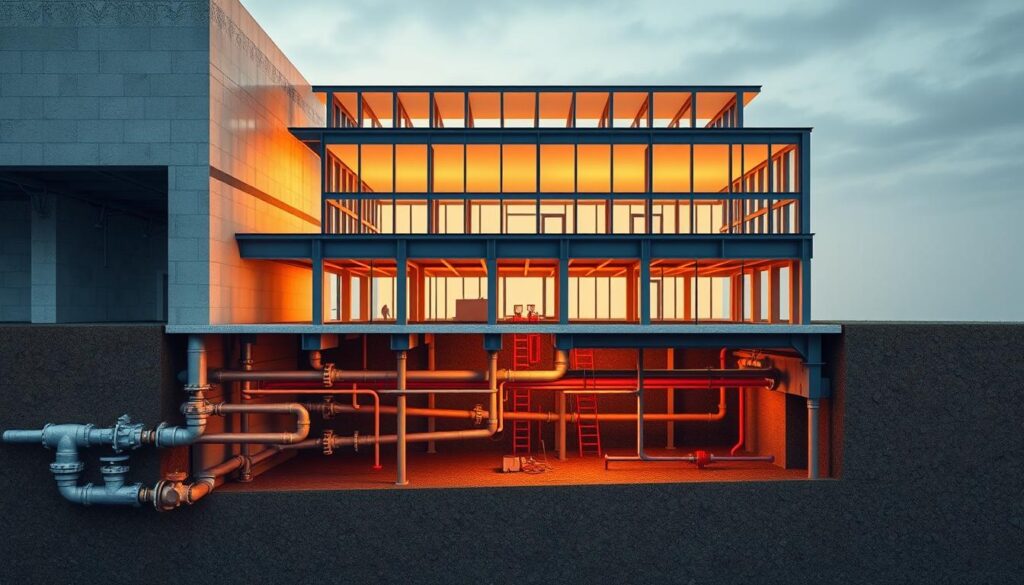
Civil engineering is huge, covering everything from big bridges to detailed water systems. It’s more than what most people think. Looking into whether plumbing is part of civil engineering shows how technical skills meet real-world needs.
In the construction field, it’s clear that plumbing’s role in civil engineering is complex. It’s not just a simple yes or no. It’s about seeing how different engineering areas work together to build lasting, useful structures.
Key Takeaways
- Civil engineering covers a broad spectrum of infrastructure development
- Plumbing plays a critical role in modern infrastructure design
- Technical expertise connects various engineering fields
- Infrastructure needs a unified approach to design and use
- Knowing how engineering areas link is key
Understanding the Relationship Between Civil Engineering and Plumbing
Civil engineering is a broad field that shapes our world. Plumbing is a key part of it, working with engineering to make our buildings and systems work well.
Historical Development of Plumbing in Engineering
Plumbing in civil engineering has a long history. It started with ancient civilizations. They saw the need for good water management.
- Ancient Romans built amazing aqueducts.
- Medieval Europe improved water systems.
- The Industrial Revolution brought new plumbing tech.
Core Principles of Civil Engineering
Civil engineering aims to make our world better. Plumbing systems are where tech meets practical design.
| Engineering Principle | Plumbing Application |
|---|---|
| Structural Integrity | Pipe Support Systems |
| Environmental Sustainability | Water Conservation Design |
| Material Science | Advanced Piping Materials |
Integration of Plumbing Systems in Infrastructure
Today’s buildings need plumbing systems that work together well. Hydraulics in civil engineering helps design these systems.
When designing plumbing, civil engineers think about many things. They look at:
- Water pressure needs
- How long materials last
- The impact on the environment
- How to keep systems running smoothly over time
The Scope of Modern Civil Engineering
Civil engineering is a dynamic field that shapes our world. It’s more than just building projects. It includes many specialties that change how we live and work.
- Structural Engineering: Designing safe and resilient buildings and structures
- Transportation Engineering: Creating efficient road, rail, and transit systems
- Geotechnical Engineering: Analyzing ground conditions for complex projects
- Environmental Engineering: Developing sustainable infrastructure solutions
- Water Resources Engineering: Managing water distribution and conservation
“Civil engineers are the architects of human progress, transforming landscapes and solving complex societal challenges through innovative design.” – American Society of Civil Engineers
Your career in civil engineering offers many opportunities. Each specialty has its own challenges and requires unique skills.
| Engineering Specialty | Primary Focus | Key Responsibilities |
|---|---|---|
| Structural Engineering | Building Design | Ensuring structural integrity and safety |
| Transportation Engineering | Infrastructure Networks | Designing efficient transportation systems |
| Environmental Engineering | Sustainable Solutions | Creating eco-friendly infrastructure |
Modern civil engineering keeps growing, using new technologies and ideas to tackle global challenges.
Is Plumbing Part of Civil Engineering?
Looking into the connection between plumbing and civil engineering shows a mix of shared and unique areas. These fields overlap but also have their own special roles.
Direct Connections and Overlapping Areas
Civil engineers and plumbers often work together on big projects. They team up in important areas like:
- Water distribution systems
- Drainage infrastructure
- Municipal water network design
- Wastewater management
Key Differences Between Disciplines
It’s important to know the differences between civil engineering and plumbing. The main differences are:
| Civil Engineering | Plumbing |
|---|---|
| Broad infrastructure design | Specific building system installation |
| Large-scale project planning | Detailed system implementation |
| Macro-level system development | Micro-level system maintenance |
Professional Responsibilities and Roles
Civil engineers handle big infrastructure plans, while plumbers focus on detailed installations. Is plumbing part of civil engineering? Yes, they work together but have their own jobs.
Civil engineers create overall water management plans. Plumbers then put those plans into action with their technical skills. Together, they make sure water systems work well in homes, businesses, and cities.
Plumbing Engineering as a Specialized Field
Plumbing engineering is a key part of water systems engineering. It involves designing and setting up complex systems for safe water and waste management. These systems are found in buildings and communities.
It’s not just about installing pipes. Plumbing engineers create detailed solutions. They consider many technical aspects:
- Advanced hydraulic design principles
- Water conservation technologies
- Sustainable infrastructure development
- Risk mitigation strategies
They tackle tough technical problems. They look at water pressure, material choices, and how it affects the environment. Their work is in homes, businesses, and factories. They need to know a lot about building design, fluid flow, and following rules.
Some of their main tasks are:
- Designing efficient water systems
- Creating drainage and sewage systems
- Setting up water recycling solutions
- Following local and national building codes
The need for skilled plumbing engineers is rising. This is because communities want to save water and make their infrastructure stronger. Working in this field can help improve public health and protect the environment.
Civil Engineers’ Role in Plumbing System Design
Civil engineers are key in designing plumbing systems for modern buildings. They make sure these systems are safe, sustainable, and meet community needs.
When planning infrastructure, civil engineers focus on plumbing with great care. They use their technical skills to create solutions that work well for everyone.
Infrastructure Planning and Development
The planning of infrastructure involves many important steps:
- Looking at the land and weather
- Thinking about how many people will live there and how much water they’ll need
- Creating water systems that can handle changes
- Finding ways to save money without sacrificing quality
Water Distribution Systems
Creating water systems needs a good grasp of water flow. Civil engineers figure out the right:
- Pipe size and what it’s made of
- How much water pressure is needed
- How much water will flow
- How it might affect the environment
Drainage and Sewage Management
Civil engineers work on drainage systems to keep people and the environment safe. Water systems engineering uses new tech to handle wastewater well. This helps cities stay strong and healthy.
Building Services Engineering and Plumbing
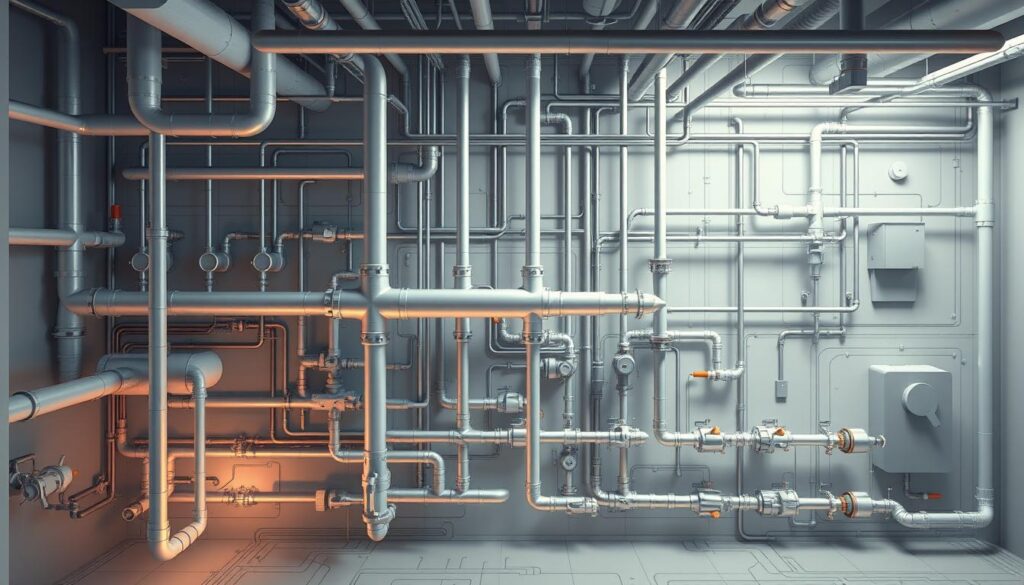
Building services engineering is where tech meets design in modern buildings. It’s about the systems that make buildings work well. Plumbing is key in this field, making buildings comfy and efficient.
Exploring building services engineering, you find a web of systems. Plumbing is more than just pipes and water. It’s about:
- Proper water distribution
- Effective waste management
- Sustainable resource use
- Keeping buildings safe and healthy
Putting plumbing systems in buildings needs smart engineering. Experts must think about:
- Building structure
- Local weather
- Energy saving rules
- New tech
Modern building services engineering changes old plumbing ways. New tech brings smarter, greener water management to all kinds of buildings.
Building services engineering is the future of smart building design.
Understanding plumbing in building construction is more than just water. It’s about making solutions that work with other systems. This ensures buildings perform well and last long.
Water Systems Engineering in Civil Projects
Water systems engineering is where tech, environmental science, and design meet. It’s about how water flows through complex systems. This can greatly improve health and sustainability in communities. Civil engineers are key in creating solutions for today’s water challenges.
Water systems engineering covers many parts of urban and rural areas. It needs a deep understanding of hydraulics. This is to make water distribution networks that work well for everyone.
Municipal Water Supply Networks
Creating municipal water supply networks is complex. It involves planning and using new technologies. Civil engineers must think about:
- Population growth projections
- Water quality standards
- Geographic terrain challenges
- Long-term infrastructure resilience
Sustainable Water Management
Today’s water systems engineering focuses on being green. It includes:
- Rainwater harvesting systems
- Greywater recycling techniques
- Smart water metering technologies
- Low-impact distribution infrastructure
Environmental Considerations
Protecting the environment is key in water systems engineering. Hydraulics now includes ways to keep ecosystems safe. This ensures water infrastructure meets human needs without harming nature.
Water is not just a resource—it’s the lifeline of our communities and ecosystems.
Knowing about these water management strategies helps build better, more sustainable infrastructure.
MEP Engineering and Its Connection to Civil Engineering
Exploring the world of building services engineering, MEP (Mechanical, Electrical, and Plumbing) engineering stands out. It’s a key part of today’s construction projects. The bond between MEP engineering and civil engineering is strong and complex.
MEP engineering is all about the important systems inside a building. These systems make spaces work well, feel good, and are efficient. Civil engineers team up with MEP experts to make sure everything fits together right.
- Mechanical systems manage heating, ventilation, and air conditioning
- Electrical systems handle power distribution and lighting
- Plumbing systems manage water supply and waste management
Understanding MEP engineering helps you see how it supports civil engineering’s work. Civil engineers lay the groundwork. MEP engineers make sure the building’s systems work well.
Working together, MEP and civil engineers plan and design. MEP pros work with civil engineers to:
- Develop integrated infrastructure solutions
- Optimize building performance
- Ensure compliance with local building codes
- Create sustainable and energy-efficient designs
The teamwork between these engineering fields shows how complex modern building projects are. Your project’s success depends on seamless collaboration and deep technical expertise across different engineering domains.
Career Paths: Civil Engineering vs. Plumbing Engineering
Choosing between civil engineering and plumbing engineering offers unique career opportunities in the construction and infrastructure industries. Understanding the distinctions and overlaps can help you make an informed career decision.
Civil engineers and plumbers play critical roles in designing and maintaining infrastructure. Their career trajectories differ significantly. Plumbing in civil engineering curriculum provides foundational knowledge, but the two professions have distinct paths.
Educational Requirements
Your educational journey will differ based on your choice:
- Civil Engineering typically requires a 4-year bachelor’s degree in engineering
- Plumbing engineering may involve vocational training or specialized technical degrees
- Some civil engineering programs include plumbing systems in their curriculum
Professional Certifications
Professional credentials can enhance your career prospects in both fields:
- Professional Engineer (PE) license for civil engineers
- Journeyman and Master Plumber certifications
- Specialized certifications in water systems engineering
Job Market Opportunities
The job market for civil engineers vs. plumbers presents diverse opportunities:
| Civil Engineering | Plumbing Engineering |
|---|---|
| Infrastructure development | Residential and commercial installations |
| Municipal project planning | Specialized systems design |
| Environmental engineering | Sustainable water management |
Your choice between civil engineers and plumbers depends on your interests. Consider technical design, problem-solving, and specific industry focus. Both careers offer rewarding paths with opportunities for growth and specialization.
Future Trends in Civil and Plumbing Engineering
The world of civil engineering is changing fast. New technologies and the need for sustainability are leading the way. Knowing about these trends is key to shaping the future of building and infrastructure.
New technologies are changing plumbing in construction. Smart water management is getting better, thanks to IoT sensors and advanced monitoring. This makes using water resources more efficient.
- Sustainable infrastructure design
- Intelligent water distribution networks
- Green building technologies
- Resilient urban infrastructure solutions
Artificial intelligence and machine learning are changing civil engineering. They help with predictive maintenance, better design, and monitoring infrastructure performance.
Plumbing in construction is also evolving. New materials like self-healing pipes and advanced filters are making water management better and more sustainable.
The future of engineering lies in adaptive, intelligent, and environmentally conscious infrastructure solutions.
Engineers in civil and plumbing need to keep learning and embracing new tech. Working together across disciplines will help solve big infrastructure problems.
- Digital twin technologies
- Sustainable design methodologies
- Advanced material engineering
Your career in civil or plumbing engineering will need you to be flexible and creative. The next ten years will bring many chances for those who are ready to innovate and adapt.
Integration of Smart Technologies in Modern Infrastructure
Smart technologies are changing how we design and build infrastructure. They are making water systems and cities smarter. Now, cities are becoming more intelligent with new solutions.
Today’s infrastructure uses the latest tech for real-time monitoring and management. This means we can control and manage systems better than ever before.
- IoT-enabled water meters that track consumption in real-time
- Automated leak detection systems
- Smart sensors for infrastructure performance monitoring
- AI-powered predictive maintenance tools
Cities are embracing these technologies to create more sustainable and resilient urban environments. Smart water management systems can now predict maintenance needs, reduce waste, and optimize resource allocation with remarkable accuracy.
“The future of infrastructure is not just about building, but about building intelligently.” – Urban Technology Innovator
Your infrastructure is becoming more connected, with smart technologies enabling unprecedented levels of efficiency and sustainability. From municipal water networks to individual building systems, the integration of intelligent solutions is reshaping how we design and manage urban infrastructure.
Conclusion
Exploring the link between civil engineering and plumbing shows they are closely tied. Plumbing is not the same as civil engineering, but it’s very important. It helps shape our built world.
Now you see how plumbing is key to building our world. It’s part of designing our cities and buildings. Plumbing makes sure our structures work well and last long.
Engineering is changing, and so are the roles of its experts. Plumbing skills are now more important than ever. They help solve big problems like water management and keeping our environment clean.
This journey shows how important it is to know about different fields. The future of engineering depends on understanding how fields like plumbing help us build better places. These places should be safe, green, and advanced for everyone.