Affiliate Disclosure
Plumber Guide Guys is a participant in the Amazon Services LLC Associates Program, an affiliate advertising program designed to provide a means for sites to earn advertising fees by advertising and linking to Amazon.
Is Plumbing Easy? Ever thought about fixing your home’s plumbing yourself? Plumbing work isn’t as hard as it seems. While some jobs need a pro, many simple repairs are doable by homeowners with the right info and prep.
Is plumbing easy for the average homeowner? Not always, but with some learning and practice, you can get better at simple fixes. Experts say start with small tasks to build your skills and know your plumbing system better.
It’s important to know your limits. Some repairs are easy, but others need special skills. This guide will help you understand plumbing better. It will teach you when to DIY and when to call a pro.
Key Takeaways
- Not all plumbing tasks require professional intervention
- Start with simple repairs to build confidence
- Know your skill limits and when to seek help
- Proper tools and research are essential for success
- Safety should always be your primary concern
Table of Contents
Is Plumbing Easy for Beginners to Learn?
Starting to learn plumbing basics can seem tough for many homeowners. The world of pipes and fixtures might look complex. But, knowing the basics can make DIY plumbing easier for beginners.
Learning plumbing takes patience and a desire to learn. Your DIY plumbing journey begins with understanding key principles. These principles are the foundation of home maintenance.
Understanding the Learning Curve of Plumbing Skills
Getting good at plumbing involves several important steps:
- Recognize different pipe materials (copper, PVC, PEX)
- Learn basic water pressure concepts
- Understand drainage system principles
- Practice using essential tools like pipe wrenches
Breaking Down Common DIY Plumbing Misconceptions
Many beginners face challenges when starting their DIY plumbing journey. Popular myths can lead to costly mistakes:
- Myth: Plumbing repairs are always simple
Reality: Plumbing systems are complex networks needing precise knowledge
- Myth: Online tutorials can replace professional training
Reality: Videos can’t cover unique home plumbing needs
- Myth: DIY plumbing always saves money
Reality: Wrong repairs can cause expensive water damage
Your success in plumbing basics depends on careful study, practice, and knowing your limits. Start small, be patient with yourself, and don’t hesitate to seek professional help when needed.
Understanding Common DIY Plumbing Mistakes
Many homeowners find DIY repairs challenging. One big mistake is misdiagnosing plumbing issues. This can turn a simple task into a costly disaster.
Common DIY plumbing mistakes include:
- Misidentifying the root cause of plumbing problems
- Using incorrect tools or materials
- Overtightening pipe connections
- Ignoring local building codes
A leak might seem easy to fix, but it could hide bigger problems. Professional plumbers know that simple-looking tasks often need special skills and care.
Using the wrong tools is a big mistake. A DIY fix can harm pipes, create weak spots, and cause expensive water damage. Specialized plumbing tools are made for specific jobs – a regular wrench won’t always work.
Local building codes are also important. Not following them can lead to fines, mandatory fixes, and problems with insurance or selling your home.
Remember: Just because is plumbing easy to attempt doesn’t mean it’s easy to do correctly.
Knowing these common mistakes helps you tackle DIY plumbing with more care. This can save you from expensive repairs later on.
Recognizing When DIY Plumbing Becomes Too Complex
Dealing with plumbing can be tough. Some repairs seem easy, but complex issues show the true challenge. Knowing when to call a pro is key to avoid damage and keep your home safe.
Plumbing needs skills beyond simple fixes. Plumbers spend years learning to tackle tough problems. These issues can be too much for DIY enthusiasts.
Identifying Complex Plumbing Problems
Look out for these signs that mean you need a pro:
- Many fixtures draining slowly at once
- Sewage backing up into your home
- Low water pressure everywhere
- Water looks different or smells bad
- Water sounds like it’s running when it shouldn’t
Signs Professional Help Is Mandatory
Some plumbing problems need expert care because they’re complex and risky:
- Main sewer line blockages need special camera checks
- Gas line fixes with explosion risks
- Big repiping jobs
- Installing new water heaters
- Fixing leaks in the foundation
“Knowing your limits is smart. It stops small problems from turning into big disasters.”
Trying to fix complex plumbing without the right skills can cause big problems. It can lead to expensive fixes and safety risks. Always ask a professional plumber for help when you’re unsure.
Essential Plumbing Skills Required for DIY Success
Learning plumbing skills can turn you from a nervous homeowner to a skilled DIYer. Knowing the main skills needed for plumbing projects is key when starting plumbing work at home.
Key plumbing skills for DIY success include:
- Diagnostic Abilities: Finding the main cause of plumbing problems
- Manual Dexterity: Working well in small spaces
- Technical Knowledge: Knowing about pipe systems and water flow
- Safety Awareness: Spotting dangers before they become big issues
To get better at plumbing, start by studying your home’s plumbing setup. Find shut-off valves, trace pipe runs, and learn about the basics. Start with easy tasks like changing faucet aerators or showerheads to gain confidence.
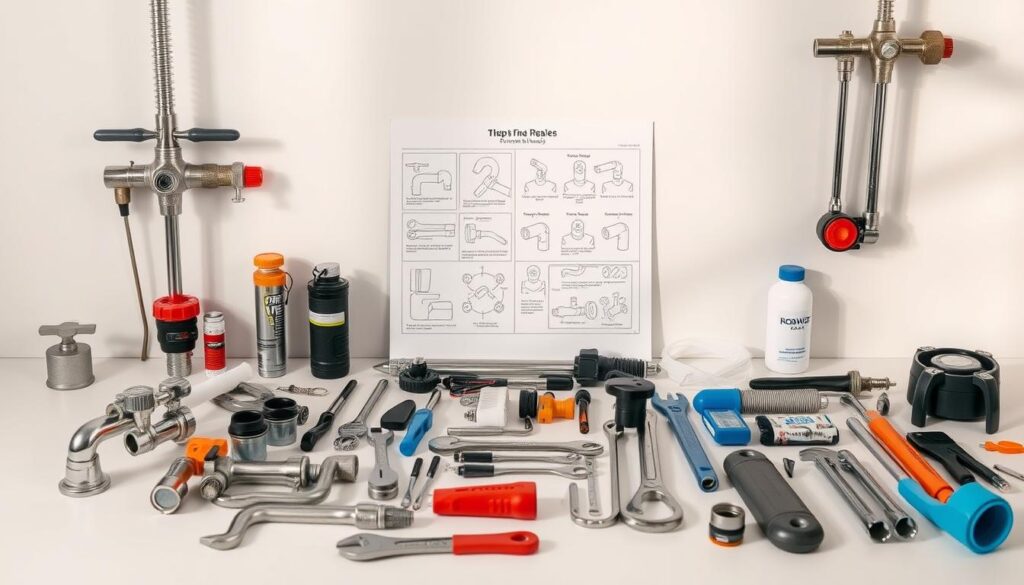
Essential tools for beginners include:
- Adjustable wrench
- Pipe wrench
- Plumber’s tape
- Plunger
- Drain snake
Remember, patience and careful thinking are your best tools when learning plumbing. Start small, keep practicing, and ask for help when a task seems too hard.
Potential Risks and Hazards of DIY Plumbing Work
Starting with DIY plumbing for beginners? It’s key to know the risks for your safety and home. Plumbing repairs might look easy, but hidden dangers can turn a simple job into a big problem.
DIY plumbers without experience face big challenges. These can harm your safety and the integrity of your home. Knowing these risks helps you decide what plumbing tasks you can do yourself.
Water Damage and Mold Growth Consequences
Small leaks can lead to big problems for DIY plumbers. Water damage goes beyond what you can see:
- It weakens walls and foundations
- It can damage electrical systems
- Mold grows quickly, in 24-48 hours
- Fixing it can cost a lot
Look out for signs like discoloration, musty smells, and damp spots. These show there’s hidden moisture.
Health and Safety Hazards in Plumbing Repairs
DIY plumbing comes with physical and chemical risks that beginners might miss:
| Risk Category | Potential Hazards |
|---|---|
| Physical Injuries | Cuts, burns, back strain |
| Chemical Exposure | Toxic fumes, skin irritation |
| Electrical Risks | Shock near water sources |
Use safety gear like gloves, eye protection, and respirators. If unsure, get a pro plumber to avoid disasters.
Some plumbing jobs are better for pros. Knowing your limits saves time, money, and health risks.
Financial Implications of DIY Plumbing Errors
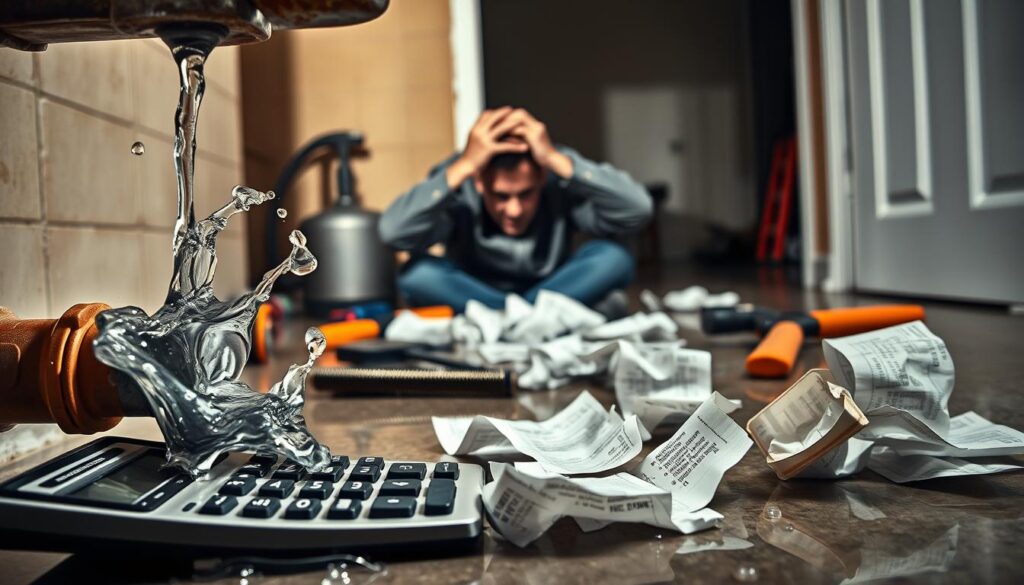
Trying DIY plumbing can lead to big financial problems. What looks like saving money can quickly become very costly for those who are new to plumbing.
DIY plumbing might seem simple, but there are hidden costs. It’s rare for DIY to work well, mainly for complex jobs that need special skills.
- Immediate repair costs can skyrocket when professionals must fix DIY mistakes
- Emergency service fees often exceed original repair estimates
- Incorrect repairs can cause extensive water damage
- Potential property value reduction due to substandard work
The real cost of DIY plumbing goes beyond the first try. Homeowners often don’t realize how complex plumbing systems are. A small leak can turn into a thousand-dollar renovation if not done right.
Common financial risks include:
- Purchasing unnecessary specialized tools
- Buying incorrect materials
- Multiple trips to hardware stores
- Time lost attempting repairs
Insurance issues are another big worry. Many policies need licensed pros for certain repairs. DIY work might lead to denied claims, leaving you to pay for damage.
The cheapest option initially can become the most expensive choice ultimately.
Before trying any plumbing fix, think about your skills, risks, and long-term costs. Sometimes, hiring a pro is cheaper than trying DIY.
Simple Plumbing Repairs You Can Master at Home
Fixing simple plumbing issues can save you money and improve your DIY skills. With the right tools and knowledge, you can tackle basic plumbing tasks on your own. This means you won’t need to call a plumber every time.
Starting to master plumbing at home means knowing which repairs are safe for beginners. Not all plumbing jobs need a professional.
Basic DIY Plumbing Tasks for Enthuasiasts
There are many simple plumbing repairs that DIY fans can try:
- Replacing faucet aerators
- Installing new toilet seats
- Fixing minor drain clogs
- Replacing toilet flappers
- Tightening loose pipe fittings
Essential Tools for Home Plumbing Repairs
Having a basic toolkit is key for DIY plumbing projects. Here are the must-haves for beginners:
- Adjustable wrench for gripping nuts and fittings
- Basin wrench for tight spaces
- Channel-lock pliers
- Screwdrivers in multiple sizes
- Plumber’s tape for sealing connections
Always put safety first when doing plumbing repairs. Wear protective eyewear, gloves, and have a bucket ready to catch water. Start with small, easy projects to build your confidence.
Remember, the more you practice, the better you’ll get at plumbing at home. Each successful repair will boost your skills and save you money on professional help.
Benefits of Professional Plumber Training and Expertise
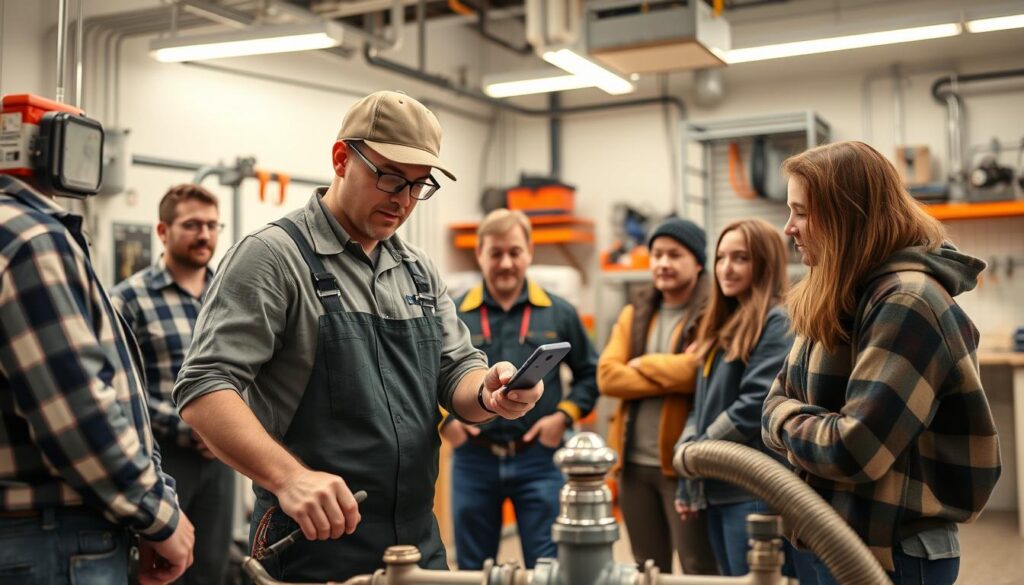
Professional plumber training is a deep dive into becoming an expert in fixing your home’s key systems. When you pick a licensed plumber, you’re choosing years of hard study and hands-on experience.
The training for plumbers is quite extensive:
- It takes 4-5 years of both classroom learning and on-the-job training.
- They master plumbing for homes, businesses, and big projects.
- They know all about local and national plumbing rules.
- They use special tools to find and fix problems.
Plumbers face big challenges that need special skills. They learn to tackle tough problems like:
- Finding hidden issues in systems.
- Dealing with old plumbing setups.
- Ensuring repairs meet safety standards.
- Working in tough environments.
Licensed plumbers bring unmatched expertise to your home. They use the latest tech like camera inspections and thermal imaging to spot problems. Their training means you get top-notch repairs with a warranty, saving you time and money.
Choosing a trained plumber means you get work that’s up to the highest standards. It also keeps your home’s vital systems safe.
Conclusion
Learning plumbing basics is a journey of skill development and smart decision-making. Your success in home plumbing repairs depends on understanding your personal capabilities and limitations. Start small, invest time in learning, and gradually build your confidence with progressively challenging tasks.
Approach DIY plumbing with a strategic mindset. Recognize that some repairs are perfect for homeowners with basic skills, while others demand professional expertise. When learning plumbing basics, always prioritize safety and preparedness. Equip yourself with proper tools, research techniques, and maintain a realistic perspective on what you can accomplish.
Your home’s plumbing system requires careful respect and thoughtful maintenance. By balancing self-reliance with professional wisdom, you can save money and gain valuable homeownership skills. Remember that knowing when to call an expert is just as important as understanding which repairs you can handle independently.
Ultimately, successful DIY plumbing is about continuous learning, careful preparation, and smart risk management. Embrace each repair as an opportunity to expand your knowledge, protect your home’s infrastructure, and develop practical skills that will serve you throughout your homeownership journey.