

Affiliate Disclosure
Plumber Guide Guys is a participant in the Amazon Services LLC Associates Program, an affiliate advertising program designed to provide a means for sites to earn advertising fees by advertising and linking to Amazon.
Is Plumbing a Trade? Ever thought plumbing is more than fixing leaky pipes? What if a plumbing career could open doors most people don’t see?
The plumbing trade is more than just fixing pipes. It’s a vital career that’s gaining recognition. From 2020 to 2023, trade school enrollment in plumbing jumped by 4.9%.
Is plumbing a trade with real career chances? Yes, it is. This guide will dive into the world of plumbing. You’ll see why skilled plumbers are key to our infrastructure, technology, and community health.
Key Takeaways
- Plumbing is a recognized skilled trade with significant career opportunities
- Trade school enrollment in plumbing continues to grow
- Plumbers play a critical role in maintaining infrastructure
- Career paths in plumbing offer stability and competitive earnings
- Technical skills and hands-on training are essential for success
Table of Contents
Understanding the Plumbing Profession
The plumbing profession is key to our modern world. Plumbers keep our water systems safe and our homes comfortable. They are vital for communities all over the United States.
Definition of a Skilled Trade
Being a plumber requires special training and hands-on skills. It’s a job that can’t be automated. Plumbers learn through:
- Extensive technical training
- Practical apprenticeship programs
- Continuous professional development
- Specialized certification processes
Historical Evolution of Plumbing
Plumbing has changed a lot over time. Early water management techniques were used by ancient Romans. Now, plumbing combines old skills with new technology.
Modern Plumbing Industry Overview
Today’s plumbing covers many areas and uses new tech. Plumbers work in homes, businesses, and more. They face big challenges with advanced tools and digital systems.
- Residential installation and repair
- Commercial building maintenance
- Environmental system design
- Green technology integration
Starting a career in plumbing can be rewarding. It offers stable jobs in a growing field.
Is Plumbing a Trade? Understanding the Classification
Plumbing is a skilled trade that needs a lot of technical knowledge and training. Plumbers are key in keeping water and drainage systems safe in homes and businesses.
To see if plumbing is a trade, let’s look at its main points:
- Requires specialized technical training
- Involves complex technical skills
- Demands professional certification
- Requires extensive apprenticeship programs
Plumbing is seen as a trade for good reasons. Plumbers go through tough educational paths. These paths usually include:
- Vocational training programs
- Apprenticeship periods
- State licensing examinations
- Continuous professional development
Being a plumber is more than just fixing leaks. It’s a trade that needs deep knowledge of systems, reading blueprints, and following codes. Plumbers use precise skills in many settings.
| Trade Classification Criteria | Plumbing Profession Alignment |
|---|---|
| Specialized Training | ✓ Comprehensive apprenticeship programs |
| Technical Skills | ✓ Advanced system knowledge |
| Professional Certification | ✓ State licensing requirements |
| Continuous Learning | ✓ Regular skill updates |
The skill and precision needed in plumbing show it’s a respected trade in construction and maintenance.
Essential Skills and Qualifications for Plumbers
Starting a plumbing career needs a mix of technical skills, physical strength, and good people skills. Plumbers must have many abilities, not just fixing pipes and installing fixtures.
Technical Skills Required
To be a top plumber, you must learn key technical skills:
- Advanced knowledge of pipe systems and water distribution
- Understanding of building codes and regulations
- Ability to read and interpret technical blueprints
- Proficiency with specialized plumbing tools and equipment
Soft Skills for Success
Being a good plumber also means having strong soft skills:
- Excellent problem-solving capabilities
- Strong communication skills
- Customer service orientation
- Attention to detail
Physical Requirements
Plumbing work needs a lot of physical strength. Plumbers must be able to:
| Physical Attribute | Required Capability |
|---|---|
| Strength | Ability to lift heavy equipment (up to 50 pounds) |
| Dexterity | Precise hand movements for detailed installations |
| Stamina | Endurance for long hours in different settings |
| Flexibility | Comfortable working in tight spaces and awkward positions |
Building these skills takes time and effort. But they are key to a successful plumbing career.
Education and Training Pathways
Starting a plumbing career needs the right education and training. Trade school plumbing programs are a great way to begin. They give you the basics to succeed in the plumbing world.
There are many ways to start your plumbing journey:
- Trade School Programs (6-24 months)
- Community College Vocational Courses
- Technical Institute Training
- Apprenticeship-Linked Educational Tracks
Trade school plumbing programs teach important skills like:
- Pipe system installation techniques
- Blueprint reading
- Plumbing code compliance
- Safety protocols
- Advanced technical diagnostics
Each path has its own benefits. Technical institutes offer hands-on training for real-world challenges. Community colleges mix theory with practical workshops for a balanced learning experience.
When picking your plumbing path, look for programs with:
- Accredited curriculum
- Industry-standard certification preparation
- Internship or apprenticeship connections
- Modern technology training
Investing in quality education is key for a strong plumbing career. Choose a program that fits your goals and helps you develop skills.
Plumbing Apprenticeship Programs
A plumbing apprenticeship is key to starting your plumbing career. It turns book learning into real-world skills. This training mixes classroom learning with practical experience.
Future plumbers will go through a detailed apprenticeship. It lasts 4-5 years and dives deep into the trade.
Apprenticeship Program Structure
Your apprenticeship will include several important parts:
- Classroom lessons at technical schools
- Hands-on training under supervision
- Guidance from seasoned professionals
- A detailed curriculum on technical skills
Program Requirements and Duration
Apprenticeships have certain requirements:
| Requirement | Details |
|---|---|
| Minimum Age | 18 years old |
| Education | High school diploma or GED |
| Training Hours | 4,000-8,000 hours of practical experience |
| Classroom Instruction | 144 hours per year |
Benefits of Pursuing a Plumbing Apprenticeship
Apprenticeships offer big benefits for your career:
- Earn while you learn
- Get real-world experience
- Get advice from experts
- Make professional connections
- Get ready for future licenses
A plumbing apprenticeship is a unique chance to start strong in this vital trade. It prepares you for a fulfilling and exciting career.
Licensing and Certification Requirements
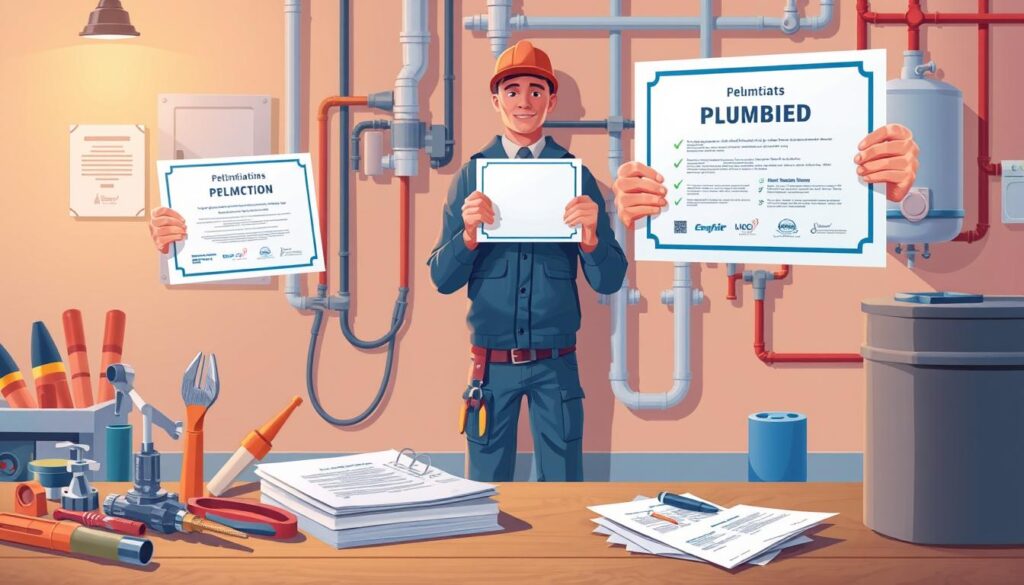
To become a licensed plumber, you need to do more than just an apprenticeship. Each state has its own rules to protect both plumbers and customers. Getting certified means you must prepare well and meet strict standards.
Getting plumber certification involves several steps:
- Complete a state-approved apprenticeship program
- Accumulate required work experience hours
- Pass a detailed licensing exam
- Submit proof of technical training
- Get the right insurance and bonding
The licensing exam checks your critical technical skills. This includes:
- Local and state building codes
- Safety rules
- Plumbing system design
- Installation methods
- Repair and upkeep procedures
Different states have different rules for plumbers. But most require you to keep learning to keep your certification. This keeps you up-to-date with new tech, safety, and best practices.
Professional certification shows you’re dedicated to being the best in plumbing.
Your certification is more than a piece of paper. It proves your skills, protects people, and opens up new career paths in plumbing.
Career Growth and Advancement Opportunities
Your plumbing career path is full of exciting opportunities. The plumbing industry offers many ways to grow professionally and personally. You can develop your skills and earn more as you progress.
Success in plumbing requires careful planning and ongoing learning. Each step in your career brings new challenges and rewards.
Journey to Master Plumber
Getting from apprentice to master plumber involves several important steps:
- Complete a 4-5 year apprenticeship program
- Obtain journeyman plumber certification
- Accumulate minimum required work experience
- Pass a thorough master plumber exam
Specialization Options
Plumbing jobs offer many specializations, such as:
- Commercial Plumbing: Big projects in buildings
- Industrial Systems: Complex mechanical setups
- Green Plumbing Technologies: Eco-friendly water solutions
- HVAC Integration: Advanced climate control systems
Business Ownership Possibilities
Starting your own plumbing business is a career goal. Many plumbers turn their skills into their own companies. This path leads to financial freedom and control over your work.
Successful plumbing entrepreneurs use their technical skills, business knowledge, and strong customer ties.
With hard work and a commitment to learning, you can make your plumbing career a success.
Salary Expectations and Job Outlook
Exploring a plumbing career path shows promising financial opportunities in the United States. Plumbers earn competitive salaries for their specialized skills and vital services. The U.S. Bureau of Labor Statistics reports a median annual wage of $61,550 for plumbers. Top earners in major cities make even more.
Your earnings in plumbing jobs depend on several factors:
- Geographic location
- Years of experience
- Specialization
- Professional certifications
Salary ranges vary greatly based on your market and expertise. In cities like San Jose and San Francisco, plumbers earn about $80,000 a year. Experienced pros or those running their own businesses can earn even more.
“The plumbing trade offers stable income and consistent growth opportunities for skilled professionals.” – Industry Expert
The job outlook for plumbers is strong. Growth is driven by infrastructure projects, renovations, and the need for maintenance and repairs. Your career can lead to many opportunities, from journeyman to master plumber, and even business ownership.
Strategic career development, continuous learning, and specialization can boost your earnings in this dynamic trade.
Tools and Technology in Modern Plumbing
The plumbing trade has changed a lot with new technology. Today, plumbers use advanced tools and digital tech to do their jobs better and faster.
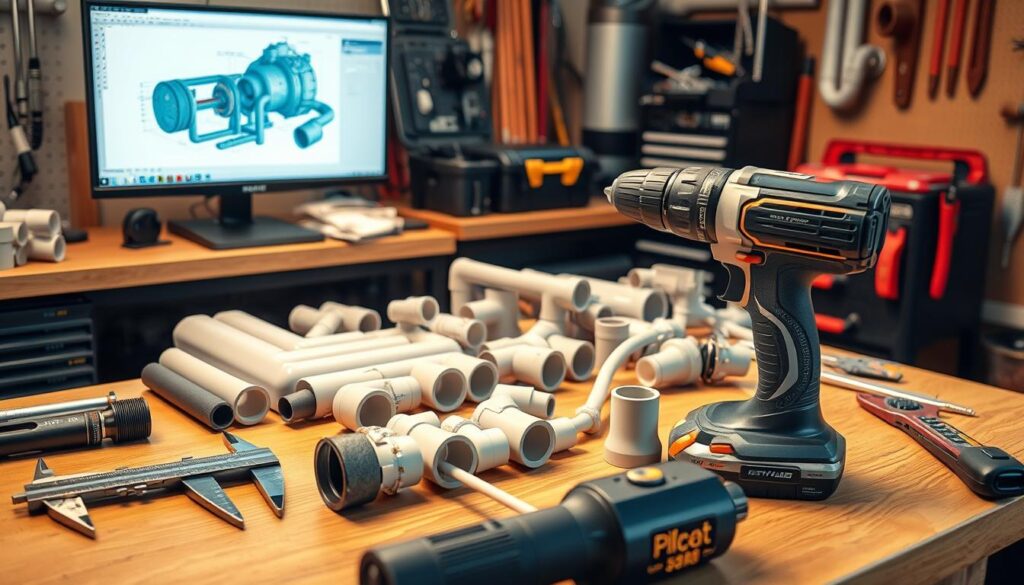
For plumbers, having the right tools is key to getting the job done right. Their tools have moved from old wrenches and pipes to new, high-tech gadgets for measuring and diagnosing.
Essential Tool Kit for Professional Plumbers
- Pipe wrenches (multiple sizes)
- Plumber’s tape
- Adjustable pliers
- Pipe cutters
- Drain snake/auger
- Digital pressure gauge
Digital Technologies Transforming Plumbing
New tech has changed plumbing a lot. Plumbers now use tools that help them find problems and work more efficiently.
| Technology | Purpose |
|---|---|
| Thermal imaging cameras | Detect hidden leaks and moisture |
| Pipe inspection cameras | Visualize internal pipe conditions |
| Mobile estimation software | Create instant project quotes |
Safety Equipment Essentials
Keeping safe is very important for plumbers. They wear top-notch safety gear to avoid getting hurt on the job.
- Safety glasses
- Steel-toe boots
- Cut-resistant gloves
- Respirator masks
- Hard hats for construction sites
By using modern tools and tech, plumbers can get better at their job. They can do their work more accurately and keep up with the highest standards in plumbing.
Work Environment and Job Types
The plumbing profession offers a variety of work environments. Plumbers work in many places, from small homes to big industrial sites. This shows how versatile plumbing jobs can be.
Your career in plumbing can take you to different places:
- Residential settings (single-family homes, apartments)
- Commercial buildings (offices, restaurants, shopping centers)
- Industrial facilities (manufacturing plants, refineries)
- Construction sites
- Municipal infrastructure projects
Plumbing jobs need different skills and flexibility. You might focus on:
- Installation services for new buildings
- Fixing and keeping systems running
- Handling emergency repairs
- Offering technical advice
| Work Environment | Primary Responsibilities | Typical Challenges |
|---|---|---|
| Residential | Home plumbing repairs, fixture installations | Tight spaces, varied home layouts |
| Commercial | Large-scale system maintenance, complex installations | Coordinating with multiple contractors |
| Industrial | High-pressure system management, technical diagnostics | Safety protocols, specialized equipment |
Working in plumbing is physically demanding. You need strength, flexibility, and endurance. Being able to adapt quickly is key, as you’ll face different projects and clients.
Industry Regulations and Standards
The plumbing world is filled with rules to keep everyone safe and the environment healthy. As a licensed plumber, you need to know and follow these important rules.
It’s key to understand the rules of the plumbing world to do well. These standards help ensure that plumbing work is top-notch and safe.
Building Codes: Structural Safety Foundations
Building codes are the core of plumbing rules. They set the rules for how plumbing is installed and kept up. These rules help keep buildings safe and the water clean.
- Structural integrity of buildings
- Water quality and safety
- Proper waste management systems
- Compliance with local and national requirements
Safety Regulations: Protecting Professionals and Public
Being a licensed plumber means following strict safety rules. Important safety rules include:
- Wearing the right protective gear
- Handling dangerous materials safely
- Following electrical safety steps
- Reducing risks
Environmental Guidelines: Sustainable Practices
Today, plumbing is all about being green. Plumbers must use:
- Water-saving methods
- Green installation ways
- Systems that use less energy
| Regulation Category | Key Requirements | Impact |
|---|---|---|
| Building Codes | Structural compliance | Ensures safe installations |
| Safety Standards | PPE and risk management | Protects workers and public |
| Environmental Guidelines | Sustainable practices | Reduces ecological footprint |
It’s vital to keep up with these rules to excel in plumbing.
Conclusion
Exploring plumbing shows it’s a dynamic and vital trade. It offers great opportunities for those who want to grow professionally. Is plumbing a trade? Yes, it is. This career provides stable jobs, good pay, and the joy of doing important work.
Starting your plumbing career opens up many exciting paths. You can work on homes or big projects, depending on your interests and skills. The need for skilled plumbers keeps growing, which means job security and chances for advancement.
Thinking about a career change or starting fresh? Plumbing is a great choice for those who like working with their hands and solving problems. You’ll get the chance to learn, work as an apprentice, and keep learning, all while growing in this essential trade.
Choosing plumbing means more than just a job. It’s a career that helps build and maintain communities. Your skills will always be needed, making plumbing a smart choice for a stable and fulfilling career.