
Affiliate Disclosure
Plumber Guide Guys is a participant in the Amazon Services LLC Associates Program, an affiliate advertising program designed to provide a means for sites to earn advertising fees by advertising and linking to Amazon.
Is Copper Plumbing Good? Copper pipes have been used for water distribution for over 4,000 years. This material has proven its durability and reliability for generations. It’s a key part of copper plumbing systems.
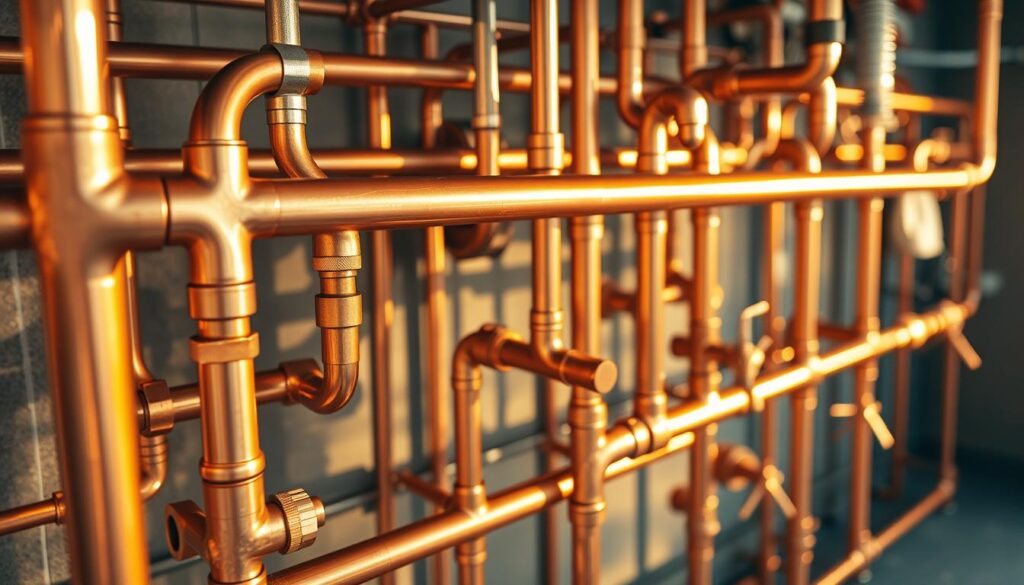
When thinking about copper plumbing for your home, you’ll find both benefits and challenges. It’s important to weigh the pros and cons to see if it fits your needs.
Copper pipes last a long time, often 50-70 years if installed right. They resist corrosion and keep water quality high. But, they cost more upfront and might not work well in all water conditions.
Key Takeaways
- Copper pipes have a proven track record spanning thousands of years
- Exceptional durability with 50-70 year lifespan
- Natural resistance to bacterial growth
- Superior performance in temperature extremes
- Higher initial installation costs compared to plastic alternatives
Table of Contents
What Makes Copper Piping a Popular Choice in Modern Plumbing?
Copper has been a key part of plumbing for thousands of years. It has proven its worth through reliable performance. Its unique properties and versatility make it a top choice for homes and businesses.
A Legacy of Proven Performance
The history of copper piping goes back to ancient times. Archaeologists found evidence of copper use for water as far back as 4000 BC. This long history shows copper’s durability and reliability in plumbing.
Comprehensive Types of Copper Pipes
Knowing about copper piping types is important for choosing the right one. Copper pipes come in different grades and types:
- Type M (Red): Thinnest wall, most economical for residential interiors
- Type L (Blue): Medium thickness, ideal for outdoor water services
- Type K (Green): Thickest wall, used for underground water mains
- DWV (Yellow): Designed for drainage and waste systems
Versatile Residential Plumbing Applications
Copper pipes have many uses in homes. They are found in important systems like:
- Main water supply lines
- Hot and cold water distribution
- HVAC refrigerant lines
- Radiant heating systems
| Pipe Type | Wall Thickness | Primary Application |
|---|---|---|
| Type M | Thin | Interior residential plumbing |
| Type L | Medium | Outdoor water services |
| Type K | Thick | Underground water mains |
Soft copper is flexible, while rigid copper is strong. This makes copper adaptable for many plumbing needs. It works well in tight spaces and for long, straight runs, solving many plumbing challenges.
Key Benefits of Copper Plumbing Systems
Copper plumbing has many advantages that make it stand out. It offers durability and exceptional performance for your home’s water system. Understanding these benefits can greatly improve your home’s plumbing.
Exceptional Durability and Longevity
Copper pipes are known for their long lifespan. They can last between 50-70 years, making them a durable choice for homes. Investing in copper pipes means your home’s plumbing will be reliable for decades.
- Resistant to physical damage
- Maintains structural integrity across temperature variations
- Performs exceptionally well under different environmental conditions
Natural Resistance to Corrosion
Copper pipes form a protective layer when exposed to water and air. This layer prevents corrosion and keeps your pipes clean and working well. Unlike iron or steel, copper doesn’t rust, keeping your water quality high.
| Pipe Material | Corrosion Resistance | Average Lifespan |
|---|---|---|
| Copper | Excellent | 50-70 years |
| Galvanized Steel | Poor | 20-30 years |
| PVC | Good | 25-40 years |
Antimicrobial Properties for Healthier Water
Antimicrobial copper pipes add extra protection to your home’s water. Copper naturally stops bacteria from growing, making your water cleaner and safer. This means you don’t need chemical treatments for clean drinking water.
- Biostatic material prevents bacterial colonization
- Historically used for water purification
- Reduces waterborne health risks
Copper’s antimicrobial properties have been recognized for millennia, from ancient civilizations to modern medical research.
Is Copper Plumbing Good for Your Home’s Water Quality?
When thinking about copper plumbing for your home, water quality is key. Copper pipes are great for keeping your drinking water safe.
Copper pipes have special benefits for water quality. They don’t let bacteria grow and stop contaminants from building up. This means your water stays clean and safe.
- Prevents bacterial colonization
- Eliminates rust and sediment contamination
- Provides minimal metallic taste
Drinking water from copper pipes also has health perks. Copper is a trace mineral that’s good for your body. The World Health Organization says it’s safe in small amounts.
Some people worry about a metallic taste. But, if you notice it, just flush your tap for 15 seconds. This simple step ensures optimal water quality and taste.
Copper pipes: Keeping your water clean, safe, and naturally pure.
Experts say copper plumbing is best for top-notch drinking water. Your home’s water system stays protected. Copper pipes help keep your water pure and safe.
Understanding the Drawbacks of Copper Pipes
Copper plumbing has many benefits, but it also has downsides. Before choosing copper for your home’s water system, it’s important to know these challenges. Copper pipes have been trusted for years, but they come with specific issues.
Higher Initial Installation Costs
The cost of copper plumbing is a big issue for many. Copper is much pricier than options like PEX or PVC. You might pay two to three times more for copper compared to other materials.
- Material costs are typically 2-3 times higher than plastic pipes
- Specialized labor increases overall installation expenses
- Market fluctuations can impact copper pricing
Potential Corrosion Challenges
Corrosion from acidic water is a big worry for copper pipes. The CDC says to avoid copper in water with pH levels below 6.5. Acidic water can slowly damage the pipes, affecting water quality.
| Water pH Level | Corrosion Risk | Recommended Action |
|---|---|---|
| Below 6.5 | High | Avoid copper pipes |
| 6.5-7.5 | Moderate | Monitor water quality |
| Above 7.5 | Low | Generally safe for copper |
Labor-Intensive Installation Process
Installing copper pipes is complex. It requires special skills and tools. Plumbers must cut, clean, and solder the pipes, which takes more time and money.
“The complexity of copper pipe installation makes it a skilled trade that requires significant expertise.” – Professional Plumbing Association
Knowing these challenges helps you decide if copper pipes are right for your home.
Copper Plumbing vs. PEX and Other Alternatives
Each plumbing material has its own benefits and drawbacks. Copper stands out when compared to PEX, PVC, and galvanized steel.
The fight between copper and PEX is a clash of modern materials. PEX is flexible and cheaper to install. It also resists freezing and is easy to route through walls. Copper, on the other hand, lasts longer and performs better.
- PEX advantages:
- Lower initial cost
- Easy installation
- Freeze resistance
- Copper advantages:
- Longer lifespan (50-70 years)
- Better resistance to damage
- Superior water quality
PVC is good for drain lines but not for hot water. It can’t handle high temperatures and becomes brittle. Copper, on the other hand, stays strong under different conditions.
Copper beats galvanized steel because it doesn’t corrode. Galvanized steel pipes corrode fast, lowering water pressure and quality. Copper keeps water flowing well and needs fewer repairs.
Professional plumbers often recommend copper for its proven track record and long-term reliability.
Your choice depends on your needs, budget, and local codes. Copper might be pricier at first, but it’s a wise choice for your home’s plumbing in the long run.
How Does Copper Piping Perform in Different Climates?
Copper water lines are durable in many environments. They are a strong choice for plumbing in different places. Knowing how copper pipes handle different climates helps homeowners choose the right plumbing.
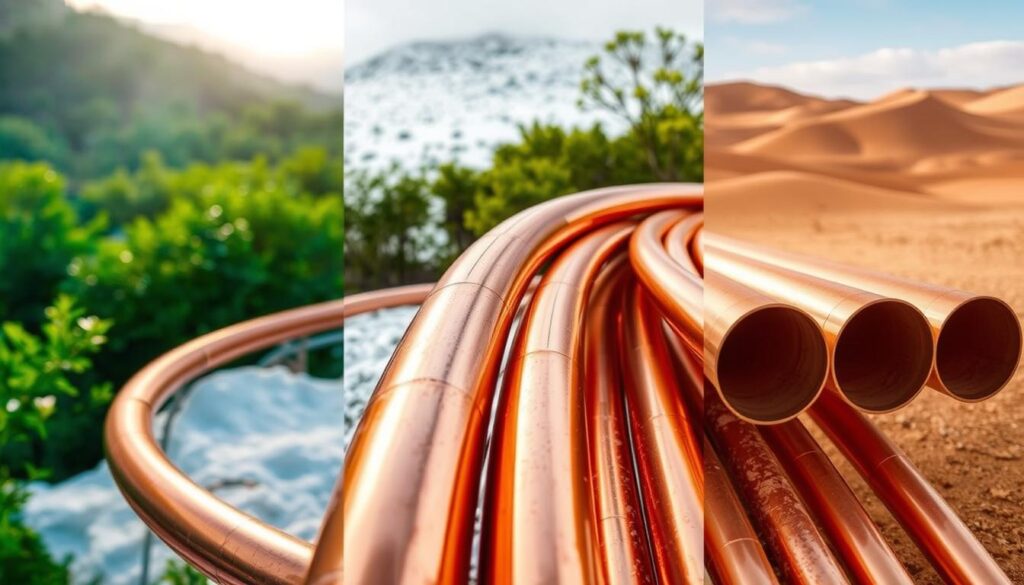
Copper is great at handling extreme temperatures. It works well in cold winters and hot summers. Copper pipes are reliable and consistent.
Cold Climate Performance and Freeze Resistance
Copper pipes are top-notch in cold weather. They may not be completely freeze-proof, but they do well:
- They transfer heat quickly
- They are a bit more flexible than rigid materials like PVC
- They stay strong even when temperatures change
To keep copper pipes from freezing, they need the right setup and insulation. Adding extra protection helps prevent freezing.
Hot Climate Durability and Heat Tolerance
Copper pipes also excel in hot climates. They have properties that make them great for hot areas:
| Climate Characteristic | Copper Pipe Performance |
|---|---|
| High Temperature Resistance | Stays strong up to 180°F |
| Thermal Conductivity | Transfers heat well without losing strength |
| Fire Resistance | Melting point at 1,984°F |
Choosing copper pipes means you get plumbing that lasts. It can handle many environmental challenges. This gives you peace of mind, no matter the climate.
Installation and Maintenance Considerations for Copper Pipes
Installing copper pipes needs careful planning and special skills. You’ll need the right tools and a step-by-step approach. This ensures your plumbing system is strong and leak-free.
- Pipe cutters
- Deburring tool
- Sandpaper
- Flux
- Lead-free solder
- Propane torch
Soldering copper pipes requires precision. Here are the main steps:
- Measure and cut pipes accurately
- Clean pipe ends well
- Apply flux to the surfaces
- Heat joints evenly
- Apply solder carefully
- Check if the connection is good
Maintaining copper pipes is easy. Annual checks can prevent problems. Watch out for these signs during your inspections:
| Sign | Potential Issue | Recommended Action |
|---|---|---|
| Greenish-blue stains | Pipe oxidation | Professional inspection |
| Water pressure changes | Potential blockage | System flush |
| Small leaks | Joint weakness | Immediate repair |
To keep copper plumbing lasting, clean pipes with vinegar and water. Minor leaks can often be fixed with pipe clamps. But big problems need a pro.
Proper installation and regular maintenance are the keys to a reliable copper pipe system.
Environmental Impact and Sustainability of Copper Plumbing
Copper plumbing is a top choice for those who want to go green. It’s great for recyclable copper pipes and supports eco-friendly homes.
Choosing sustainable plumbing can really help the planet. Copper is amazing because it can be recycled over and over again. It keeps its quality every time.
Recyclability and Eco-Friendly Manufacturing
Copper pipes are at the top of eco-friendly plumbing. Here are some big environmental wins:
- 100% recyclable without losing quality
- Needs very little energy to recycle
- Creates way less carbon emissions than other materials
Long-Term Environmental Benefits
Copper’s good for the planet long after it’s made. It lasts 50-70 years, which means you don’t need to replace it often. This cuts down on waste and saves resources.
Copper also keeps water clean naturally. This means you don’t need to use harmful chemicals. By picking copper, you’re choosing a green future for your home.
Conclusion
Choosing copper plumbing depends on your needs and situation. Copper pipes last 50-70 years, making them durable for long-term use. They also have natural antimicrobial properties and perform well in different temperatures.
When thinking about copper plumbing, consider both the good and bad sides. Copper is more expensive than some other materials, costing 2-3 times more than plastic. But, the long-term benefits might be worth the extra cost. Your home’s water, climate, and budget will help decide if copper is right for you.
Experts suggest getting your water tested and talking to a licensed plumber. Copper plumbing isn’t for every home, but it’s a top choice for quality, durability, and lasting performance. Think about your specific needs to make the best choice for your plumbing.
Copper plumbing is a reliable and proven choice for many homeowners. Knowing its strengths and weaknesses helps you decide if it fits your home’s needs and future plans.