

Affiliate Disclosure
Plumber Guide Guys is a participant in the Amazon Services LLC Associates Program, an affiliate advertising program designed to provide a means for sites to earn advertising fees by advertising and linking to Amazon.
Is Cast Iron Plumbing Bad? Ever thought about the pipes behind your walls? They might be quietly harming your home. Cast iron plumbing, once a top choice, now raises big questions about its safety and reliability.
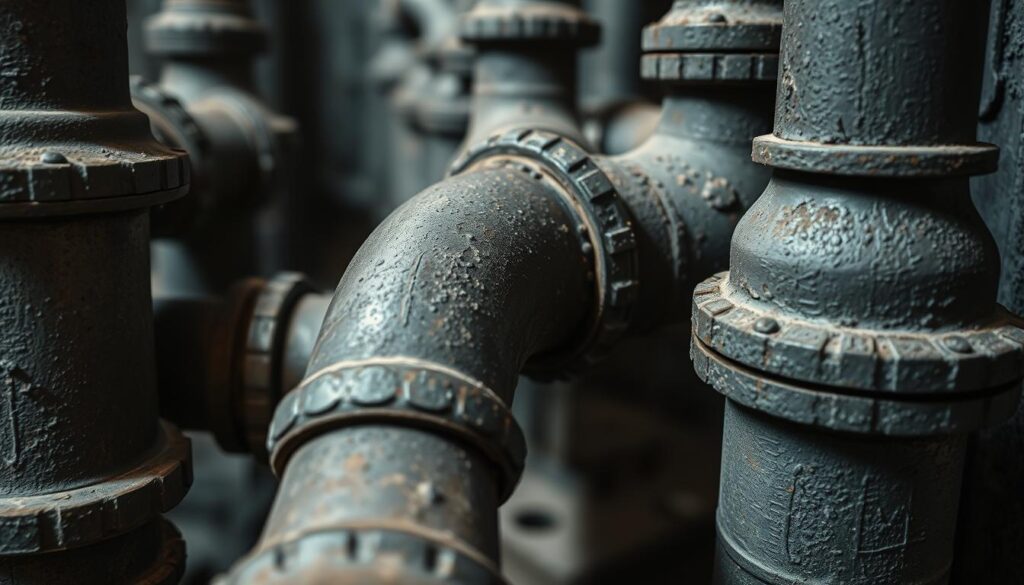
Cast iron pipes were the go-to for homes for years. They were strong and reliable. But, as time goes on, they face big challenges that could hurt your home’s value and safety.
To figure out if cast iron plumbing is bad, we need to look at its history, how it works, and its risks. Cast iron pipes don’t last forever. Spotting problems early can prevent expensive fixes and health risks.
Key Takeaways
- Cast iron plumbing has been used in homes for many decades
- Older pipes can develop serious structural issues over time
- Regular inspection is key to avoiding big plumbing problems
- Modern alternatives like PVC offer better long-term performance
- Getting a pro to check your pipes can help find issues
Table of Contents
Understanding Cast Iron Plumbing Systems
Cast iron plumbing has been key in homes for many years. If your home is older than the 1970s, it likely has cast iron pipes. These pipes were once the top choice for managing water and waste.
Composition of Cast Iron Pipes
Cast iron pipes are made by pouring molten iron into molds. This makes them strong and long-lasting. They have:
- Thick walls
- High durability
- Great sound dampening
- Resistance to damage
Historical Usage in Home Construction
From the late 19th century to the mid-20th century, builders used cast iron. Plumbers liked them because they could handle a lot of water and resist corrosion for years.
Typical Home Locations
Cast iron pipes are often found in certain spots:
- Underground sewer lines
- Basement drainage systems
- Kitchen and bathroom waste pipes
- Vertical stack pipes
Knowing where these pipes are helps homeowners plan for upkeep and future plumbing issues.
The Expected Lifespan of Cast Iron Pipes
Knowing how long cast iron pipes last is key for homeowners with older plumbing. These pipes have been around for decades but don’t last forever. They can last from 25 to 60 years, depending on several factors.
Several things affect how long cast iron pipes last:
- Soil composition and moisture levels
- Water chemistry and pH levels
- How often the pipes are used
- The quality of their installation
- Maintenance practices
Plumbers say pipes in different places wear down at different rates. Places near the coast with lots of moisture and salt can see pipes break down faster than places with milder weather.
| Region | Average Pipe Lifespan | Deterioration Factors |
|---|---|---|
| Coastal Regions | 25-40 years | High moisture, salt exposure |
| Moderate Climate | 40-60 years | Balanced environmental conditions |
| Dry Regions | 50-70 years | Low moisture, stable soil |
Your home’s situation will decide how long your cast iron pipes last. Regular checks can spot problems early.
If you see big signs of wear or constant drainage issues, it’s time for a pro to look at your pipes. They might need to be replaced.
Is Cast Iron Plumbing Bad: Analyzing the Drawbacks
Cast iron plumbing can be a big problem for homeowners. Knowing the issues with old cast iron drain systems helps you make smart choices for your home.
When deciding if cast iron plumbing is bad, several key factors come into play. These factors can affect your property’s safety and value.
Common Issues with Deterioration
Old cast iron drain problems show up in many ways:
- Persistent pipe corrosion
- Frequent drain blockages
- Unexpected water leaks
- Structural pipe degradation
Impact on Home Value
Aging cast iron plumbing can lower your home’s value. Buyers might see these systems as costly to fix. This can make your home less appealing.
Health and Safety Concerns
Deteriorating cast iron pipes are a serious health risk. Potential contamination and mold can grow when pipes leak or crack. This can harm your family’s health.
Proactive assessment of your plumbing system is key to a safe home.
Understanding these issues shows why many are moving away from cast iron plumbing. They’re choosing more modern, lasting options instead.
Signs of Failing Cast Iron Pipes
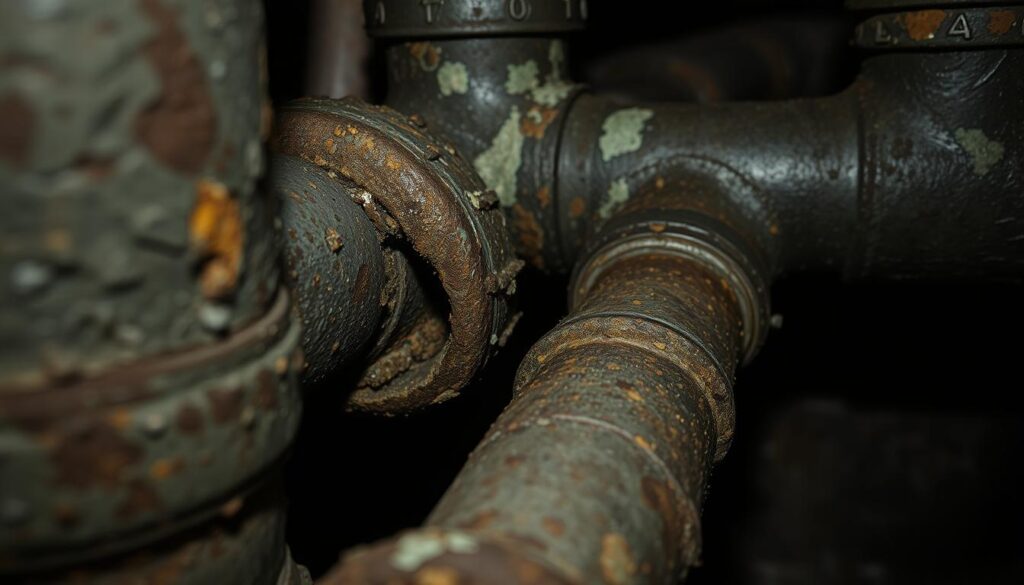
Spotting failing cast iron pipes early can save you a lot of money and prevent damage. Corrosion in these pipes is a big problem. It can harm your plumbing and the structure of your home.
Your plumbing system gives you clues when cast iron pipes start to fail. Knowing these signs can help you act fast to avoid big problems.
- Water Discoloration: Rusty or brown water means your pipes are corroding badly
- Persistent leaks that pop up out of nowhere
- Slow draining in sinks, toilets, and showers
- Foul sewage smells inside or around your home
- Unexpected mold growth near pipes
Some signs of failing cast iron pipes might not be as obvious:
- Unusually lush or green patches in your yard
- Indentations or sagging areas in your lawn
- Unexplained cracks in foundation or walls
- Puddles or sewage seepage in your yard
- Increased pest activity near drainage areas
If you see many signs of cast iron pipe corrosion, call a professional plumber right away. Early detection can stop major damage and save you from expensive fixes.
Cast Iron vs Modern Plumbing Materials
Homeowners have a big choice when replacing cast iron sewer pipes. They can pick from old materials or new ones. Modern materials offer big benefits over cast iron.
New plumbing tech has changed how we install and care for pipes. PVC has become a top choice in the cast iron vs PVC debate.
Material Characteristics Comparison
| Feature | Cast Iron Pipes | PVC Pipes |
|---|---|---|
| Durability | 25-50 years | 50-100 years |
| Cost per Linear Foot | $10-$15 | $3-$5 |
| Corrosion Resistance | Low | High |
| Weight | Heavy | Lightweight |
Installation Considerations
- PVC pipes are lighter and easier to move
- They need less special labor
- Installation is faster than cast iron
- They cost less to replace
Maintenance Factors
PVC is a better choice for maintenance when replacing cast iron pipes. They resist roots, chemicals, and need little upkeep over time.
Experts say PVC is better for homes because it’s more effective and cheaper.
Choosing between cast iron and PVC depends on cost, durability, and your home’s needs.
Benefits of Cast Iron Plumbing Systems
Cast iron plumbing has been around for a long time. It offers many benefits that make it a great choice for homes and businesses. Despite some concerns, these pipes have many advantages that show their lasting value.
Cast iron pipes can last over 100 years with the right care. Experts say this material is strong and reliable for handling water and waste.
- Exceptional Durability: Cast iron pipes resist corrosion and can withstand significant pressure
- Sound Dampening: These pipes significantly reduce noise from water flow and drainage
- Heat Resistance: They maintain structural integrity under high temperatures
- Longevity: Properly installed cast iron pipes can function effectively for decades
Many cities and businesses use cast iron plumbing. They trust its performance. The material’s strength and ability to resist damage make it a good choice for important systems.
Even though newer options are available, cast iron plumbing is a solid choice for certain needs. Knowing its unique benefits helps you decide what’s best for your home’s plumbing.
Maintenance and Inspection Requirements
Keeping your home’s plumbing system in good shape is key, and cast iron drainage pipes need special care. Knowing how to handle rusted cast iron pipes can save you a lot of money and time.
Regular upkeep is vital to avoid expensive repairs and make your drainage system last longer. Homeowners should follow a few important steps to keep their pipes in top shape.
Essential Maintenance Tips for Homeowners
- Check exposed pipe sections every six months
- Look for signs of corrosion or rust
- Watch how water drains and its quality
- Avoid harsh chemicals that harm pipes
- Keep water pressure right to avoid pipe stress
Professional Inspection Guidelines
Experts say it’s smart to get your pipes checked by pros. Advanced video-scope technology lets them see inside pipes and find problems early.
- Get a pro to inspect every 2-3 years
- Use cameras to see inside pipes
- Check pipe integrity fully
- Get a report on any needed repairs
Regular maintenance can really cut down on repair costs and stop unexpected problems with your drainage system.
Repair Options and Solutions
When dealing with aging cast iron sewer pipes, you have several repair options. Replacing them isn’t always needed. Sometimes, targeted repairs can extend your plumbing system’s life.
Your primary repair strategies include:
- Spot Repairs: Ideal for localized damage or minor cracks
- Trenchless Pipe Lining: Rehabilitates pipes without extensive excavation
- Full Pipe Replacement: Recommended for severely deteriorated systems
Trenchless pipe repair is gaining popularity for addressing cast iron plumbing challenges. It involves inserting an epoxy-lined sleeve inside the pipe. This creates a new, seamless interior without digging up your yard.
| Repair Method | Cost Range | Disruption Level |
|---|---|---|
| Spot Repair | $500 – $1,500 | Low |
| Trenchless Lining | $3,000 – $7,000 | Minimal |
| Full Replacement | $5,000 – $15,000 | High |
Cast iron plumbing repair costs vary widely. They depend on the extent of damage and the chosen repair method. Getting a professional assessment is key to finding the most cost-effective solution for your situation.
Cost Considerations for Replacement
Replacing cast iron sewer pipes can be a big expense for homeowners. Knowing the costs helps you get ready for this big home project.
The cost to replace cast iron sewer pipes varies a lot. This depends on several important factors:
- Pipe length and how easy it is to get to
- How big your home is
- What plumbers in your area charge
- How bad the pipe damage is
Breaking Down Labor Expenses
Labor costs a lot in replacing cast iron sewer pipes. Plumbers charge between $100 and $500 per foot. If the job is hard or in a tough spot, it can cost even more.
Material Cost Breakdown
Pipe MaterialCost per Linear FootEstimated DurabilityPVC Replacement$50-$12550-100 yearsCast Iron Pipes$75-$25025-50 years
Insurance Coverage Insights
Your homeowners insurance might help with the cost of replacing cast iron sewer pipes. Check your policy carefully for any plumbing system replacement coverage. Some policies cover part of the cost if a pipe fails unexpectedly. Others might need extra coverage.
Pro Tip: Document all pipe damage well and talk to your insurance about coverage options.
Plan to spend between $5,000 and $15,000 for all the costs of replacing cast iron pipes. Planning ahead can help avoid unexpected expenses during a pipe replacement.
Conclusion
Is cast iron plumbing bad for your home? The answer is not simple. Cast iron pipes have been around for decades in the U.S. They have their good points but also some downsides.
Cast iron pipes are durable and can block out noise. Yet, they can rust and wear down over time. Homeowners need to think about their pipes’ condition, age, and if they need fixing. Whether cast iron is bad depends on your home’s needs and upkeep.
Getting a professional to check your pipes is the best way to know what’s going on. They can tell you if you should replace or fix your pipes. This way, you can avoid water damage and expensive repairs, keeping your plumbing working well for a long time.
Your home’s plumbing needs regular checks and care. Whether you have cast iron pipes or are thinking of changing them, knowing what to do is key. With the right steps, you can keep your home’s plumbing safe and working right.