

Affiliate Disclosure
Plumber Guide Guys is a participant in the Amazon Services LLC Associates Program, an affiliate advertising program designed to provide a means for sites to earn advertising fees by advertising and linking to Amazon.
Is a Plumbed Eyewash Station Portable? Ever thought about moving a plumbed eyewash station around your workplace? It’s key to know how emergency equipment works. This is because eye safety is a big deal in any job.
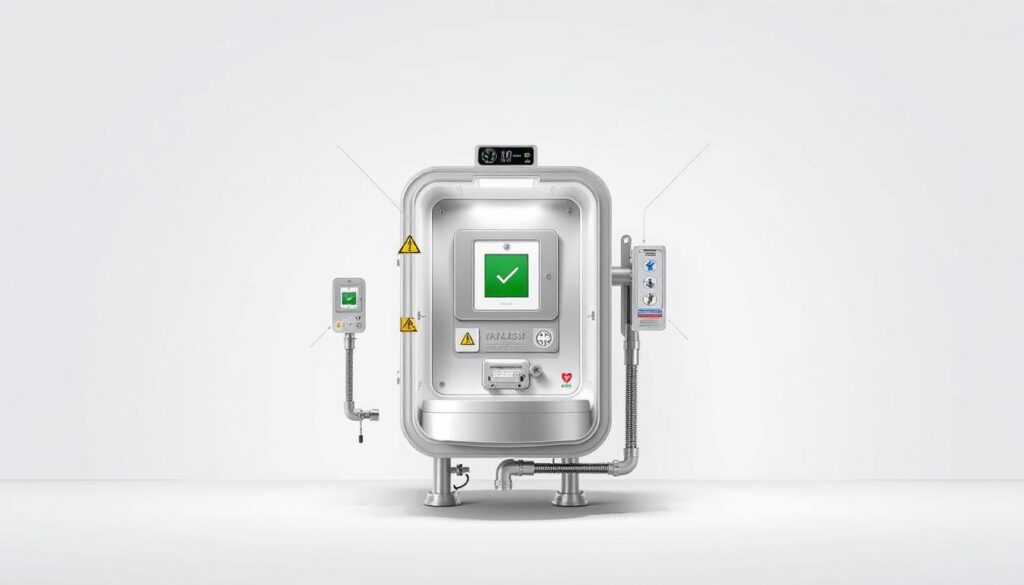
Plumbed and portable eyewash stations are two different ways to protect eyes at work. Plumbed systems always have water ready, but they need to be fixed in place. Knowing the difference helps you choose the right eye safety gear.
Experts say not all eyewash stations are the same. What you need depends on your job, risks, and rules. So, it’s important to pick the right one for your safety.
Key Takeaways
- Plumbed eyewash stations are permanently connected to water sources
- Portability depends on specific workplace safety requirements
- OSHA and ANSI standards guide eyewash station selection
- Different work environments require unique safety solutions
- Understanding equipment limitations is key for worker safety
Table of Contents
Understanding Plumbed Eyewash Stations: Basic Principles
Plumbed eyewash stations are key in keeping workers safe from chemicals in work places. They help clean eyes quickly when accidents happen.
Companies must know the basics of these lifesaving tools when following ansi z358.1 eyewash standards.
Key Components of Plumbed Systems
- Integrated water supply connection
- Dual spray nozzles for full eye coverage
- Activation lever or push handle
- Protective dust covers
- Drainage system
Water Supply Requirements
For eyewash stations to work well, they need certain water supply details:
| Parameter | Specification |
|---|---|
| Water Pressure | 30-90 PSI |
| Flow Rate | 0.4 gallons per minute |
| Water Temperature | 60-100°F |
Installation Considerations
Putting eyewash stations in the right place is key:
- Place them within 10 seconds of danger zones
- Make sure they are easy to get to
- Follow all safety rules
- Keep them in good working order
Knowing these basics helps keep your workplace safe for eye health.
Is a Plumbed Eyewash Station Portable: Key Facts and Limitations
When we talk about emergency safety gear, knowing if plumbed eyewash stations can move is key. These stations are not portable because they need to be fixed in place and have a direct water line.
The main issues with plumbed eyewash stations are:
- Fixed water supply connection
- Permanent installation infrastructure
- Dependence on building’s plumbing system
- Limited relocation capabilities
Portable emergency eyewash stations are a good choice for places that need quick solutions. These units can be set up fast in different work areas where setting up a permanent station is not possible.
Here’s what sets plumbed and portable systems apart:
- Water Source: Plumbed stations need a direct water line from the city or the building itself
- Mobility: Portable stations can be moved around
- Installation: Permanent stations require a pro to set up
Knowing these points helps safety managers pick the best eyewash solution for their workplace.
OSHA Regulations and ANSI Z358.1 Standards for Eyewash Stations
Workplace safety equipment is key to protecting workers from dangers. Knowing OSHA eyewash rules and ANSI Z358.1 eyewash standards is vital for a safe work area.
Workplace safety rules set clear guidelines for emergency eyewash stations. The Occupational Safety and Health Administration (OSHA) demands eye protection and emergency wash facilities in places with chemical risks.
Compliance Requirements
To follow OSHA rules, your workplace must have strong eye safety plans:
- Put eyewash stations in areas where chemicals might be present
- Make sure they’re accessible within 10 seconds of eye exposure
- Keep paths to emergency wash stations clear
- Train employees on how to respond in emergencies
Safety Standards Overview
The ANSI Z358.1 standard outlines specific rules for eyewash station design and function. These rules ensure emergency gear meets essential safety standards.
“Proper emergency preparedness can prevent serious eye injuries and possible long-term damage.” – Safety Experts
Maintenance Protocols
Regular upkeep is vital for safety equipment. Your company should do regular checks to make sure eyewash stations work right:
- Do weekly visual checks
- Do full tests every year
- Keep records of all maintenance
- Fix or replace equipment right away if it’s not up to standard
By sticking to these OSHA and ANSI rules, you can make your workplace safer. This helps protect your employees from eye injuries.
Comparing Plumbed vs Portable Eyewash Solutions
Choosing the right eyewash station is key for workplace safety. Plumbed and portable emergency eyewash stations have different benefits. Each type can greatly affect how ready your workplace is for emergencies.
Portable emergency eyewash stations are great for places with changing safety needs. They come with several advantages:
- Quick deployment in various work environments
- No complex plumbing infrastructure needed
- Ideal for remote or temporary work locations
- Cost-effective solution for smaller workspaces
Plumbed and portable eyewash solutions are very different. Plumbed stations use water directly from a source, giving consistent pressure and temperature. Portable stations have solution reservoirs that can be placed anywhere, making them perfect for areas without permanent installations.
| Feature | Plumbed Stations | Portable Stations |
|---|---|---|
| Installation Complexity | High | Low |
| Maintenance Requirements | Regular plumbing checks | Solution replacement |
| Mobility | Fixed location | Easily relocatable |
Deciding between plumbed and portable eyewash stations depends on your workplace. Consider your environment, budget, and safety rules. Choose the best emergency eye protection for your needs.
The Critical 10-Second Rule for Eyewash Station Access
Every second matters in an eye emergency at work. The ANSI Z358.1 eyewash requirements have a key 10-second rule. It could save your vision in a critical moment.
Knowing the 10-second rule is key for OSHA compliance and quick emergency response. It makes sure workers can get to eye decontamination fast when chemicals splash.
Distance Requirements for Maximum Safety
Your workplace needs to place eyewash stations safely. Important rules include:
- Maximum distance of 55 feet from hazards
- A clear path to the eyewash station
- Easy to see and get to
- Well-marked and lit
Emergency Response Protocols
Act fast when chemicals splash. Follow these steps:
- Turn on the eyewash station right away
- Take out contact lenses if you have them
- Keep eyelids open and flush for full 15 minutes
- Get medical help after the first treatment
| Response Time | Potential Outcome |
|---|---|
| 0-10 seconds | Minimal tissue damage |
| 10-30 seconds | Moderate tissue damage |
| 30+ seconds | Significant risk of permanent injury |
Quick action and right equipment placement are key to safety. By following these rules, you and your team can avoid eye injuries.
Maintenance Requirements for Plumbed Eyewash Stations
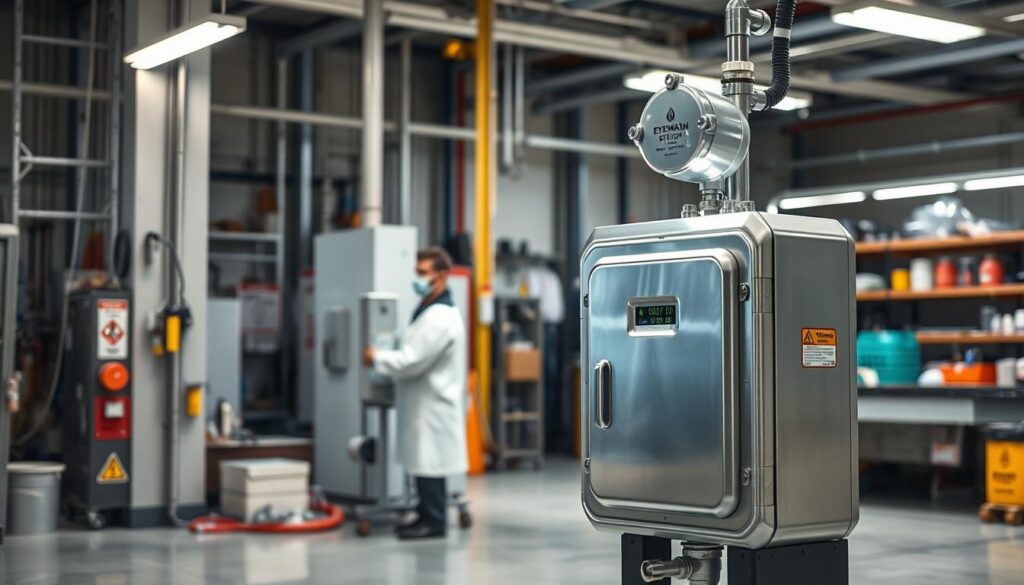
Keeping your workplace safety equipment in top shape is key. It ensures eyewash stations work right to protect workers’ eyes. Regular checks and attention are needed to avoid eye injuries.
The ANSI Z358.1 eyewash requirements set clear maintenance rules. Every workplace must follow these to keep workers safe:
- Weekly activation of all eyewash units
- Annual thorough inspections
- Regular cleaning and water quality checks
- Fix any problems right away
Here are important steps for your maintenance routine:
- Weekly Testing: Turn on each eyewash for 3 minutes to stop water from getting stale and bacteria from growing
- Visual Inspection: Look for corrosion, damage, or blockages
- Water Quality Assessment: Make sure the water is clean and free from contaminants
| Maintenance Task | Frequency | Purpose |
|---|---|---|
| Water Flow Test | Weekly | Check water pressure and coverage |
| Comprehensive Inspection | Annually | Make sure everything meets safety standards |
| Clean Equipment | Monthly | Keep it clean to prevent contamination and ensure it works |
Ignoring maintenance can be very dangerous. A bad eyewash station might not work when it’s needed most. This could lead to more injuries. By sticking to these steps, you’ll keep your workers safe and follow safety rules.
Benefits and Drawbacks of Permanent Plumbed Systems
When looking at workplace safety, plumbed vs portable eyewash stations have their own pros and cons. Permanent plumbed systems have their own set of benefits and challenges. It’s important to think them through carefully.
Setting up a plumbed eyewash station needs a lot of planning. Your workplace must look at several key points before going for these permanent setups.
Cost Considerations
Getting a permanent eyewash station costs a lot upfront. The costs include:
- Changing the plumbing setup
- Hiring experts for the installation
- Money for upkeep over time
- Maybe upgrading the water system
Installation Requirements
Permanent systems need a lot of prep and know-how. Your place must think about:
- Water pressure needs
- Following OSHA safety rules
- Being close to danger areas
- Keeping the water at the right temperature
Putting in workplace safety gear needs good planning and expert advice.
Even though plumbed systems give a steady water supply, they need careful upkeep. This stops bacteria from growing and keeps them working well. Your team must decide if the long-term gains are worth the setup hassle.
Portable Emergency Eyewash Station Alternatives
Portable emergency eyewash stations are great when you can’t use traditional ones. They are perfect for places with limited setup or temporary work areas. These stations give vital eye protection where it’s needed most.
There are many types of portable eyewash stations to fit different safety needs:
- Gravity-fed portable units
- Pressurized self-contained systems
- Cartridge-based emergency wash stations
- Compact mobile eyewash solutions
Adding portable eyewash stations to your safety plan can really help. They offer many benefits, including:
- Fast setup in remote areas
- Less upfront cost than fixed systems
- Easy to move between locations
- No need for complex plumbing
When picking a portable eyewash station, think about water capacity, upkeep, and safety standards. Some models can flush for 15 minutes, which is key in emergencies.
Workers in construction, mining, farming, and industry love these solutions. They keep everyone safe in changing work settings.
Installation Guidelines and Location Requirements
Installing an eyewash station needs careful planning for safety and to follow OSHA rules. The right spot for emergency eyewash stations is key to avoiding eye injuries and damage.
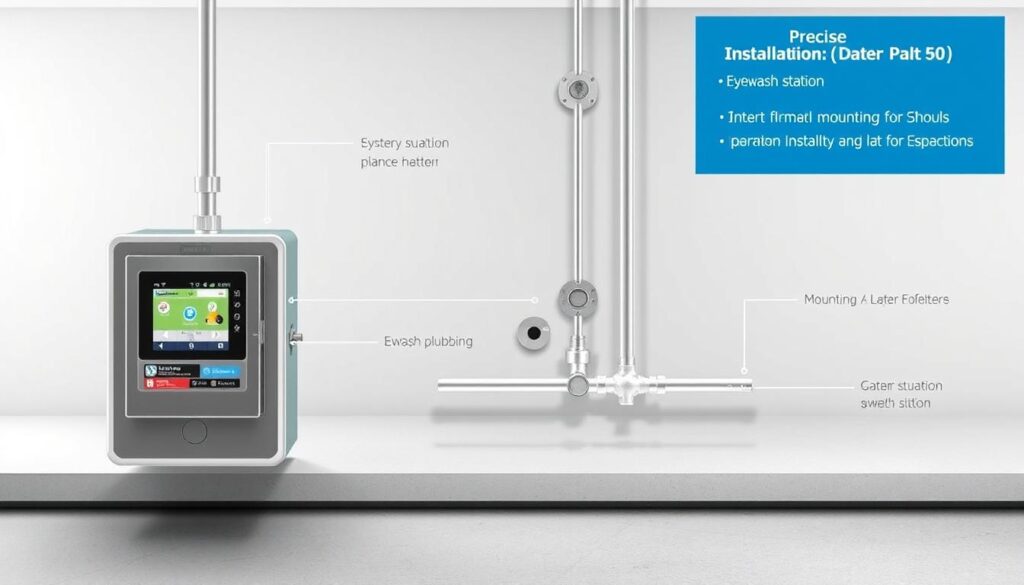
Choosing the right eyewash station type is important. ANSI Z358.1 gives clear rules for where and how to place them.
Strategic Positioning Principles
Your eyewash station must be placed for quick access. Important rules include:
- Within 10 seconds of possible danger zones
- About 55 feet from where chemicals might spill
- On the same level as the danger
- A clear path to the station
Accessibility Considerations
Being close isn’t enough. Think about these important points:
- Clear signs pointing to the eyewash station
- A well-lit area around the station
- An easy-to-use mechanism
- Protection from dirt and chemicals
Places like labs, factories, and chemical plants need extra care for eyewash station placement. Always check local safety rules and get advice from safety experts to meet all standards.
Workplace Safety Considerations for Eye Protection
Keeping your eyes safe at work is key to overall safety. Every year, over 20,000 eye injuries happen at work. It’s important for both employers and employees to know how to protect their eyes.
Using the right safety gear is vital to avoid eye injuries. Your workplace should have a strong plan for eye protection. This plan should do more than just follow OSHA rules.
- Conduct thorough hazard assessments of all work areas
- Provide appropriate protective eyewear for specific tasks
- Install emergency eye washing facilities in strategic locations
- Develop comprehensive employee training programs
Having emergency eye washing stations is not just a rule. It’s a must for keeping workers safe. OSHA rules make sure workers can quickly clean their eyes if they get chemicals or debris in them.
Important things to think about for eye safety include:
- Identifying eye hazards in different work places
- Picking the right personal protective equipment (PPE)
- Creating clear emergency plans
- Keeping safety gear in good shape
Remember, being proactive about eye safety can stop serious harm. It protects your most important asset – your workers.
Essential Inspection and Testing Procedures
Keeping workplace safety equipment in top shape is key. This means regular checks on eyewash stations. These tests make sure your emergency gear is ready to go when needed.
Every year, you should check a few important things. This ensures your equipment meets OSHA standards:
- Make sure water flows at 0.4 gallons per minute
- Check if the activation mechanism works
- Look at the water’s temperature and quality
- Inspect the station’s physical parts
- Test how fast the emergency valve opens
Regular tests are a must. You need to write down every inspection. This includes the date, who did it, and what they found. Keeping detailed records shows you’re serious about safety.
Here are some key steps for testing:
- Flush plumbed stations weekly
- Do a visual check every month
- Get a full check-up from a pro once a year
Regular upkeep stops equipment from failing in emergencies. Your hard work in testing eyewash stations could save someone’s life.
Conclusion
Understanding if a plumbed eyewash station is portable is key for workplace safety. The right eye protection can prevent serious injuries. Plumbed and portable eyewash solutions have their own benefits, depending on your workplace and risks.
When deciding if a plumbed eyewash station is portable, think about your workplace. Permanent setups ensure steady water flow and meet safety standards. Portable units are great for changing work environments. The goal is to pick a solution that protects employees quickly and effectively.
Safety experts need to assess risks, installation needs, and maintenance. Training, correct placement, and following OSHA and ANSI rules are vital. Eye safety is more than just equipment; it’s a complete approach to preventing eye injuries at work.
Act now. Check your eye safety measures, talk to safety experts, and choose the best eyewash station for your workplace. Protecting your team’s vision is not just a rule; it’s a critical responsibility to prevent serious injuries.