

Affiliate Disclosure
Plumber Guide Guys is a participant in the Amazon Services LLC Associates Program, an affiliate advertising program designed to provide a means for sites to earn advertising fees by advertising and linking to Amazon.
Is A Boiler HVAC Or Plumbing? Ever thought if a boiler is part of your HVAC or plumbing system? Many homeowners get confused by this complex home heating equipment. It seems to mix two important parts together.
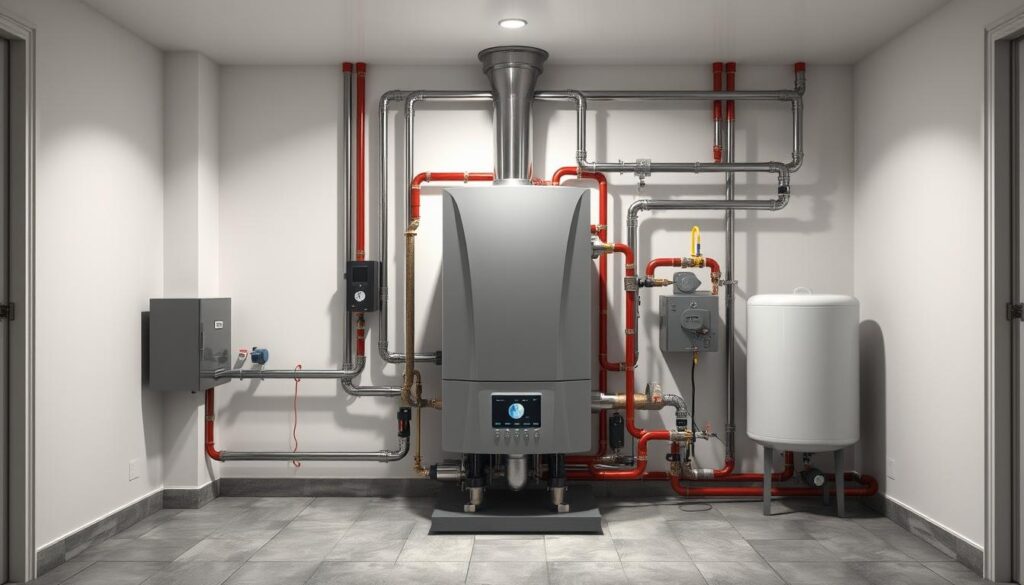
Boilers are where heating and water management meet. Knowing how they fit into your home’s system is key. It helps you make smart choices about upkeep, setup, and upgrades.
Unlike old heating ways, boilers use water to heat things up. This makes them a mix of HVAC and plumbing, making it hard to say which one they are.
Key Takeaways
- Boilers operate at the intersection of HVAC and plumbing systems
- Water serves as the primary heat transfer mechanism
- Understanding boiler classification helps with home maintenance
- Boilers can be more energy-efficient than forced-air systems
- Professional expertise is key for right boiler installation
Table of Contents
Understanding Boiler Systems Fundamentals
Exploring heating systems can be tricky, with many ways to keep your home warm. Boilers are a special way to heat your home, different from other methods. Knowing about heating systems helps you choose the best for your home’s comfort.
Looking at furnace vs boiler differences shows how boilers work differently. Unlike furnaces, which heat air, boilers use water. Boiler systems circulate heated water through pipes and radiators, warming your home efficiently.
Key Components That Make Boilers Unique
- Heat Exchanger: Converts fuel energy into heat for water
- Circulation Pump: Moves heated water through the system
- Burner: Generates heat by burning fuel
- Expansion Tank: Manages pressure changes
The Critical Role of Water in Heat Transfer
Water is a great heat transfer medium. It absorbs and spreads heat well, making boilers very efficient. As water moves through your home’s radiators or radiant floor systems, it evenly releases warmth. This creates a cozy environment without the cold drafts of forced-air systems.
Water transforms from a simple liquid to a powerful heating solution in boiler systems.
Your choice of heating system affects both comfort and energy use. Learning how boilers work helps you decide the best heating strategy for your home.
Is A Boiler HVAC Or Plumbing: Understanding The Classification
Deciding if a boiler is HVAC or plumbing isn’t easy. It’s all about how heating, ventilation, and plumbing systems work together. This mix makes figuring out boiler installation tricky.
A boiler has parts from both HVAC and plumbing. The heating part is HVAC, but the water flow and pipes are plumbing. This mix-up makes classifying boilers a big challenge.
- HVAC Components: Temperature control mechanisms
- Plumbing Components: Water circulation systems
- Integrated Function: Heat transfer through water
Experts know boilers need skills from many areas. Your home’s heating system needs both heating tech and plumbing. This mix is key for keeping your home warm.
| System Classification | Primary Characteristics |
|---|---|
| HVAC Aspects | Temperature regulation, heat generation |
| Plumbing Aspects | Water circulation, pipe connections |
Knowing how boilers fit into these categories helps everyone. It makes maintenance and installation easier for both homeowners and pros.
Types of Boiler Systems for Residential Use
Choosing the right home heating equipment is important. Knowing about different types of residential boiler systems helps. Each type has its own benefits and challenges for keeping your home warm.
There are three main fuel options for modern residential boiler systems. Each has its own characteristics:
Natural Gas Boilers
Natural gas boilers are common in many areas. They have several advantages:
- They cost less to run than other fuels
- They burn cleaner, which is better for the environment
- You don’t need to store fuel on site
Oil-Fired Boilers
Oil-fired boilers are popular where natural gas isn’t available. They need careful thought:
- You’ll need a fuel storage tank at your home
- They usually cost more to fuel
- The storage tank needs regular maintenance
Electric Boilers
Electric boilers are a good choice for homes with limited fuel options:
- You don’t need to store fuel on site
- They are cheaper to install upfront
- They work well in smaller homes
| Boiler Type | Fuel Source | Installation Cost | Efficiency Rating |
|---|---|---|---|
| Natural Gas | Utility Pipeline | Moderate | 90-95% |
| Oil-Fired | On-Site Tank | High | 80-85% |
| Electric | Electrical Grid | Low | 95-100% |
Your choice of boiler depends on your area, budget, and heating needs. Talking to a professional can help find the best option for you.
How Boiler Distribution Systems Work
Understanding how heat spreads in your home is key. Your home’s warmth comes from a network that moves heat through different areas. This network uses water to carry heat, making it different from HVAC systems.
- Radiators: Traditional cast-iron units that radiate heat into rooms
- Baseboard Registers: Low-profile heating units along wall bases
- Radiant Floor Heating: Invisible warmth distributed beneath flooring
The main idea is to circulate hot water through pipes. Your boiler heats the water, which then goes through pipes to warm your home.
| Distribution Method | Heat Efficiency | Installation Complexity |
|---|---|---|
| Radiators | Medium | Low |
| Baseboard Registers | High | Medium |
| Radiant Floor Heating | Very High | High |
Each method has its own benefits. You can pick the best one for your home’s layout and comfort needs.
The Integration of HVAC and Plumbing in Boiler Systems
Boiler systems are a mix of HVAC and plumbing, needing special knowledge. They use mechanical engineering and water flow to heat homes and businesses.
Knowing how boilers work means seeing how parts fit together. This makes boilers a key part of heating technology.
Mechanical Components
Boilers have key parts:
- Heat exchangers that transfer thermal energy
- Circulation pumps for water movement
- Combustion chambers for fuel burning
- Pressure relief valves for safety
Plumbing Connections
Plumbing is key for water flow and system work. It makes sure:
- Water gets in right
- Heat is transferred well
- Water moves safely
- Drainage works right
Control Systems
Today’s boilers use smart tech for better control. Smart thermostats and digital tools help manage heat and energy.
“The future of heating lies in seamless integration of mechanical, plumbing, and electronic systems.” – HVAC Engineering Quarterly
Common Boiler Problems and Maintenance Requirements
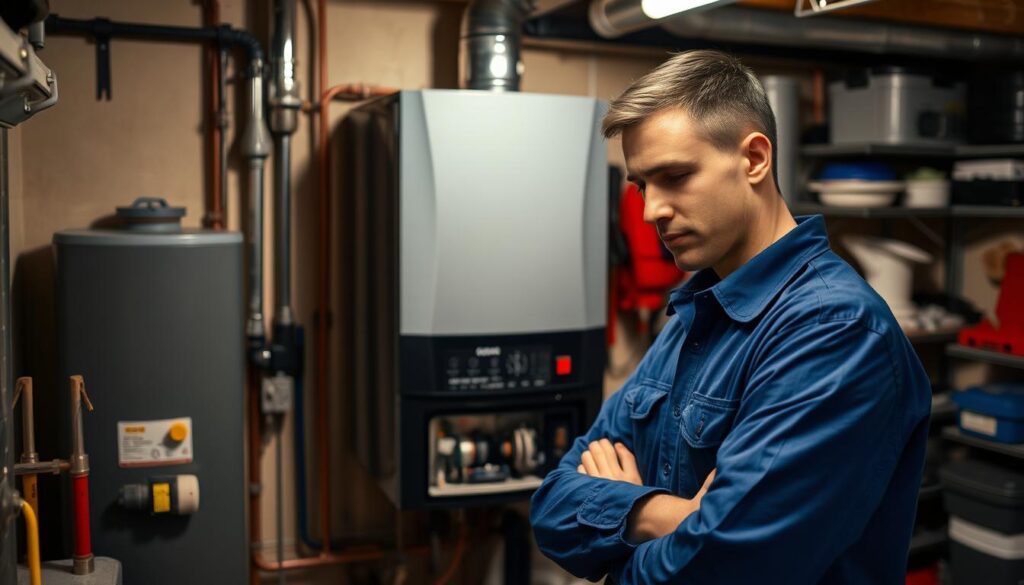
Keeping your boiler in top shape is key. You need to know about common problems that can hurt its performance and safety. A professional boiler maintenance service is vital in stopping and fixing these issues before they get worse.
Homeowners should watch out for several big problems that can hit boiler systems:
- Pressure changes
- Leaking pipes and connections
- Strange noises when it’s running
- Heating that’s not even
- Corrosion and sediment buildup
A skilled boiler repair pro can find and fix these issues with detailed checks. Regular upkeep stops sudden failures and makes your heating system last longer.
“Prevention is always more cost-effective than emergency repairs” – HVAC Industry Standard
Important maintenance steps include:
- Annual check by a pro
- Cleaning the heat exchangers
- Examining safety valves
- Watching the water quality
- Oil for moving parts
Regular maintenance keeps your boiler running well, safely, and reliably all year.
Professional Requirements for Boiler Installation and Repair
Boiler systems need expert care for safe and efficient use. A skilled boiler repair professional has more than basic maintenance skills.
Boiler work is a mix of HVAC and plumbing. Your system’s life and performance depend on the right contractor with deep training.
Essential Technician Qualifications
A top boiler repair pro needs certain credentials:
- State-issued HVAC or plumbing licensing
- Advanced technical certifications
- Minimum 3-5 years of specialized experience
- Proven expertise in diagnostic testing
Certification Standards
The best contractor shows their skills with recognized certifications:
| Certification Type | Required Skills | Validation Period |
|---|---|---|
| NATE Certification | Advanced HVAC Technical Knowledge | 2-3 Years |
| EPA Section 608 | Refrigerant Handling | Lifetime |
| State Plumbing License | Comprehensive System Understanding | Annual Renewal |
Safety and Compliance
Boiler techs must follow safety regulations closely. They need to know about electrical systems, pressure, and high-voltage risks. This requires special tools.
Choosing a certified pro means your boiler works safely and meets all rules.
Energy Efficiency and Modern Boiler Technologies
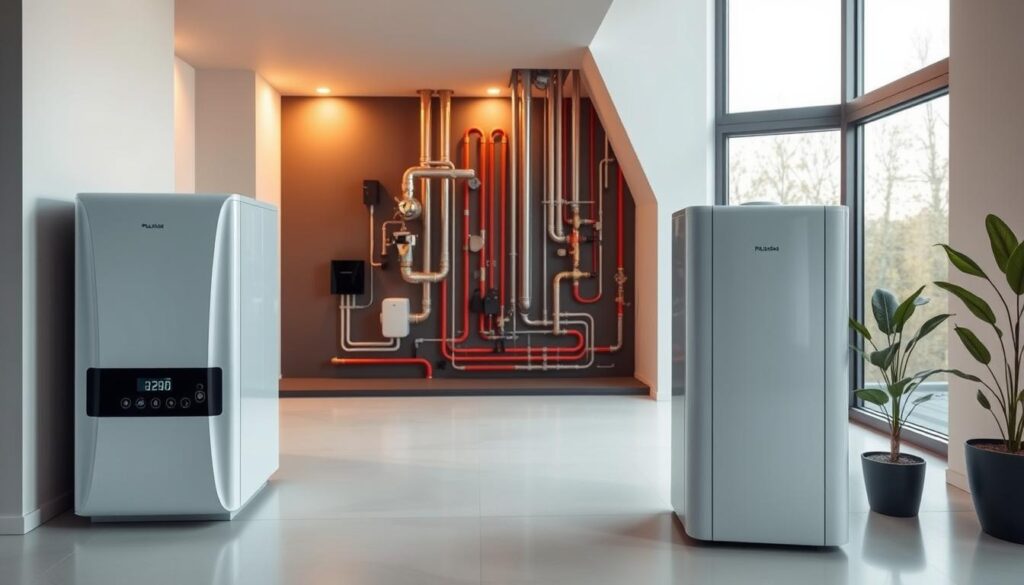
The world of home heating has changed a lot in recent years. Today’s residential boiler systems use the latest technology. This makes them much more energy efficient and effective.
New boiler technologies are changing how we heat our homes. Some key improvements include:
- Condensing boilers that capture waste heat
- Smart control systems with precise temperature management
- Integration with renewable energy sources
- Advanced heat exchange mechanisms
Condensing boilers are a big step forward. They can use up to 95% of fuel, unlike older models that use 70-80%.
“Energy efficiency is no longer a luxury, but a standard expectation in modern home heating equipment.” – Energy Efficiency Experts
Smart control technologies let you manage your heating system from your phone. Apps let you control temperature, schedule, and monitor energy use. This helps cut down on costs and environmental impact.
Another big change is the ability to use renewable energy. Many modern boilers work well with solar or heat pumps. This makes homes more eco-friendly.
Conclusion
Exploring heating system categorization shows that boilers are a special mix of HVAC and plumbing. Your home’s heating needs require more than just knowing what it is. It’s key to know if a boiler is HVAC or plumbing for good maintenance and performance.
Homeowners need to see that boiler systems need experts who know both mechanics and water stuff. These systems are complex, so don’t just focus on one area. Get pros who know both HVAC and plumbing to keep your heating system safe and working well.
Choosing the right boiler system means looking at its whole picture. From saving energy to how it spreads heat, these systems need skills from different areas. When you’re upgrading or fixing your system, pick experts who get how heating and water work together.
Getting how boilers work in homes helps you make smart choices. Whether it’s gas, oil, or electric, knowing the difference helps you enjoy better comfort and reliability at home.