
Affiliate Disclosure
Plumber Guide Guys is a participant in the Amazon Services LLC Associates Program, an affiliate advertising program designed to provide a means for sites to earn advertising fees by advertising and linking to Amazon.
How to Vent Basement Bathroom Plumbing Properly? Do you find it hard to figure out how to vent your basement bathroom plumbing? Installing basement bathroom ventilation can be tricky, even for those who love DIY projects. It’s key to have a good venting system to keep your plumbing working right and safe.
Every basement bathroom needs a special venting plan to avoid drainage and sewer gas problems. When you learn how to vent your basement bathroom plumbing, you face unique challenges. These are different from the ones you see in bathrooms above ground.
Having the right plumbing vents for your basement bathroom is not just a good idea—it’s essential. Your drainage system needs balanced air pressure and strong trap seal protection to work well. Knowing the best venting methods helps you set up a plumbing system that follows local building codes and avoids future problems.
Key Takeaways
- Basement bathrooms require specialized venting techniques
- Proper venting prevents sewer gas infiltration
- Multiple venting methods exist for below-grade spaces
- Local building codes must be carefully followed
- Effective venting protects your entire plumbing infrastructure
Table of Contents
Understanding the Primary Purpose of Plumbing Vents
Proper plumbing vents for basement bathrooms are key to a safe and working drainage system. Many homeowners don’t know the science behind these important parts. They think they just help with water flow.
The main job of plumbing vents is more than just drainage. They keep your home safe from harmful sewer gases and keep the water seal in your plumbing fixtures.
Protecting Trap Seals from Pressure Fluctuations
Every plumbing fixture has a P-trap that stops sewer gases from getting in. Below-grade bathroom venting solutions keep this seal by controlling air pressure in your drainage system.
- Prevent water seal disruption
- Block harmful sewer gases
- Maintain proper drainage performance
Siphonage and Backpressure Dynamics
Your basement bathroom’s plumbing faces two main pressure challenges:
| Pressure Type | Effect | Potential Consequence |
|---|---|---|
| Siphonage (Negative Pressure) | Pulls water out of traps | Exposed sewer gases |
| Backpressure (Positive Pressure) | Pushes water back toward fixtures | Potential drainage blockages |
“A well-designed venting system is your first line of defense against plumbing system failures.” – ASPE Plumbing Engineering Guidelines
Knowing about these pressure challenges shows why getting professional plumbing vents is a must. It’s not just a good idea—it’s necessary for a safe, working home.
Basement Bathroom Plumbing Code Requirements
Understanding basement bathroom plumbing codes can be tough. The U.S. doesn’t have one national plumbing code. Instead, two main codes rule below-grade bathroom venting: the International Plumbing Code (IPC) and the Uniform Plumbing Code (UPC).
It’s key to know these codes for your basement bathroom project. Each area has its own rules that might affect your setup.
- IPC allows Air Admittance Valves (AAVs) in most scenarios
- UPC has more restrictive AAV regulations
- Local building departments can modify national code requirements
Your basement bathroom plumbing must follow certain venting rules. Important things to consider include:
- Minimum vent pipe distances
- Maximum trap arm lengths
- Vent pipe sizing requirements
- Height specs for below-grade setups
Pro tip: Always check with your local Authority Having Jurisdiction (AHJ) before starting your basement bathroom project. They can give you clear advice on acceptable venting methods and any code changes.
Section 901.2.1 of the IPC says traps and trapped fixtures must be vented according to Chapter 9’s methods.
By grasping these basement bathroom plumbing code rules, you’ll avoid inspection problems. You’ll also make sure your installation is safe and follows the law.
How to Vent Basement Bathroom Plumbing
Venting your basement bathroom plumbing needs careful planning and precise execution. The right system ensures proper drainage and prevents plumbing issues. Knowing about basement bathroom ventilation installation can save you time and money.
Successful strategies for venting basement bathroom plumbing involve several approaches. You must consider important factors when designing your system:
- Fixture-specific venting requirements
- Building code compliance
- Available vertical space
- Potential routing obstacles
Conventional Venting Methods for Below-Grade Bathrooms
Conventional venting is the most reliable method for basement bathrooms. It involves creating individual vent pipes for each fixture, which connect to a primary vent stack. Proper installation is key to prevent pressure issues and ensure good drainage.
Individual Vent Installation for Basement Fixtures
When installing individual vents, follow these guidelines:
- Ensure each fixture has a dedicated vent pipe
- Maintain appropriate pipe diameter based on fixture type
- Create proper connections to the main vent stack
- Follow local building code specifications
Your basement bathroom ventilation installation should aim for a seamless, efficient system. It should manage air pressure and ensure smooth drainage. Getting professional advice can help you through the complexities of basement plumbing venting.
Wet Venting Basement Bathroom Fixtures
Wet venting is a smart way to set up plumbing in basements. It uses one pipe for both draining water and venting air. This makes installing basement bathroom ventilation easier.
- Reduces total number of required pipes
- Simplifies basement bathroom plumbing configurations
- Meets both Uniform Plumbing Code (UPC) and International Plumbing Code (IPC) standards
Wet venting lets a drain pipe also act as a vent for another fixture. It’s great for basements where space is tight.
| Wet Venting Type | Description | Best Used For |
|---|---|---|
| Horizontal Wet Vent | Pipe runs horizontally | Compact basement layouts |
| Vertical Wet Vent | Pipe runs vertically | Multi-level basement installations |
When using wet venting, pipe size is key. The pipe must be big enough for both drainage and ventilation. Professional plumbers suggest checking local building codes for compliance.
Consider how close fixtures are, pipe size, and total drainage when designing. Make sure your wet venting plan follows local plumbing rules for basement bathrooms.
Air Admittance Valve for Basement Bathroom Applications
Plumbing in basements is tricky, often making traditional vents hard to use. An air admittance valve (AAV) is a smart fix for venting bathrooms below ground. It makes plumbing easier to set up.
An air admittance valve lets air into your drainage system when it’s under pressure. It’s different from regular vent pipes. AAVs are flexible and work well in tight spaces.
Jurisdictional Considerations for AAVs
Not every place lets you use air admittance valves in basements. Your local building codes decide if they’re okay:
- International Plumbing Code (IPC) areas usually okay AAVs
- Uniform Plumbing Code (UPC) often says no to AAVs unless approved
- Local building offices might have their own rules
Proper Installation Requirements
When putting in an air admittance valve in a basement bathroom, follow these key steps:
- Put AAVs above the fixture trap’s weir level
- Make sure they’re easy to get to for upkeep
- Check that they’re mounted right
- Keep the area around the valve well-ventilated
| AAV Characteristic | Specification |
|---|---|
| Mounting Position | Above fixture trap |
| Accessibility | Must be reachable for maintenance |
| Ventilation Requirement | Open, unobstructed space |
AAVs are great for venting bathrooms below ground, but they’re not a full replacement for traditional vents. Most codes say you need at least one regular vent pipe for good drainage.
Basement Toilet Vent Pipe Installation Techniques
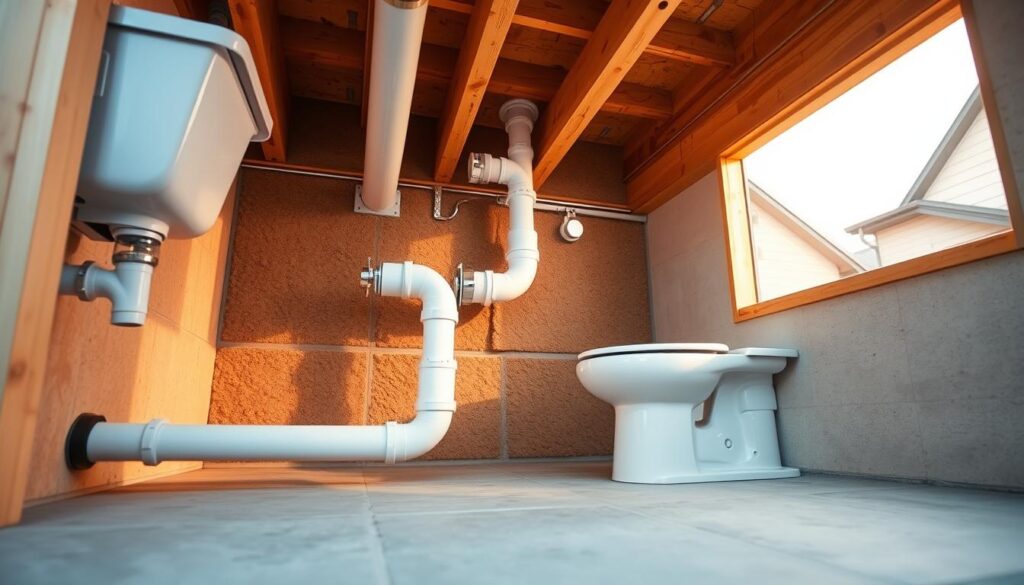
Installing a basement toilet vent pipe needs careful planning and precise steps. Basement plumbing comes with unique challenges. These demand special techniques for good drainage and venting.
Here are the key steps for installing a basement toilet vent pipe:
- Select the correct pipe diameter (typically 2-3 inches)
- Ensure proper vertical connection to the main vent stack
- Maintain appropriate slope for drainage
- Follow local building code requirements
Basement shower drain venting has its own needs. Proper venting techniques are key to avoid drainage problems and keep the system running well.
Key considerations for basement plumbing vents include:
- Connecting individual fixture vents
- Creating branch vent configurations
- Ensuring adequate air circulation
- Preventing possible sewer gas buildup
When installing basement toilet vent pipes, focus on the connection near the toilet flange. The vent must be the right size and route well with your home’s ventilation system.
Professional tip: Always check local building codes and think about hiring a licensed plumber for complex basement plumbing jobs.
Understanding these installation techniques helps ensure a reliable and efficient basement plumbing ventilation system. It meets both functional and safety needs.
Common Venting and Branch Vent Configurations
When setting up basement bathroom ventilation, it’s key to know about proper plumbing vents. The right setup makes your plumbing system simpler and ensures it works well and meets codes.
Good venting solutions manage water flow and stop plumbing problems. They let many fixtures use the same vent pipes. This saves money and makes installation easier.
Back-to-Back Fixture Venting Solutions
Back-to-back fixture venting is smart for basement bathrooms. It works well when fixtures are on opposite sides of a wall. The main benefits are:
- Less vent holes needed
- Easier to install
- Costs less overall
Connecting Multiple Vents to a Stack Vent
Branch vent setups are great for linking individual vents to a main stack vent. This is key for basement bathroom ventilation.
| Vent Configuration | Maximum Fixture Units | Recommended Pipe Size |
|---|---|---|
| Single Branch Vent | 4-6 fixtures | 2 inches |
| Multiple Branch Connections | 8-12 fixtures | 3 inches |
When planning your basement bathroom’s plumbing, think about these setups. Each connection must be measured right and follow local building codes. This ensures good water flow and air.
Basement Bathroom Rough-in Venting Best Practices
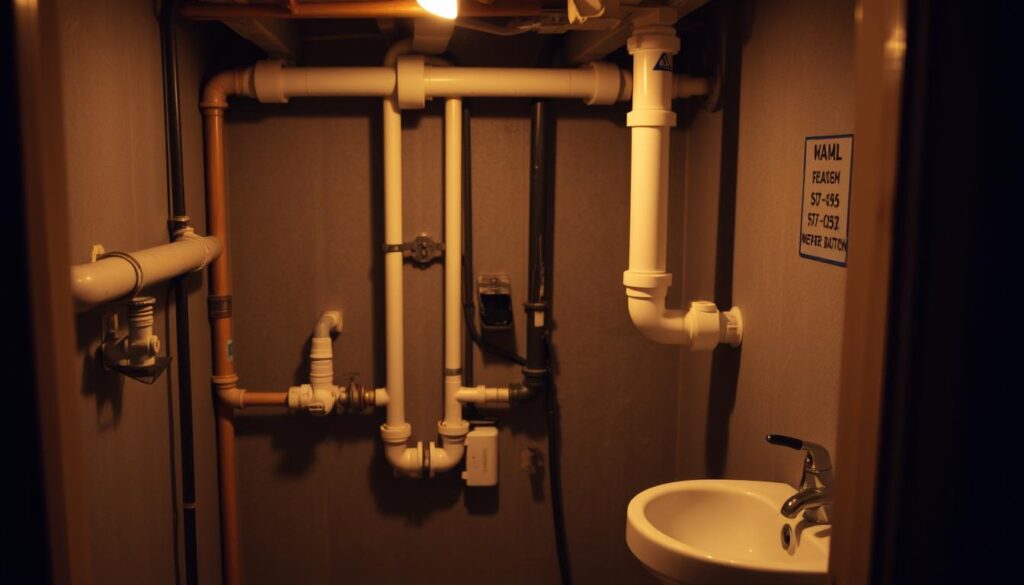
Planning your basement bathroom rough-in venting needs careful preparation and precision. It’s key for a working and code-compliant plumbing system. This prevents drainage problems and health risks.
To vent your basement bathroom plumbing, focus on several important steps:
- Create detailed pipe routing drawings
- Calculate the right pipe sizes for each fixture
- Find the best vent pathway
- Reduce material waste
Concrete basement floors require special techniques. You must mark and locate drain and vent pipe spots carefully. Precision is vital when drilling or breaking concrete for clean, accurate installations.
Proper pipe support is critical during basement bathroom rough-in venting. Here are the key support needs:
- Use the right hangers for horizontal pipes
- Secure vertical pipes to stop movement
- Keep supports evenly spaced
- Stop pipe vibration noise
Before the building inspector comes, test your vent system thoroughly. Use air or water tests to find leaks. This ensures your plumbing meets local codes.
Pro tip: Always document your rough-in process with detailed photographs for future reference and troubleshooting.
Conclusion
Knowing how to vent basement bathroom plumbing is key for a working and safe bathroom below ground. Proper vents protect your home’s drainage from issues like sewer gas and bad water flow. You need to pick the right venting method that fits local codes and tackles underground space challenges.
The success of basement bathroom venting comes from balancing air pressure in your drainage system. You can use conventional, wet venting, or air admittance valves. Each has its own benefits. Your aim is to make sure every fixture has the right vent to avoid problems and keep water flowing well.
Before you start, check local plumbing rules and think about getting a pro’s help. Basement bathroom plumbing is complex and needs careful planning and installation. By understanding venting and choosing the best methods, you’ll make a bathroom that’s valuable and useful for your home.
Good venting is not just a rule—it’s about keeping your home’s plumbing safe. Spend time researching, planning well, and using the best venting for your basement bathroom.