

Affiliate Disclosure
Plumber Guide Guys is a participant in the Amazon Services LLC Associates Program, an affiliate advertising program designed to provide a means for sites to earn advertising fees by advertising and linking to Amazon.
How to Start My Own Plumbing Business? Starting a plumbing business is a dream of independence and a passion for fixing homes and businesses. As a skilled tradesperson, you’re ready to turn your skills into a successful business. This business will not only make you money but also help your community.

The plumbing industry is a great chance for entrepreneurs to start their own business. With a market value of $126.4 billion and a constant need for skilled workers, now is a good time to become a plumbing business owner. Your skills and smart business planning can lead to great financial success.
To start a plumbing business, you need more than just technical skills. You’ll also need determination, a good plan, and knowledge of the industry. This guide will help you through every important step, from getting certifications to marketing your services well.
Key Takeaways
- Plumbing industry offers significant growth opportunities
- Technical skills are key for success
- Good planning is vital for a sustainable business
- Getting the right licenses is important for trust
- There’s always a high demand for plumbing services
- Financial freedom is within reach
- Keeping learning helps your business grow
Table of Contents
Understanding the Plumbing Industry Landscape and Market Demand
The plumbing industry is full of exciting opportunities for entrepreneurs. It’s a growing market, thanks to new construction, upgrades, and more renovation projects. This growth means there’s a big demand for plumbing services.
To succeed, you need to know the plumbing industry well. It offers many chances for specialization and growth. Professionals who spot and use these opportunities can thrive.
Current Market Opportunities for New Plumbing Businesses
There are many trends in plumbing that offer great chances for new businesses:
- Residential service repairs
- Green plumbing solutions
- Water efficiency installations
- Smart home plumbing technologies
- Sustainable water management systems
Analyzing Your Local Competition and Finding Your Niche
To start a plumbing business, you must do local market research. Look at other plumbing companies in your area. Check their:
- Service offerings
- Pricing strategies
- Customer reviews
- Potential service gaps
Creating a targeted approach is key to success. Think about specializing in certain services. This could be trenchless sewer repair, water heater installations, or advanced leak detection. This way, you can stand out in a competitive market.
Getting Licensed and Certified as a Professional Plumber
To become a licensed plumber, you must follow several important steps. These steps help you show you’re a skilled and legal plumber. Knowing what’s needed to get a plumber’s license is key to starting a plumbing career in the U.S.
First, you need to get a good education. Here are the main steps:
- Get a high school diploma or GED
- Go to a vocational or trade school for plumbing
- Do a thorough apprenticeship
- Pass the plumbing certification exams set by your state
The apprenticeship is a big part of getting certified. You’ll work with a licensed plumber, learning by doing. This can take two to five years. It’s a hands-on way to learn and get ready for your journeyman plumber license.
| Licensing Level | Requirements | Typical Duration |
|---|---|---|
| Apprentice | Educational program + supervised training | 2-5 years |
| Journeyman Plumber | Complete apprenticeship + pass state exam | 4-5 years total |
| Master Plumber | Journeyman experience + advanced exam | 6-8 years total |
Every state has its own rules for plumbing licenses. It’s important to check what your state requires. Some places need you to renew your license and take extra classes to keep your license. Getting a master plumber license lets you run your own plumbing business and manage other plumbers.
Pro tip: Always show your licenses and certifications clearly. This helps build trust with customers and shows you’re an expert.
How to Start My Own Plumbing Business: Essential Steps and Requirements
Starting a plumbing business needs careful planning and smart decisions. You start by building a strong legal base. This protects your personal stuff and helps your business grow.
Choosing the right business structure is the first big step. It affects your taxes, liability, and how you run your business.
Selecting the Right Business Structure for Plumbers
Plumbers have a few business structure options:
- Sole Proprietorship: Simple with little paperwork
- Limited Liability Company (LLC): Protects your personal stuff
- Partnership: Good for businesses with more than one owner
- Corporation: More complex but great for big businesses
Most plumbers choose an LLC for its balance. It protects your personal assets and keeps taxes simple.
Registering Your Plumbing Business
After picking your structure, you’ll need to do some paperwork:
- Pick a unique business name
- Do a trademark search
- Register with state authorities
- Get an Employer Identification Number (EIN)
- Get the right local permits and licenses
Registering right makes sure you follow the law. It also makes your business look good to customers and banks. Make sure to check what your local area needs for plumbing businesses.
Securing Financing and Managing Plumbing Business Startup Costs
Starting a plumbing business needs careful financial planning. Your startup costs can be from $10,000 to $50,000. This depends on your needs and the local market. It’s key to understand the financial side well to start your plumbing business.
Financing your plumbing startup means looking at different funding sources. Here are the main ways to get your business capital:
- Small business loans for plumbers from traditional banks
- Equipment financing through specialized lenders
- SBA loan programs
- Online business lenders with faster approval processes
- Local credit union business financing
What funding options you have depends on a few important things. Lenders look at:
- Personal credit score
- Business plan quality
- Previous work experience
- Collateral availability
Key startup costs to budget for include:
- Professional tools and equipment
- Work vehicle or van
- Initial inventory of pipes and fixtures
- Licensing and certification fees
- Insurance and bonding
Pro tip: Make a detailed business plan that shows you know your finances. Banks and investors want to see a clear plan for your plumbing business’s success. It’s a good idea to talk to a financial advisor who knows about small business loans. This can help you get the most funding.
Obtaining Plumbing Business Insurance and Bonding Requirements
Running a plumbing business comes with big financial risks. These risks can hurt your business a lot. You need good plumbing business insurance to protect your money and your future.
Insurance is more than just a safety net. It’s a key part of your business plan. It keeps you safe from unexpected problems that could cost a lot of money.
Essential Insurance Types for Plumbing Professionals
Every plumbing business needs certain insurance types to handle risks:
- General liability insurance plumbers protect against third-party property damage and bodily injury claims
- Workers compensation insurance covers employee injuries during work
- Commercial auto insurance plumbers safeguards company vehicles and equipment
- Professional liability insurance defends against possible negligence claims
Understanding Surety Bonds and Liability Protection
Surety bonds add extra protection for your clients. These bonds ensure you’ll finish contracted work as agreed. Many places need plumbers to have active surety bonds to show they’re reliable.
“Insurance is not an expense, but an investment in your business’s financial security.” – Professional Contractor Insight
When picking insurance, talk to agents who get plumbing risks. Look at different quotes, check policy details, and make sure you have the right coverage for your business.
Investing in Essential Plumbing Tools and Equipment
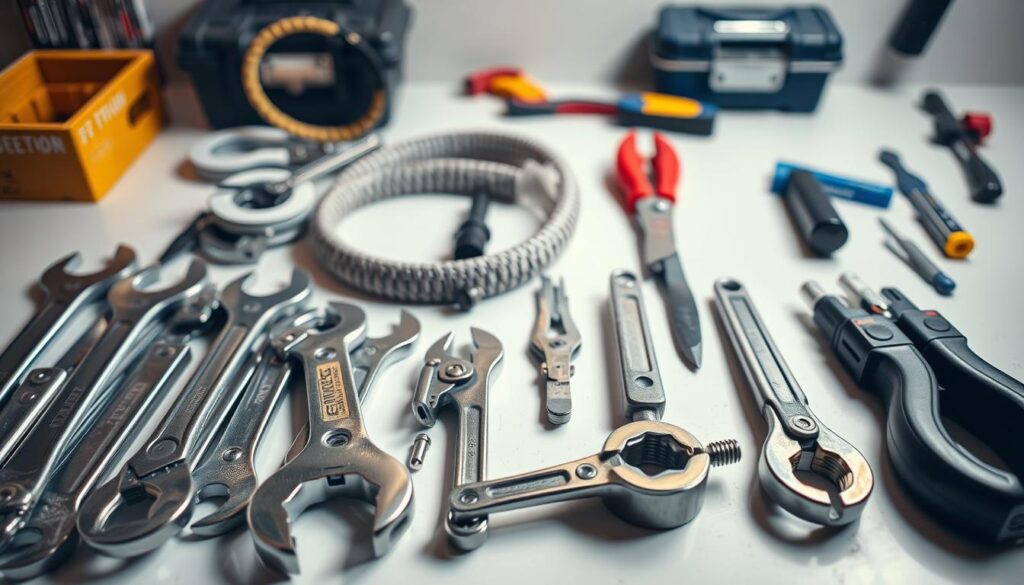
Starting a plumbing business means investing in quality tools and equipment. Your success depends on having the right tools. These tools help you work efficiently and safely.
When you’re building your plumbing tool list, focus on essential equipment. Beginners should look for versatile and durable tools. These tools should serve multiple purposes.
Must-Have Hand Tools for Plumbing Professionals
- Adjustable pipe wrenches
- Basin wrenches
- Channel lock pliers
- Hacksaw
- Tape measure
- Level
Critical Power Tools for Modern Plumbing Work
- Cordless drill/driver
- Reciprocating saw
- Impact driver
- Angle grinder
Quality tools might seem pricey at first, but cheap tools can cost you more in the long run. Bad tools can slow you down, cause damage, and upset customers.
Essential Safety Equipment
- Work gloves
- Safety goggles
- Protective knee pads
- Steel-toe work boots
Look into financing options like leasing or supplier programs to help with costs. Remember, your tools are business assets. They can be depreciated and even resold.
Creating a Complete Business Plan for Your Plumbing Company
Creating a solid business plan is key to making your plumbing skills a successful business. A good plumbing business plan template is like a map. It guides you through starting and growing your plumbing business.
Your business plan is more than for investors. It’s a tool to think deeply about your plumbing business.
Setting Financial Projections for Your Plumbing Business
Financial projections are the heart of your business plan. When making financial projections, remember these important points:
- Startup costs and initial investment
- Projected monthly and annual revenue
- Expected expenses and overhead
- Cash flow forecasts for the first three to five years
Defining Your Pricing Strategy for Plumbing Services
Choosing the right pricing is critical for your plumbing business. Consider these strategies:
| Pricing Method | Pros | Cons |
|---|---|---|
| Flat-Rate Pricing | Predictable for customers | Less flexibility for complex jobs |
| Hourly Pricing | Accurate billing for time spent | Can make customers nervous about costs |
| Hybrid Pricing | Flexible and transparent | Requires more detailed tracking |
Study local competitors to keep your pricing competitive. Remember, the cheapest option isn’t always the best approach. Aim to provide value that justifies your prices.
Marketing Strategies for Attracting Your First Plumbing Customers
Starting a new plumbing company needs smart planning and creative ideas. You aim to draw in customers with methods that are both effective and budget-friendly.
Begin by tapping into your personal network for word-of-mouth marketing. Family, friends, and local acquaintances can be your first customers. Their support and referrals can help establish your business’s good name.
- Create a strong brand identity with a professional logo
- Develop clear messaging about your unique service offerings
- Design visually appealing business cards and marketing materials
Digital marketing is key in drawing in customers. Use these strategies to grow your customer base:
- Build a user-friendly website optimized for local search results
- Establish social media profiles to showcase your work
- Use platforms like Facebook and Instagram to share:
- Before and after project images
- Customer testimonials
- Educational plumbing tips
Focus on getting customer reviews on Google and Yelp. Good reviews boost your credibility and help people trust you. Ask happy customers to share their stories online.
“Your reputation is your most valuable marketing tool in the plumbing business.”
Look into affordable ads like local bulletin boards, online ads, and networking with businesses like real estate agents. Every chance to meet people is a chance to show off your skills and dependability.
Building Your Online Presence and Managing Customer Reviews
In today’s world, your online presence is key to your plumbing business’s success. A strong digital strategy helps you find customers and build trust. Your online presence shows your skills and draws in new clients.

Your plumbing business website is like a digital store. It should clearly show what you offer, your skills, and what makes you different. When making your website, remember these important points:
- Make sure it works well on phones
- Describe your services clearly
- Make it easy to find how to contact you
- Use great photos of your work
- Include what others say about you
Maximizing Your Google Business Profile
Your Google Business Profile is vital for people to find you locally. Optimize your online presence by filling out your profile fully. Include the right contact info, where you work, and when you’re open.
| Online Platform | Marketing Opportunity |
|---|---|
| Google Business Profile | Local search visibility |
| Community engagement | |
| Visual project showcase |
Generating Online Reviews
Reviews online can greatly affect how people see your plumbing business. Ask happy customers to share their stories on Google, Yelp, and Facebook. Always respond to reviews, showing you care about your customers.
To get reviews, follow these steps:
- Ask for feedback right after you finish the job
- Make it easy to leave a review
- Use many places for people to leave feedback
- Thank those who take the time to review
By focusing on your online presence, you’ll build a strong marketing tool. This tool will help you attract and keep customers in your area.
Hiring and Managing Employees for Your Growing Plumbing Business
Expanding your plumbing business means building a strong team. This team will help you meet growing customer demands. When hiring plumbers, you’ll need a strategic approach to recruitment and management.
Start by identifying the right time to hire. Look for these key indicators:
- Consistently turning down work due to capacity constraints
- Working excessive hours to meet customer needs
- Sufficient cash flow to support additional payroll
Managing plumbing employees requires careful consideration. Your team might include:
- Licensed journeyman plumbers who can work independently
- Plumbing apprentices completing their training
- Administrative staff for scheduling and customer service
- Specialized technicians for specific services
Building a plumbing team involves more than just hiring. You’ll need to focus on onboarding, training, and employee development. Consider using tools like Weave Teams to streamline employee communication and management.
“A great team is the foundation of a successful plumbing business” – Industry Expert
When working with plumbing apprentices, create a structured learning environment. Balance training with productivity. Develop clear paths for skill advancement and provide ongoing support to help them grow within your company.
Compensation and benefits are key in attracting and retaining top talent. Research local market rates and create competitive packages. These should reflect the skills and experience of your team members.
Setting Up Accounting Systems and Managing Business Finances
Financial management is key to a plumbing business’s success. It’s not just about keeping records. It’s about understanding your business’s financial health and making smart choices.
When starting your plumbing business, a strong financial system is vital. Your bookkeeping should cover important areas for financial stability and growth.
Selecting the Right Accounting Software
Choosing the right accounting software is important. Look for software that fits service-based businesses well. It should have features like:
- Invoicing capabilities
- Expense tracking
- Mobile accessibility
- Integration with payment systems
Understanding Tax Obligations and Deductions
Knowing your tax obligations is key to managing costs. Learn about tax deductions for plumbers, such as:
- Vehicle expenses for work-related travel
- Tool and equipment purchases
- Business insurance premiums
- Marketing and advertising costs
Pro tip: Consider working with a professional accountant who understands plumbing businesses. They can help you maximize tax deductions and stay compliant.
Effective financial management isn’t just about tracking money—it’s about creating a strategic foundation for your plumbing business’s future growth.
Conclusion
Starting your own plumbing business is a big step in your career. The plumbing field is full of chances for those who want to be their own boss. To succeed, you need to know the market, get the right licenses, and plan your business well.
The market is great for new plumbing businesses right now. There’s a big need for skilled plumbers, making it a good time to start. By providing top-notch service, being open, and building strong customer ties, you can stand out.
Using tips for success in plumbing, like good management software and staying up-to-date with skills, can help you grow. Focus on excellent service, fair prices, and clear communication. This will bring in more customers and referrals.
Your journey as an entrepreneur starts with careful planning. You’ll face obstacles, but your skills, knowledge, and love for helping others will help you succeed. Keep your goals in mind, stay flexible, and believe in your ability to build a successful plumbing business.