

Affiliate Disclosure
Plumber Guide Guys is a participant in the Amazon Services LLC Associates Program, an affiliate advertising program designed to provide a means for sites to earn advertising fees by advertising and linking to Amazon.
How to Soften Plumber’s Putty? Ever wondered how plumbers make tough jobs look easy? The secret is in softening plumber’s putty. You can turn hard plumbing material into something flexible at home.
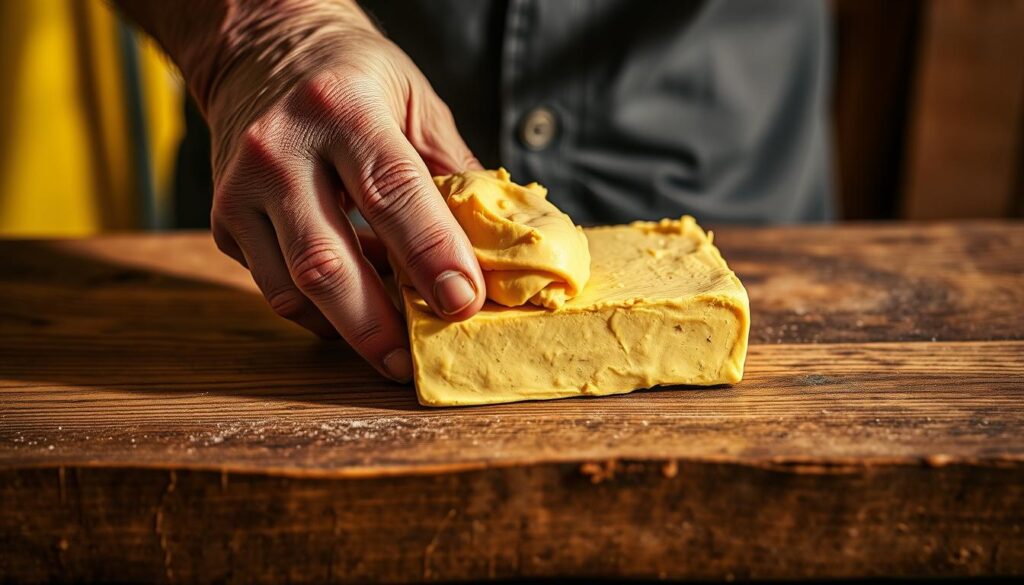
Plumbing repair doesn’t have to scare you. Learning to soften plumber’s putty can save you time and money. It’s a key skill for DIY projects, like fixing leaks or replacing fixtures.
This guide will show you how to revive hard putty. You’ll learn to make your plumbing repairs smooth and professional. Get ready to master this versatile sealing material.
Key Takeaways
- Understand the importance of properly softened plumber’s putty
- Learn multiple techniques for softening putty at home
- Save money by avoiding unnecessary putty replacement
- Improve your DIY plumbing repair skills
- Discover safe and effective putty handling methods
Table of Contents
Understanding Plumber’s Putty and Its Properties
Plumber’s putty is key in plumbing repairs and installations. It makes watertight seals around fixtures. This stops leaks and keeps your plumbing working right.
Professionals use different types of plumber’s putty for various jobs. Knowing these types helps you pick the best one for your needs.
Types of Plumber’s Putty Available
- Standard Clay-Based Putty: Traditional for most plumbing tasks
- Synthetic Polymer Putty: Modern, more durable option
- Marine-Grade Putty: For areas with lots of water
Chemical Composition and Characteristics
The mix of materials in plumber’s putty makes it effective. It usually has clay, linseed oil, and mineral spirits. This mix makes it soft and able to seal well.
| Putty Type | Flexibility | Water Resistance | Best Used For |
|---|---|---|---|
| Clay-Based | Moderate | Good | Sink Drains |
| Synthetic Polymer | High | Excellent | Complex Fixtures |
| Marine-Grade | Very High | Superior | Wet Environments |
When to Use Plumber’s Putty
Use plumber’s putty for sink drains, faucets, and shower heads. It seals well, preventing leaks and lasting long.
Essential Tools and Materials Needed
To soften plumber’s putty, you need specific tools and materials. The right equipment makes the job easier and faster. Before starting, make sure you have these essential items ready.
- Heat Source: A hairdryer or heat gun for controlled warming
- Warm water container
- Clean work surface or cutting board
- Protective gloves
- Soft cloth or towel
- Plastic scraper or putty knife
Professional plumbers suggest using special materials for softening putty. Your toolkit should have flexible tools for precise handling. This helps avoid damaging the putty.
Choose tools based on the type of plumber’s putty you’re using. Different types need different approaches. A versatile plastic scraper is best for most putty, as it gently manipulates without stressing the material.
Pro Tip: Always keep your tools clean and free from previous putty residue to prevent contamination and ensure optimal performance.
Preparing your workspace is key. Set up a clean area with good lighting. Make sure all your tools are within reach before you start softening the putty.
How to Soften Plumber’s Putty
Learning to soften plumber’s putty is key for both pros and DIY fans. It’s all about getting the putty right for a good seal. Knowing how to soften putty makes your work easier.
There are many ways to make hard putty soft again. Each method has its own benefits. Here are some ways to soften and prepare plumber’s putty for use.
Manual Kneading Method
The simplest way to soften plumber’s putty is kneading. Just follow these steps:
- Remove putty from its container
- Press and stretch the material between your hands
- Apply consistent pressure to break down hardened sections
- Continue kneading until the putty becomes pliable
Warm Water Technique
Water can also soften putty. Here’s how to do it:
- Fill a bowl with warm water
- Place the putty container in the water for 5-10 minutes
- Remove and knead the putty gently
- Repeat if additional softening is needed
Heat Application Process
Using heat can also soften putty. But be careful:
- Use a hairdryer on low heat setting
- Keep the dryer 6-8 inches from the putty
- Move continuously to prevent overheating
- Knead immediately after heating
| Method | Difficulty | Time Required |
|---|---|---|
| Manual Kneading | Easy | 5-10 minutes |
| Warm Water | Medium | 10-15 minutes |
| Heat Application | Advanced | 3-7 minutes |
Pro tip: Always test the putty’s consistency before application to ensure optimal performance.
Common Mistakes to Avoid When Softening Putty
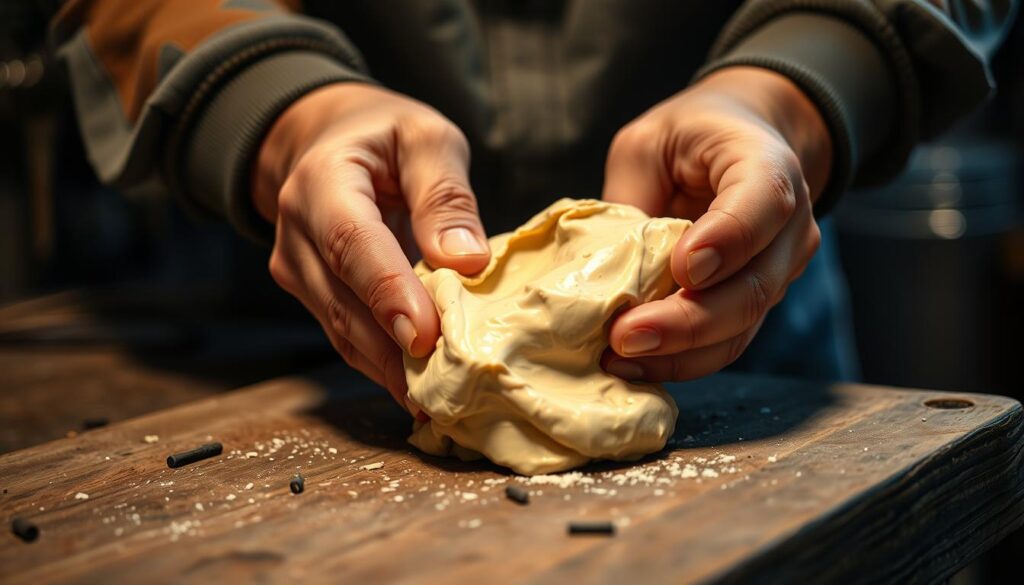
Working with plumber’s putty can be challenging. Many DIY fans make mistakes that ruin their projects. Knowing these putty softening errors can save you a lot of trouble.
Improper putty preparation is a big issue. Experts warn against these common mistakes:
- Overheating the putty, which can break down its molecular structure
- Using too much water during softening
- Not cleaning surfaces before applying the putty
- Hurrying the softening process
Temperature control is key when working with plumber’s putty. Extreme temperatures can mess up its consistency. A professional plumbing guide advises keeping the temperature at room level for best results.
| Mistake | Potential Consequence |
|---|---|
| Uneven Kneading | Inconsistent Seal Quality |
| Contaminated Surface | Poor Adhesion |
| Insufficient Warming | Difficult Molding |
By knowing these common mistakes, you can do better plumbing repairs. This way, you can avoid redoing your work.
Best Practices for Storing Plumber’s Putty
Storing plumber’s putty right is key to keeping it good and lasting longer. This tool is important for your projects. It needs care to stay in great shape.
Storing plumber’s putty well can really help it last longer and work better. The main thing is to keep it away from things that can make it hard or bad fast.
Optimal Storage Conditions
Here’s how to store plumber’s putty right:
- Keep it in its original sealed container
- Store it in a cool, dry place, away from sunlight
- Keep the temperature between 50-75°F
- Avoid places near heat or big changes in temperature
Extending Putty Shelf Life
To make your putty last longer, do these things:
- Always seal the container tightly after use
- Remove air from the container before closing
- Use clean tools when handling the putty
- Check the putty’s condition before each use
Signs of Deteriorated Putty
Knowing when your plumber’s putty is bad is important to avoid problems. Look out for these signs:
- Cracking or becoming too dry
- Unusual color changes
- It’s hard or hard to work with
- It separates into parts
By following these tips, your plumber’s putty will stay in great shape. It’ll be ready for your next home fix or plumbing job.
Alternative Methods for Difficult Cases
Dealing with stubborn putty softening can be tough, even for DIY experts. When usual methods don’t work, you need advanced techniques for hard plumber’s putty. Professional plumbers suggest special methods for tough cases.
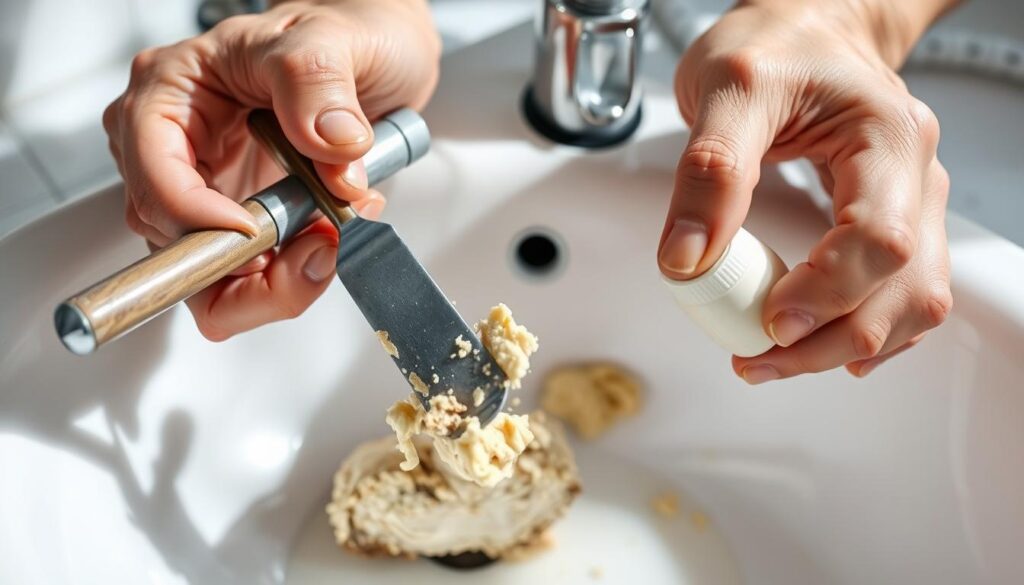
Advanced techniques for tackling hard plumber’s putty need careful planning. Here are some special methods:
- Chemical solvent application
- Precision heating techniques
- Mechanical manipulation strategies
For very hard putty, you need professional-grade solutions. Targeted softening approaches can soften tough material without harming nearby areas.
| Method | Effectiveness | Difficulty Level |
|---|---|---|
| Mineral Spirit Treatment | High | Moderate |
| Infrared Heat Application | Medium | Complex |
| Specialized Putty Remover | Very High | Easy |
If all else fails, replacing the putty might be best. Experts say check the material’s state before spending a lot of time on softening efforts.
Safety Precautions and Considerations
Working with plumber’s putty requires safety. Protecting yourself and your area prevents injuries and ensures a good outcome. Knowing how to handle putty safely is key.
Professional plumbers start with safety in mind. They prepare for risks from chemicals, sharp tools, and wrong handling of materials.
Protective Equipment Guidelines
Choosing the right gear is vital for safety. Your equipment should protect you from dangers:
- Safety glasses to guard against chemical splashes
- Chemical-resistant gloves
- Long-sleeve clothes to avoid skin contact
- Slip-resistant, closed-toe shoes
Workspace Preparation Tips
A safe workspace is essential for handling putty. Follow these tips:
- Clear the area of extra items
- Ensure good air flow
- Keep your workspace tidy
- Have cleaning tools ready
Emergency Response Measures
Being ready for emergencies is important. Remember these steps:
| Scenario | Immediate Action |
|---|---|
| Chemical Contact with Skin | Rinse with cool water for 15 minutes |
| Eye Exposure | Flush with water, seek medical help |
| Accidental Ingestion | Contact poison control |
Your safety is the most important thing. Always put on protective gear and be ready for risks when working with plumbing materials.
Troubleshooting Hardened Putty Issues
Dealing with hardened putty can be tough. When your plumber’s putty gets stiff, you need to know how to fix it. This will help you get it working again.
It’s important to know when your putty is getting old. Look for signs that it needs fixing:
- Cracking or separation around fixture edges
- Dried-out, brittle texture
- Loss of sealing capability
- Visible gaps or shrinkage
To fix hardened putty, try these steps:
- Softening Method: Warm the putty with a heat gun or warm water to make it soft again
- Removal Technique: Use a plastic scraper to remove old putty without harming surfaces
- Replacement Strategy: If warming doesn’t work, remove and replace the putty with new one
Experts say to prevent hardened putty, keep your putty cool and sealed. Check it often. If it’s hard to work with, it’s better to replace it than try to fix it.
Pro Tip: Always inspect your plumbing seals annually to catch putty deterioration early.
Knowing how to spot and fix hardened putty helps avoid water damage. It keeps your plumbing fixtures in good shape.
Conclusion
Learning to soften plumber’s putty is key for DIY plumbing skills. It saves time and money on home projects. By following the techniques we’ve shared, you can handle minor repairs yourself.
Home maintenance tips should include how to handle and store putty. Knowing how to use this material helps you make tight seals. Remember, the more you practice, the better you’ll get.
While DIY skills are great, know your limits. Some jobs need a pro. If unsure, call a licensed plumber to avoid damage.
With the right knowledge and tools, you can handle plumbing tasks with confidence. Keep learning and trust your growing skills to keep your home in top shape.