
Affiliate Disclosure
Plumber Guide Guys is a participant in the Amazon Services LLC Associates Program, an affiliate advertising program designed to provide a means for sites to earn advertising fees by advertising and linking to Amazon.
How to Plumb in a Washer? Are you tired of paying a lot to have your washing machine installed? You can learn how to do it yourself and save money. Plus, you’ll gain a new skill in home improvement.
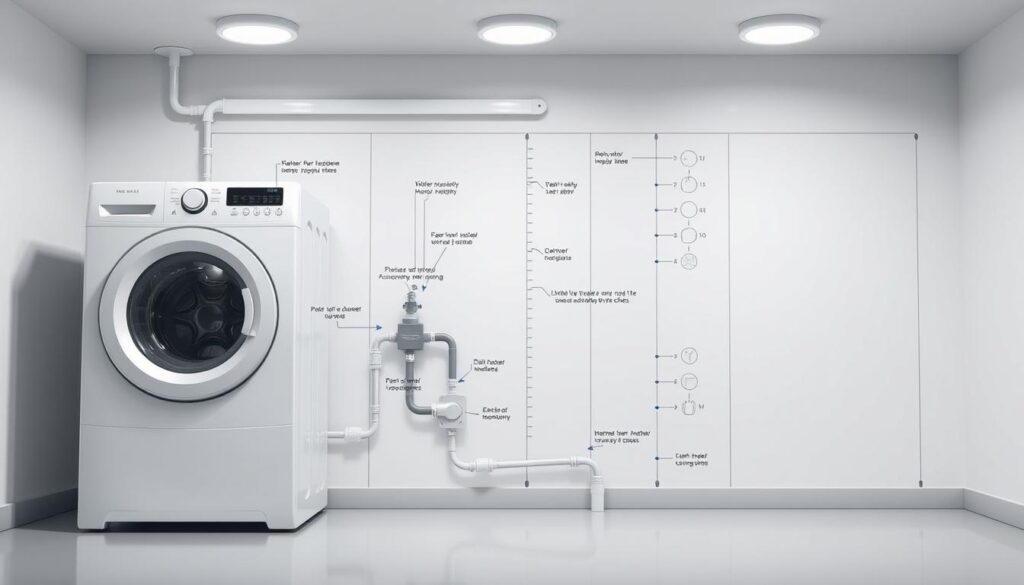
Installing a washer might look hard, but it’s doable with the right guide. This guide will help you set up your new appliance easily. You won’t need to call a professional.
Whether you’re a new homeowner or upgrading your laundry area, learning to install a washer is a big help. It saves you time, money, and stress. Our guide makes it simple, so you can do it with basic tools and patience.
Key Takeaways
- DIY washing machine installation is achievable with proper guidance
- Basic tools and careful attention can replace professional installation services
- Following manufacturer instructions is key for a successful setup
- Proper installation stops water damage and appliance problems
- You can finish the installation in about 1-2 hours
Table of Contents
Essential Tools and Materials for Washing Machine Installation
Getting ready for a DIY washer installation means you need the right tools and materials. Before starting, make sure you have everything needed for a safe and efficient job.
- Adjustable wrench – Essential for tightening connection nuts of various sizes
- Pliers – Perfect for gripping and holding fittings securely
- Screwdriver set – Needed for securing bolts and making precise adjustments
- Level – Crucial for ensuring your washer sits evenly and prevents vibrations
- Measuring tape – Helps with accurate positioning and spacing
- Utility knife – Useful for cutting and trimming hoses if necessary
- Bucket – Catches any water spillage during installation
When picking water supply components, focus on quality connections. Braided stainless steel hoses are more durable than rubber hoses. They reduce the risk of leaks during your DIY installation.
Water Supply and Drain Essentials
You’ll need specific materials for your washing machine plumbing:
- Water supply hoses (check manufacturer recommendations)
- Drain hose compatible with your washing machine model
- Optional drain pan for added leak protection
Pro tip: Always check your washer’s specific needs. Different models might need unique fittings or special installation steps.
Preparing Your Installation Space
Getting your space ready for a new washing machine is key. It ensures a smooth installation and avoids problems. Your aim is to make the best environment for your appliance’s performance and life.
Start by clearing the area where you’ll install the washer. Get rid of any dirt, dust, or things that could get in the way. The spot should have a few important things:
- Accessible water supply lines
- Functional drainage system
- Nearby electrical outlet
- Room temperature above 32°F
- Level and sturdy floor surface
Before you start, check the area’s connections. If you’re replacing an old machine, look at the water supply valves, drain outlets, and electrical connections. Most washers need a standard 120V electrical outlet. Make sure it matches your washer model’s needs, as shown in this guide.
| Installation Requirement | Recommended Specification |
|---|---|
| Electrical Outlet | 120V, Grounded |
| Floor Evenness | Within 1/2 inch level |
| Minimum Room Temperature | 32°F and above |
Pro tip: Measure your space carefully to ensure the washer fits comfortably, leaving room for connections and possible maintenance.
Selecting the Perfect Location for Your Washer
Choosing the right spot for your washing machine is key for easy installation and long-term use. The location affects everything from access to utilities to how well the machine works.
Before you start installing your washing machine, planning is vital. Every space has its own needs that can make or break your setup.
Measuring Your Space and Doorways
Getting accurate measurements is your first step in placing your washer right. Take your time to check these important dimensions:
- Measure the width, depth, and height of your washing machine
- Check the dimensions of doorways, hallways, and possible installation spaces
- Make sure there’s at least 6 inches behind the machine for hoses and connections
- Ensure 1 inch of clearance on machine sides for proper ventilation
Checking Water Supply and Electrical Access
Your chosen location must have the essential utilities for plumbing a washing machine. Check if you have:
- Hot and cold water supply valves
- The right drain connection (standpipe or floor drain)
- A grounded 120V electrical outlet within reach
If your preferred location doesn’t have the needed hookups, talking to a professional plumber can help you create the perfect installation space.
Removing Your Old Washing Machine
Replacing your washing machine needs careful planning and safety steps. First, get your tools ready like pliers, a bucket, and gloves. These will help keep you safe while you disconnect.
- Unplug the machine from the electrical outlet
- Turn off both hot and cold water supply valves
- Disconnect water supply hoses
- Prepare a bucket to catch residual water
When you disconnect the water hoses, use pliers to loosen them. Pro tip: Always turn water shut-off valves clockwise until fully closed to prevent unexpected water flow. Place your bucket where it can catch any water left in the hoses.
Disconnecting water hoses needs a bit of skill:
- Use adjustable pliers to grip hose nuts
- Apply gentle, steady pressure to loosen connections
- Keep towels nearby to handle any water drips
- Check hose conditions for wear or damage
If the machine seems too heavy, get help to avoid injury. Make sure the path is clear and protect your floors during the move.
Unpacking and Preparing Your New Washer
Getting a new washing machine is thrilling. But, it’s important to prepare well for a smooth setup. First, unpack and check your new appliance carefully. Make sure it’s in top shape.
When your new washer arrives, you’ll need to do a few key things. These steps will get it ready for installation:
- Remove all external packaging materials carefully
- Check for any shipping damage
- Locate the manufacturer’s installation manual
- Prepare to remove transportation bolts
Removing Packaging and Transportation Bolts
Your washer has special bolts for shipping. These keep the drum safe and prevent damage during transport.
- Carefully cut away any plastic wrapping
- Remove cardboard and protective foam
- Locate the transportation bolts at the back of the machine
- Use a wrench to completely remove all four bolts
- Store the bolts in a safe place for future use
“Failing to remove transportation bolts can cause severe damage to your washer’s internal mechanisms during operation.”
Inspecting Your New Machine
Inspecting your washer is the first step to a smooth install. Look for any damage or missing parts.
| Inspection Checklist | What to Look For |
|---|---|
| External Condition | No dents, scratches, or shipping damage |
| Included Accessories | Verify all promised components are present |
| Manual and Documentation | Check for complete installation instructions |
Pro tip: If you find any problems or have questions, reach out to the manufacturer’s customer support before you start the installation.
How to Plumb in a Washer: Connecting Water Supply Lines
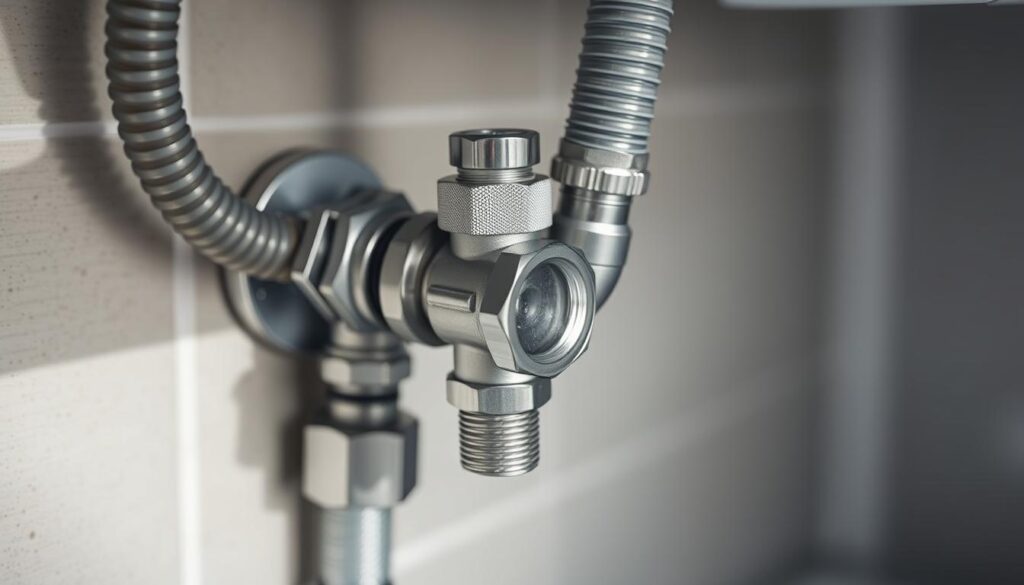
Connecting the water line for your washer needs careful attention. The washer’s performance depends on a good water supply connection. First, find the hot and cold water inlet valves on your machine. They are usually marked with red and blue indicators.
Choose the right water supply hoses for your washer. You have two main options:
- Standard rubber hoses
- Braided stainless steel hoses (recommended for durability)
Before you start, check your hoses for any damage. Look for signs of wear, cracks, or damage. Replace hoses every five years or as the manufacturer suggests to avoid water damage.
Here’s how to connect the water supply:
- Match the labeled hot and cold water hoses to the correct inlet valves.
- Hand-tighten the coupling nuts on the wall supply valves and machine inlets.
- Use an adjustable wrench to give a quarter-turn for a leak-free seal.
- Apply plumber’s tape to threaded connections for extra protection.
Important warning: Never stretch hoses to reach distant connections. If your water supply is too far, get a proper hose extension to avoid leaks or damage. Make sure each hose connects to its correct water feed without too much tension.
Pro Tip: A proper water supply connection is the foundation of your washer’s performance and longevity.
Installing the Drain Hose Properly
Connecting your washer drain hose correctly is key to avoid water damage and ensure smooth drainage. A well-installed drain hose keeps your laundry area safe from flooding. It also keeps your washing machine running smoothly.
When you set up your washer drain hose, focus on a few important details. The right installation stops serious plumbing problems and water damage at home.
Positioning the Drain Hose at the Correct Height
Getting the height right is critical for your washer drain hose. Follow these important steps:
- Place the drain hose at least 39 inches (1 meter) above the floor
- Make sure the hose goes 4 inches into the drainpipe
- Stop water siphoning during the drain cycle
Securing the Drain Connection
Securing your washer drain hose needs careful attention to avoid leaks. Here are the best ways:
- Use hose clamps for a tight, secure connection
- Tighten clamps with a screwdriver
- Check for any kinks or bends in the hose
Pro tip: Use a drain pan during initial installation to catch any water spills or leaks.
Regularly check your washer drain hose to spot any issues early. This keeps your washing machine running at its best.
Making Safe Electrical Connections
Electrical safety is key when setting up your washing machine. First, check the owner’s manual for electrical specs. Most home washers need a 120V outlet.
- Make sure your home’s electrical system can handle the washer’s power needs
- Use a dedicated wall outlet, not a power strip or extension cord
- Ensure the electrical connection is properly grounded
When you connect the power cord, watch the wire colors:
- Green wire: Ground connection
- White wire: Neutral connection
- Black or red wire: Hot connection
If you’re unsure about electrical work, stop right away. Call a licensed electrician. Wrong electrical connections can lead to fires or harm your washer.
Safety Tip: Always get professional help if you’re not sure about electrical work.
Follow these important safety tips:
- Never force connections
- Make sure all wire connections are tight and secure
- Check that the outlet fits your washer’s voltage needs
Leveling and Stabilizing Your Washing Machine
Getting your washing machine level is key for its performance and life. An unbalanced washer can cause a lot of problems. These include loud noises and damage to parts inside.
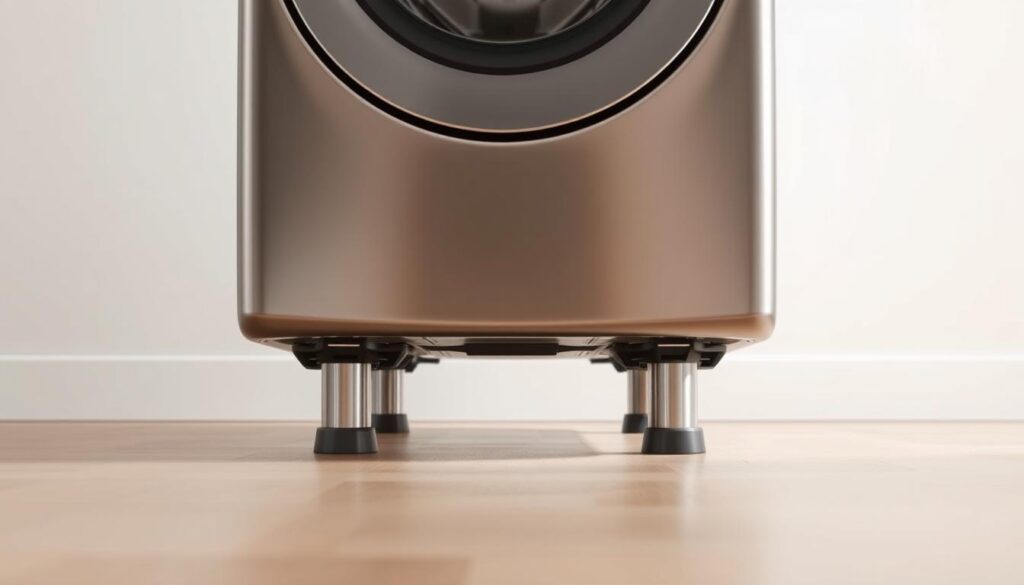
Your washing machine needs to be perfectly balanced to work right. If it’s not, you might face issues that affect how well it works and how long it lasts.
Adjusting the Leveling Feet
To make sure your washer runs smoothly, follow these steps to adjust its leveling feet:
- Find the adjustable feet at each corner of the washing machine
- Use an adjustable wrench to twist the feet
- Turn clockwise to lower the machine
- Turn counterclockwise to raise the machine
- Use a bubble level to check if it’s level
Preventing Vibration and Movement
To stop unwanted movement and noise, try these tips:
- Put anti-vibration pads under each leveling foot
- Make sure the floor is even
- Use wooden shims for uneven floors
- Think about using anchoring brackets for more stability
Regular checks are important. Check your washer’s level often, like after moving it. A balanced washing machine runs quieter and lasts longer.
Testing Your Washer Installation
After you’ve installed your washing machine, it’s key to do a thorough test. This step makes sure everything works right. It also helps catch any problems early on.
Start your test by following a few steps:
- Slowly turn on both hot and cold water supply valves
- Carefully inspect all connection points for leaks
- Plug in the washer and verify power and display functionality
First, run a Clean Cycle without any clothes. This does two things:
- It cleans the inside of the machine
- It lets you see how the whole cycle works
When you do your first laundry load, keep these tips in mind:
- Use a small test load of laundry
- Stay present throughout the entire cycle
- Check underneath and around the machine for water leaks
- Listen for unusual sounds
- Observe machine stability and vibration
If you spot any small problems, fix them right away:
- Tighten loose connections
- Relevel the machine if excessive vibration occurs
- Adjust drain hose positioning if water doesn’t drain properly
Being careful during the first test can stop water damage. It also makes sure your washer works well for a long time.
Best Practices for Maintaining Your Washing Machine
Keeping your washing machine in top shape needs regular care. Proper maintenance keeps it running well and lasts longer. This saves you money on repairs or buying a new one.
Here are key steps to keep your washer in good condition:
- Pre-treat extremely dirty or hairy items before washing
- Avoid overloading the machine beyond two-thirds capacity
- Inspect water supply hoses regularly
- Clean washer filters annually
- Perform deep cleaning cycles
Make sure to include these important steps in your routine:
- Regular Hose Inspection: Check water supply hoses every six months for wear, cracks, or bulging. Replace hoses every five years, even if they look fine.
- Filter Cleaning: Remove and clean inlet filters to stop mineral buildup that blocks water flow.
- Deep Cleaning: Run a cleaning cycle monthly with washer cleaning products or the self-clean function.
| Maintenance Task | Frequency | Purpose |
|---|---|---|
| Hose Inspection | Every 6 months | Prevent leaks |
| Deep Cleaning | Monthly | Remove mold and detergent residue |
| Filter Cleaning | Annually | Keep water flowing well |
More tips include leaving the washer door open after use to stop moisture buildup. Also, clean door seals to stop mold. By doing these maintenance tasks, your washing machine will work great for many years.
Conclusion
You’ve made it through the washing machine installation process. What seemed hard at first is now a DIY task that saved you money. You’ve learned a lot, from preparing your space to connecting water lines and leveling the machine.
By doing this, you’ve saved cash and learned a lot about home maintenance. The whole thing took about 1-2 hours and needed just basic tools and careful following of instructions. Your new washer is ready to make doing laundry easier and more efficient.
Remember to check the maintenance section often to keep your washer in great shape. Keep your installation manual and warranty info in a safe spot. With what you’ve learned, you’ll be ready for any future appliance tasks or small problems.
Enjoy your new washing machine and be proud of your DIY success. Your hard work means it will work well for a long time, saving you money and hassle.