
Affiliate Disclosure
Plumber Guide Guys is a participant in the Amazon Services LLC Associates Program, an affiliate advertising program designed to provide a means for sites to earn advertising fees by advertising and linking to Amazon.
How to Plumb a Water Pressure Tank? Are you fed up with water pressure that keeps changing? Maybe plumbing a water pressure tank is what you need. Learning how to install this key part can save you money and avoid water system problems later.
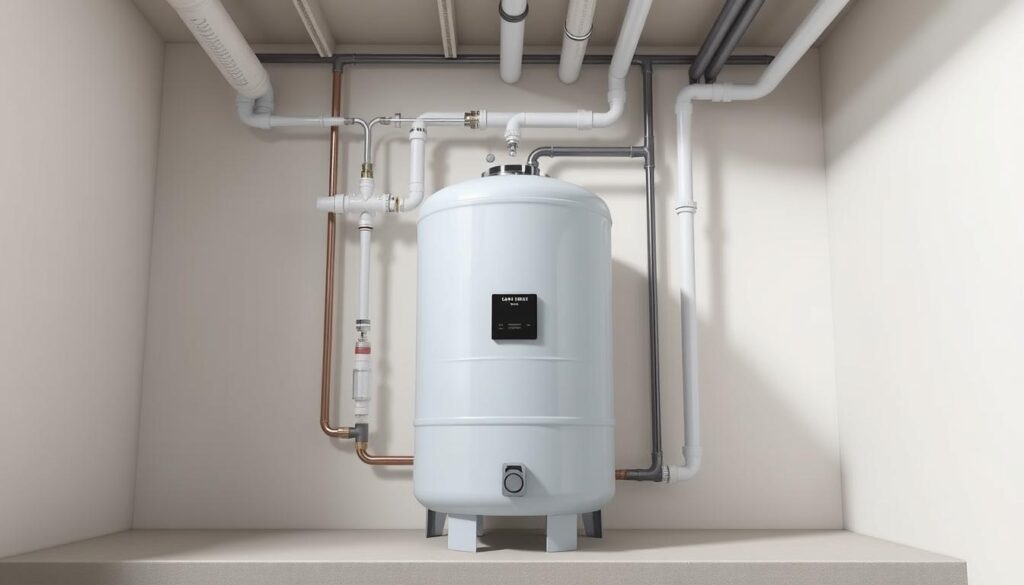
Water pressure tanks are essential for keeping water flow steady in your home. Whether you have a well water system or want to improve your current setup, knowing how to plumb a pressure tank is vital. It can greatly improve your home’s water performance.
Key Takeaways
- Proper installation ensures consistent water pressure
- Understanding tank types helps you choose the right system
- Safety is key during installation
- Regular maintenance prevents future water system issues
- Professional guidance is helpful for complex installations
- Correct plumbing extends your pressure tank’s lifespan
Table of Contents
Understanding Water Pressure Tanks and Their Role in Your Water System
Water pressure tanks are key for homes with well water. They manage water pressure, protect your well pump, and keep water flowing well. Knowing how they work helps keep your water system running smoothly.
These tanks do a lot for your home’s water system. They store water under air pressure. This helps your well pump work less and last longer.
What a Pressure Tank Does for Your Home
Your water pressure tank keeps water pressure steady. It stores water under air pressure. This way, water flows evenly when you turn on a faucet or appliance. Modern pressure tanks make sure you always have good water pressure.
How Pressure Tanks Protect Your Well Pump
Well pumps work hard to get water to your home. Pressure tanks help by storing water. This stops the pump from starting and stopping too much, which can damage it.
Types of Pressure Tanks Available
There are different types of pressure tanks for homes:
- Traditional Steel Tanks: Air-over-water design needing air recharging
- Bladder Tanks: Rubber bladder separates air and water for steady pressure
- Diaphragm Tanks: Fixed diaphragm separates air and water, good for sediment
- Air-Volume Control Tanks: Special design for certain water system needs
Each tank has its own benefits. Choosing the right one depends on your home’s water system needs. This ensures your tank works well and lasts a long time.
Essential Tools and Supplies for Pressure Tank Installation
Installing a well water pressure tank needs careful planning and the right tools. Before starting, make sure you have all the necessary equipment for a smooth installation.
First, choose the right well water pressure tank for your home. Think about the size and capacity based on your water use. Most homes need a 20-40 gallon tank.
- Pressure Switch: This key part controls the pump based on water pressure, usually between 30-50 PSI or 40-60 PSI
- Pressure Gauge: It checks the water pressure inside the tank during and after setup
- Fittings: Includes couplings, tees, elbows, and adapters that fit with your plumbing
- Teflon tape for leak-free connections
You’ll need specific tools for a professional installation:
- Pipe wrench for tightening connections
- Pipe cutter or saw for cutting pipes accurately
- Electrical connectors like wire nuts or crimp connectors
- PVC or copper pipes for the pump and tank connections
Always prioritize safety. Wear gloves and safety glasses during the installation. Also, have a concrete pad or stable base for mounting the tank securely.
Pro Tip: Invest in quality materials to prevent future repairs and ensure a reliable water system.
With the right tools and careful preparation, you’ll be ready to install your water pressure tank efficiently and safely.
Preparing Your Work Area and Shutting Down Your Water System
Installing a water pressure tank needs careful preparation and safety steps. Before starting, make a safe workspace and shut down your water system. This prevents damage or accidents.
Getting ready is key for a good pressure tank installation. Your workspace should be clean, well-lit, and big enough to move around.
Safety First: Electrical Shutdown Procedures
Electrical safety is very important when working with water systems. Here are the steps to turn off power to your well pump:
- Locate your main electrical panel
- Identify the circuit breaker for the well pump
- Switch the breaker to the OFF position
- Use a voltage tester to confirm no electrical current
Controlling Water Supply
Stopping water flow is key to avoid flooding and work safely:
- Find your main water shutoff valve
- Close the valve completely
- Open a faucet to release remaining pressure
- Drain any standing water in pipes
Selecting the Perfect Location
Choosing the right spot for your pressure tank is important. It affects its performance and life:
| Location Criteria | Recommended Specifications |
|---|---|
| Temperature Range | Between 40-80°F |
| Humidity Level | Less than 50% |
| Accessibility | Easy maintenance access |
| Proximity to Pump | Within 10-15 feet |
Pro tip: Don’t install your pressure tank in areas that freeze or have extreme temperatures.
How to Plumb a Water Pressure Tank
Plumbing a water pressure tank needs precision and careful detail. You’ll connect your well pump to the tank with high-quality pipes and fittings. Use Teflon tape for a leak-free setup.
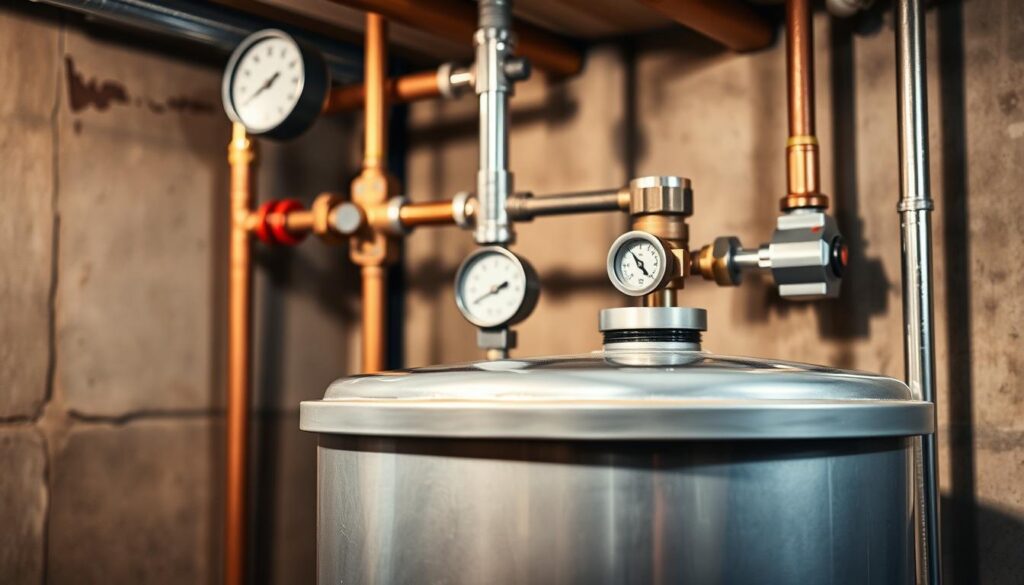
- Installing a tee fitting on the pipe from your well pump
- Connecting the pump line, pressure tank inlet, and household plumbing
- Measuring and cutting pipes precisely
- Ensuring all cuts are square and deburred
When connecting, wrap threaded parts with Teflon tape. Use 3-4 clockwise wraps for a tight seal. Avoid over-tightening – just hand-tight plus one turn is enough.
Put a union or brass nipple at key points for easy future disconnections. Place the tank right, keeping the air valve easy to reach. Follow the manufacturer’s directions for bladder and diaphragm tanks.
Pro tip: Always test each connection as you go and check alignment before final tightening.
Mount the tank on a stable surface with the right brackets. Connect the drain valve at the system’s lowest point for easy maintenance. Your aim is a strong, leak-free setup that works well for your home.
Connecting the Pressure Switch and Electrical Components
Setting up electrical parts for your water pressure tank needs careful safety and precision. Electrical work is complex. So, knowing each step is key for a good installation.
Always make sure power is off at the breaker before starting any electrical work. It’s also a good idea to use a voltage tester to check. Safety is the most important thing when working with electrical systems.
Wiring Your Pressure Switch Safely
Finding the wiring terminals inside the pressure switch cover is your first big step. You’ll usually see three main connections:
- Incoming power from the electrical panel
- Outgoing power to the well pump
- Ground connection
When you connect wires, remember these important tips:
- Look at your switch’s wiring diagram
- Use the right wire nuts or connectors
- Make sure all connections are tight and well-insulated
- Choose wire gauge that matches your pump’s amperage (usually 12-gauge for home well pumps)
Installing the Pressure Gauge
Mounting the pressure gauge lets you check your system’s status easily. Here’s how to do it right:
- Screw the gauge into a port on the pressure switch or a tee fitting near the tank
- Use Teflon tape on the gauge threads
- Tighten it well while making sure it’s easy to see
| Gauge Reading | System Status |
|---|---|
| 40-60 PSI | Normal Operating Range |
| Below 40 PSI | Potential Pump or Tank Issue |
| Above 60 PSI | Possible Pressure Regulation Problem |
Following National Electrical Code (NEC) rules is very important. If you’re not sure about electrical work, call a licensed electrician. Always put the pressure switch cover back on securely before turning the power back on. This protects against electrical shock and moisture.
Setting the Correct Air Pressure in Your Tank
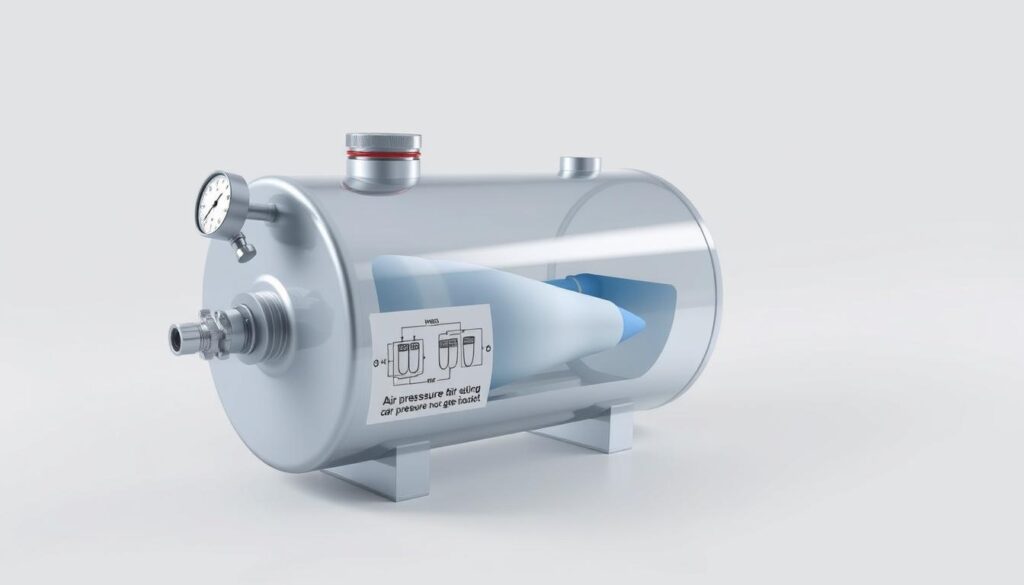
Knowing the air pressure in bladder and diaphragm tanks is key for your home’s water system. The air on one side pushes against water on the other. This keeps the pressure steady between pump cycles.
Setting the right air pressure is important. You should set it about 2 PSI below your pressure switch’s turn-on point. Here’s a quick guide:
- For a pressure switch set at 30-50 PSI, set tank pressure to 28 PSI
- For a 40-60 PSI switch, adjust tank pressure to 38 PSI
To check the air pressure, follow these steps:
- Find the air valve stem at the top of the tank
- Take off the protective cap
- Press a tire pressure gauge firmly onto the valve
- Read the current pressure
New tanks might come pre-charged. But, always check if the pressure fits your system. If it’s too low, add air slowly with a portable electric air compressor. Warning: Too much air can harm the bladder and might need a new tank.
Don’t forget to put back and tighten the valve stem cap. A loose cap can let air leak out, affecting your system’s performance.
Testing Your Pressure Tank Installation for Leaks and Proper Function
After installing your water pressure tank, it’s important to test it carefully. This ensures your water system works well and efficiently. You’ll need to turn on your system and check its performance with a few key steps.
Turning Your System Back On
When you turn your water system back on, watch the pressure gauge needle. It should rise steadily as the pump fills the tank. When the pressure hits 50 or 60 PSI, the pump should turn off by itself.
Verifying System Performance
Let the system sit for a few minutes. Check the pressure gauge to make sure it stays steady. This helps find any leaks in your installation.
Next, open a faucet in your home. Watch the gauge—pressure should drop slowly. When it hits the cut-in point, the pump should start again.
Purging Air from Your Plumbing Lines
When you drain and refill your water system, air gets trapped in the lines. To get rid of this air, follow these steps:
- Start with faucets without aerators (like laundry sinks or outdoor spigots)
- Open each faucet fully
- Let water run until the flow is steady and clear
- Work systematically through your home, from lowest to highest fixtures
Pro tip: If water looks cloudy or discolored at first, don’t worry. It’s just sediment disturbance that should clear in a few minutes. Flush toilets and run appliances briefly to finish the process.
Final Inspection
Go back to your pressure tank area for a final check. Look for any signs of moisture or dripping on connections, fittings, and the tank. Some leaks only show up when the system is fully pressurized. Fixing small leaks right away prevents water damage and keeps your system running smoothly for years.
Common Plumbing Mistakes to Avoid During Installation
Installing a water pressure tank might seem easy, but many mistakes can harm your water system. Knowing these common errors can save you from costly repairs and ensure your system works well.
Choosing the wrong tank size is a big mistake. A tank that’s too small makes your pump work too hard, leading to early wear and failure. Your tank must fit your home’s water use and pump size perfectly.
- Incorrect air pressure setting triggers short cycling or waterlogging
- Over-tightening fittings can crack brass connections
- Improper Teflon tape application compromises seal integrity
- Skipping pressure gauge installation leaves system vulnerabilities
Where you place your tank is also key. Putting it in a cold spot or somewhere hard to get to is a bad idea. Choosing the right spot helps your tank last longer and makes maintenance easier.
| Mistake | Potential Consequence | Recommended Solution |
|---|---|---|
| Incorrect Pressure Switch Settings | System Inefficiency | Calibrate According to Manufacturer Specifications |
| No Union for Service Access | Difficult Future Maintenance | Install Disconnect Fittings |
| Electrical Safety Violations | Shock Hazards | Always Disconnect Power Before Working |
Electrical safety is very important. Not turning off power before working on electrical parts is dangerous. Also, not supporting pipes well can cause leaks.
Always check for leaks and follow the manufacturer’s instructions carefully. Hurrying or ignoring these steps can void warranties and cause long-term problems.
Maintaining Your Water Pressure Tank for Long-Term Performance
Keeping your water pressure tank in good shape is key for reliable water flow. Regular checks and care can avoid expensive fixes and sudden failures.
Look over the tank for rust, corrosion, or coating damage. These signs mean the tank might soon need to be replaced. Also, check pipe connections and fittings for moisture, mineral buildup, or leaks.
Regular Inspection Checklist
- Check the area around and beneath the tank for water stains, dampness, or pooling
- Verify the pressure gauge is functioning by tapping it gently
- Listen to system operation for unusual sounds
- Ensure the tank remains securely mounted without movement
Performance Monitoring Techniques
Watch how often your pump cycles. If it cycles too much, it might mean air or bladder problems.
| Maintenance Task | Frequency | Purpose |
|---|---|---|
| Air Pressure Check | Annually | Prevent system problems |
| Visual Inspection | Every 6 months | Detect early signs of wear |
| Sound/Performance Check | Quarterly | Identify possible failures |
To check air pressure, do this:
- Turn off pump power
- Close main water valve
- Drain pressure tank completely
- Check air pressure with tire gauge
- Adjust using air compressor as needed
Keeping a simple maintenance log is helpful. Just a few minutes of regular checks can stop costly system failures.
Conclusion
Installing a water pressure tank needs careful planning and attention to detail. It’s important to understand how these tanks work and choose the right one for your home. By getting the right tools and preparing your area, you’re off to a good start.
Safety is key when working on plumbing. Always switch off the power before touching electrical parts. If something seems too hard, call a licensed expert. Your work will pay off with steady water pressure and a well pump that lasts.
Keeping records of your installation and maintenance is smart. Note down the installation date, tank details, pressure settings, and when you did maintenance. These records help you fix problems later and give service pros the info they need.
Whether you did it yourself or helped a pro, you know how vital a water pressure tank is. With regular care and the right setup, your water system will work well for years. This means reliable water pressure and safe equipment for your home.