
Affiliate Disclosure
Plumber Guide Guys is a participant in the Amazon Services LLC Associates Program, an affiliate advertising program designed to provide a means for sites to earn advertising fees by advertising and linking to Amazon.
How to Plumb a Steam Shower? Are you ready to turn your bathroom into a spa? Imagine stepping into a personal wellness sanctuary. It’s a place of ultimate relaxation and health benefits, right in your home. Learning to plumb a steam shower might seem hard, but with the right help, you can make a big change in your daily life.
Steam showers are more than a bathroom trend. They’re a big investment in your home’s value and your health. Knowing how to plumb a steam shower is key. It ensures a safe, efficient, and enjoyable experience that lasts for years.
This guide will take you through every step of installing a steam shower. You’ll learn how to pick the right parts and connect them properly. You’ll get the skills to make a steam shower that feels like a top spa experience.
Key Takeaways
- Steam shower installation requires careful planning and specialized knowledge
- Proper plumbing is essential for a safe and functional steam shower
- Professional consultation is recommended for complex installations
- Steam showers can increase home value and provide health benefits
- Understanding system components is key for a successful installation
Table of Contents
Understanding Steam Shower Systems and Their Components
Steam showers are a luxury upgrade from regular showers. They turn your bath into a spa experience. The steam shower piping system is key, making it different from standard showers.
What makes steam showers special is their sealed space and unique steam tech. They create a warm, humid space that’s good for your body, more than just a water rinse.
Unique Characteristics of Steam Showers
Steam showers stand out in several ways:
- Fully enclosed space to trap steam
- Dedicated steam generator
- Specialized steam shower piping system
- Precise temperature and humidity controls
- Sealed walls and ceiling to prevent moisture escape
Essential Components of the System
Your steam shower needs many parts working together:
- Steam Generator: The heart, turning water into steam
- Steam Head: Spreads steam evenly
- Control Panel: Controls temperature and time
- Water Supply Lines: Bring water to the generator
- Drainage System: Gets rid of steam and water
Knowing these parts shows the complexity of your steam shower. Each part of the system is vital for a great steam experience.
Health and Wellness Benefits of Installing a Steam Shower
Turning your bathroom into a healing space with a steam shower is more than just cleaning. It’s a powerful way to boost your health and mind.
Your steam shower becomes a natural healing spot. It offers health perks that regular showers can’t. The warm steam wraps you in comfort.
- Improved Circulation: Steam makes blood vessels wider, helping your heart work better
- Stress Reduction: Warm steam lowers stress hormones, making you feel calm
- Respiratory Support: Steam helps clear your airways, supporting your lungs
- Skin Detoxification: Steam opens your pores, deep cleaning and removing toxins
Therapeutic steam bathing has amazing effects on your body. It makes your body release hormones that help control blood pressure and calm you down.
| Health Benefit | Physiological Response |
|---|---|
| Cardiovascular Health | Improved blood circulation |
| Mental Wellness | Reduced stress hormone levels |
| Respiratory Function | Enhanced mucous membrane clearing |
| Skin Condition | Deep pore cleansing |
Getting a steam shower is more than just a fancy bathroom feature. You’re making a wellness center for yourself. The benefits of a steam shower last long, improving your health and mind.
Planning Your Steam Shower Installation Project
Planning a steam shower needs careful thought. You want to make a relaxing space in your home. Success comes from good preparation and knowing what makes a steam shower great.
When you start installing steam shower plumbing, focus on important details. These ensure your shower works well and feels good:
- Space requirements
- Ceiling dimensions
- Room volume calculations
- Generator placement
Determining the Optimal Size for Your Steam Shower
The smallest steam shower for one person is 3′ x 3′ x 7′. But bigger is better for luxury. Here’s how to plan your steam shower:
- Measure your bathroom space
- Calculate interior dimensions
- Make sure there’s room to move around
Ceiling Height and Steam Efficiency
An 8-foot ceiling is best for steam shower efficiency. Steam goes up, so higher ceilings help. But, if your ceiling is over 10 feet, you’ll need a bigger generator.
Steam Room Volume Calculations
Use V=LxWxH to find your steam room’s volume. This helps pick the right steam generator size. Accurate measurements mean your system works its best.
Pro tip: Always plan for slightly more space and generator capacity than you think you’ll need.
Selecting and Sizing Your Steam Generator
Choosing the right steam shower generator is key to a great steam shower experience. It turns water into soothing steam, making your bathroom a wellness retreat.
When installing a steam shower generator, several factors are important. They help pick the right size and type for your needs. This ensures your steam shower works well and efficiently.
Understanding Generator Capacity Requirements
Generator size depends on your steam shower’s size. You need to measure the room’s volume carefully. Consider:
- Total room cubic footage
- Ceiling height
- Wall material porosity
- Anticipated steam usage
Power and Electrical Specifications
Most home steam generators need specific electrical setups:
- 240V or 208V household electricity
- Dedicated circuit breaker
- Typically 40 Amp electrical line
- No Ground Fault Interrupter (GFI) needed
Ideal Placement Strategies
Where you place the generator is very important. Good spots include:
- Heated attic spaces
- Adjacent closets
- Basement utility rooms
- Under built-in shower benches
Keep 10-12 inches of space around the generator for air flow. It should be within 25 feet of your steam shower. This helps keep the steam warm and efficient.
How to Plumb a Steam Shower
Plumbing a steam shower needs careful technical knowledge and the right materials. This ensures a safe and efficient setup. Knowing the details of how to plumb a steam shower helps you make a top-notch steam shower that works perfectly.
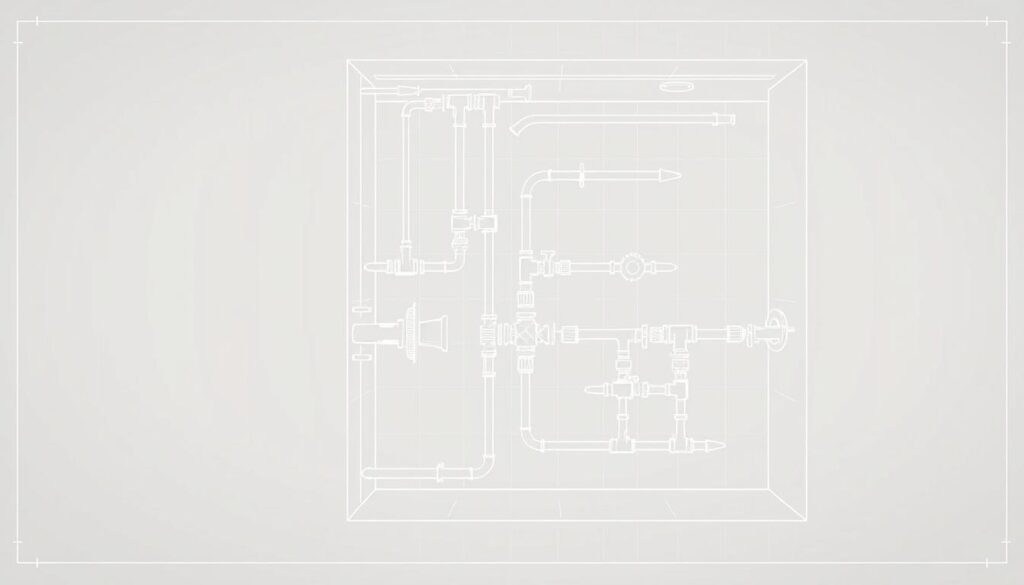
When you’re setting up your steam shower, focus on three key plumbing parts: water lines, steam lines, and drain lines. These parts need special materials and methods to work their best.
Required Plumbing Materials and Pipe Specifications
Choosing the right materials is key for steam shower valve setup. You must use only brass or copper pipes – not PVC or PEX. These materials can handle high temperatures and prevent system failures.
- 3/8″ cold water supply line for steam generator
- 1/2″ steam line connecting generator to steam head
- 1/2″ drain line for condensation and mineral deposit removal
Water Line, Steam Line, and Drain Line Connections
Proper steam shower drain requirements mean strategic routing and precise installation. Try to avoid pipe bends to prevent condensate trapping and ensure proper drainage angles.
Pressure Reduction and Threaded Union Installation
Install a pressure reducing valve (PRV) to keep water pressure between 15-25 PSI. This protects your steam generator from damage and ensures steady steam production. Use threaded unions at connection points for easier maintenance later.
Pro Tip: Always test your connections for leaks before completing the installation.
Electrical Requirements for Steam Shower Systems
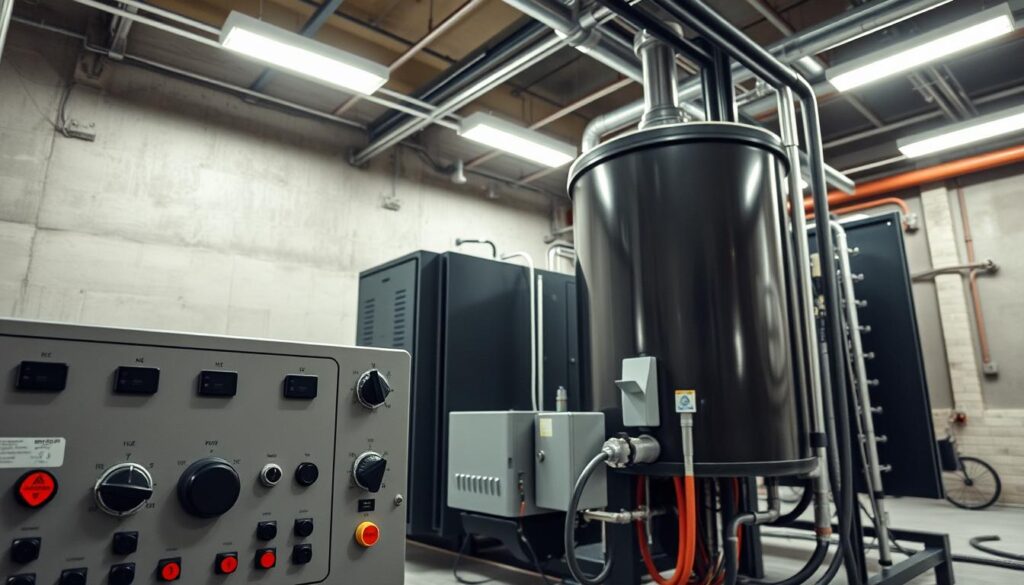
Setting up a steam shower needs careful thought about electrical needs. Your steam generator’s electrical setup is key for safe and efficient use. Unlike regular bathroom items, steam generators need special electrical setups.
When setting up your steam shower, focus on the electrical needs. Most home steam generators need 240V or 208V power. This is usually on a single-phase power circuit.
- Minimum circuit rating: 40 Amps
- Voltage: 240V or 208V
- Power type: Single-phase
- Dedicated circuit breaker recommended
Important electrical points to remember include:
- Make sure the steam generator has its own dedicated circuit
- Don’t mix electrical loads
- Get a licensed electrician for the installation
Steam generator circuits are different from regular bathroom setups. They don’t need Ground Fault Interrupter (GFI) protection. Your electrician will figure out the exact electrical needs based on your steam generator model and the manufacturer’s advice.
Professional tip: Always check the manufacturer’s guide and local building codes for your electrical setup.
Good electrical planning makes sure your steam shower works well. It will be safe, efficient, and give you the relaxing experience you want.
Creating a Steam-Proof Shower Enclosure
Building a steam shower needs careful planning. You must focus on making a sealed, moisture-resistant area. This area must handle intense steam well.
Waterproofing a steam shower is key to avoiding damage and ensuring it lasts long. The right materials and sealing methods are essential.
Installing Vapor Barriers and Waterproofing Membranes
Here are important steps for waterproofing your steam shower:
- Use 4 mil plastic sheeting as a primary vapor barrier over stud framing
- Install Durock cement board instead of standard drywall
- Apply corrosion-resistant screws for secure attachment
- Cover all joints with adhesive mesh tape and thinset mortar
Selecting Non-Porous Materials
Choose materials that don’t soak up water to keep your steam shower efficient:
- Porcelain tiles
- Ceramic tiles
- Marble
- Granite
Pro tip: Avoid using materials like slate or mesh-backed mosaics. They can soak up moisture and lower your steam shower’s performance.
Ceiling Slope and Drainage Considerations
A well-designed ceiling is vital for a comfortable steam session. Aim for a slope of 1:12. This helps guide condensation away from you.
By following these waterproofing tips, you’ll have a durable, luxurious steam shower. It will offer a relaxing experience every time.
Steam Head and Control Placement Guidelines
When setting up your steam shower valve, it’s key to place the steam head and controls right. This ensures a top-notch relaxation experience. The right spot makes your steam shower both comfy and functional.
Choosing the right spot for your steam head is important. Here are some tips to follow:
- Install the steam head 6-12 inches from the shower floor
- Position on the wall opposite the control panel
- Keep away from direct contact with bather’s body
- Place near the shower door for optimal steam distribution
Your steam shower control panel needs a precise spot too. Aim for 4-5 feet above the floor. This makes it easy to reach and ensures accurate temperature control.
Pro Tip: Leave adequate wall backing for secure mounting of both steam head and control panel to maintain a professional, leak-free installation.
Remember, the right spot for your steam shower setup is more than just practical. It’s about making your home feel like a spa. With careful placement, you get even steam, comfy control, and the best steam shower experience.
Installing Shower Seating, Lighting, and Accessories
Turning your steam shower into a luxury retreat starts with the right seating, lighting, and accessories. The right choices can make your steam shower a personal sanctuary of relaxation and wellness.
Bench Seating Dimensions and Positioning
Choosing the right shower bench is key for comfort and function. It should meet these important specs:
- Minimum depth: 15 inches
- Standard height: 18 inches from the floor
- Surface sloped for steam runoff
You have two main options for installing a shower bench:
- Built-in benches: Made during shower construction
- Fold-up seats: Great for smaller spaces
Steam-Rated Lighting Options
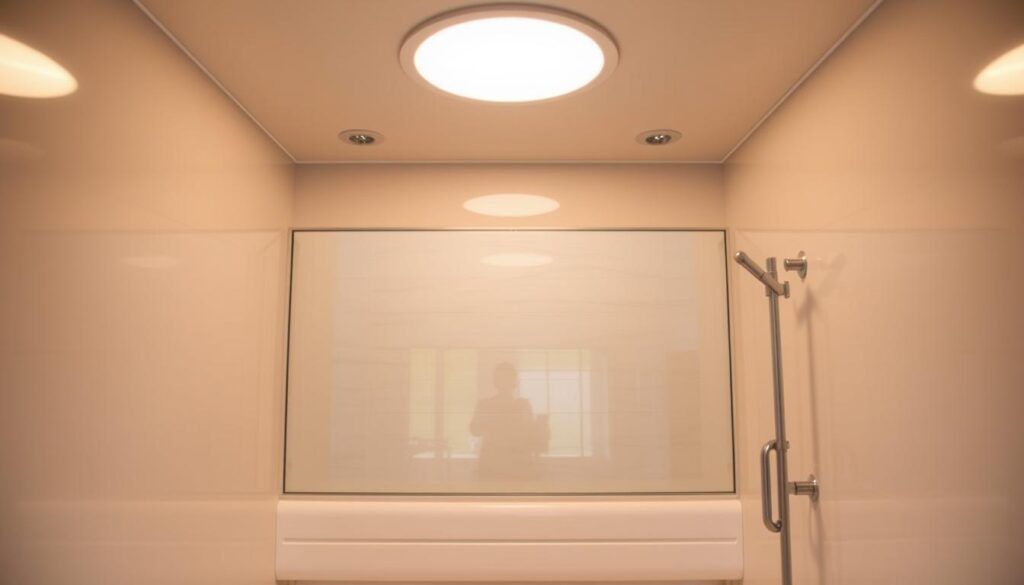
Choosing the right lighting is vital for a safe and enjoyable steam shower. Your accessories must handle high moisture and heat.
| Lighting Type | Features | Benefits |
|---|---|---|
| Halogen Recessed Lights | 75-watt energy-efficient lamps | Excellent visibility |
| LED Chromatherapy Lights | Color-changing capabilities | Mood enhancement and therapeutic effects |
When picking lighting, safety is top priority. Look for:
- Shower-rated trim
- Moisture-resistant gaskets
- cETLus safety listing
- Aromatherapy systems with electronic oil delivery
- Chromatherapy LED modules
- Moisture-resistant sound systems
By choosing the right bench and accessories, you’ll create a spa-like space. It will be both comfortable and luxurious.
Ensuring Proper Ventilation and Air-Tight Sealing
To get the best out of your steam shower, focus on ventilation and sealing. Your shower’s quality depends on keeping it air-tight and managing moisture in the bathroom.
Good steam shower ventilation stops moisture problems and keeps your bathroom safe. A good plan includes:
- Strategic exhaust fan placement
- High-quality sealing materials
- Moisture-resistant design elements
Bathroom Exhaust Fan Installation Strategy
Put your bathroom exhaust fan outside the steam shower. This spot is key for removing extra humidity after steaming. It helps avoid mildew and damage.
| Exhaust Fan Considerations | Recommended Specifications |
|---|---|
| Location | Outside steam shower enclosure |
| Ventilation Capacity | Match bathroom cubic footage |
| Additional Features | Louvers to control airflow |
Sealing Windows and Creating Steam-Proof Enclosures
Your shower needs careful sealing to keep steam in. For windows, use double-paned glass and caulk well to block drafts and heat loss. Steam shower doors need special care with:
- Glazing gaskets on glass panels
- Rubber weatherstripping
- Tight door sweeps
Choose a top-notch steam shower door made for steam use. These doors cost more but are vital for a great steam experience and your shower’s performance.
Customizing Your Steam Experience with Therapy Options
Turn your steam shower into a personal wellness haven with new customization options. Today’s steam shower systems come with amazing aromatherapy and chromatherapy features. These features make your relaxation time even better.
Aromatherapy lets you add essential oils to your steam session. Electronic oil delivery systems release the scents right into the steam. This gives you specific health benefits:
- Lavender for relaxation and stress relief
- Eucalyptus for respiratory support
- Mint for invigoration
- Citrus for mood elevation
Chromatherapy adds color healing to your steam time. LED modules create light environments that affect your body and mind:
- Blue: Calming and stress-reducing
- Red: Energizing and circulation-boosting
- Green: Balancing and harmonizing
- Purple: Meditation and spiritual enhancement
You can also add accessories like shower steamers and antioxidant mud masks. These extras make your steam shower a full wellness tool.
Conclusion
Installing a steam shower is a big step towards making your home more comfortable and healthy. You now know the key plumbing needs for a steam shower. This knowledge will help you through the whole installation.
Getting help from professionals is key for a successful steam shower setup. This guide gives you a lot of information, but plumbers and electricians are needed for the tricky parts. They make sure everything is done right and safe.
With good planning, the right parts, and a focus on quality, your bathroom will become a wellness haven. Quality materials, accurate measurements, and expert setup will make your steam shower a place of healing. It will also increase your home’s value for many years.
Starting a steam shower project means you’re ready to create a luxurious, health-focused space. Your journey to a relaxing and healthy sanctuary begins today.