
Affiliate Disclosure
Plumber Guide Guys is a participant in the Amazon Services LLC Associates Program, an affiliate advertising program designed to provide a means for sites to earn advertising fees by advertising and linking to Amazon.
How to Plumb a Pool? Ever wondered why some pools work smoothly while others cause stress? It’s all about the plumbing. The hidden network of pipes and parts brings your pool to life.
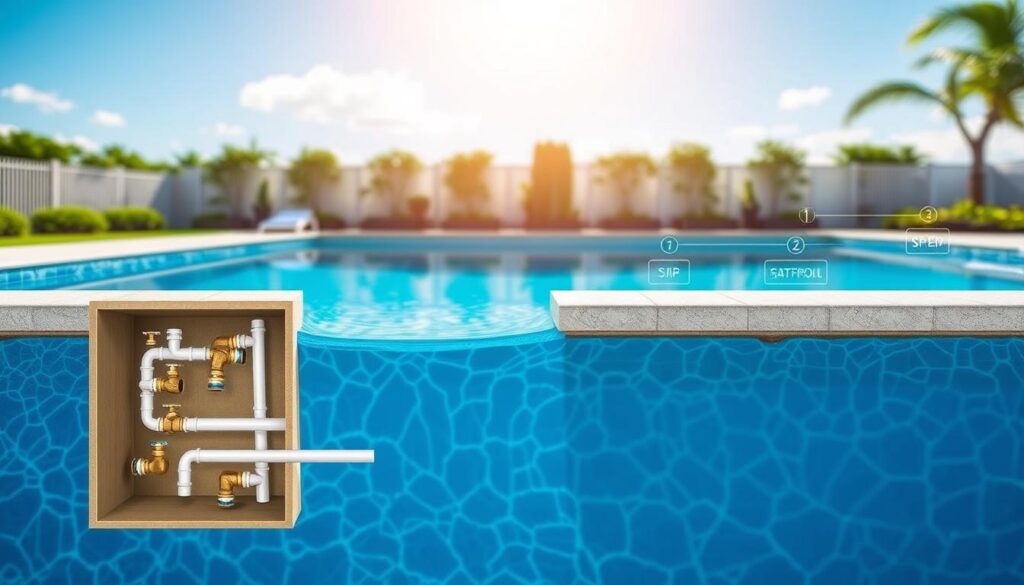
Pool plumbing might look hard, but with the right info, it’s doable. Knowing how it works is key for clean water, good flow, and avoiding big repair costs. Pool owners can master this by learning professional pool plumbing techniques.
This guide covers everything about pool plumbing. You’ll learn about key parts and how to install them like a pro. It’s perfect for DIY fans or pool owners wanting to know more. You’ll get the skills to build a reliable and efficient pool system.
Key Takeaways
- Pool plumbing is critical for water circulation and maintenance
- Understanding component functions prevents system failures
- Proper installation needs careful planning and precision
- Regular maintenance extends your pool’s lifespan
- Professional-grade materials ensure long-term reliability
Table of Contents
Why Pool Plumbing Is the Lifeblood of Your Aquatic Oasis
Pool plumbing is key to turning a simple water container into a lively, functional space. It’s more than just pipes; it’s the heart of your pool. It keeps the water clean, comfortable, and fun.
Knowing how pool plumbing works can keep your swimming area perfect. Let’s look at the main parts that make your backyard pool great.
Water Circulation and Distribution
Good water flow stops water from getting stale and keeps it clean. Your pool’s plumbing system does this with smart design:
- Skimmers that catch surface dirt
- Suction lines that pull water through filters
- Pipes placed right to move all the water
Filtration and Sanitation Systems
The filtration system is your pool’s shield. It gets rid of bad stuff, balances chemicals, and keeps water clear. Important parts include:
- Sand or cartridge filters
- Systems that add chemicals
- Constant water treatment
Temperature Control and Water Features
Modern pool plumbing lets you control temperature and add fun water features. Advanced systems make it possible:
- Efficient heaters
- Custom water jets
- Control for water features
Investing in strong plumbing makes your pool a lasting, enjoyable spot for your family.
Planning Your Pool Plumbing Layout and Design
Creating a good pool plumbing layout needs careful planning. Your pool’s performance depends on a well-thought-out plumbing system. This system should ensure good water circulation, filtration, and function.
Before starting the installation, think about these important factors for your pool plumbing design:
- Pool size and shape
- Terrain and landscape characteristics
- Desired water features
- Equipment placement requirements
The secret to a great pool plumbing layout is understanding hydraulic efficiency. You should aim to keep pipe length short and avoid unnecessary bends. This helps water flow better and reduces pump strain.
Your plumbing design should cover several key zones:
- Intake area (skimmers and main drains)
- Circulation path
- Filtration zone
- Return jet positioning
Experts suggest making a detailed schematic for every pipe, connection, and part. This blueprint helps avoid installation problems and ensures your pool works well for years.
“A well-planned pool plumbing system is like a circulatory system – it must be efficient, balanced, and strategically designed.” – Pool Engineering Experts
Remember, every pool is different. Your layout will depend on your property, budget, and what you want your swimming experience to be like.
Essential Pool Plumbing Components and Their Functions
Knowing your pool’s plumbing system is key to keeping it clean and fun. Each part is important for moving, filtering, and returning water.
Pool plumbing is like your pool’s circulatory system. It keeps your water clear and well-maintained.
Skimmers and Suction Lines: Your Pool’s First Line of Defense
A skimmer is a vital part in your pool’s wall. It catches big debris before it hits the bottom. The basket in the skimmer traps leaves, bugs, and other stuff floating on the surface.
- Captures surface debris effectively
- Prevents larger objects from entering the pump
- Helps maintain water cleanliness
Suction lines link the skimmer to the pump. They carry water through the system. These PVC pipes move water from where it’s collected.
Pumps and Filters: The Cleaning Powerhouse
The pump is the heart of your pool’s system. It pulls water from the skimmer into the lines. Without it, water would just sit there and get dirty fast.
Your pool’s filter is the top cleaner. It takes out big debris and tiny germs. This keeps your water clean and safe for swimming.
Return Jets and Main Drains: Completing the Circulation Cycle
Return jets let clean water back into the pool. Main drains at the deep end help move water around.
Valves and manifolds control water flow. They make sure each part gets the right amount of water. Always keep water in the pump to avoid damage.
How to Plumb a Pool: Step-by-Step Installation Process
Plumbing a pool needs precision and careful planning. Your pool’s efficiency depends on a well-executed installation process. This connects all critical components seamlessly.
Start by placing and securing skimmers in the pool walls. These are key entry points for water circulation. Place them strategically to collect debris and improve water flow.
- Measure and mark skimmer locations carefully
- Cut precise openings in pool walls
- Secure skimmers using recommended mounting hardware
Then, run suction lines from the skimmers to your equipment pad. This step requires careful routing and obstacle consideration. Use elbow connectors to navigate around structures and follow your pool’s contours.
- Cut PVC pipes accurately using professional-grade tools
- Dry-fit connections before permanent installation
- Apply primer and cement for leak-free joints
Install the pump and filter on the equipment pad next. Ensure proper alignment and secure mounting. Connect the pump to suction lines, then link the filter to the pump using appropriate piping techniques.
Run return lines from the filter back to the pool, installing return jets in the pool walls. Pay attention to the slope and pitch of plumbing lines. This prevents air pockets and ensures efficient water flow.
Pro Tip: Always test your plumbing system by pressurizing lines before completing backfilling to catch any leaks early.
A systematic approach helps avoid expensive corrections. It ensures a robust pool plumbing system that provides years of reliable service.
Understanding Pool Plumbing Diagrams for Different Pool Sizes
Pool plumbing designs change a lot based on pool size and shape. Knowing the right setup is key for good water flow, cleanliness, and performance. Each pool size needs a special plumbing plan for the best water movement and filtration.
When setting up your pool’s plumbing, several important factors come into play. The pool’s size decides how many skimmers, returns, and main drains you need. These parts are vital for keeping the water clean and flowing well.
Small Pool Plumbing Configurations
For pools that are 16×32 or smaller, you usually need:
- 1 central skimmer
- 3 strategic returns
- 2 main drains
The plumbing design puts two returns on the opposite side from the skimmer. These push water toward the central skimmer for even flow. A third return on the same side as the skimmer stops water from staying put and directs it to the main drains.
Large Pool Plumbing Arrangements
Bigger pools, like a 20×40 rectangle, need a more complex setup:
- 2 skimmers for better water drainage
- 3 returns for better circulation
- 2 main drains to handle more water
The extra skimmer lets more water drain through the lines. This design keeps bigger pools cleaner and cuts down on maintenance. It spreads the work across more entry points.
Pro tip: Always get a professional pool designer to make a custom plumbing diagram for your pool’s shape and size.
Setting Up Your Pool Equipment Pad
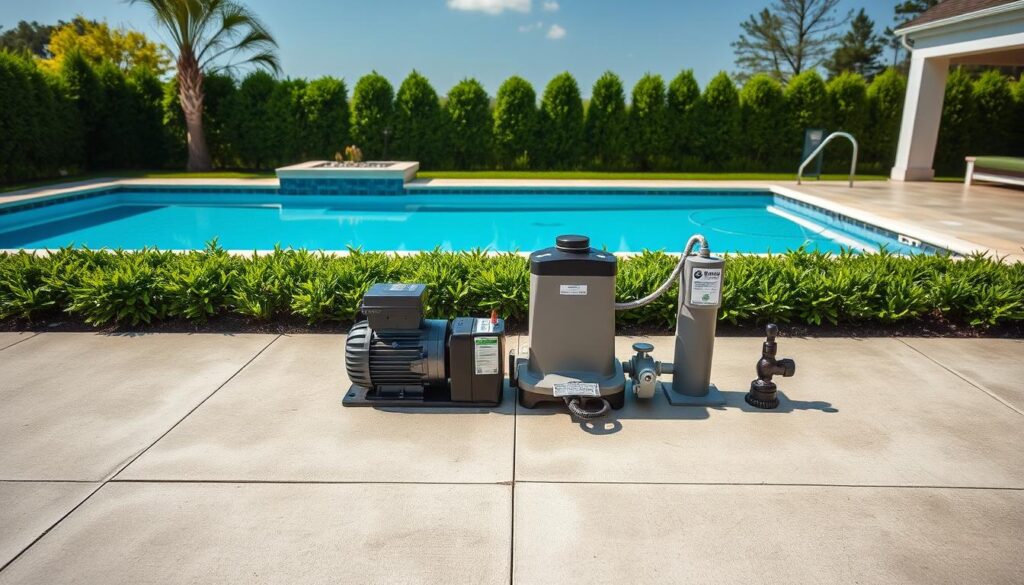
Creating the right pool equipment pad is key for your pool’s efficiency and life. The pad’s location and setup greatly affect your pool’s performance and upkeep.
When picking a spot for your pool equipment pad, consider a few important things:
- Choose a location within 15-20 feet of the pool to cut down on plumbing runs
- Make sure the area is easy to get to and has good air flow
- Keep the equipment away from direct sunlight and harsh weather
Setting up the perfect equipment pad needs careful planning and precise work. Begin by making a level concrete slab for a stable base. A good starting size is 4 square feet by 8 square feet, which fits most pool equipment setups.
| Equipment Pad Considerations | Recommended Approach |
|---|---|
| Concrete Slab Size | 4 ft x 8 ft minimum |
| Distance from Pool | 15-20 feet |
| Electrical Installation | Certified electrician required |
| Ventilation | Prevent heat buildup |
Place your pool equipment on the pad carefully and secure it well to stop it from moving. It’s important to connect plumbing correctly: use the right fittings and sealants. Professional tip: Always have a certified electrician handle electrical connections to meet national and local safety codes.
Remember to add proper ventilation to avoid heat buildup and keep your equipment cool. Lastly, label all plumbing connections and equipment for easy maintenance and identification in the future.
Professional-Grade Materials and Tools for Pool Plumbing
Building a reliable pool plumbing system needs high-quality materials. These materials must handle intense water pressure and environmental challenges. Your pool’s life depends on the right components and connection products for durability and performance.
Choosing Quality PVC Pipes and Fittings
When picking pool plumbing materials, go for professional-grade components. They offer exceptional reliability. Key fittings include:
- 90-degree and 45-degree elbows for precise pipe routing
- Tees for creating branch connections
- Couplings to join pipe sections seamlessly
- Unions for easy equipment maintenance
- Ball valves to control water flow
Professional Sealants and Connection Products
Investing in top-tier connection materials prevents leaks and system failures. Products from hardware stores like Oatey might seem good at first but fail quickly. Professional-grade PVC primers and cements create permanent, leak-free bonds that last through extreme pressure and temperature changes.
Knowing how to use thread sealants is key. Decide between Teflon tape and pipe dope based on your needs. Professional-grade products ensure your pool plumbing lasts, preventing water loss and keeping the system efficient.
Common Pool Plumbing Issues and Troubleshooting Tips
Pool plumbing problems can quickly turn your backyard oasis into a maintenance nightmare. Understanding the most common issues helps you diagnose and resolve problems before they become costly repairs.
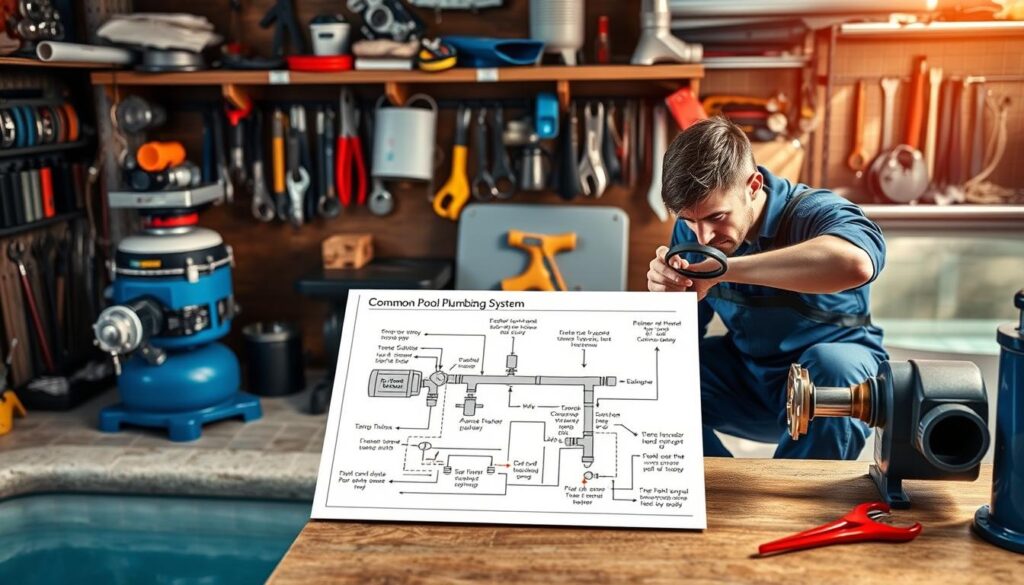
Pool owners often face several critical plumbing challenges. These can disrupt water circulation and system performance:
- Air leaks in the suction side that cause pump priming issues
- Clogged skimmer baskets reducing water flow
- Blocked return jets creating stagnant pool zones
- Leaking connections wasting water and reducing pressure
- Valve failures preventing proper water routing
Identifying these problems requires systematic inspection and understanding of your pool’s plumbing infrastructure. Early detection can save you significant time and money.
| Problem | Symptoms | Troubleshooting Steps |
|---|---|---|
| Air Leaks | Noisy pump operation | Check connection points, look for bubbles in pump basket |
| Clogged Baskets | Reduced water flow | Clean skimmer and pump baskets regularly |
| Return Jet Blockage | Uneven water circulation | Inspect and clean return jet openings |
Professional intervention becomes necessary when DIY repairs reach their limits. Knowing when to seek expert help prevents potentially expensive system damage.
Remember: Preventive maintenance is always cheaper than extensive repairs.
Implementing routine checks and understanding your pool’s plumbing system transforms you from a passive owner to an informed problem-solver. This ensures optimal pool performance and longevity.
Maintaining Your Pool Plumbing System for Longevity
Keeping your pool plumbing system in top shape needs regular care. Proper maintenance stops expensive fixes and keeps your pool running well all year.
Pool water levels are key to system performance. If levels are too low, the pump can’t pull water efficiently or might run dry, causing damage. If levels are too high, the skimmer can’t clear surface debris. Watch water levels closely, more so in extreme weather.
Regular Inspection Strategies
- Check pipes and connections monthly for leaks
- Inspect pump and filter seals
- Clean skimmer baskets weekly
- Test water chemistry every two weeks
Water Level Management Techniques
Managing water levels needs careful attention in different seasons:
| Season | Water Level Considerations | Recommended Action |
|---|---|---|
| Summer | High evaporation rates | Add water weekly, check levels daily |
| Rainy Season | Potential overflow | Use pump to drain excess water |
| Winter | Reduced usage | Maintain consistent water level |
*”Consistent maintenance is the key to a long-lasting pool plumbing system.”*
With a practical maintenance checklist, you’ll have a routine for pool care. This ensures your plumbing system works well every year. Stay ahead, and your pool will give you clear water and smooth operation.
Conclusion
Learning about pool plumbing turns your backyard into a special place for swimming. You now know how a good system keeps the water clear and inviting. This knowledge helps you make smart choices for your pool’s key parts.
Efficient water flow saves on chemicals and makes swimming better. Long-lasting equipment is a wise choice for your home. By understanding pool plumbing, you protect your fun space and avoid future problems.
Now, it’s time to act. You might do the work yourself or get help from pool experts. First, think about what you need for your pool, draw up plans, and ask for help when needed. Knowing your pool well brings peace of mind.
Use this chance to make your pool the best part of your summer. Your backyard is ready for you to plan and enjoy. Start now and make your pool a place of calm and fun for years.