
Affiliate Disclosure
Plumber Guide Guys is a participant in the Amazon Services LLC Associates Program, an affiliate advertising program designed to provide a means for sites to earn advertising fees by advertising and linking to Amazon.
How to Plumb a Grease Trap? Are you tired of costly kitchen plumbing disasters? Installing grease trap plumbing can prevent them. It’s your best defense against clogged drains and pollution.
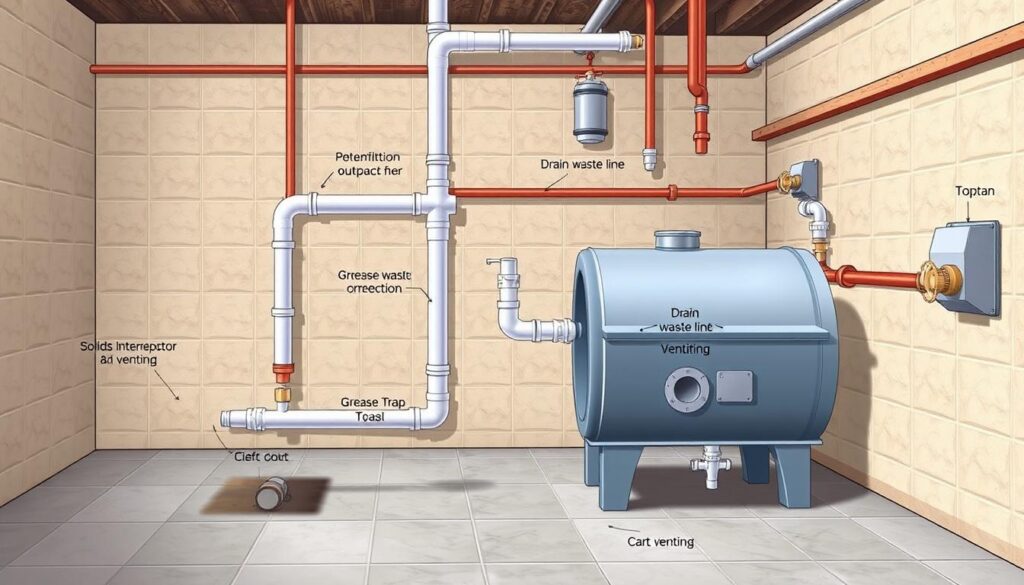
Commercial kitchens struggle with fats, oils, and grease (FOG). Learning to plumb a grease trap is key. It’s an investment in your kitchen’s efficiency and safety.
This guide will make installing grease trap plumbing easy. You’ll get expert tips and practical steps. They’ll help protect your kitchen’s drainage and keep you in line with local laws.
Key Takeaways
- Understand the critical role of grease traps in preventing plumbing blockages
- Learn step-by-step installation techniques for maximum effectiveness
- Discover how proper grease trap plumbing saves money long-term
- Recognize the environmental benefits of professional installation
- Master compliance requirements for commercial kitchen drainage
Table of Contents
Understanding Grease Traps and Their Importance
Commercial kitchens have special needs for managing wastewater. Grease traps are key to keeping grease trap drainage systems running smoothly. They protect plumbing and stop pollution.
What is a Grease Trap?
A grease trap catches and separates fats, oils, and grease (FOG) from wastewater. It acts as a filter to avoid plumbing problems.
Why Grease Traps are Essential for Commercial Kitchens
Managing FOG is vital in commercial kitchens. Grease traps help by:
- Stopping pipe blockages
- Lessening environmental harm
- Meeting local rules
- Protecting sewer systems
Types of Grease Interceptors
Commercial kitchens need different grease trap setups. The main types are:
- Under-sink grease traps: Good for small kitchens
- Large in-ground interceptors: Best for big restaurants
- Automatic grease removal units: High-tech with skimming
Choosing the right grease trap depends on your kitchen’s size and needs.
Local Codes and Compliance Requirements
Understanding plumbing codes for grease traps is complex. You must follow local rules to ensure safety and protect the environment. Your grease trap installation must meet these standards.
Different places have their own rules for grease interceptor plumbing diagrams. Knowing these rules is key to avoid legal trouble and expensive errors.
- Check local building codes specific to your area
- Verify health department regulations
- Obtain necessary permits before installation
- Schedule required inspections
When checking compliance, consider these important points:
| Regulatory Aspect | Compliance Requirements |
|---|---|
| Trap Size | Determined by kitchen volume and equipment |
| Installation Location | Must meet specific distance requirements |
| Venting Standards | Must follow local plumbing code specifications |
Pro tip: Always talk to local authorities or a licensed plumber. They can help you follow the latest grease trap plumbing codes.
Proper compliance protects your business from fines and keeps the environment safe.
Essential Tools and Materials for Installation
Getting ready for a diy grease trap installation needs careful planning and the right tools. Before starting, make sure you have all the necessary tools and materials. This will help you work smoothly and avoid problems with your grease trap pipe connections.
Your toolkit for a successful installation should include several key items:
- Pipe cutter or hacksaw
- Adjustable wrenches (multiple sizes)
- Screwdrivers (flathead and Phillips)
- Measuring tape
- Level
- Marker or pencil for marking
Plumbing Materials and Fittings
For effective grease trap pipe connections, you’ll need specific plumbing materials:
- PVC pipes of appropriate diameter
- Pipe connectors and elbows
- Plumber’s tape
- Pipe sealant
- Mounting brackets
- Rubber gaskets
Safety Equipment
Safety is key during diy grease trap installation. Essential safety gear includes:
- Heavy-duty work gloves
- Safety glasses
- Protective work boots
- Dust mask
- Knee pads for comfort during installation
Pro tip: Always double-check local plumbing codes and manufacturer specifications before beginning your installation project.
How to Plumb a Grease Trap
Installing grease trap plumbing needs careful planning and precision. Many restaurant owners choose professional installation. But knowing the process helps you make better decisions for your kitchen.
- Pipe cutter
- Measuring tape
- Level
- Adjustable wrench
- PVC pipes and fittings
- Pipe sealant
The installation process has several key steps:
- Site Preparation: Pick a spot near the kitchen’s main drainage with enough space and access.
- Measurements: Measure pipe connections and grease trap sizes for a perfect fit.
- Pipe Cutting: Cut pipes with a pipe cutter for clean, straight edges.
- Connection Setup: Align inlet and outlet pipes with the right slope for good drainage.
When installing, remember local building codes and compliance. Proper installation avoids costly repairs and ensures efficient wastewater management.
Professional tip: Always double-check connections and test for leaks before finishing the installation.
Each kitchen’s plumbing is different. If you face complex issues or are unsure, get a professional plumber. They ensure a safe and effective installation.
Proper Venting Requirements and Configurations
Venting is key to a grease trap system’s success. Knowing how to vent properly keeps your plumbing running smoothly and follows local rules. The right setup helps avoid clogs and keeps wastewater flowing well.
Experts say a good grease interceptor diagram must tackle venting issues. The PDI G101 standard offers essential advice for effective venting.
Air Intake Systems
Air intake systems are vital for good grease trap venting. They manage pressure inside the interceptor, ensuring waste moves smoothly. Important points include:
- Ensuring enough air circulation
- Stopping negative pressure buildup
- Keeping waste flow steady
Downstream Venting Techniques
Downstream venting tackles pressure issues in your grease trap system. By placing vents right, you can:
- Lessen turbulence in waste
- Lower blockage risk
- Keep system performance steady
Common Venting Mistakes to Avoid
Wrong venting can harm your grease trap system. Be careful of these big mistakes:
| Venting Error | Potential Consequence |
|---|---|
| Incorrect vent sizing | Restricted waste flow |
| Blocked air intake | Pressure buildup |
| Inadequate slope | Potential system failure |
“Proper venting is not just a technical requirement, it’s a critical component of maintaining a healthy plumbing system.” – Professional Plumbing Association
Knowing these venting needs helps your grease trap system work best. It also keeps you in line with local plumbing laws.
Installing Flow Control Devices
Flow control devices are key in your grease trap drainage system. They manage wastewater flow and prevent plumbing problems in commercial kitchens.
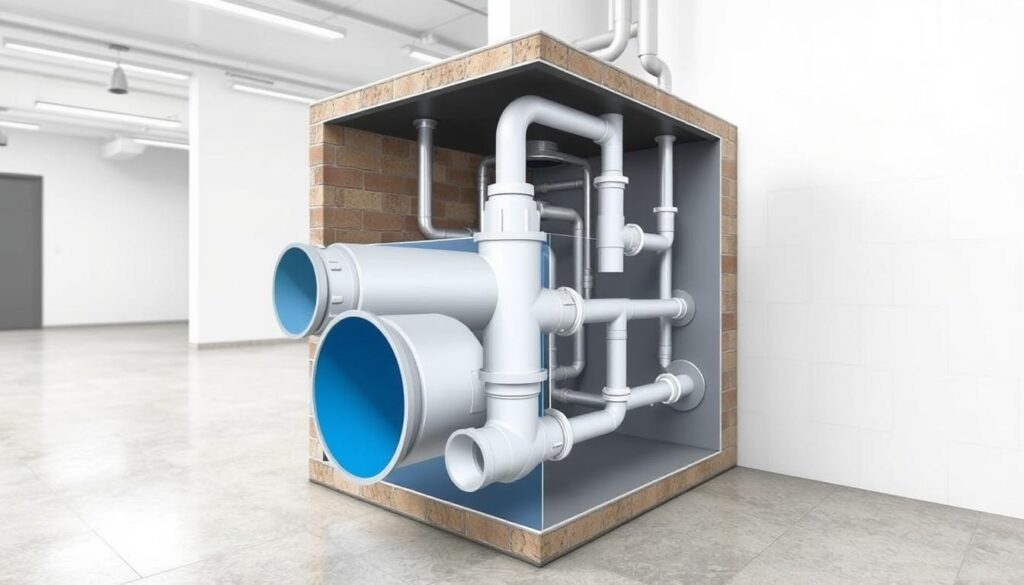
When making a grease interceptor plumbing diagram, think about where and what type of flow control device to use. The right one ensures your system works well and follows local plumbing rules.
- External vented flow controls
- Internal flow restrictors
- Certified PDI G101 devices
- ASME A112.14.3 Type A interceptors
Experts say to pick flow control devices that fit your kitchen’s needs. It’s important to size them right for your grease trap to work well. Your chosen device should handle wastewater volume and stop blockages.
Proper flow control installation can significantly reduce maintenance costs and extend your grease trap’s operational lifespan.
Important things to think about when installing include:
- Make sure the device fits with your plumbing
- Place it correctly upstream
- Follow the manufacturer’s instructions
- Make sure it meets local codes
Knowing what flow control devices you need helps make a better grease trap drainage system. This protects your commercial kitchen’s plumbing.
Connecting Inlet and Outlet Pipes
Connecting pipes for a grease trap is key in commercial kitchens. It’s all about detail and precision. This ensures your plumbing works well and avoids problems.
When you set up your grease trap, focus on three main pipe connection points:
Proper Pipe Sizing
Choosing the right pipe size is vital. It should match your kitchen’s flow rate and the trap’s capacity.
- Measure the total fixture output
- Consult manufacturer specifications
- Choose pipes that prevent bottlenecks
Slope and Grade Requirements
The slope is important for waste flow. Aim for a 1/4 inch per foot downward slope for grease trap plumbing.
| Pipe Type | Recommended Slope | Flow Efficiency |
|---|---|---|
| Cast Iron | 1/4 inch per foot | High |
| PVC | 1/4 inch per foot | Very High |
| Stainless Steel | 1/8 inch per foot | Moderate |
Sealing and Testing Connections
Sealing is critical to avoid leaks and contamination. Use top-notch sealants and test pressure to check for leaks.
“A well-sealed grease trap connection is the foundation of an efficient kitchen drainage system.” – Professional Plumbing Association
By sticking to these guidelines, you’ll have a strong and reliable plumbing system. It will support your kitchen’s cleanliness and function.
System Testing and Troubleshooting
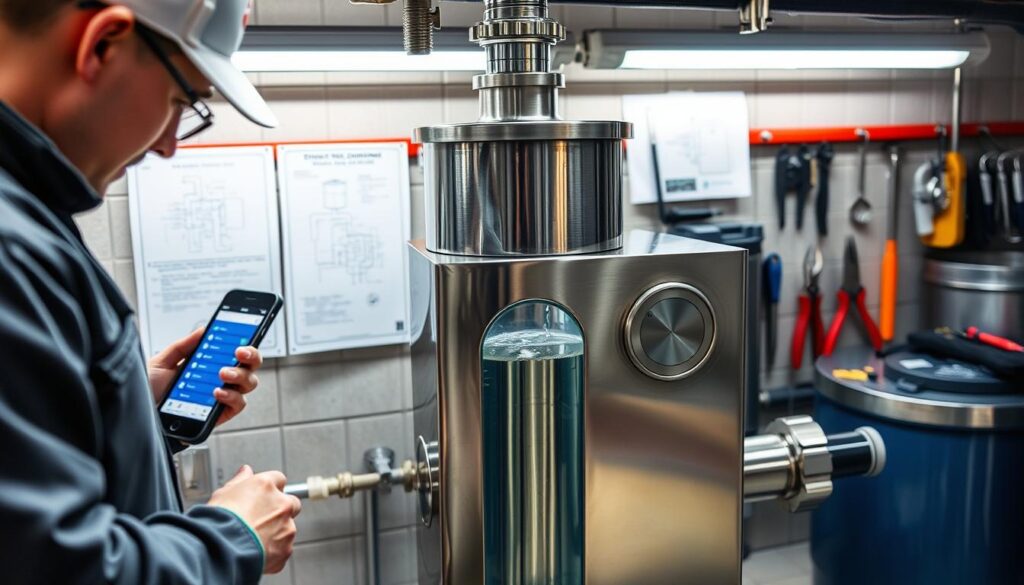
After you’ve installed your grease trap, it’s important to test it thoroughly. This ensures it works well. Testing helps find any problems and makes sure it’s doing its job right.
Here’s what to do when testing your grease trap:
- Turn on water supply gradually
- Check for any visible leaks
- Observe drainage flow rate
- Inspect pipe connections
- Verify grease separation mechanism
Look out for signs that might show you had problems during installation:
| Issue | Potential Cause | Recommended Action |
|---|---|---|
| Slow drainage | Improper pipe slope | Adjust pipe angle |
| Water backflow | Blocked inlet/outlet | Clean connections |
| Unusual odors | Inadequate sealing | Recheck pipe joints |
Pro tip: Keep a record of all test results and any changes you make. This can be very helpful for future maintenance and inspections.
If you keep having problems, it might be time to call a professional plumber. They know a lot about commercial kitchen setups. Fixing issues quickly helps your grease trap work right and follow health rules.
Maintenance Access Points and Clean-outs
It’s key to place maintenance access points right for a good grease trap setup. Your system needs entry points that let you check and clean easily. This way, you don’t have to take apart a lot.
Think about these important access point tips when setting up your grease trap:
- Put in clear and easy-to-reach clean-out ports
- Make sure panels can be removed for a full system check
- Design entry points that don’t mess up kitchen work
- Have several access spots for a complete clean
Your grease trap system should have well-thought-out maintenance points. These points should follow local health and safety rules. Good access means:
- Regular cleaning and waste removal
- Quick checks on system health
- Easy troubleshooting
- Less disruption to kitchen work
| Access Point Type | Best Practices | Maintenance Frequency |
|---|---|---|
| Under-sink Clean-out | Easy removal, sealed connections | Monthly inspection |
| Floor-level Port | Direct waste line access | Quarterly deep cleaning |
| External Access Panel | Large opening for full maintenance | Semi-annual professional service |
Pro tip: Always check local plumbing codes for your maintenance access points. This ensures you follow rules and keep your system running well.
Regular Maintenance and Cleaning Procedures
Keeping your commercial kitchen grease trap in good shape is key. It stops expensive plumbing problems and meets health rules. Taking care of it also makes your kitchen work better.
Cleaning Schedule Guidelines
How often you clean your grease trap depends on a few things:
- Kitchen size and cooking volume
- Types of food prepared
- Local plumbing code for grease traps requirements
You should clean it every one to three months. Clean it when it’s about 25% full.
Professional Maintenance Requirements
Some upkeep you can do yourself, but for the full job, you need pros. They:
- Do deep cleaning
- Check for structural problems
- Make sure you follow local rules
Record Keeping
Keeping detailed logs is very important. Your records should have:
- Dates of cleaning and inspection
- Services done
- Any repairs or issues found
- Names of technicians
Good records show how well your grease trap is doing. They also prove you’re following health rules during inspections.
Conclusion
Installing a grease trap in your commercial kitchen needs careful planning. Knowing how to plumb a grease trap can save you money and avoid legal issues. It also keeps your plumbing system safe and your kitchen running smoothly.
Putting in a grease trap is more than just a technical job. It’s a big investment in your restaurant’s setup. By following expert advice, you avoid costly repairs and shutdowns. Keeping up with maintenance and local rules is vital for long-term success.
For big kitchens or complex setups, getting help from a pro is best. While you can do it yourself for small places, a licensed plumber can offer valuable advice. They make sure your grease trap meets all the rules.
A good grease trap system is key to your kitchen’s success. Spend time learning how to install it right. Clean it regularly and know the local plumbing laws. This keeps your business safe and your kitchen clean.