
Affiliate Disclosure
Plumber Guide Guys is a participant in the Amazon Services LLC Associates Program, an affiliate advertising program designed to provide a means for sites to earn advertising fees by advertising and linking to Amazon.
How to Plumb a Boiler? Ever wondered what makes a pro boiler install different from a DIY mess? Learning about boiler plumbing can save you a lot of money and keep your heating system working well for years.
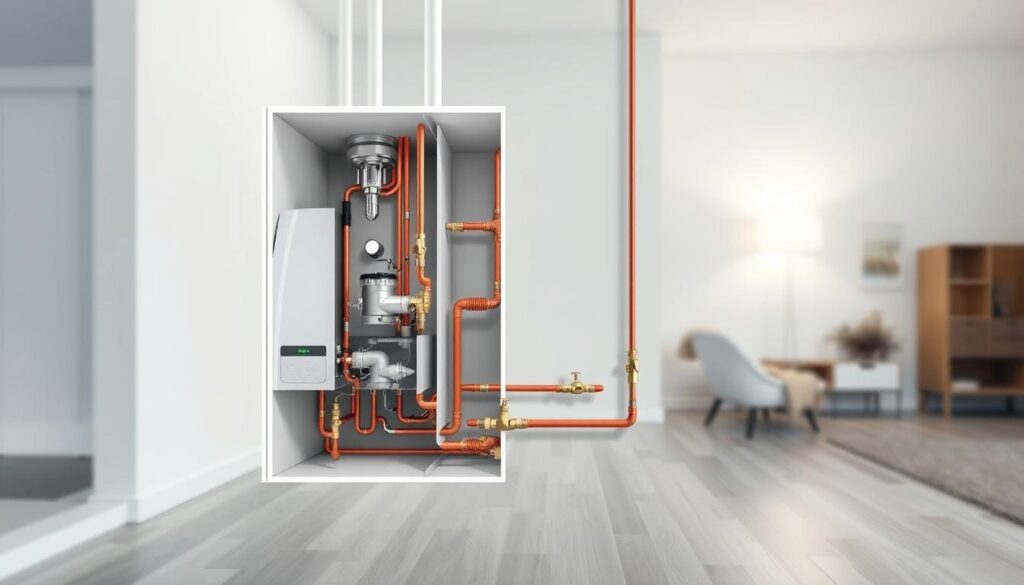
Installing a boiler is a detailed job that needs precision, technical skills, and strict safety rules. This guide will help you through each important step of plumbing a boiler.
Boiler plumbing is more than just connecting pipes. It’s about making a heating system that’s efficient, safe, and reliable. This system will keep your home warm when it’s cold outside.
Key Takeaways
- Professional boiler plumbing requires specialized skills and knowledge
- Safety and compliance are key in boiler installation
- Choosing the right tools is vital for a successful install
- Knowing your system parts helps avoid future problems
- Correct venting and connections are essential for the boiler’s best performance
Table of Contents
Understanding Boiler Systems and Their Components
Boiler systems are complex heating solutions that provide warmth and comfort to homes. Knowing how they work helps homeowners make smart choices about installation and upkeep.
A boiler is a sophisticated heating appliance that turns fuel into thermal energy. It has several key parts that work together to efficiently generate and spread heat.
What Is a Boiler and How Does It Work?
The fuel burner in a boiler atomizes fuel and mixes it with air. The ignition source sparks the fuel, and the blower fan ensures air flows right. Inside the refractory liner, intense heat is made and moved through the heat exchanger.
- Fuel enters the combustion chamber
- Ignition system creates controlled combustion
- Heat exchanger transfers thermal energy
- Circulating pump moves heated water
Hot Water vs Steam Boiler Systems
There are two main boiler types: hot water and steam systems. Hot water systems offer even, quiet heating perfect for today’s homes. Steam systems, on the other hand, heat up quickly and use less electricity.
Key Components of a Residential Boiler
Important boiler parts include:
- Expansion tank to manage water volume changes
- Pressure controls for safe operation
- Circulating pump for hot water distribution
- Radiators or baseboard heaters for heat delivery
Each part is vital in turning fuel into warm, steady home heating.
Essential Tools and Materials for Boiler Installation
Getting ready for a boiler installation means picking the right tools and materials. Professional plumbers know the right gear makes a big difference. It can turn a smooth project into a disaster.
Soldering and Pipe Connection Tools
- Propane or MAPP gas torch for copper pipe soldering
- Lead-free solder for secure pipe connections
- Flux for cleaning pipe surfaces
- Wire brushes to prepare pipe ends
- Pipe threading dies and handles
- Thread-cutting oil
- Pipe vises for secure material handling
Measurement and Leveling Equipment
- High-quality level for proper pipe slope
- Measuring tapes for accurate spacing
- Marking tools for precise cut lines
Safety Gear
- Safety glasses to protect from debris and sparks
- Heat-resistant work gloves
- Class B and C fire extinguisher
Your materials list should include specific piping components:
| Material Type | Specifications | Usage |
|---|---|---|
| Copper Pipe | Type L, ½-inch to 1-inch diameter | Water supply lines |
| Black Iron Pipe | Standard schedule 40 | Gas line connections |
| CSST Tubing | Corrugated stainless steel | Alternative gas line material |
Boiler system components are key. They include pressure relief valves, expansion tanks, and circulating pumps. Zone valves and backflow preventers are also important. Choosing the right ones ensures efficiency and safety.
Venting materials vary by boiler type. Use PVC for condensing boilers or Type B double-wall vent pipe for conventional ones. Being well-prepared helps avoid delays and ensures a successful installation.
Boiler Plumbing Requirements and Building Codes
Installing a boiler needs careful attention to local building codes and safety rules. Your project’s success depends on following specific requirements. These protect your property and your safety.
When planning a boiler installation, you’ll face several key compliance aspects:
- Minimum clearances around boilers (typically 6 inches from combustible materials)
- Proper combustion air supply (often requiring 50 cubic feet per 1,000 BTU/hour of input)
- Adequate venting sized according to boiler capacity
- Pressure relief valve requirements (mandatory on all boilers, set at 30 PSI for residential systems)
Understanding Regulatory Compliance
Most places require specific permits for boiler installations. These permits lead to multiple inspection stages, including:
- Rough-in inspection before concealing pipes
- Final inspection before operational status
- Potential additional gas line or electrical inspections
Certification Requirements
Professional certification is key for safe boiler installation. Different states need specific licenses:
- Master plumber licenses for water piping connections
- Gas fitter certifications for natural gas or propane connections
- Specialized boiler installer licenses in some regions
Failing to follow local regulations can lead to serious issues, including:
- Denied insurance claims
- Difficulty selling your property
- Potential liability for accidents
- Significant fines from building departments
While homeowners can work on single-family homes, boiler installations usually need a pro. This is because of their complexity and safety risks. Always check local rules and consider a licensed pro for a safe, compliant installation.
Preparing Your Space for Boiler Installation
Installing a new boiler needs careful planning for a smooth process. Modern condensing boilers are much lighter than old cast iron ones. They weigh 150-200 pounds, compared to 400-800 pounds of traditional units. This makes them easier to mount on walls and simpler to install.
- Maintain 6 inches clearance from combustible side walls
- Allow 6-12 inches from the front for service access to controls and burners
- Provide 12-18 inches overhead clearance for removing jacket panels
- Ensure adequate floor space for associated equipment like expansion tanks
For wall-mounted setups, extra steps are needed. Check the wall’s structure to make sure it can hold the boiler’s weight. Install mounting brackets securely and level to avoid problems later.
Your checklist should include:
- Remove old equipment and dispose of it at recycling facilities
- Verify floor drainage or install a drain pan
- Check that the floor is level and can support equipment weight
- Confirm combustion air supply meets code requirements
- Verify electrical service capacity
- Measure access points to ensure boiler can be moved into position
Keep your work area safe by using drop cloths and good lighting. A clean workspace helps avoid problems with pipes and fittings. This careful preparation helps avoid delays and ensures a successful installation.
How to Plumb a Boiler: Connecting Water Supply Lines
Setting up a boiler’s water supply system needs precision and attention to detail. Your goal is to create a reliable water connection. This connection should support filling the system and replenishing water lost through leaks or evaporation. It also needs to keep the system at the right operating pressure.
The water supply connection involves several key components. These components work together to ensure your boiler runs safely and efficiently. Knowing each step will help you do a professional installation.
Feed Water Supply Setup
When setting up your feed water supply, follow a specific sequence:
- Identify the cold water supply line (½-inch or ¾-inch copper/PEX piping)
- Install a tee fitting to create a dedicated boiler feed branch
- Ensure adequate water pressure (minimum 20 PSI, ideal 40-60 PSI)
Installing Pressure Reducing Valves and Backflow Preventers
Your boiler’s water supply needs strategic valve installations for protection:
- Shutoff valve for service isolation
- Backflow preventer to protect potable water
- Pressure reducing valve (PRV) to manage water pressure
| Valve Type | Protection Level | Recommended Use |
|---|---|---|
| Simple Check Valve | Minimum | Basic residential systems |
| Dual-Check Valve | Moderate | Enhanced residential protection |
| Reduced Pressure Zone (RPZ) | Maximum | Commercial and high-risk applications |
Remember to install valves in the correct flow direction. Adjust pressure to the optimal 12-15 PSI range for residential boiler systems. Proper installation ensures long-term reliability and prevents water damage.
Connecting Pipes to a Boiler and Heat Distribution System
Creating an efficient heat distribution system needs careful planning. It’s important to understand different piping setups. Each home has its own challenges when it comes to heating.
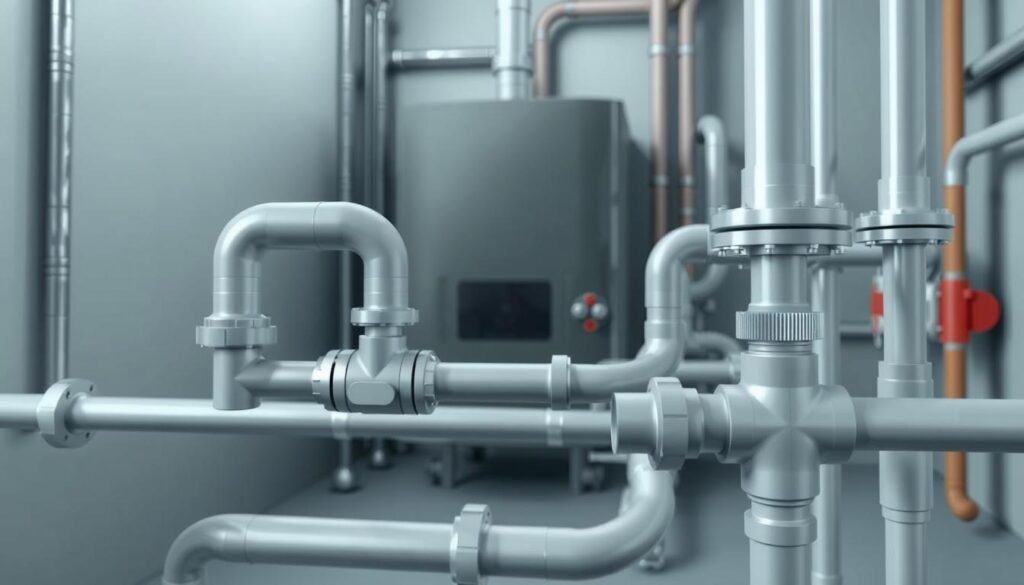
- Series loop: Simplest design with all radiators connected in a continuous circuit
- One-pipe system: Main loop with radiators branching off and returning to the same pipe
- Two-pipe direct return: Separate supply and return mains with individual radiator connections
- Two-pipe reverse return: Balanced system ensuring equal flow distribution across all radiators
Pipe sizing is key to system efficiency. Pipes that are too small create too much resistance, needing bigger pumps and wasting energy. On the other hand, pipes that are too big cost more and might cause flow problems.
| Pipe Size | Typical Application |
|---|---|
| ¾-inch | Main distribution lines serving multiple radiators |
| ½-inch | Individual radiator connections |
| 1-inch | Main supply/return lines in larger homes |
Begin at the boiler’s supply outlet when installing. First, put in a shutoff valve for service isolation. Then, add a flow check valve to stop reverse circulation. For hot water systems, an expansion tank is essential. It handles water volume increases as temperature goes up.
Make sure to support your piping well. Use hangers or brackets every 4-6 feet for horizontal copper runs. Also, install shutoff valves on radiator supply and return connections. This lets you isolate individual units without draining the whole system.
In multi-zone systems, use zone valves or additional circulators for independent flow control. Each zone has its own temperature control through separate thermostats. This boosts comfort and energy savings.
Installing the Boiler Drain and Condensate System
Proper drainage is key for your boiler’s health and avoiding water damage. Knowing how boiler drain and condensate systems work is important. It ensures your system runs well and meets local plumbing codes.
The boiler drain is vital for keeping your heating system in top shape. A typical boiler drain valve is a hose-thread valve at the lowest point. It lets you drain water for maintenance, winterization, or repairs.
Drain Location and Slope Requirements
When setting up your boiler drain, keep these points in mind:
- Connect a ¾-inch drain valve to the boiler’s bottom outlet
- Ensure the valve handle is easily accessible
- Route a permanent drain line to a floor drain
- Maintain a downward slope of at least ¼-inch per foot
Condensate Drainage for High-Efficiency Boilers
High-efficiency condensing boilers need special care for their condensate drainage. These systems make 2-8 gallons of condensate daily. The condensate has a pH of 3.5-5.0, which is slightly acidic.
| Condensate Drainage Component | Specifications |
|---|---|
| Drain Connection | ½-inch or ¾-inch outlet |
| Trap Type | P-trap (3-5 inch water column depth) |
| Piping Material | PVC, CPVC, or polypropylene |
In tough drainage spots, condensate pumps can be a lifesaver. These small electric pumps start when condensate builds up. They prevent blockages in your system.
Don’t forget to protect condensate lines from freezing in cold areas. Use insulation or heat trace cables. Regular upkeep and correct setup will keep your boiler’s drainage system working well.
Proper Boiler Venting and Flue Outlet Installation
Boiler venting is key for safe and efficient heating. There are different systems to handle exhaust gases. Each has its own features and setup needs.
The three main types of boiler venting systems are:
- Natural draft (atmospheric) systems: Use hot gas buoyancy to rise through a chimney
- Power vented systems: Employ fans to push exhaust gases out
- Direct vent (sealed combustion) systems: Take in combustion air from outside and exhaust through the same opening
Most modern high-efficiency condensing boilers use direct vent systems. These systems remove so much heat that the exhaust gases are too cool (usually 100-140°F) to create enough natural draft.
The choice of vent pipe material depends on the exhaust temperature:
- For conventional boilers (over 400°F), Type B double-wall vent pipe is needed
- Condensing boilers (under 200°F) can use PVC, CPVC, or polypropylene pipes
Coaxial venting systems are the most common for direct-vent boilers. They have a smaller exhaust pipe inside a larger intake pipe. This setup is efficient because it preheats the incoming combustion air.
Important installation points include:
- Following strict vent terminal clearance rules
- Ensuring the right slope for horizontal pipes
- Sealing wall and roof penetrations correctly
- Following the manufacturer’s exact specifications
The last steps involve a detailed inspection. This includes checking joint seals, verifying pipe slope, and confirming support. It ensures the boiler venting system works safely and efficiently.
Gas Line or Oil Supply Connections
Connecting your boiler to a fuel source needs careful planning and precise installation. Whether it’s natural gas or oil, knowing the technical details is key for safe and efficient use.
Natural Gas Supply Line Installation
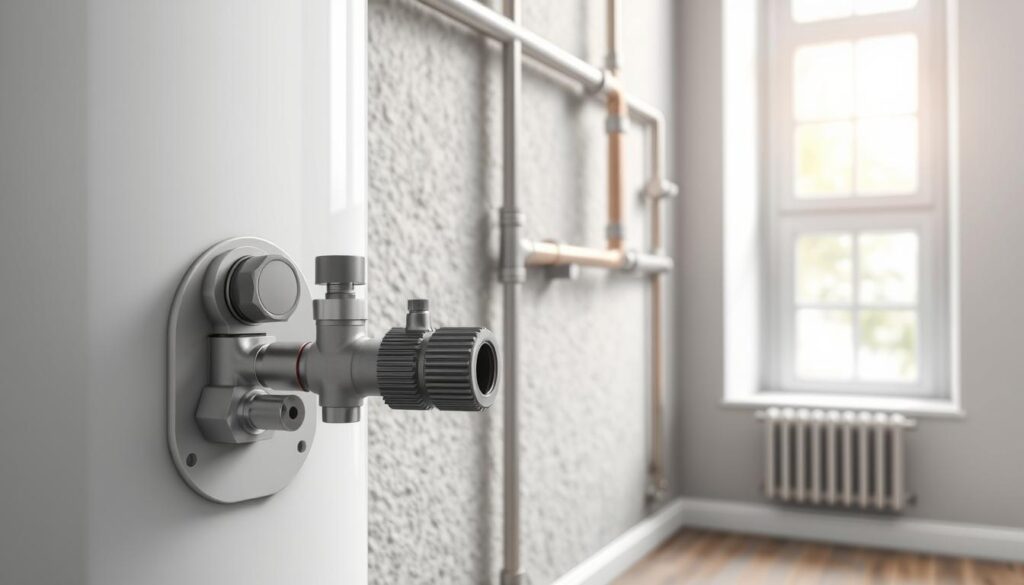
Utility gas flows from street mains to your gas meter. This measures your gas use for billing. Boilers usually need gas pipes from ½-inch to 1-inch, based on size and distance from the meter.
- Gas pipe material options:
- Black iron pipe (traditional, durable)
- CSST (Corrugated Stainless Steel Tubing)
- PE (polyethylene) pipe for outdoor runs
“Proper gas line sizing prevents incomplete combustion and safety hazards.” – HVAC Safety Guidelines
Critical Gas Line Installation Steps
- Connect at existing gas line or meter outlet
- Install immediate shutoff valve
- Route gas line directly to boiler location
- Support line every 4-6 feet
- Install sediment trap near boiler
Oil Tank and Fuel Delivery System Setup
For oil-based systems, storage tanks vary. Indoor tanks are usually 275-330 gallons. Outdoor tanks can be aboveground or underground.
| Tank Location | Typical Size | Installation Considerations |
|---|---|---|
| Indoor (Basement) | 275-330 gallons | Stable, level surface |
| Outdoor (Aboveground) | 330-500 gallons | Concrete pad, weather protection |
| Underground | 500-1000 gallons | Environmental regulations |
Professional installation makes your fuel supply connections safe, code-compliant, and reliable for your boiler.
Electrical Connections and Thermostat Installation
Setting up electrical connections for your home boiler is a job that needs focus and safety steps. Most home boilers use 120-volt power, but some bigger ones might need 240 volts. First, check the boiler’s rating plate for electrical needs.
- Dedicated circuit with no shared loads
- Proper circuit sizing (5-15 amps)
- Appropriate wire gauge (14 AWG or 12 AWG)
- Electrical disconnect switch within 10 feet of boiler
When you connect electrical parts, precision is key. You must find the right wires for line (hot), neutral, and ground. Connect them right to avoid damage or shock.
“Electrical safety isn’t optional—it’s essential for protecting your home and family.”
Installing thermostats means picking the right spot and wiring it up right. Choose spots on interior walls, 5 feet up, away from heat and drafts. Use standard wire colors to connect correctly:
| Wire Color | Terminal | Function |
|---|---|---|
| Red | R | 24V Power |
| White | W | Heat Call |
| Green | G | Fan Control |
| Yellow | Y | Cooling |
Smart thermostats let you program for better heating and save up to 15% on energy.
Testing Your Boiler System for Safe Operation
Checking your boiler system is key for safe and efficient use. It needs thorough testing and careful checks. Professional installers pay close attention to every detail, from finding leaks to checking how well the system works.
Comprehensive Leak Detection Techniques
Finding leaks in your boiler system takes several steps:
- Visual inspection for obvious dripping or seeping
- Feeling connections with dry hands to detect moisture
- Placing paper towels under suspicious joints to identify slow leaks
- Applying leak detection solution to gas piping connections
Minor leaks at new connections might fix themselves as the joint compound fills in. But, any leak that keeps coming back needs a full check, fixing the threads, and reassembling carefully.
Pressure Testing Protocol
| Test Parameter | Acceptable Range |
|---|---|
| Test Duration | 30 minutes minimum |
| Pressure Drop | 1-2 PSI maximum |
| Normal Operating Pressure | 12-15 PSI |
For soldered copper joints, you need to drain, cut, and then solder again. If the pressure drops more than 1-2 PSI, you have leaks that need fixing.
Initial System Startup Verification
Before starting, make sure your boiler is ready:
- Check the valve positions
- Make sure there’s fuel
- Look at the electrical connections
- Set the thermostat right
- Get rid of air in the system
Follow the maker’s start-up guide closely. Watch how the burner lights, check the flame, and see how the system works at first.
Conclusion
Installing a boiler needs more than just basic home repair skills. This guide shows how important professional certification is for safe and effective heating system installations. It helps homeowners make smart choices when hiring professionals and spotting quality work.
This journey through boiler installation covers key aspects, from system components to electrical connections. It highlights the need for professional licensing. Proper installation prevents dangers like scalding injuries, fires, and carbon monoxide leaks. For HVAC students and apprentices, it lays a strong foundation in hydronic heating systems.
Regular maintenance is vital to keep your boiler running well for years. Annual checks, water quality tests, and quick fixes for performance issues are essential. Experienced tradespeople will find valuable reference material for ongoing learning through manufacturer training and hands-on experience.
Whether you’re a homeowner, HVAC student, or professional, knowing about boiler plumbing gives you confidence. By focusing on safety, efficiency, and professional skills, you’ll get reliable heating. This saves energy and helps the environment in homes across the United States.