
Affiliate Disclosure
Plumber Guide Guys is a participant in the Amazon Services LLC Associates Program, an affiliate advertising program designed to provide a means for sites to earn advertising fees by advertising and linking to Amazon.
How to Plumb a Bathroom in the Basement? Ever thought about turning your unfinished basement into a cozy bathroom? Plumbing a basement bathroom might seem hard, but it’s doable with the right steps.
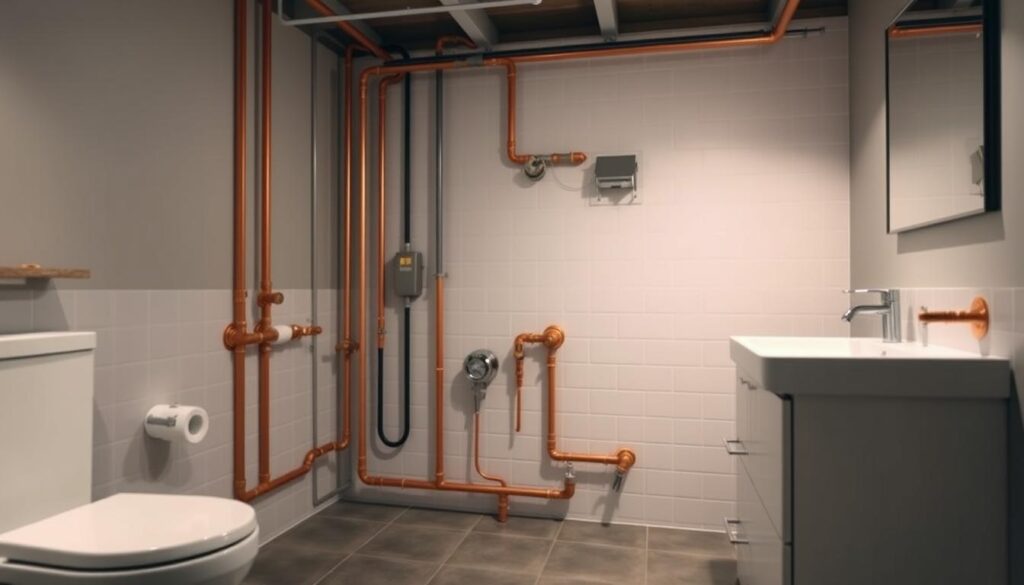
Setting up a basement bathroom needs careful planning. It’s different from regular bathrooms because of gravity. You can pick between gravity-fed systems or upflush pumps, based on your basement’s layout.
Doing it yourself can save you money, with costs ranging from $101 to $250. Hiring a pro will cost between $1,500 and $2,000. Knowing how to do it can help you save a lot.
Key Takeaways
- Basement bathrooms require special plumbing considerations
- Two primary installation methods exist: gravity-fed and upflush systems
- DIY installation can significantly reduce project costs
- Understanding drainage challenges is key for success
- Proper planning prevents costly mistakes
Table of Contents
Understanding Basement Bathroom Plumbing Basics
Plumbing a basement bathroom needs special knowledge and careful planning. The unique challenges of underground spaces make it a complex task. It demands precise engineering and strategic design.
Basement plumbing faces distinct obstacles compared to standard home installations. Your main challenge is managing water flow in a space below ground level. Traditional gravity-based drainage systems become more complicated underground.
The Challenge of Downhill Water Flow
Gravity naturally moves water downward. But basement fixtures are often at or below the main sewer line elevation. This creates unique drainage challenges that need innovative solutions:
- Precise elevation measurements
- Potential need for specialized pumping systems
- Strategic pipe positioning
- Understanding local building codes
Drain-Waste-Vent System Fundamentals
A basement plumbing diagram shows the critical components of the drain-waste-vent (DWV) system. This network has three essential elements:
- Drain Lines: Remove water from fixtures
- Waste Lines: Transport sewage from toilets
- Vent Lines: Allow sewer gases to escape
“Proper DWV system design is the backbone of functional basement bathroom plumbing.” – Professional Plumbing Association
Understanding these systems ensures your basement bathroom rough-in meets professional standards. It also maintains long-term functionality.
Planning Your Basement Bathroom Layout
Adding a bathroom to your basement needs careful planning. First, you must assess your basement’s current state and any challenges it might have.
Begin by looking at your basement’s setup. You should think about a few important things:
- Existing rough-in plumbing locations
- Main sewer line depth and position
- Available ceiling height
- Potential obstacles like support posts or electrical panels
Where you place your bathroom affects the project’s complexity and cost. Using existing plumbing can save a lot of money. Moving drain lines means breaking concrete and expensive changes.
When planning your bathroom layout, consider these points:
- Proximity to current plumbing connections
- Accessibility from main basement areas
- Minimum ceiling height requirements
- Determining bathroom type (half-bath, three-quarter, or full bath)
Building codes set rules for bathroom sizes. Make sure your bathroom meets these standards:
- 15 inches from toilet centerline to walls
- 21 inches clear space in front of toilets
- 30 inches clear space in front of sinks
Before you start building, make a detailed floor plan. Double-check your measurements and always follow local building codes. Getting the right permits is essential to avoid legal and insurance issues.
Choosing Between Gravity-Fed and Upflush Systems
When you’re planning a basement bathroom, picking the right plumbing system is key. Your choice depends on your basement’s layout, sewer line elevation, and how easy it is to install. You have two main options: traditional gravity-fed systems and modern upflush toilet systems.
Gravity-fed systems are best if your basement floor is higher than the sewer line. They use natural water flow and need big changes to the floor. On the other hand, upflush toilet systems are more flexible for tricky basement setups.
When to Use a Sewage Ejector Pump
A sewage ejector pump is needed in certain situations. You’ll need it when:
- Your basement floor is below the main sewer line
- Gravity-based drainage is impossible
- You want to keep the floor from getting too much damage
The sewage ejector pump collects waste in a basin and pumps it up to the sewer line. This makes sure waste is removed properly in hard-to-reach basement areas.
Macerating Toilet System Benefits
Macerating toilet systems offer special benefits for basement bathrooms:
| Benefit | Description |
|---|---|
| Flexible Installation | Can be installed with little floor damage |
| Vertical Pumping | Pumps waste up to 15 feet vertically |
| Multiple Fixture Support | Can handle toilet, sink, and shower waste |
The upflush toilet system lets you have a working bathroom in places where regular plumbing won’t work. Remember, these systems need electricity and might make some noise.
How to Plumb a Bathroom in the Basement
Plumbing a bathroom in the basement needs careful planning and precise work. First, gather the right tools and materials for a successful job. Proper preparation is essential when plumbing a basement bathroom.
- Power tools: Jackhammer, reciprocating saw, cordless drill
- Measuring tools: Level, tape measure
- Safety equipment: Safety glasses, work gloves
- Pipe cutting and joining tools: Pipe cutter, pipe wrench
Your materials list should include:
- PVC or ABS pipes (2-inch, 3-inch, and 4-inch)
- Pipe fittings (elbows, tees, wyes)
- Pipe primer and cement
- Concrete patch material
The steps to plumb a basement bathroom are key:
- Layout Planning: Mark fixture locations on the basement floor
- Floor Preparation: Break concrete if needed for drain lines
- Drainage Installation: Install drain pipes with the right slope
- Water Supply Lines: Run hot and cold water lines to fixtures
- Vent System: Connect vent pipes to the existing stack
Important tips for success include keeping pipe slope right, ensuring tight connections, and doing thorough pressure tests. Always check local building codes and get necessary permits before starting your basement bathroom plumbing project.
Pro tip: When in doubt, consult a professional plumber to ensure your basement bathroom meets all safety and building requirements.
Breaking Through Concrete for Under-Slab Plumbing
Setting up a basement bathroom means a lot of work under the slab. You have to break through the concrete floor. This is to make the drainage system for your new bathroom. Knowing the right steps can help make this hard task easier.
Essential Tools for Concrete Floor Preparation
To break through concrete, you need the right tools. Here’s what you’ll need for this tough job:
- Electric jackhammer for concrete removal
- Sledgehammer for breaking concrete chunks
- Spade for excavating soil
- Shop vacuum for cleanup
- Safety equipment (glasses, hearing protection, dust mask)
- Chalk line for precise marking
- Concrete saw for controlled cutting
Creating Optimal Drainage Slopes
Getting the drainage right is key for your basement shower. You need a slope of at least 1/4 inch per foot towards the sewer. This keeps water flowing right and stops backups.
When you’re doing under-slab plumbing, remember to:
- Determine the main sewer line connection point
- Calculate required depths for each fixture
- Use a laser level to verify precise slope
- Create a stable base using sand or gravel
Professional tip: Always test your drainage system by running water through the pipes before finishing. Incorrect slopes can lead to significant plumbing problems down the line.
Installing Rough-In Plumbing for Basement Fixtures
When you start a basement bathroom project, planning your plumbing is key. The rough-in stage is very important. It makes sure your bathroom works right and follows local building rules.
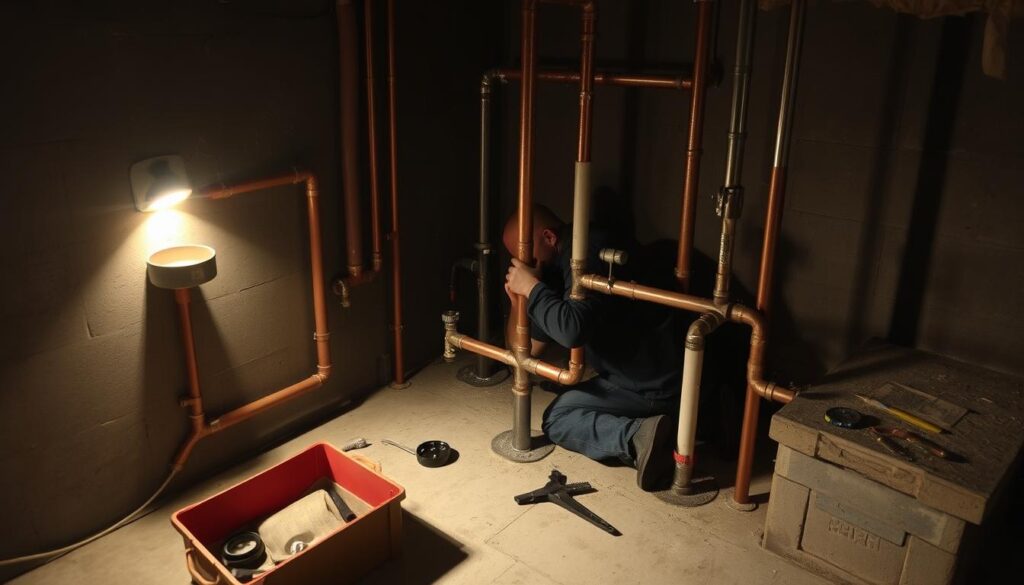
Setting up your basement bathroom’s plumbing needs careful steps. You must measure accurately and work with precision:
- Determining exact pipe locations for each fixture
- Installing drain and water supply lines
- Positioning vent pipes
- Preparing for fixture connections
Most basement bathrooms need three main plumbing systems:
- Drain Lines: Make sure they slope right and connect to the main sewer line
- Water Supply: Use pipes with the right size and pressure
- Vent System: Ensure good air flow for drainage
Each fixture has its own size needs. For example, toilet drains should be 12 inches from the back wall. Sink drains are usually 16-20 inches high. Always check the maker’s advice for your fixtures.
Pro tip: Always schedule a professional inspection before closing walls to ensure your basement bathroom rough-in meets local building codes.
Good planning and precise work in the rough-in phase save time and money. It prevents costly fixes later.
Connecting to Existing Sewer and Vent Lines
Connecting your basement toilet plumbing to existing sewer and vent lines needs precision and planning. The process involves detailed connections that affect your home’s plumbing system. Understanding these connections is key to proper drainage and avoiding water damage.
When working on basement toilet plumbing, you must find and connect to your home’s main sewer and vent lines. These connections are vital for waste removal and ventilation.
Proper Pipe Sizing and Spacing Requirements
Choosing the right pipe sizes and spacing is critical for basement toilet plumbing. Here are important points to remember:
- Main sewer lines need 4-inch pipes
- Toilet drains should have at least 3-inch pipes
- Horizontal drain pipes must be supported every 4 feet
- Vertical drain pipes need support every 10 feet
- Keep a slope of 1/4 inch per foot for best drainage
Building Code Compliance Considerations
Following building codes is key for safe and legal basement toilet plumbing. Local rules differ, but most follow standard plumbing rules.
| Code Requirement | Description |
|---|---|
| Inspection | All work must be checked by professionals |
| Venting | Proper venting is needed for all fixtures |
| Permits | Get the required local building permits |
| Materials | Use approved plumbing materials |
Pro tip: Always consult a licensed plumber for complex basement toilet plumbing connections to ensure safety and code compliance.
Installing Bathroom Fixtures and Final Connections
Your basement bathroom plumbing installation is almost done when it’s time to put in the fixtures. This step is very important. You need to be careful and precise to avoid leaks and make sure everything works right.
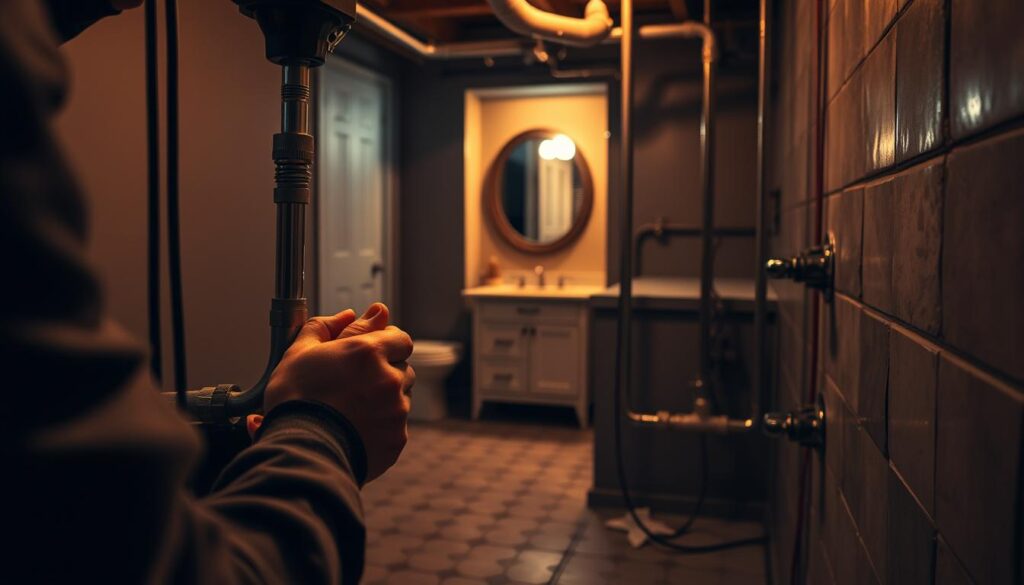
First, get your space ready after finishing the walls and floors. The order in which you install things is key. Here’s the best order:
- Bathtub or shower installation
- Vanity and sink placement
- Toilet positioning
- Final fixture connections
When you put in your bathtub, make sure it’s against wall studs. Use shims to level it perfectly. Then, follow the manufacturer’s instructions to secure it. Make sure the drain assembly is connected to the p-trap tightly and correctly.
For the toilet, focus on the flange height and seal quality. A well-installed toilet prevents leaks and works well for a long time. Place the wax ring, position the toilet carefully, and press down gently but not too hard.
| Fixture | Key Installation Considerations |
|---|---|
| Bathtub | Level placement, secure mounting, proper drain connection |
| Toilet | Correct flange height, wax ring seal, careful positioning |
| Vanity/Sink | Level mounting, secure connections, leak testing |
Vanity and sink installation needs to be precise. Make sure the vanity is level and attached to wall studs. Connect the water supply lines carefully. Always use thread seal tape and hand-tighten before making any final adjustments.
“Proper fixture installation is the difference between a functional bathroom and an expensive renovation nightmare.” – Professional Plumbing Expert
Always test all connections well. Run water through each fixture, look for leaks, and make sure everything works right. Only then can you say your basement bathroom plumbing installation is complete.
Conclusion
Adding a bathroom to your basement needs careful planning and smart execution. It might seem tough, but homeowners can do it by breaking it down. Understanding plumbing challenges and preparing well are key.
Building your own basement bathroom can save a lot of money. According to Family Handyman, materials cost about $250. This is much less than what plumbers charge, which is $1,500-2,000. By doing some work yourself and hiring pros for the hard parts, you save money and get quality.
For a successful bathroom project, mix DIY and professional help. Do what you can, like tearing down walls and finishing. But, for plumbing and rough-in work, get experts. This way, you avoid risks and costly fixes.
Many homeowners have added bathrooms to their basements and done well. With good research, attention to detail, and a willingness to learn, you can too. Your new bathroom will make your home better, possibly increase its value, and add useful space for years.
FAQ
How much does it cost to add a bathroom in the basement?
How much does it cost to add a bathroom in the basement?
FAQ
How much does it cost to add a bathroom in the basement?
The cost varies. DIY materials cost between 1-0. Professional installation can cost
FAQ
How much does it cost to add a bathroom in the basement?
The cost varies. DIY materials cost between $101-$250. Professional installation can cost $1,500-$2,000. Your total cost depends on plumbing complexity, sewage pump needs, and concrete work.
Do I need a permit to install a basement bathroom?
Yes, you need a permit. Not getting one can lead to fines and insurance problems. Always check with your local building department before starting.
What are the two main drainage systems for basement bathrooms?
There are two main systems. Gravity-fed systems work when your basement floor is higher than the sewer line. Pump-assisted systems, like sewage ejector pumps, are needed for lower basements.
How difficult is it to install a basement bathroom?
It’s an intermediate-level project. You’ll need skills in concrete work, plumbing, and measurements. DIY enthusiasts can do most of it, but professional help is often needed for plumbing connections.
What is the most challenging part of basement bathroom plumbing?
Managing water flow against gravity is the biggest challenge. You’ll need to plan drainage slopes, possibly install a sewage ejector pump, and ensure proper pipe installation.
How long does it take to install a basement bathroom?
Installation takes days to weeks, depending on your skill and project complexity. The process includes planning, permits, breaking concrete, plumbing, installing fixtures, and finish work.
What are the key plumbing components I’ll need?
You’ll need PVC or ABS pipes, fittings, primer, cement, a sewage ejector pump (if needed), and venting components. Make sure materials meet local building codes.
Can I install a basement bathroom in an older home?
Yes, but it’s more challenging. Older homes may have cast iron pipes, limited space, or complex sewer lines. A professional plumber should inspect your systems before starting.
What slope do drainage pipes need in a basement bathroom?
Pipes must slope downward at least 1/4 inch per foot toward the sewer. This ensures waste removal and prevents clogs.
Do I need special venting for a basement bathroom?
Yes, proper venting is essential. Each fixture needs specific vent sizing and must connect to the vent stack or roof. Venting prevents sewer gases and ensures drainage.
,500-,000. Your total cost depends on plumbing complexity, sewage pump needs, and concrete work.
Do I need a permit to install a basement bathroom?
Yes, you need a permit. Not getting one can lead to fines and insurance problems. Always check with your local building department before starting.
What are the two main drainage systems for basement bathrooms?
There are two main systems. Gravity-fed systems work when your basement floor is higher than the sewer line. Pump-assisted systems, like sewage ejector pumps, are needed for lower basements.
How difficult is it to install a basement bathroom?
It’s an intermediate-level project. You’ll need skills in concrete work, plumbing, and measurements. DIY enthusiasts can do most of it, but professional help is often needed for plumbing connections.
What is the most challenging part of basement bathroom plumbing?
Managing water flow against gravity is the biggest challenge. You’ll need to plan drainage slopes, possibly install a sewage ejector pump, and ensure proper pipe installation.
How long does it take to install a basement bathroom?
Installation takes days to weeks, depending on your skill and project complexity. The process includes planning, permits, breaking concrete, plumbing, installing fixtures, and finish work.
What are the key plumbing components I’ll need?
You’ll need PVC or ABS pipes, fittings, primer, cement, a sewage ejector pump (if needed), and venting components. Make sure materials meet local building codes.
Can I install a basement bathroom in an older home?
Yes, but it’s more challenging. Older homes may have cast iron pipes, limited space, or complex sewer lines. A professional plumber should inspect your systems before starting.
What slope do drainage pipes need in a basement bathroom?
Pipes must slope downward at least 1/4 inch per foot toward the sewer. This ensures waste removal and prevents clogs.
Do I need special venting for a basement bathroom?
Yes, proper venting is essential. Each fixture needs specific vent sizing and must connect to the vent stack or roof. Venting prevents sewer gases and ensures drainage.