
Affiliate Disclosure
Plumber Guide Guys is a participant in the Amazon Services LLC Associates Program, an affiliate advertising program designed to provide a means for sites to earn advertising fees by advertising and linking to Amazon.
How to Make a Plumbing Snake Turn Corners? Ever wondered how pros make a drain snake go around tight bends without getting stuck? Learning to make a plumbing snake turn corners can boost your DIY plumbing skills. It can turn you from a beginner to a pro.
Plumbing snakes are key for clearing tough clogs. But, they need special techniques to move well through complex pipes. Knowing how to guide a drain snake through tight bends can save you time, money, and avoid plumbing problems.
This detailed guide will show you the exact methods pros use to make plumbing snakes move smoothly through tough pipe setups. Whether you’re a homeowner or a DIY newbie, learning these tricks will help you deal with drain blockages with confidence.
Key Takeaways
- Learn advanced techniques for making plumbing snakes turn corners
- Understand the critical role of cable tension and selection
- Discover professional strategies for navigating complex pipe systems
- Prevent possible damage to pipes during drain cleaning
- Recognize when DIY methods reach their limits
Table of Contents
Understanding Plumbing Snakes and Their Basic Functions
Plumbing snakes are key tools for fixing stubborn drain blockages at home. They help you deal with tough clogs without needing a plumber every time. Knowing how they work can save you time and money on drainage problems.
Drain cleaning needs special tools, and plumbing snakes are your main tool against pipe blockages. The right snake makes it easier to handle different drainage problems.
Types of Plumbing Snakes
There are many plumbing snake types for different needs:
- Drain Augers: Good for sinks, showers, and tubs
- Closet Augers: Made for toilet blockages
- Motorized Snakes: Strong for tough clogs
- Manual Handheld Snakes: Small and easy to carry
Components of a Drain Snake
To use flexible plumbing snake techniques, you need to know its parts:
- Flexible Cable: Reaches deep into pipes
- Handle or Grip: Helps you control it
- Protective Coatings: Keep pipes safe
- Attachable Heads: Fit different blockages
How Plumbing Snakes Work
Plumbing snakes work by putting a flexible cable into pipes. The cable can go around tight corners and breaks up blockages. Using the right technique is key for cleaning drains well.
“A skilled plumber knows that a snake is only as good as the person operating it.” – Professional Plumbing Insight
The secret to success is knowing your pipes and using gentle pressure. This helps you move the snake through your home’s pipes effectively.
Essential Tools and Safety Equipment for Drain Cleaning
Getting ready for drain cleaning means focusing on safety and the right tools. You’ll need specific gear to safely and effectively work with plumbing snakes, even in tight spots.
Your safety is the most important thing when using plumbing snakes. The right tools can keep you safe and make cleaning drains easier.
Essential Safety Gear
- Safety glasses to protect eyes from debris
- Thick rubber gloves to shield hands
- Waterproof apron or old clothing
- Respirator mask for dust and bacteria protection
Recommended Tools for Plumbing Snake Operation
- Flexible drain snake with multiple cable lengths
- Pipe wrench
- Bucket for catching debris
- Flashlight for inspecting tight spaces
Special tools are key when working around 90 degree turns. A flexible cable with a sturdy head design helps navigate challenging pipe configurations. Look for a snake with interchangeable heads for different pipes.
Professional plumbers recommend always wearing protective gear and checking your equipment before starting any drain cleaning project.
Your safety kit doesn’t have to cost a lot, but it should cover everything. Good protective gear can prevent injuries and make cleaning drains more comfortable and effective.
How to Make a Plumbing Snake Turn Corners
Dealing with tight bends in curved pipes can be tough for DIY fans. Your success depends on picking the right tools and learning how to move through complex pipes.
Using a bend-friendly drain auger well means knowing how to handle pipe curves. Plumbers know that getting through corners right is more than just pushing hard.
Proper Cable Selection for Tight Bends
Picking the right cable is key for tackling tough pipe shapes. Think about these points when choosing your drain snake:
- Cable diameter matching pipe size
- Flexibility of the cable material
- Length fitting your drain system
Techniques for Navigating Pipe Curves
When working with complex pipe layouts, experts suggest certain methods:
- Apply gentle, consistent pressure
- Rotate the cable smoothly
- Use slow, controlled movements
Managing Cable Tension Around Corners
| Technique | Effectiveness | Recommended Use |
|---|---|---|
| Reverse Cable Movement | High | Stuck cable at 90-degree bends |
| Controlled Rotation | Medium | Gradual pipe curve navigation |
| Minimal Tension | High | Preventing cable kinking |
Pro tip: Always keep a bit of slack in your cable when heading towards tight corners. This helps avoid too much strain and damage.
Preparing Your Drain for Snake Operation
Before you start using a snake tool for plumbing, you must prepare your drain. The right preparation can mean the difference between success and disaster.
First, visually inspect your drain. Look for any debris or objects that could block your snake. Remove these to clear the way for your plumbing snake.
- Clear the drain opening completely
- Remove hair, soap scum, and visible blockages
- Check for any signs of severe drainage issues
To make your plumbing snake turn corners, you need to prepare well. Measure the distance to the clog and note any bends in your pipes. This helps you choose the right snake and cable length.
“Preparation is key to successfully navigating complex drain systems.” – Professional Plumbing Experts
Think about the type of drain you’re dealing with. Kitchen sinks, bathroom drains, and main sewer lines all have their own challenges. Different drain setups need different approaches with a snake tool.
- Identify the drain type
- Assess pipe material
- Determine possible bend locations
- Select the right snake tool
Get your safety gear ready before you start. Wear safety glasses, gloves, and old clothes to protect yourself from splashes and debris.
Proper Technique for Feeding the Snake Cable
Using a drain snake well needs precision and careful technique. When you’re dealing with pipe curves, your method can be the difference between success and disaster.
For effective drain snake use, you need a strategic plan. Knowing how to control the cable and handle different pipe conditions is key to success.
Speed Control Methods
When working with tight bends, you need a gentle touch. Here are some important speed control tips:
- Start with a slow, steady motion
- Maintain consistent pressure
- Avoid rapid or jerky movements
- Use gentle rotational techniques
“Patience is key when maneuvering a drain snake through complex pipe systems.” – Professional Plumbing Expert
Recognizing Resistance Points
Knowing how to handle pipe resistance is vital. Different resistances can mean different problems:
- Soft resistance: Possible minor blockage
- Hard resistance: Possible big obstruction
- Sudden stops: Could be a pipe bend or sharp turn
Handling Different Pipe Materials
Each pipe material needs its own approach with a drain snake. Cast iron, PVC, and copper pipes all require special care to avoid damage and clear blockages effectively.
Remember, gentle handling is essential when using an auger in pipe curves. Your aim is to clear the blockage without causing more plumbing problems.
Navigating Through Common Pipe Configurations
Learning to use a flexible plumbing snake means knowing how to handle different pipe shapes. Pipes are not always straight. It’s important to know how to move your snake through bends for good drain cleaning.
Working with pipes, you’ll face many tricky setups. Handling pipe elbows needs patience and a smart plan. It’s all about listening to your snake and understanding its feedback on different pipe shapes.
- 45-degree pipe bends demand gentle, controlled movements
- 90-degree corners require careful cable rotation
- P-traps need extra attention and precise technique
Experts suggest these tips for using a flexible plumbing snake:
- Apply steady, consistent pressure when encountering resistance
- Rotate the snake cable slowly while advancing
- Listen and feel for changes in pipe configuration
Spotting pipe obstacles needs a light touch. When you sense significant resistance, stop and think again. A pipe wall feels solid, but a clog might yield a bit under pressure.
Remember: Your snake is your primary diagnostic tool. Pay attention to its movements and signals.
Troubleshooting Difficult Corners and Bends
Using a plumbing snake in 90 degree turns can be tough, even for DIY experts. Cleaning curved pipes needs patience, skill, and the right methods. These are key to solving common plumbing problems.
Common Obstacles in Pipe Configurations
Working with complex pipes brings many challenges. These can make using a plumbing snake hard. You might face:
- Accumulated debris and mineral buildup
- Sharp 90-degree pipe bends
- Narrow pipe diameters
- Corroded or damaged pipe sections
Solutions for Stuck Cables
Dealing with a stuck snake needs a careful approach. Never force the cable, as it can harm both the snake and your pipes. Try these strategies instead:
- Gently rotate the snake while applying minimal pressure
- Retract and reposition the cable at a slightly different angle
- Use a smaller diameter snake for tight turns
| Pipe Bend Challenge | Recommended Solution |
|---|---|
| Tight 90-degree turn | Flexible cable with pre-bent tip |
| Moderate resistance | Slow, steady cable rotation |
| Significant blockage | Professional drain cleaning service |
Curved pipe cleaning needs skill and knowledge of your plumbing setup. If unsure, getting a professional plumber can avoid damage and save money.
Maintenance and Care of Your Plumbing Snake
It’s important to keep your plumbing snake in good shape. This ensures it works well and lasts longer. Regular care helps your snake tool stay ready for any plumbing problem.
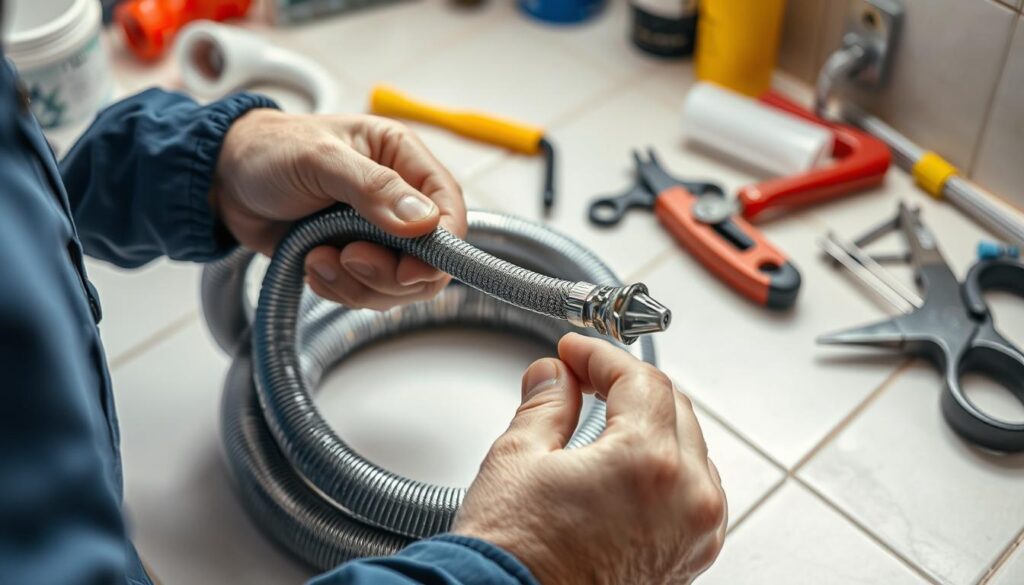
- Cleaning after each use: Rinse the cable well to get rid of dirt
- Disinfect the whole snake tool to stop bacteria from growing
- Make sure it’s dry to avoid rust and corrosion
Your bend-friendly drain auger needs special care. This keeps it flexible and effective. Check the cable for:
- Any signs of wear or damage
- Rust or corrosion
- Stiffness in the cable mechanism
How you store your snake tool is also important. Keep it in a dry, cool spot. Here are more tips for maintenance:
- Lubricate moving parts now and then
- Look for kinks or sharp bends in the cable
- Replace any worn or damaged parts right away
Pro tip: A well-maintained plumbing snake can last years and save you a lot of money on professional plumbing services.
By following these maintenance tips, your plumbing snake will always be ready to handle tough drain blockages.
Professional Tips for Complex Drain Systems
Dealing with complex drain systems needs advanced skills and smart planning. Professionals use special techniques to handle corners and bends. These methods are more than just basic cleaning.
Experts suggest several key strategies for tough pipe setups:
- Use a flexible drain snake for tight bends with multiple joint capabilities
- Invest in high-quality camera inspection tools
- Map out pipe layouts before attempting complex snake operations
- Practice precise cable tension control
Understanding pipe shapes is key when working with complex systems. Skilled technicians use creative solutions, like:
- Utilizing specialized snake attachments designed for sharp angles
- Applying gentle rotational movements to guide cables through difficult turns
- Combining mechanical snaking with hydro-jetting for complete blockage removal
“The key to successful drain snake navigation is patience and technical precision.” – Professional Plumbing Association
If your drain snake has trouble with corners, it might mean there’s a bigger problem. Getting a pro to check it out is important to avoid damage.
Professional tip: Always keep your tools in good shape and know when to call for help. Some jobs need special tools and skills that DIY can’t handle.
When to Call a Professional Plumber
Using an auger to navigate pipe curves can be tough. Sometimes, DIY efforts aren’t enough to fix plumbing problems. Knowing when to call a professional plumber can prevent costly damages and extensive repairs.
Professional plumbers have the skills and tools you don’t. They can solve complex drainage problems that homeowners might miss.
Signs of Serious Plumbing Issues
- Multiple drains clogging at once
- Foul odors from drain pipes
- Water backing up in unexpected places
- Unusual gurgling sounds in pipes
- Visible water damage around pipes
Risk Assessment Guidelines
Consider calling a pro if:
- Your auger can’t break through a blockage
- You see possible pipe damage while using the snake
- The clog is in a complex or hard-to-reach spot
- You’re not sure about your plumbing repair skills
“Prevention is always cheaper than extensive pipe repairs. When in doubt, consult a professional.” – Plumbing Expert
Professional plumbers use special camera tools and advanced augers. They can find and fix deep plumbing problems. Their skills keep your home’s plumbing system working well.
Conclusion
Clearing complex drain systems needs skill and patience. You must learn how to make a plumbing snake turn corners. This involves gaining technical knowledge and practical skills.
Every pipe setup is different. It’s important to clean drains methodically. Choose the right snake tool and understand how pipes work.
DIY skills can save money and fix many problems. But, knowing your limits is key. Some jobs need a pro. Always put safety first and know when to ask for help.
Keep learning and use careful techniques. This will make you more confident in plumbing. Practice, stay updated on your plumbing, and ask for help when needed.