
Affiliate Disclosure
Plumber Guide Guys is a participant in the Amazon Services LLC Associates Program, an affiliate advertising program designed to provide a means for sites to earn advertising fees by advertising and linking to Amazon.
How to Loosen Plumbing Fittings? Ever stared at a stubborn pipe connection, wondering if you’ll ever break it free without calling a professional? Learning how to loosen plumbing fittings can transform your home repair skills from frustrating to confident.
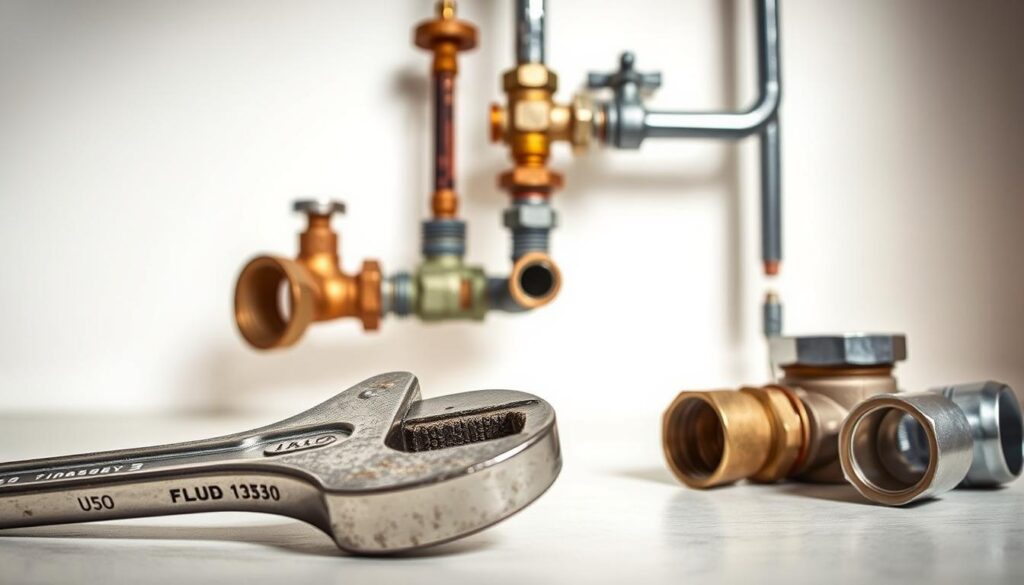
Plumbing fixture upgrades can dramatically improve your home’s functionality and value. Whether you’re replacing a leaky faucet or installing a modern shower system, understanding stuck pipe connections is key for successful DIY projects.
This guide will show you proven techniques to tackle even the most challenging plumbing connections. You’ll learn expert strategies that save money, prevent damage, and boost your home maintenance confidence.
Key Takeaways
- Master basic techniques for loosening plumbing fittings
- Save money by avoiding professional service calls
- Prevent possible pipe and fixture damage
- Gain confidence in home repair skills
- Learn safety protocols for DIY plumbing work
Table of Contents
Understanding Basic Plumbing Systems and Connections
Home plumbing is complex, but knowing how water flows is key. Your home’s plumbing is a network that moves water and waste. To fix plumbing, you need to understand its basic parts.
- Water Supply System
- Drain-Waste-Vent System
Water Supply System Components
The water supply system brings water into your home. It has important parts that need special tools for upkeep:
- Main Water Line: Where water from the city comes in
- Branch Lines: Smaller pipes that carry water to different parts of your home
- Fixtures and Connections: Water outlets for sinks, showers, and appliances
Drain-Waste-Vent System Overview
The drain-waste-vent system uses gravity to remove wastewater. It has pipes that take waste away and keep sewer smells out. Knowing how these work is key for fixing plumbing.
Common Types of Plumbing Connections
There are different plumbing connections that need special tools. The main types are:
- Threaded Connections: Used in metal pipes
- Compression Fittings: Common in new plumbing
- Soldered Joints: Lasting connections for copper pipes
Understanding these systems and connections helps you fix plumbing with confidence.
Essential Tools for Loosening Plumbing Fittings
Fixing plumbing issues needs the right tools. The right tools can make a tough job easier. Knowing which tools to use saves time and prevents damage.
Your toolkit should have:
- Pipe Wrench: The top tool for gripping and turning pipes
- Adjustable Wrench: Great for different fitting sizes
- Basin Wrench: Ideal for tight spots under sinks
- Channel Lock Pliers: Offers extra grip for tough connections
Plumber’s tape helps prevent stuck fittings. Use it to reduce friction and make disconnections easier. Penetrating oils are also helpful for corroded or rusted joints.
Pro Tip: Always keep your tools clean and well-maintained to ensure they perform optimally when you need them most.
Quality tools might cost more upfront, but they’re worth it. Look for tools made from chrome vanadium steel. It’s strong and lasts long.
Safety Precautions Before Starting
Getting ready for plumbing work is all about planning and safety. When you’re learning to loosen plumbing fittings, keeping yourself and your area safe is the first thing to do. Good preparation stops accidents and makes repairs easier.
Before you start with plumbing wrench techniques, you must take some key safety steps. These steps will let you work with confidence and avoid injuries or water damage.
Personal Protective Equipment Requirements
When working with plumbing, your safety is the top priority. You should wear:
- Safety glasses to protect your eyes from debris
- Waterproof work gloves
- Non-slip work boots
- A long-sleeved shirt to avoid skin irritation
“Safety isn’t expensive, it’s priceless.” – Unknown Plumbing Professional
Water Supply Shutdown Procedures
Turning off the water is essential before starting plumbing work. Here’s how to do it:
- Find your main water shutoff valve
- Turn it clockwise to stop the water flow
- Open a faucet on a lower level to release pressure
- Check nearby fixtures to make sure the water is off
Workspace Preparation Guidelines
To make a safe and organized space for plumbing work, do the following:
- Clear the area around your workspace
- Make sure there’s enough light
- Use protective drop cloths
- Keep tools within reach
- Ensure good ventilation
Remember, proper preparation is the key to successful and safe plumbing repairs.
How to Loosen Plumbing Fittings
Dealing with stuck pipe connections can be tough for DIY fans. To loosen plumbing fittings, you need patience, the right tools, and a plan. First, get your tools ready and set up your workspace for the best results.
Here are the key steps to tackle stuck pipe connections:
- Identify the specific type of fitting you’re working with
- Select appropriate tools for breaking free threaded fittings
- Apply gentle, consistent pressure
- Use penetrating oil to reduce friction
When loosening plumbing fittings, focus on careful handling. Experts suggest using controlled movements to avoid harming your pipes or nearby fixtures.
| Fitting Type | Recommended Approach | Difficulty Level |
|---|---|---|
| Copper Pipe Connections | Gentle wrench rotation | Low |
| Galvanized Steel Fittings | Penetrating oil application | Medium |
| Corroded Connections | Heat and precision tools | High |
Pro tip: Always work slowly and methodically to avoid causing additional damage to your plumbing system.
Remember, each plumbing fixture has its own challenges. Be flexible and patient in your approach. This way, you can keep your pipes safe while loosening those hard-to-move connections.
Using Penetrating Oil and Heat Methods
Dealing with tough plumbing connections? Penetrating oil and heat methods are your best friends. They help loosen tight fittings that are hard to move with usual methods.
Penetrating oils fill tiny gaps between metals, reducing friction. This makes it easier to break stuck connections. The right method can save you a lot of time and prevent damage to your plumbing.
Types of Penetrating Oils
- Liquid Wrench: Best for rust and corrosion
- WD-40: General-purpose penetrating solution
- Kroil: High-performance industrial penetrant
- PB Blaster: Specialized for extremely tight connections
Safe Heat Application Techniques
Applying heat to tight connections needs care. A propane torch or heat gun can expand metal and loosen rust. Keep a safe distance and don’t let the flame touch plastic parts.
| Method | Temperature Range | Best Used For |
|---|---|---|
| Low Heat | 100-250°F | Brass and copper fittings |
| Medium Heat | 250-500°F | Steel and iron connections |
| High Heat | 500-700°F | Extremely corroded joints |
Waiting Times and Best Practices
After using penetrating oil, wait patiently. Let it sit for 10-15 minutes before trying to loosen the fitting. This time lets the oil deeply penetrate and break down rust and corrosion.
“Slow and steady wins the battle with stubborn plumbing connections.” – Professional Plumber’s Wisdom
Always wear gloves and safety glasses when working on these tasks. The right approach and tools can turn a hard plumbing job into a simple DIY task.
Proper Wrench Techniques for Stubborn Fittings
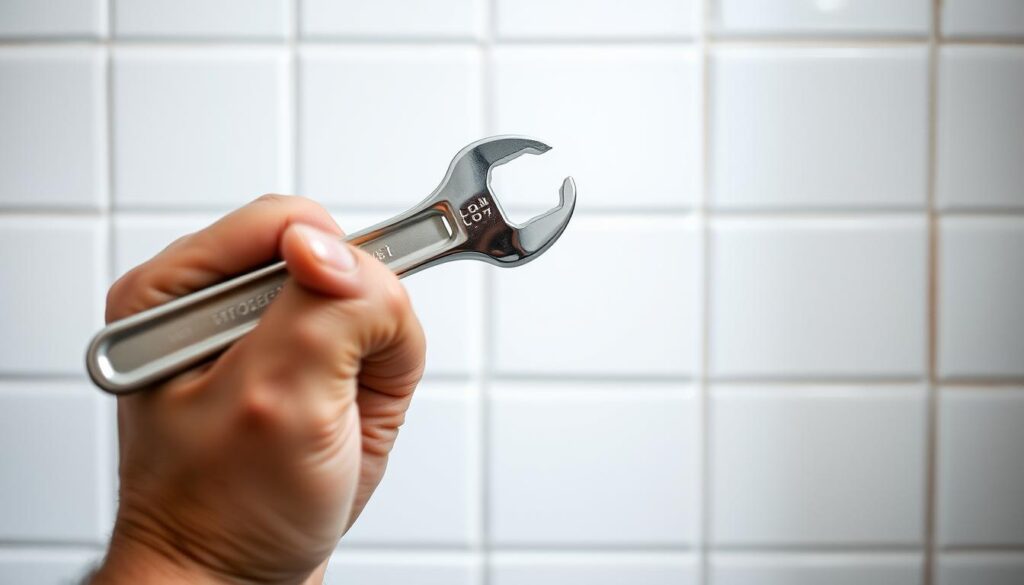
Learning how to use plumbing wrenches is key to loosening tough pipe joints. Experts say the right method can save you time and avoid damage to your plumbing.
Here are some important tips for using pipe joint loosening tools:
- Choose the right wrench size for your fitting
- Place the wrench for the best leverage
- Use steady, controlled pressure
- Avoid too much force to prevent thread damage
Each wrench needs its own special way of being used. Adjustable wrenches are best when fully open to fit the fitting’s width. Pipe wrenches need precise angle positioning to avoid slipping.
| Wrench Type | Best Technique | Recommended Pressure |
|---|---|---|
| Adjustable Wrench | Open fully, align straight | Moderate, controlled |
| Pipe Wrench | Grip at 45-degree angle | Firm, consistent |
| Basin Wrench | Use in tight spaces | Gentle, precise |
Always protect your fittings by keeping wrench jaws clean. Also, avoid sudden or jerky movements. Being patient and using controlled technique will help you loosen even the toughest connections.
Breaking Free Corroded and Rusted Connections
Removing rusted fittings can be tough for DIY plumbers. Corroded pipes make connections hard to loosen. Knowing the right methods can save time and avoid damage.
To loosen corroded pipes, you need a smart plan. Rust makes connections tight, making them hard to remove. But, there are ways to overcome this challenge.
Effective Rust Prevention Strategies
- Apply protective coatings to metal fittings
- Use dielectric unions for dissimilar metal connections
- Implement regular maintenance inspections
- Control moisture in pipe environments
Chemical Rust Removers: Your Secret Weapon
Professional plumbers use special chemicals to remove rust. These solutions dissolve corrosion, making it easier to remove rusted fittings.
| Rust Remover Type | Effectiveness | Best Used For |
|---|---|---|
| Phosphoric Acid-Based Removers | High | Heavy rust on metal surfaces |
| Citric Acid Solutions | Moderate | Lighter corrosion |
| Vinegar-Based Treatments | Low | Mild surface rust |
When using chemical rust removers, wear protective gear. Always follow the instructions. Safety is the most important thing when removing rusted fittings.
Pro Tip: Patience is key when loosening corroded pipes. Rushing can lead to damaged threads or broken fittings.
Dealing with Stripped or Damaged Threads
Stripped or damaged threads can make plumbing repairs hard. When fittings get stuck, you need special methods to fix them. This helps avoid leaks.
Spotting thread damage early is key. Watch for these signs:
- Threads look worn or uneven
- Fitting doesn’t tighten fully
- Visible gaps or misalignment
- Persistent leaking after installation
For small damage, plumber’s tape can help. Wrap the tape carefully around the threads. This creates a tight seal to stop leaks.
For bigger damage, try these fixes:
- Use thread repair kits with special inserts
- Re-tap the threads carefully
- Apply specialized thread sealants
- Replace the damaged fitting entirely
Experts say to use top-notch tools and take your time. Hurrying can lead to more damage and higher costs.
Pro Tip: Always check threads before reassembling to avoid future problems.
If you’re not sure about fixing it, get a pro plumber. They can prevent water damage and save you money.
Professional Tips for Difficult Cases
When you’re having trouble with plumbing fittings, standard methods might not work. Professional plumbers have advanced strategies for the toughest stuck pipe connections. These methods save time and prevent damage.
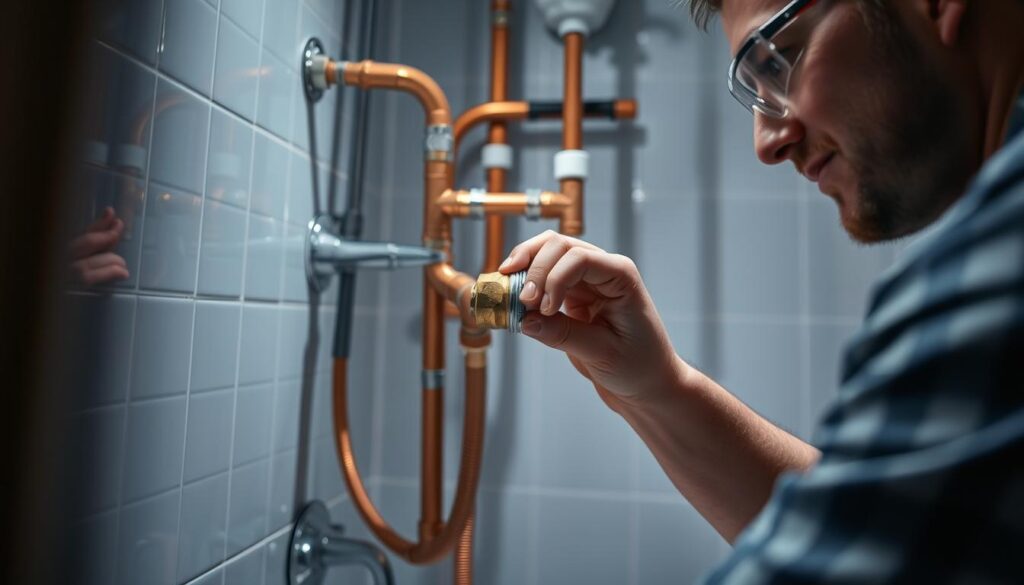
Experts know not every plumbing problem can be fixed with basic tools. They use special techniques for complex fittings that seem impossible to DIY fans.
Advanced Power Tool Strategies
Power tools can be a big help with very stubborn connections. Professionals suggest using specific tools for different problems:
- Reciprocating saws for cutting through severely corroded pipes
- Electric impact wrenches for maximum torque
- Specialized pipe cutting tools for precision removal
Expert Loosening Techniques
When usual methods don’t work, professionals use advanced methods:
- Two-wrench leverage technique for increased mechanical advantage
- Custom-fabricated removal tools for unique connection types
- Strategic heat application using industrial-grade torches
Keep in mind, these advanced techniques need a lot of skill and practice. When in doubt, consulting a professional plumber is always the safest option.
Professional help can prevent expensive mistakes and keep your plumbing system safe.
Common Mistakes to Avoid
DIY plumbing projects can quickly turn into costly nightmares when you make critical errors. Understanding common mistakes in plumbing wrench techniques can save you time, money, and frustration.
When learning how to loosen plumbing fittings, many beginners fall into predictable traps. These traps can damage pipes or create more significant problems.
- Applying excessive force that can crack or break pipes
- Using incorrect wrench sizes that strip threading
- Neglecting proper lubrication before attempting to loosen connections
- Ignoring rust and corrosion buildup
- Rushing the process without careful preparation
Precision matters in plumbing. Before attempting any fitting removal, take time to assess the situation carefully.
| Mistake | Potential Consequence | Recommended Solution |
|---|---|---|
| Using wrong wrench | Stripped threads | Use correctly sized, adjusted wrench |
| Applying direct heat | Pipe damage | Use controlled heat application |
| Skipping penetrating oil | Stuck fittings | Apply penetrating oil 15-20 minutes before work |
Remember that patience is your greatest tool when working with plumbing connections. If you’re unsure about any step, consulting a professional plumber can prevent expensive mistakes.
When to Call a Professional Plumber
Dealing with stuck pipe connections can be tough. Some plumbing problems are too big for DIY fixes. Knowing when to call a plumber can prevent costly damages and complex repairs.
Certain situations need a plumber right away. These include:
- Major water line breaks
- Extensive water damage to walls or floors
- Persistent leaks in loosening corroded pipes
- Complex pipe network repairs
- Sewer line complications
Professional plumbers have the skills for tough stuck pipe connections. They use advanced tools and know how to fix complex systems. Their work ensures repairs are done right and prevents long-term damage.
When picking a plumber, look for these things:
- Valid state licensing
- Comprehensive insurance coverage
- Positive customer reviews
- Transparent pricing
- Experience with complex pipe repairs
Trying to fix complex problems without training can cause big water damage. Professional help is key when DIY fails or risks are too high.
“A professional plumber can diagnose and resolve issues that might seem simple but could have underlying complexities.”
Conclusion
Learning to loosen plumbing fittings is a great skill for homeowners. It lets you handle small repairs on your own. You’ll save time and money by not needing professional help as often.
Being patient is important when working with plumbing. Start with easy tasks to build your confidence. Each success makes you more skilled in home maintenance.
DIY repairs can be rewarding, but know your limits. Some jobs need a pro’s touch. If unsure, call a licensed plumber for safety and to protect your home’s plumbing.
With the right techniques and safety tips, you can handle many plumbing tasks. Keep practicing and stay prepared. This will make you better at fixing things around the house.