

Affiliate Disclosure
Plumber Guide Guys is a participant in the Amazon Services LLC Associates Program, an affiliate advertising program designed to provide a means for sites to earn advertising fees by advertising and linking to Amazon.
How to Get Plumbing License in North Carolina? Did you know plumbers in North Carolina make an average of $56,330 a year? The best ones can earn over $75,000. Getting a plumbing license in North Carolina can lead to a rewarding and stable career in the construction and maintenance field.
To become a licensed plumber, you need hard work, technical skills, and to meet North Carolina’s plumbing certification needs. This guide will help you through every step to get your professional license, from training to getting your license.
If you’re starting out or already have experience, North Carolina has clear paths to becoming a certified plumber. The state’s strong rules ensure quality services and offer many chances for skilled workers.
Key Takeaways
- Plumbing licenses in North Carolina require specific training and certification
- Multiple license types are available based on experience and specialization
- Comprehensive examination process validates technical competence
- Ongoing education maintains professional credentials
- Potential for high earnings in the plumbing industry
Table of Contents
Understanding the Plumbing Industry in North Carolina
If you’re thinking about becoming a licensed plumber in NC, you’re stepping into a vibrant field. The plumbing industry in North Carolina is booming. It offers great chances for skilled workers to have a fulfilling career.
Current Market Demand
The plumbing industry in North Carolina is growing fast. If you aim to become a licensed plumber in NC, you’ll find a job market full of chances. Here are some key points:
- Approximately 12,160 plumbers currently employed in the state
- Nearly 70% of plumbing jobs remain unfilled
- High demand across residential and commercial sectors
Employment Statistics
The job outlook for plumbers in North Carolina is bright. Those preparing for the plumbing license exam in North Carolina will find a strong job market. There are many career paths to explore.
Recent data shows plumbing job opportunities are on the rise. This trend is expected to keep growing. Cities like Charlotte, Raleigh, and Durham have a high need for skilled plumbers.
Average Salary Expectations
Financial rewards for licensed plumbers in North Carolina are good. Salaries range from $56,000 to over $60,000 a year. This depends on experience, specialization, and where you work.
| Experience Level | Annual Salary Range |
|---|---|
| Entry-Level | $40,000 – $50,000 |
| Mid-Career | $55,000 – $65,000 |
| Experienced | $65,000 – $75,000+ |
With such promising prospects, getting a plumbing license in North Carolina is a smart career choice. It offers a stable and well-paying job.
Types of Plumbing Licenses Available in NC
Exploring the world of plumbing licenses in North Carolina can be tricky. The NC Plumbing Board has three main license types. These match your skills and career goals.
It’s key to know the nc plumbing board requirements if you want to be a plumber. Each license lets you do different types of work. This opens up various opportunities in the plumbing field.
- P-I Contractor (Limited License)
- Restricted scope of work
- Ideal for entry-level professionals
- Limited project complexity
- P-II Contractor (Intermediate License)
- Broader work authorization
- More complex project eligibility
- Enhanced professional opportunities
- Restricted Limited Plumbing Contractor (RLP) (Unlimited License)
- Comprehensive work permissions
- Maximum project flexibility
- Highest professional certification
The license you choose affects the projects you can do. It also impacts how much you can earn in North Carolina’s plumbing market.
| License Type | Work Scope | Professional Level |
|---|---|---|
| P-I Contractor | Limited residential projects | Entry-level |
| P-II Contractor | Intermediate commercial/residential work | Mid-level |
| RLP Contractor | Unlimited project types | Advanced professional |
Choosing the right license in North Carolina depends on your experience and goals. It’s about where you are in your career and where you want to go.
Basic Eligibility Requirements and Prerequisites
To get a plumbing license in North Carolina, you need to prepare well and meet certain criteria. The state board of examiners of plumbing North Carolina has set clear rules. These rules help make sure only qualified people work in the field.
Before starting your plumbing career, you must know the key requirements. These will help you succeed on your journey.
Age and Education Requirements
To start a plumbing apprenticeship in North Carolina, you must meet these requirements:
- Be at least 18 years old
- Hold a high school diploma or GED
- Have a valid government-issued photo ID
Background Check Details
The state values professional standards highly. You must pass a detailed background check. This includes:
- Criminal history review
- Verification of personal information
- Professional character assessment
Documentation Needed
Here’s what you need for your plumbing license application:
- Proof of education (high school diploma or GED certificate)
- Valid government-issued identification
- Completed application form from the state board of examiners of plumbing North Carolina
- Proof of completed apprenticeship hours
- Application fee payment confirmation
Each document is important for showing you’re ready to be a professional plumber. Preparing these requirements well will help you get your plumbing license in North Carolina.
How to Get Plumbing License in North Carolina
Getting a plumbing license in North Carolina needs careful planning and meeting certain requirements. You must go through several steps to become a certified plumber in the state.
To begin your path to a plumbing license in North Carolina, focus on two main things: experience and qualifications. The state has strict rules to ensure top-notch plumbing services.
- Gather 4,000 hours of on-site plumbing experience
- Complete approved technical training courses
- Prepare for the state licensing examination
- Submit detailed documentation of work history
North Carolina’s plumbing certification puts a big emphasis on hands-on experience. You need to get 4,000 hours of full-time work in plumbing. You can also get up to 2,000 hours from school or technical training, helping you grow professionally.
Your experience should cover important areas like:
- Residential plumbing systems
- Commercial plumbing installations
- Pipe fitting and maintenance
- Drainage and water supply systems
When you’re ready to get a plumbing license in North Carolina, keep your documents in order. Make sure you have records of your work hours, training certificates, and professional references. These will be key when you apply to the state licensing board.
Work Experience and Training Requirements
To become a licensed plumber in North Carolina, you need to gain work experience and complete training. This journey shows your skills and dedication to the trade.
Required Hours of Experience
North Carolina has different plumbing licenses with their own experience needs. For a Restricted Licensed Plumber (RLP) Contractor license, you must:
- Work for 9 months (1,500 hours)
- Install, maintain, service, or fix plumbing systems
- Up to 750 hours can be from school or technical training
Apprenticeship Programs
A plumbing apprenticeship in North Carolina is key for real-world experience. These programs offer:
- Guided on-the-job training
- Technical classes
- Guidance from seasoned pros
Acceptable Work Documentation
To get a plumbing license in NC, you must show your work history. You’ll need:
- Verified work logs
- Forms from your employer
- Details of your projects
- Proof of technical training hours
Keeping a close eye on your work hours is vital. It helps you meet licensing needs and prove your plumbing skills.
Examination Process and Preparation

To pass the plumbing license exam in North Carolina, you need a solid plan. You must know the nc plumbing board requirements well. The exam checks your knowledge of plumbing systems, rules, and skills.
The plumbing license exam in North Carolina is open-book. This means you can use books and resources during the test. It helps you show you can find and use important information.
- Exam duration: Typically 4 hours
- Test format: Multiple-choice questions
- Passing score: Minimum 70%
- Exam fee: Approximately $100
To do well, focus on these key steps:
- Review official study guides
- Practice with sample questions
- Understand local plumbing codes
- Study technical reference materials
Pro tip: Bring all allowed reference materials, including code books and calculators, to maximize your exam performance.
The North Carolina Plumbing Board says to prepare fully. Spend enough time studying and getting to know the exam’s structure and content.
“Success in the plumbing license exam comes from thorough preparation and understanding of core technical principles.” – NC Plumbing Licensing Expert
License Fees and Financial Considerations
Getting a north carolina plumbing contractor license can be tough on your wallet. Knowing the costs helps you plan your career investment better.
Getting a plumbing license has many financial steps. You need to budget for each part of the process.
Application Costs
Applying for your north carolina plumbing contractor license has some upfront costs:
- Initial application fee: $75-$150
- Background check processing: $30-$50
- Document verification charge: $25-$45
Examination Fees
The licensing exam is another big financial step. Plumbers should expect:
- Exam registration: $125-$225
- Study materials: $50-$150
- Practice test resources: $25-$75
Renewal Expenses
Keeping your plumbing license up to date has ongoing costs. Typical renewal costs include:
- License renewal fee: $100-$200
- Continuing education credits: $50-$150
- Renewal application processing: $25-$50
Pro tip: Some professional associations offer financial assistance or payment plans to help manage these expenses.
Educational Pathways and Training Programs
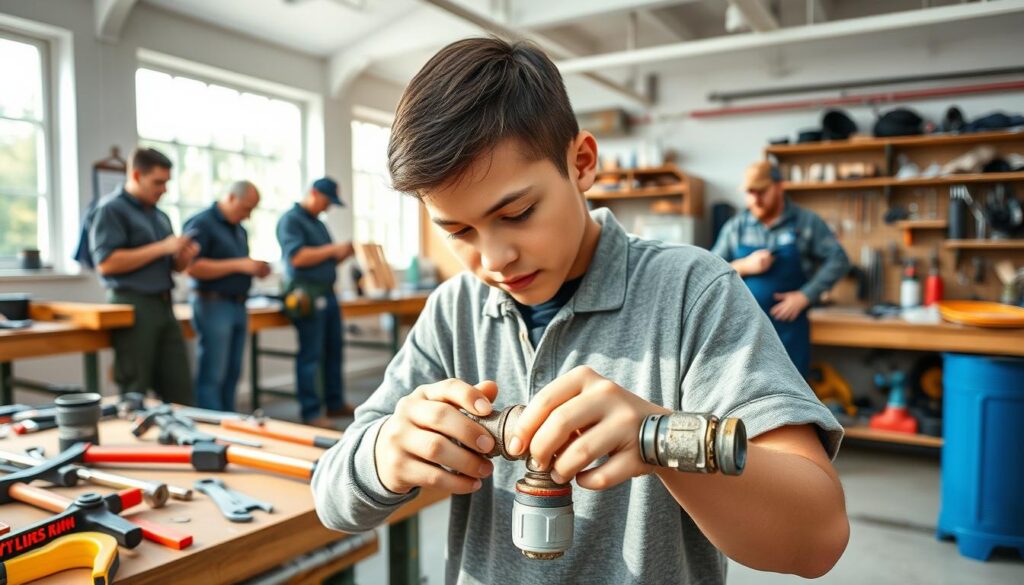
Starting a plumbing apprenticeship in North Carolina can lead to great career chances. The state has many ways to become a licensed plumber in NC. These programs are designed to get you ready for a successful career.
Several key schools offer plumbing education to start your career:
- Wake Technical Community College in Raleigh
- Central Piedmont Community College in Charlotte
- Forsyth Technical Community College in Winston-Salem
These programs have two main paths to become a licensed plumber:
- Certificate Programs (6-12 months)
- Associate Degree Programs (2 years)
Students get hands-on training in important skills like:
- Pipe system installation
- Blueprint reading
- Safety protocols
- Local plumbing codes
| Program Type | Duration | Cost Estimate | Career Preparation |
|---|---|---|---|
| Certificate Program | 6-12 months | $3,000-$7,000 | Entry-level positions |
| Associate Degree | 2 years | $10,000-$15,000 | Advanced technical roles |
Many programs work with local plumbing businesses for apprenticeships. This gives students real-world experience while they learn.
Pro tip: Look into financial aid, scholarships, and grants at local community colleges. They can help pay for your education.
Business Requirements for Licensed Plumbers
Starting a plumbing business in North Carolina needs careful planning. You must follow legal and professional standards. Your north carolina plumbing contractor license has important business requirements. These protect you and your clients.
When starting your plumbing business, you’ll face many regulatory steps. These steps ensure you meet all nc plumbing board requirements.
Insurance Essentials
Keeping your business safe means getting the right insurance. You’ll need:
- General Liability Insurance
- Professional Liability Coverage
- Workers’ Compensation Insurance
- Vehicle Insurance for Work Trucks
Bond Requirements
North Carolina has specific bonding rules for plumbers. These bonds show your business is reliable and protect consumers.
| Bond Type | Minimum Coverage | Purpose |
|---|---|---|
| Contractor License Bond | $10,000 | Ensures contract fulfillment |
| Performance Bond | Project-Specific | Guarantees project completion |
Business Registration Process
Registering your plumbing business involves several steps:
- Select a business structure (LLC, Corporation)
- Register with NC Secretary of State
- Obtain federal and state tax ID numbers
- Apply for necessary local business licenses
Tip: Consult the Economic Development Partnership of North Carolina for detailed guidance on business registration and compliance.
License Maintenance and Renewal Process
To keep your plumbing license in North Carolina, you must follow state rules. The renewal process is key to keeping your license active and legal.
For plumbing license renewal in NC, you need to take certain steps:
- Submit your renewal application before your license expires
- Complete required continuing education credits
- Pay the right renewal fees
- Update your professional documents
The renewal cycle is every two to three years, depending on your license type. It’s important to remember your expiration date to keep your certification.
“Staying current with your plumbing license is not just a requirement, it’s a mark of professional commitment.” – North Carolina Plumbing Professionals Association
Continuing education is a big part of renewal. Plumbers usually need 4-8 hours of approved courses. These courses cover:
- Latest plumbing technologies
- Updated building codes
- Safety regulations
- Advanced technical skills
Renewal fees change based on your license type. You might pay $50-$150 for standard renewals. The state board of examiners of plumbing north carolina lists fees on their website.
Keep all your documents in order. Submit your renewal application early to avoid penalties or license suspension.
Conclusion
Getting a plumbing license in North Carolina is a great start to a new career. It takes hard work and a desire to grow professionally. You’ll learn a lot and build a strong base for a fulfilling job.
To get a plumbing license in North Carolina, you need to follow several steps. You’ll need to finish your education, get work experience, pass exams, and keep your skills up to date. This effort will pay off with good pay and lots of job chances.
Being a plumber is more than just a job. It’s a stable career with lots of room to grow. As you get your license, you’ll learn new skills and help your community. You can work for someone else or start your own business.
Start your journey today. Look for local training, join plumbing groups, and move forward. Getting a plumbing license might seem tough, but with hard work and the right help, you can achieve your dreams.