
Affiliate Disclosure
Plumber Guide Guys is a participant in the Amazon Services LLC Associates Program, an affiliate advertising program designed to provide a means for sites to earn advertising fees by advertising and linking to Amazon.
How to Find Plumbing Leak in Slab? Did you know a hidden water leak under your home’s foundation could be silently causing thousands of dollars in damage right now? Finding slab leaks early can save homeowners from huge structural problems and expensive repair costs.
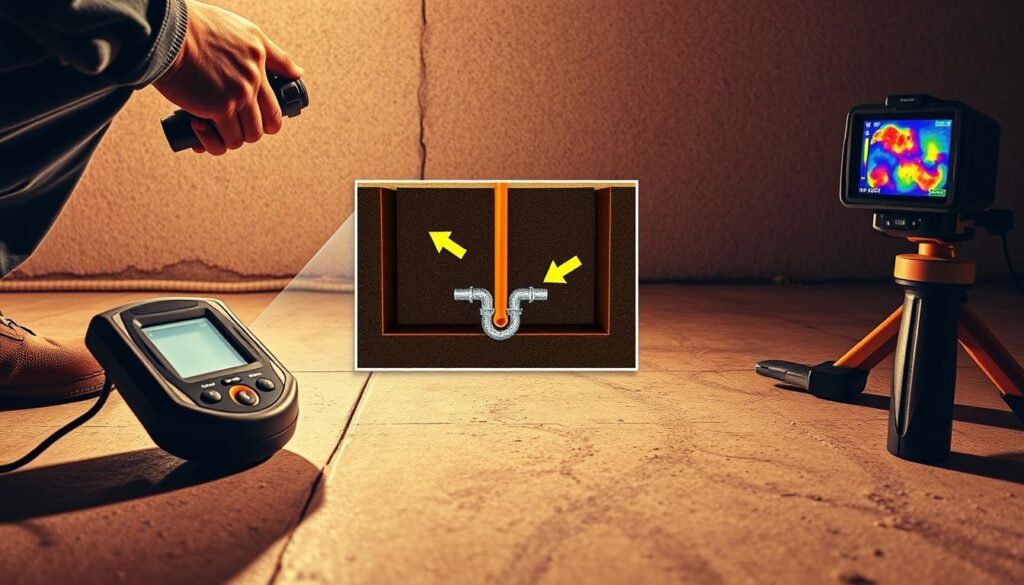
A slab leak happens when water pipes under your home’s concrete foundation start leaking. These pipes can wear out due to soil movement, corrosion, or too much water pressure. Knowing how to find plumbing leaks in slabs is key to protecting your property and avoiding long-term damage.
Water damage from hidden slab leaks can harm your home’s foundation, create mold risks, and lead to expensive repairs. By learning how to detect leaks, you can catch problems before they get worse.
Key Takeaways
- Slab leaks can cause significant structural damage if left undetected
- Early detection prevents costly home repairs
- Multiple methods exist for identifying underground pipe leaks
- Professional tools can pinpoint leak locations with precision
- Regular monitoring helps prevent extensive water damage
Table of Contents
Understanding Slab Leaks and Their Impact on Your Home
Slab leaks are a big problem for homeowners. They can damage your home’s foundation a lot. These leaks hide under the concrete slab of your home. They can be hard to find for a long time.
A slab leak happens when water pipes under your home’s foundation get damaged. This can be due to cracks, holes, or the pipes just wearing out. These leaks can be hard to spot but can cause a lot of harm if not fixed.
What Defines a Slab Leak
Slab leaks happen in the water lines under your home’s foundation. They can be caused by:
- Pipe corrosion
- Soil movement
- Extreme water pressure
- Poor initial pipe installation
- Chemical reactions in soil
Potential Consequences of Untreated Leaks
Not fixing concrete slab water damage can lead to big problems. The risks include:
| Consequence | Potential Damage |
|---|---|
| Structural Damage | Foundation weakening and possible collapse |
| Mold Growth | Health risks and property damage |
| Water Bill Increase | Big monthly cost increase |
| Property Value Reduction | Lower market value because of foundation problems |
Common Causes of Slab Leaks
Knowing why slab leaks happen helps prevent them. Pipes under your foundation can get damaged by many things. This includes water chemistry, pipe quality, and soil pressure.
Early detection is key to preventing extensive and costly repairs.
Essential Signs of Water Leak Under Foundation
Finding out if you have a water leak under your foundation early can save you a lot of money. Your home sends out small signals if something is wrong with your plumbing. It’s important to listen to these signs.
Look out for these key signs that you might need foundation leak repair:
- Unexpected Water Bill Increases: A sudden jump in your water bill without using more water could mean an underground leak
- Mysterious Water Sounds: Hearing water running when all taps are turned off means there might be hidden leaks
- Foundation Cracks: Finding hairline or bigger cracks in your concrete slab could show water damage
- Floor Anomalies: Warm spots, dampness, or flooring that’s buckling suggest water is building up underneath
Some signs outside your home include strange lawn patches and foundation shifting. Wet or soggy areas around your home’s edges might mean water is moving underground.
Getting professional help for foundation leak repair is key when you see these signs. Ignoring them can cause serious damage, mold, and costly fixes.
Early detection is your best defense against extensive foundation water damage.
Homeowners should check their homes regularly and watch for signs of leaks. This helps keep your property safe and its value high.
How to Find Plumbing Leak in Slab: Detection Methods
Finding a plumbing leak in your home’s foundation can be tough. New slab leak detection methods have made it easier. Now, homeowners have many ways to spot water problems early.
To find a plumbing leak in your slab, it’s good to know the different ways to detect it. Plumbers and homeowners use several reliable methods to find water leaks.
Visual Inspection Techniques
Visual checks are a key part of finding slab leaks:
- Look for wet spots on floors that shouldn’t be there
- Check for cracks in tile or concrete
- See if baseboards are wet when they shouldn’t be
- Listen for water running when all taps are turned off
Advanced Detection Tools
New technology has made finding leaks easier and more accurate:
- Moisture Meters: Find water in building materials
- Electronic Listening Devices: Hear water moving underground
- Infrared Cameras: Show temperature changes that mean leaks
“Early detection can save thousands in foundation repairs” – Professional Plumbing Association
Professional Detection Equipment
Professional plumbers use advanced tools to find slab leaks. They use sonar and thermal imaging to find leaks without digging.
Knowing how to detect slab leaks helps you act fast when you find water problems in your home’s foundation.
Monitoring Your Water Bill for Leak Indicators
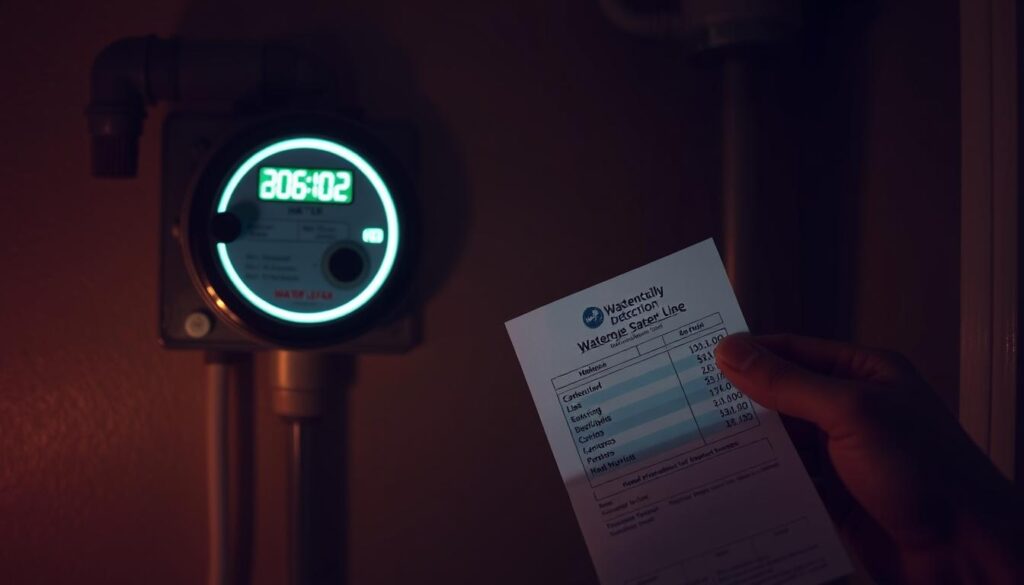
Tracking your water bill is key to spotting slab leaks in your home. A sudden jump in water costs might mean hidden plumbing problems under your foundation.
Water bill increases can come from many things, but sudden spikes often mean big problems. Homeowners should watch for odd changes in their water use each month.
- Compare current bills with previous months’ statements
- Check for unexplained water consumption jumps
- Calculate average household water usage
To keep an eye on water bill increases, try these strategies:
| Bill Indicator | Potential Leak Significance |
|---|---|
| 10-15% bill increase | Possible minor leak |
| 25-50% bill increase | Likely significant underground leak |
| 50%+ bill increase | Urgent slab leak probable |
“A water bill doesn’t lie – it tells a story about your home’s hidden plumbing health.” – Professional Plumbing Insight
Proactive monitoring can save you thousands in repairs. Knowing your water use helps spot plumbing issues fast.
Using Modern Technology for Leak Detection
Modern plumbing leak detection has changed a lot. Now, hidden water problems in your home can be found easily and without much damage. New tools give experts a deep look into plumbing issues under your home.
Today’s plumbing leak detection uses advanced methods to find water problems in your home. These new ways help technicians find leaks fast and right.
Thermal Imaging Cameras: Seeing the Invisible
Thermal imaging cameras change how we find leaks. They show temperature changes that we can’t see. These cameras spot small temperature changes that mean water might be moving or moisture is building up.
- Captures heat signatures through walls and floors
- Provides non-invasive diagnostic capabilities
- Identifies possible leak spots with great accuracy
Acoustic Listening Devices: Hearing Water’s Secret Language
Advanced acoustic listening devices can hear water sounds through solid surfaces. Experts use these tools to find where leaks are exactly.
| Device Type | Detection Capability | Accuracy Rate |
|---|---|---|
| Ground Microphones | Underground Water Flow | 90-95% |
| Electronic Leak Detectors | Pipe Interior Sounds | 85-90% |
Moisture Meters: Measuring Hidden Dampness
Moisture meters measure water in building materials. These tools help experts find water damage early. This way, they can fix problems before they get worse.
- Finds moisture levels in walls, floors, and foundations
- Prevents possible structural damage
- Gives exact data for fixing decisions
With these modern tools, plumbing leak detection services can find and fix water problems well and fast.
Professional Plumbing Leak Detection Services
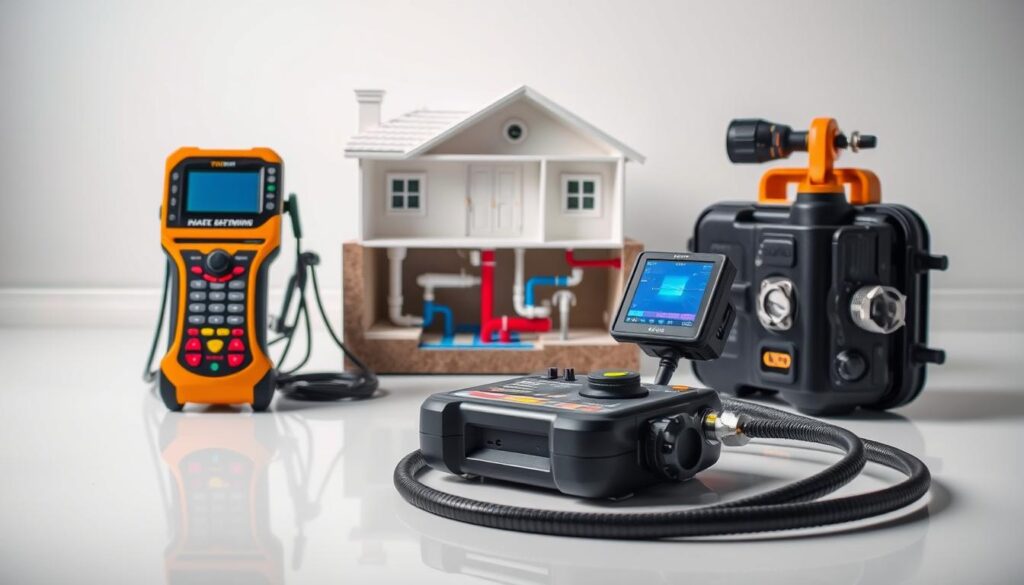
Professional plumbing leak detection is a top solution for homeowners facing tough maintenance issues. When leaks hide under your foundation, experts are key to finding and fixing complex problems.
Trained professionals in leak detection offer big advantages for solving slab leak issues:
- Advanced diagnostic equipment
- Precise leak location techniques
- Minimal property disruption
- Expert repair recommendations
Certified plumbing technicians use the latest tech to find hidden leaks accurately. Thermal imaging cameras, acoustic listening devices, and electronic moisture meters help spot leaks that old methods miss.
| Service Feature | Professional Advantage |
|---|---|
| Leak Detection | 99% Accuracy Rate |
| Diagnostic Equipment | High-Precision Instruments |
| Repair Approach | Minimally Invasive Techniques |
When picking a leak detection service, look at their credentials, experience, and training. Choose technicians certified in advanced methods for clear diagnostics and affordable fixes.
“Investing in professional leak detection saves thousands in possible home damage repair costs.”
Understanding the Cost of Slab Leak Detection and Repair
Dealing with slab leak repair costs can be a big worry for homeowners. The costs to find and fix these hidden leaks can change a lot. This depends on several important factors.
Key Factors Influencing Detection Costs
The cost to find a slab leak starts at $125 to $400. Your exact cost will depend on:
- How big your property is and your plumbing system’s complexity
- How easy it is to get to the leak
- The technology and tools used to find it
Repair Cost Variables
Fixing a slab leak can cost a lot. The cost to fix a slab leak is usually between $500 to $4,000. Several things can affect this:
- Where the leak is in the foundation
- How much damage the leak has caused to pipes and the structure
- The method used to fix it (spot repair or full repiping)
- Local labor and material prices
Insurance Coverage Considerations
Your homeowner’s insurance might help with slab leak repair costs. Most policies cover sudden water damage. But, they might not cover slow leaks. Check your policy and talk to your insurance to see what’s covered.
“Prevention and early detection can significantly reduce your overall slab leak repair cost.” – Professional Plumbing Association
Being proactive and acting fast on leaks can lower costs. It also helps protect your home’s foundation from big damage.
Prevention Strategies for Future Slab Leaks
To keep your home safe from slab leaks, you need to take action. Start by setting up a maintenance plan for your plumbing. This can help avoid big problems with your home’s foundation.
Begin with a regular check-up of your plumbing. Experts can spot issues early. They look for signs of wear or leaks in your pipes.
- Schedule annual plumbing inspections
- Monitor water pressure consistently
- Watch for signs of soil movement around your foundation
- Upgrade to modern, durable piping materials
Managing water pressure is key to avoiding slab leaks. Too much pressure can damage your pipes. Use a pressure regulator to keep the water pressure safe.
The soil around your home affects your pipes too. Shifting ground and clay soils can harm your pipes. Talk to a landscaper about drainage to reduce soil pressure on your pipes.
Choosing the right pipes is also important. Copper and PEX pipes last longer and resist corrosion. They’re great for replacing old plumbing.
When to Call a Professional Plumber
Knowing when to call a plumber is key. Water damage can grow fast, turning a small problem into a big headache. It’s important to know when to call a pro to save time, money, and avoid damage.
Homeowners need to spot signs that mean they should call a plumber. Some situations are too big for DIY fixes:
- Persistent water sounds when no fixtures are running
- Unexplained increases in water bills
- Visible water pooling around foundation areas
- Sudden drops in water pressure
- Warm spots on concrete floors
Emergency Situations
Some plumbing problems need help right away. These urgent cases include:
- Significant water accumulation underneath floors
- Potential structural foundation compromise
- Sewage backup or contamination risks
- Potential gas line interference with water pipes
Qualification Requirements
When looking for plumbing services, check these qualifications:
| Credential | Importance |
|---|---|
| State Licensing | Confirms legal authorization to perform plumbing work |
| Insurance Coverage | Protects homeowner from possible damages during repair |
| Specialized Leak Detection Certification | Shows advanced technical skills |
| Minimum 5 Years Experience | Shows a track record in complex leak investigations |
“Not all plumbers are created equal. Choose expertise that matches your specific professional plumbing leak detection needs.” – Professional Plumbing Association
By following these guidelines, you can decide when to call a plumber. This helps protect your home from serious water damage.
DIY vs. Professional Detection Methods
Homeowners must choose between DIY and professional slab leak detection. Your home’s foundation needs careful attention. Knowing the pros and cons of each method can save you time, money, and prevent damage.
DIY slab leak detection is good for those watching their budget. You can start with simple steps that don’t cost much:
- Monitor your water meter for unexpected changes
- Check for unexplained moisture on floors
- Listen for unusual sounds near your foundation
- Inspect water bills for sudden increases
Professional slab leak detection services offer skills DIY can’t match. They use tools like thermal imaging cameras and acoustic listening devices for precise leak detection.
“Not all leaks are visible, and some can cause significant damage before becoming noticeable.”
DIY methods can spot issues, but they can’t replace the detailed analysis professionals offer. Experts find hidden leaks, assess damage, and suggest repairs.
Your choice depends on several things:
- Complexity of the leak
- Your technical skill level
- The tools you have
- The cost of repairs
Early detection is vital to avoid costly foundation damage.
Conclusion
Knowing how to find plumbing leaks in slabs is key to keeping your home safe. Slab leaks can quietly damage your home’s foundation, leading to expensive fixes. By watching for signs and using both DIY and expert methods, you can protect your home from water damage.
Spotting leaks early is your strongest defense. Keep an eye on your water bill, look for moisture, and do regular checks. Tools like thermal cameras and acoustic devices can find hidden leaks fast and right.
For real help, turn to professional plumbers when you think you have a leak. They have the skills and tools to find leaks without causing too much damage. Remember, acting fast and preventing leaks can save you a lot of money and hassle later.
Being proactive about finding and fixing leaks can save you a lot of trouble. Listen to your gut, stay alert, and get expert help if you think there’s a problem with your home’s plumbing.